
Investing can often seem like a labyrinth of complex jargon, volatile markets, and endless decisions. For many, the desire to grow wealth clashes with the fear of making the wrong move. However, there’s a widely recognized and relatively straightforward path that has delivered consistent returns for decades: investing in S&P 500 index funds. This strategy offers a powerful combination of diversification, low cost, and historical growth, making it an attractive option for both novice and seasoned investors alike.
An S&P 500 index fund isn’t just another investment product; it’s a doorway to owning a piece of the 500 largest publicly traded companies in the United States, effectively mirroring the performance of the broader U.S. stock market. By demystifying this popular investment vehicle, we can empower individuals to confidently allocate their capital and build long-term wealth. This comprehensive guide will walk you through understanding what the S&P 500 is, its inherent benefits, the practical steps to invest, and crucial considerations for a successful financial journey.
Understanding the S&P 500 and Index Funds
Before diving into how to invest, it’s essential to grasp what you’re investing in. The foundation of this strategy rests on two key concepts: the S&P 500 index and the index fund itself. Understanding these elements is crucial for appreciating the simplicity and effectiveness of this investment approach.
What is the S&P 500?
The S&P 500, or the Standard & Poor’s 500, is a stock market index that represents the performance of 500 of the largest publicly traded companies in the United States. Managed by S&P Dow Jones Indices, it is a market-capitalization-weighted index, meaning companies with larger market values (share price multiplied by the number of outstanding shares) have a greater impact on the index’s performance. The S&P 500 is widely regarded as one of the best gauges of large-cap U.S. equities and a leading indicator of the overall health of the U.S. economy. Iconic companies such as Apple, Microsoft, Amazon, Google (Alphabet), and Tesla are among its constituents, covering a vast array of sectors from technology and finance to healthcare and consumer discretionary. Its diverse representation makes it a robust benchmark against which many other investment performances are measured.
The Power of Index Funds
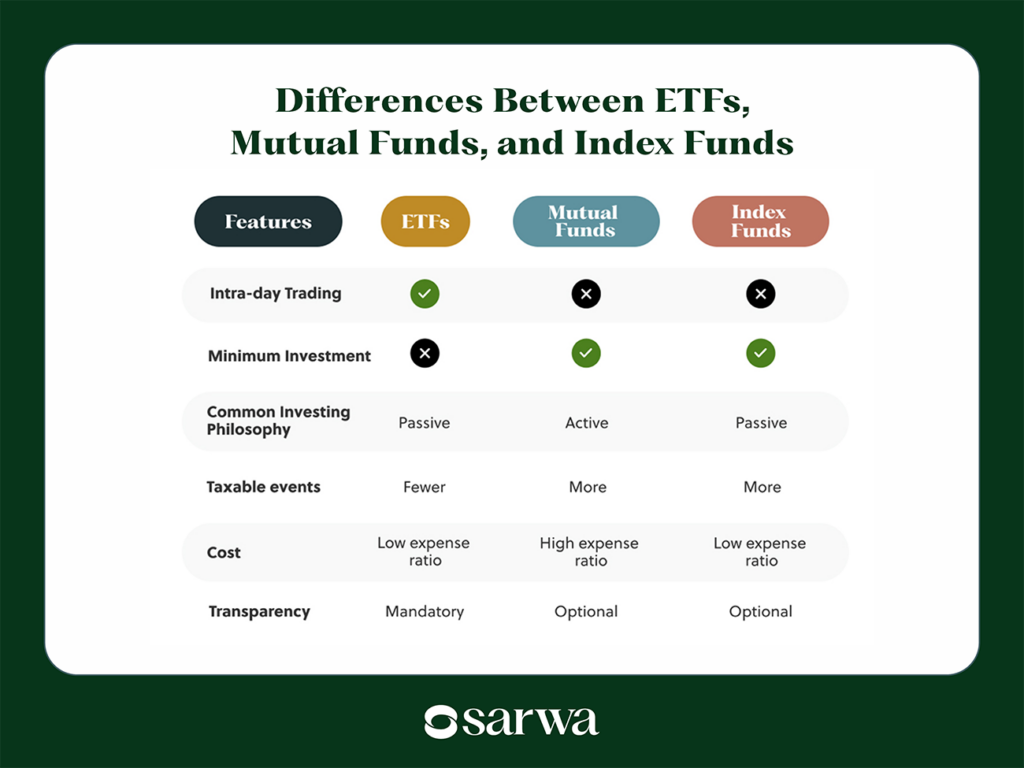
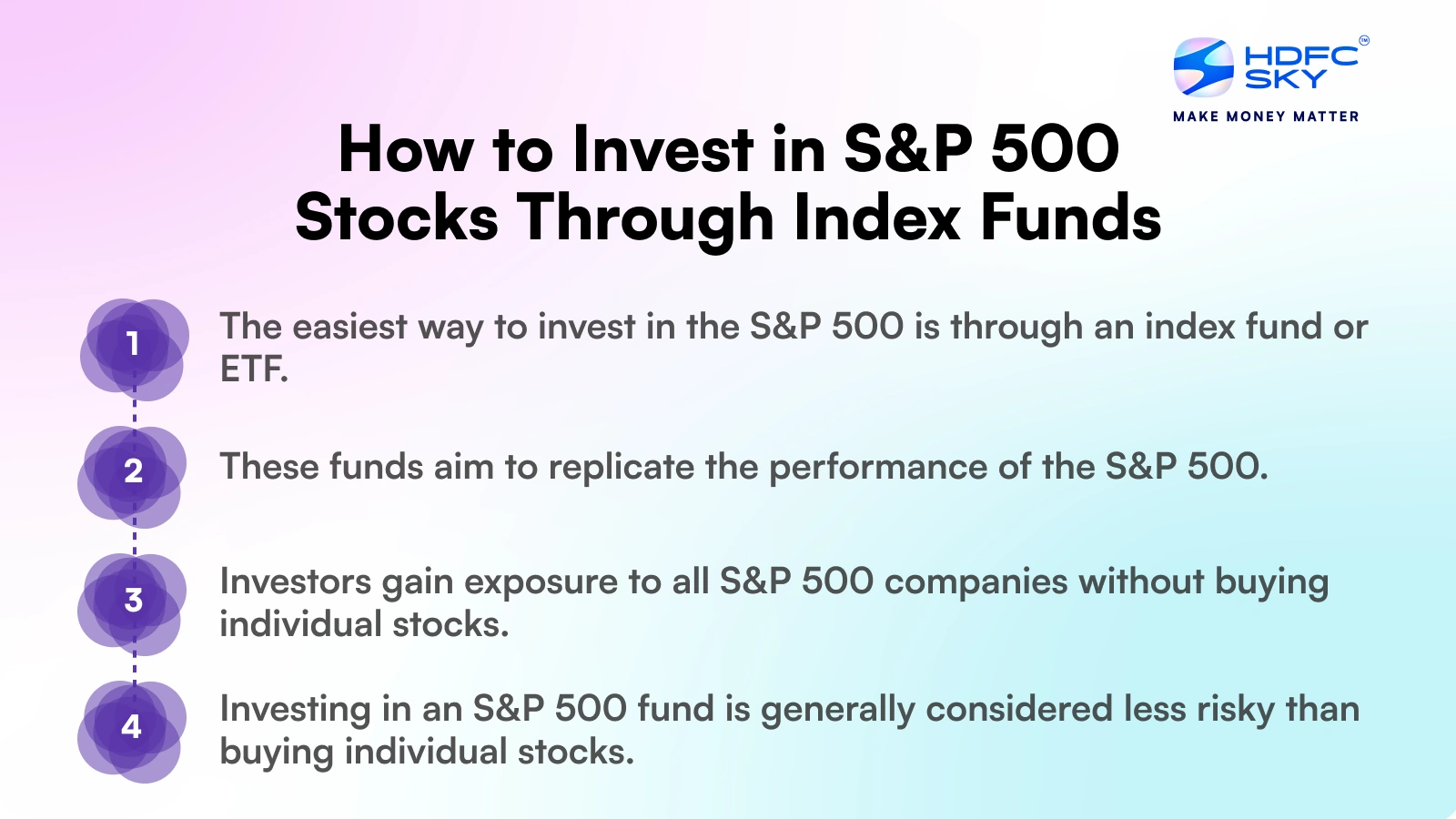
An index fund is a type of mutual fund or exchange-traded fund (ETF) with a portfolio constructed to match or track the components of a market index, such as the S&P 500. Unlike actively managed funds, where fund managers constantly buy and sell securities in an attempt to outperform the market, index funds employ a passive investing strategy. Their goal is not to beat the market, but to mirror its performance. This passive approach offers significant advantages, primarily in the form of lower operating costs and expense ratios, as there’s no need for extensive research and frequent trading by a team of analysts. By owning an S&P 500 index fund, you are effectively owning a tiny fraction of all 500 companies in the index, providing instant diversification without the need to select individual stocks.
Why Choose the S&P 500?
The appeal of the S&P 500 index fund stems from several compelling factors. Firstly, its historical performance has been remarkably strong over the long term, demonstrating an average annual return of approximately 10-12% since its inception (though past performance is not indicative of future results). Secondly, its broad diversification across 500 leading U.S. companies inherently reduces risk compared to investing in a handful of individual stocks. If one company performs poorly, its impact on your overall portfolio is mitigated by the performance of the other 499. Lastly, the S&P 500 represents the engine of American innovation and economic growth. By investing in it, you are investing in the continued success and resilience of the largest and most dynamic economy in the world.
Benefits of Investing in S&P 500 Index Funds
The popularity of S&P 500 index funds isn’t just hype; it’s built on a foundation of tangible benefits that cater to various investor needs and goals. From cost efficiency to inherent market stability, these funds offer a compelling package for wealth accumulation.
Diversification Across Major US Companies
One of the most significant advantages of an S&P 500 index fund is the immediate and extensive diversification it provides. With a single investment, you gain exposure to 500 industry-leading companies across 11 major sectors of the U.S. economy. This level of diversification significantly reduces what’s known as “idiosyncratic risk” – the risk associated with an individual company’s poor performance or collapse. Instead of betting on the success of one or a few companies, you’re betting on the collective growth of the entire U.S. market, making your portfolio far more resilient to company-specific setbacks.
Lower Costs and Expense Ratios
Index funds are renowned for their low expense ratios compared to actively managed mutual funds. An expense ratio is the annual fee charged by the fund, expressed as a percentage of your investment. Because index funds simply track an index rather than requiring expensive research teams and frequent trading, their operational costs are minimal. For example, many S&P 500 index funds boast expense ratios below 0.10%, meaning for every $10,000 invested, you might pay less than $10 in annual fees. Over decades, these seemingly small differences in fees can translate into hundreds of thousands of dollars more in your pocket due to the power of compounding.
Simplicity and Passive Investing
For investors who prefer a hands-off approach, S&P 500 index funds are ideal. They embody the principle of passive investing: buy and hold. Once you’ve chosen your fund, there’s no need to constantly monitor individual stock performance, analyze market trends, or make frequent trading decisions. This simplicity not only saves time and reduces stress but also helps avoid the common pitfalls of emotional investing and market timing. It allows you to focus on consistently contributing to your investments and letting time and the market do the heavy lifting.
Strong Historical Performance
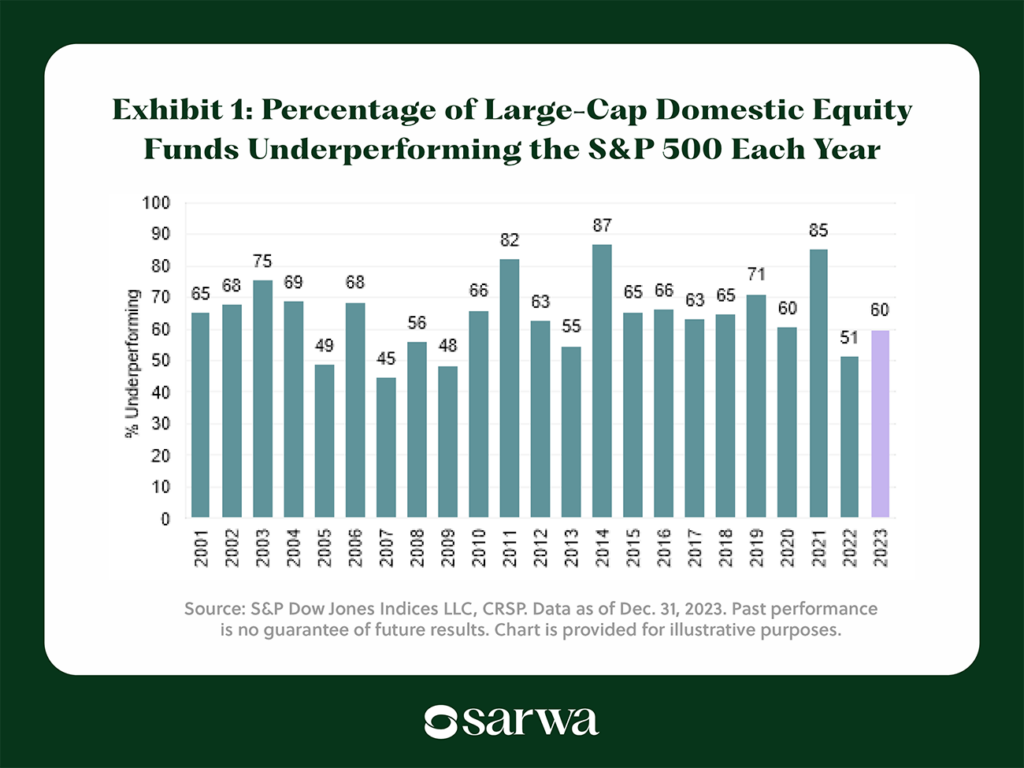
While past performance is never a guarantee of future returns, the S&P 500 has demonstrated remarkable resilience and growth over the long term. Historically, it has outperformed many actively managed funds after fees, solidifying the argument that for most investors, simply tracking the market is a more effective strategy than trying to beat it. The long-term upward trend of the U.S. stock market, driven by innovation, corporate profits, and economic expansion, positions the S&P 500 as a robust engine for wealth creation.
Practical Steps to Invest in S&P 500 Index Funds
Investing in an S&P 500 index fund is more accessible than ever, thanks to advancements in financial technology and a competitive brokerage landscape. The process involves a few clear steps, from opening an account to selecting the right fund for your needs.
Choose an Investment Vehicle
Your first step is to decide where you will hold your investment. Common options include:
- Taxable Brokerage Account: A standard investment account suitable for any investing goal. Gains are subject to capital gains tax in the year they are realized.
- Individual Retirement Account (IRA): Tax-advantaged accounts designed for retirement savings. These include Traditional IRAs (pre-tax contributions, tax-deferred growth, taxed in retirement) and Roth IRAs (after-tax contributions, tax-free growth, tax-free withdrawals in retirement).
- 401(k) or Other Employer-Sponsored Retirement Plan: If your employer’s plan offers S&P 500 index funds or a similar U.S. large-cap equity fund, this can be an excellent way to invest, especially if your employer provides matching contributions.
- Custodial Accounts (e.g., UGMA/UTMA): For investing on behalf of a minor.
Open an account with a reputable brokerage firm (e.g., Vanguard, Fidelity, Charles Schwab, E*TRADE, M1 Finance, Robinhood). The process typically involves providing personal information, linking a bank account, and verifying your identity.
Select Your S&P 500 Fund Type
S&P 500 index funds generally come in two main forms:
- Exchange-Traded Funds (ETFs): These trade like stocks on major exchanges throughout the day. They offer great flexibility, often have very low expense ratios, and can be more tax-efficient in taxable accounts. Examples include SPDR S&P 500 ETF Trust (SPY), iShares Core S&P 500 ETF (IVV), and Vanguard S&P 500 ETF (VOO).
- Mutual Funds: These are priced once per day after the market closes. They are often preferred for automatic investing plans, as you can invest a specific dollar amount directly. Many brokerage firms offer their own branded S&P 500 index mutual funds (e.g., Vanguard 500 Index Fund Admiral Shares – VFIAX, Fidelity 500 Index Fund – FXAIX).
Both ETFs and mutual funds track the S&P 500 index; the choice often comes down to personal preference regarding trading flexibility and minimum investment requirements. ETFs typically have no minimum investment beyond the share price, while mutual funds might have initial minimums (e.g., $3,000).
Research and Select a Specific Fund
Once you know your preferred fund type, you’ll need to choose a specific fund. When evaluating options, prioritize funds from reputable providers known for their low costs:
- Expense Ratio: This is paramount. Look for the lowest possible expense ratio, ideally below 0.10%.
- Tracking Error: How closely does the fund track the S&P 500 index? Lower tracking error means it’s doing a better job. This is generally not a major concern with large, established S&P 500 funds.
- Assets Under Management (AUM): Larger funds (higher AUM) are generally more stable and liquid.
- Minimum Investment: Ensure the fund’s minimum investment aligns with your budget.
Leading providers like Vanguard, Fidelity, and iShares (BlackRock) are excellent starting points for low-cost, high-quality S&P 500 index funds and ETFs.
Set Up Automatic Contributions
To harness the full power of compounding and dollar-cost averaging, set up regular, automatic contributions to your S&P 500 index fund. Dollar-cost averaging involves investing a fixed amount of money at regular intervals, regardless of market fluctuations. This strategy means you buy more shares when prices are low and fewer shares when prices are high, averaging out your cost over time and reducing the risk of making a single large investment at an unfavorable market peak. Consistency is key to long-term investing success.
Important Considerations and Strategies
While S&P 500 index funds offer a robust investment strategy, maximizing their potential requires understanding broader financial principles and adopting a disciplined approach.
The Importance of a Long-Term Horizon
Investing in the S&P 500 is a long-term game. Historically, the stock market experiences cycles of booms and busts. Short-term fluctuations are normal and should not cause panic. The true power of S&P 500 investing, especially for retirement or other distant goals, lies in the principle of compounding. By allowing your investments to grow over many years, the returns themselves start generating returns, creating an exponential growth curve. A horizon of 10, 20, or even 30+ years allows your portfolio to weather market downturns and fully capture the market’s upward trajectory.
Understanding Risks
While diversified and historically reliable, S&P 500 index funds are not without risk. They are subject to market risk, meaning the value of your investment can decline if the overall stock market falls. There’s also economic risk, where broader economic downturns can impact corporate earnings and stock prices. While the S&P 500 is highly diversified, it is exclusively focused on large-cap U.S. equities, meaning it doesn’t provide direct diversification into international markets, small-cap stocks, or other asset classes like bonds or real estate. It’s crucial to acknowledge these risks and maintain a realistic perspective that investment values can fluctuate.
Asset Allocation and Portfolio Diversification
While an S&P 500 fund provides excellent diversification within large-cap U.S. stocks, it shouldn’t necessarily be your only investment. A truly diversified portfolio typically includes a mix of different asset classes (stocks, bonds, real estate, commodities) and geographic regions (U.S., international, emerging markets) to further spread risk and potentially enhance returns. An S&P 500 fund can serve as a strong core holding, but consider complementing it with international stock funds, bond funds, or other investments suitable for your age, risk tolerance, and financial goals.
Rebalancing Your Portfolio
Over time, different parts of your portfolio will grow at different rates, potentially shifting your asset allocation away from your desired targets. Rebalancing involves periodically adjusting your portfolio back to your target allocations. For example, if your S&P 500 fund performs exceptionally well and now represents a larger portion of your portfolio than intended, you might sell a portion of it and reallocate those funds to underperforming assets or new investments to restore your desired balance. This disciplined approach helps manage risk and ensures you’re not overly exposed to any single asset class.
Tax Efficiency
For investments held in taxable brokerage accounts, S&P 500 ETFs often offer greater tax efficiency than traditional mutual funds. This is due to their structure, which allows them to manage capital gains more effectively, potentially reducing the taxable distributions you receive each year. While this might not be a primary concern for tax-advantaged accounts like IRAs or 401(k)s, it’s a valuable consideration for taxable brokerage accounts to minimize your annual tax drag.
Common Mistakes to Avoid
Even with a seemingly simple strategy like S&P 500 index investing, certain pitfalls can derail your progress. Avoiding these common mistakes is crucial for long-term success.
Market Timing
One of the biggest temptations for investors is trying to “time the market” – attempting to buy low and sell high. History repeatedly shows that consistently predicting market movements is incredibly difficult, even for professional investors. Constantly trading in and out of the market often leads to missing the best-performing days, which can significantly reduce long-term returns. The best strategy is to invest consistently and stay invested, regardless of short-term market noise.
Chasing Performance
It’s natural to be drawn to funds or assets that have recently delivered spectacular returns. However, “chasing performance” by frequently switching investments to whatever is currently hot is another common mistake. Past performance is not an indicator of future results. A disciplined, long-term approach to your S&P 500 fund, rather than hopping from trend to trend, is generally more rewarding.
Ignoring Expense Ratios
While the difference between a 0.03% and a 0.50% expense ratio might seem negligible, it accumulates substantially over decades. High fees are a guaranteed drag on your returns, eroding your wealth over time. Always prioritize funds with the lowest possible expense ratios, as even small percentages can make a massive difference to your ultimate portfolio value.
Not Staying Invested Through Downturns
Market downturns are an inevitable part of investing. Panic selling during a market crash means you lock in your losses and miss out on the subsequent recovery. Staying invested through turbulent times, and even continuing to buy via dollar-cost averaging, allows you to benefit when the market eventually rebounds. Remember that market corrections and bear markets have historically always been followed by recoveries and new highs.
In conclusion, investing in S&P 500 index funds is a robust, cost-effective, and historically proven strategy for building long-term wealth. By understanding the core principles, taking practical steps, and adhering to disciplined strategies while avoiding common pitfalls, you can confidently navigate the investment landscape and align your financial future with the enduring growth of the world’s leading economy. It’s a testament to simplicity and patience in the often-complex world of finance, offering a clear path to achieving your financial aspirations.
aViewFromTheCave is a participant in the Amazon Services LLC Associates Program, an affiliate advertising program designed to provide a means for sites to earn advertising fees by advertising and linking to Amazon.com. Amazon, the Amazon logo, AmazonSupply, and the AmazonSupply logo are trademarks of Amazon.com, Inc. or its affiliates. As an Amazon Associate we earn affiliate commissions from qualifying purchases.