
In the vast and often complex world of finance, few names resonate with as much significance and recognition as the S&P 500. Far more than just a collection of letters and numbers, the S&P 500 stands as a towering benchmark, a crucial indicator, and a foundational element for investors globally. It acts as a pulsating barometer of the U.S. stock market’s health and, by extension, a proxy for the broader American economy. For anyone navigating personal finance, contemplating investments, or simply seeking to understand the economic news cycle, grasping the essence of the S&P 500 is not merely beneficial—it’s essential. This article will delve deep into what the S&P 500 truly represents, its construction, its profound impact, and how both novice and seasoned investors engage with this iconic index.

Understanding the S&P 500: A Benchmark of U.S. Economic Health
To truly appreciate the S&P 500, one must first deconstruct its name and understand the meticulous methodology behind its creation. It is a product of Standard & Poor’s, a division of S&P Global, renowned for its financial research and analysis. The “500” refers to the approximately 500 large U.S. companies whose stocks are included in the index.
What is the S&P 500? Defining the Index
At its core, the S&P 500 is a market-capitalization-weighted index. This means that companies with larger market capitalizations (stock price multiplied by the number of outstanding shares) have a greater influence on the index’s value. When larger companies’ stock prices move, they have a more pronounced effect on the S&P 500’s performance than smaller companies within the index. This weighting system naturally reflects the overall health and sentiment surrounding the largest and most influential publicly traded entities in the United States.
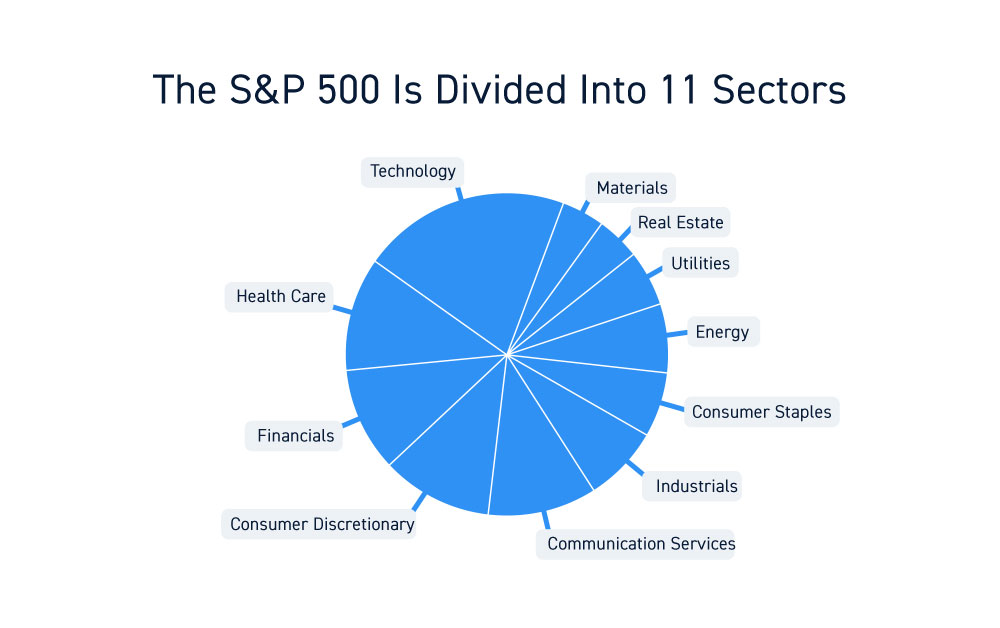
It’s important to clarify that while it’s called the “S&P 500,” the actual number of stocks can fluctuate slightly. This is due to companies sometimes having multiple share classes (e.g., Class A and Class B shares), meaning the index might technically comprise more than 500 distinct securities, though it represents around 500 unique corporate entities. The companies selected for inclusion span a wide array of sectors, from technology and finance to healthcare and industrials, ensuring a broad and representative cross-section of the U.S. economy. This diversity is key to its reliability as an economic indicator.
The Criteria for Inclusion: How Companies Get Selected
Becoming an S&P 500 company is not merely a matter of size; it involves meeting a rigorous set of criteria established by the S&P Dow Jones Indices committee. This committee periodically reviews and rebalances the index, adding companies that meet the criteria and removing those that no longer qualify or are acquired. The primary criteria include:
- U.S. Company: The company must be based in the United States.
- Market Capitalization Threshold: While this figure changes over time, companies must exceed a certain market capitalization. As of late 2023, this was well over $15 billion. This ensures that only large-cap companies are considered.
- Liquidity and Public Float: The company’s stock must be highly liquid, meaning it can be easily bought and sold without significantly impacting its price. A substantial portion of its shares must be available to the public (its “public float”).
- Profitability: The company must have positive reported earnings over the most recent quarter, and the sum of its earnings over the previous four consecutive quarters must also be positive. This demonstrates a track record of financial health.
- Sector Representation and Committee Discretion: While the above are quantitative rules, the committee also considers qualitative factors such as sector balance, ensuring the index broadly represents the sector distribution of the U.S. economy. They have the ultimate discretion in the final selection process.
These stringent requirements ensure that the S&P 500 truly represents the crème de la crème of American publicly traded companies, making it a robust and reliable benchmark.
The Significance and Impact of the S&P 500
The S&P 500’s influence extends far beyond mere enumeration of large companies. It plays a pivotal role in financial markets, economic analysis, and investment strategies, shaping perceptions and guiding decisions.
A Barometer of the U.S. Stock Market and Economy
The S&P 500 is often referred to as the best single gauge of large-cap U.S. equities and a proxy for the health of the American economy. Its broad diversification across various industries means that its movements reflect the collective performance of the most significant sectors. When the S&P 500 rises, it generally indicates investor optimism about the corporate earnings outlook, economic growth, and overall market stability. Conversely, a decline can signal concerns about a recession, corporate profitability, or systemic risks.
Its status as a leading economic indicator means that analysts, policymakers, and the public closely watch its performance. A sustained bull market in the S&P 500 can boost consumer confidence and wealth effect, while a bear market can lead to retrenchment. Its comprehensive nature makes it a more reliable indicator of overall market health compared to, say, the Dow Jones Industrial Average, which tracks only 30 companies and is price-weighted, or the Nasdaq Composite, which has a heavier concentration in technology stocks.
The Role in Investment Strategies
For professional fund managers and individual investors alike, the S&P 500 is indispensable. For active managers, it serves as the primary benchmark against which their performance is measured. If an equity mutual fund manager aims to outperform the market, they are typically trying to beat the S&P 500’s returns over a given period. This competitive aspect drives much of the financial industry’s efforts.
More importantly, the S&P 500 forms the bedrock of passive investing strategies. The rise of index funds and Exchange-Traded Funds (ETFs) that track the S&P 500 has revolutionized how many people invest. These vehicles offer investors a simple, low-cost way to gain diversified exposure to the large-cap U.S. stock market, aligning their portfolios with the performance of the broader economy. This approach, championed by luminaries like John Bogle, founder of Vanguard, has democratized investing and provided a robust path to long-term wealth creation for millions.
Historical Performance and Long-Term Trends
Historically, the S&P 500 has demonstrated remarkable resilience and a powerful upward trend over the long term, despite periodic corrections and bear markets. Since its inception, the average annual return (including dividends) has been in the double digits, though past performance is not indicative of future results. This long-term growth is a testament to the innovation, productivity, and profitability of American corporations.
Periods of significant decline, such as the dot-com bubble burst, the 2008 financial crisis, and the COVID-19 pandemic, have always been followed by recoveries, highlighting the power of compounding and the underlying strength of the U.S. economy. For long-term investors, the S&P 500 has proven to be a reliable engine of wealth accumulation, underscoring the benefits of patience and a diversified approach.
How Investors Engage with the S&P 500
While one cannot directly “invest in the S&P 500” as a single tradable asset, there are several highly effective and popular methods to gain exposure to its performance. Understanding these avenues is crucial for anyone looking to incorporate this powerful index into their financial strategy.
Direct Investment vs. Indirect Exposure
Investing in the S&P 500 means gaining indirect exposure to the collective performance of its constituent companies. You are not buying a single share called “S&P 500.” Instead, investors typically achieve this through:
- Individual Stock Picking (related): While not investing in the index, some investors might choose to buy individual stocks from the S&P 500, hoping to pick winners or replicate the index’s sector allocation. This is a more active and riskier strategy than simply tracking the index.
- Index Funds: These are mutual funds specifically designed to mirror the performance of a particular market index, in this case, the S&P 500. They hold the stocks of the 500 companies in the same proportions as the index, aiming to replicate its returns before fees.
- Exchange-Traded Funds (ETFs): ETFs are similar to index funds but trade like individual stocks on an exchange throughout the day. They offer immense flexibility, often have lower expense ratios than traditional mutual funds, and are incredibly popular for gaining S&P 500 exposure. Well-known S&P 500 ETFs include SPDR S&P 500 ETF Trust (SPY), iShares Core S&P 500 (IVV), and Vanguard S&P 500 ETF (VOO).
Advantages of Investing in S&P 500 Index Funds/ETFs
The popularity of S&P 500 index funds and ETFs stems from several compelling advantages:
- Broad Diversification: By owning a single fund, you gain exposure to 500 of the largest U.S. companies across diverse sectors. This significantly reduces company-specific risk compared to investing in individual stocks. Even if one company performs poorly, its impact on the overall fund is minimal.
- Lower Expense Ratios: Because these funds passively track an index, they require less active management, research, and trading. This translates to significantly lower management fees (expense ratios) compared to actively managed mutual funds, allowing more of your investment returns to compound over time.
- Simplicity and Ease of Investing: For individual investors, S&P 500 index funds or ETFs offer a “set it and forget it” approach. You don’t need to analyze individual companies or time the market. You simply invest regularly and benefit from the long-term growth of the U.S. economy.
- Long-Term Growth Potential: As discussed, the S&P 500 has a robust track record of delivering substantial returns over extended periods, making it an excellent component of a long-term investment strategy for goals like retirement.
Considerations and Risks
While highly advantageous, investing in the S&P 500 is not without its considerations and risks:
- Market Risk (Systematic Risk): While diversified, S&P 500 funds are still subject to overall market downturns. If the entire U.S. stock market experiences a recession or a significant correction, your S&P 500 investment will decline in value. This is inherent to equity investing.
- No Guaranteed Returns: Past performance is not an indicator of future results. There are no guarantees that the S&P 500 will continue its historical growth trajectory.
- Concentration in Large-Cap U.S. Stocks: While diversified within the U.S. large-cap segment, an S&P 500 fund does not provide exposure to small-cap stocks, international markets, or other asset classes like bonds or real estate. A truly diversified portfolio might combine S&P 500 exposure with other investments.
- Currency Risk (for international investors): If you are an investor outside the U.S. and invest in U.S. dollar-denominated S&P 500 funds, fluctuations in exchange rates can impact your returns when converting back to your local currency.
Beyond the Basics: Advanced Insights and Future Outlook
The S&P 500’s apparent simplicity belies a sophisticated underlying mechanism and ongoing evolution that savvy investors and market watchers appreciate.
The S&P Dow Jones Indices Committee’s Role
The S&P Dow Jones Indices committee wields significant power. Their decisions on which companies to include or exclude can have a tangible impact on a company’s stock price, often leading to a temporary bump for newly added companies due to increased demand from index funds that must buy its shares. The committee also oversees the index’s rebalancing – the periodic adjustment of constituent weightings to reflect market capitalization changes and ensure sector representation remains appropriate. Their methodology is transparent but their specific choices remain influential.
Criticisms and Alternatives
While widely respected, the S&P 500, particularly its market-cap weighting, isn’t without critics. Some argue that market-cap weighting naturally gives more influence to overvalued companies in speculative bubbles, potentially amplifying risk during downturns. As an alternative, equal-weighted S&P 500 indices (and corresponding funds) give the same weight to each of the 500 companies, regardless of size. This often results in a portfolio with a slightly smaller-cap tilt and potentially different performance characteristics.
Beyond S&P 500, other indices provide different perspectives: the Dow Jones Industrial Average (DJIA) tracks 30 prominent stocks, often seen as “blue chips”; the Nasdaq Composite is heavily weighted towards technology and growth stocks; and the Russell 2000 focuses on small-cap companies, offering a view of a different segment of the U.S. economy. Diversifying across these, or selecting the one that best suits an investor’s goals, is part of a nuanced strategy.

The S&P 500 in a Dynamic Global Economy
The relevance of the S&P 500 remains undeniable in a rapidly changing global landscape. While it represents U.S. companies, many of its constituents are multinational corporations with significant international revenues, making the index subtly influenced by global economic conditions. Innovation, particularly in technology and healthcare, continuously reshapes the composition and performance of the index. Companies that were once dominant can fade, while new disruptors rise to prominence, reflecting the dynamism of free markets.
As global economies become more interconnected and technology continues to accelerate change, the S&P 500 will continue to evolve, reflecting the leading edge of American enterprise. For investors, understanding this powerful index is not just about comprehending financial jargon; it’s about grasping a fundamental force in wealth creation and economic measurement. By leveraging S&P 500-tracking vehicles, individuals can confidently participate in the long-term growth trajectory of the world’s largest economy, making it a cornerstone of sound financial planning.
aViewFromTheCave is a participant in the Amazon Services LLC Associates Program, an affiliate advertising program designed to provide a means for sites to earn advertising fees by advertising and linking to Amazon.com. Amazon, the Amazon logo, AmazonSupply, and the AmazonSupply logo are trademarks of Amazon.com, Inc. or its affiliates. As an Amazon Associate we earn affiliate commissions from qualifying purchases.