
The S&P 500 Index is far more than just a list of 500 companies; it is arguably the most widely recognized and respected barometer of large-cap U.S. equity performance, and by extension, a proxy for the overall health of the American economy. For investors, economists, and financial professionals worldwide, the S&P 500 serves as a crucial benchmark, a diversified investment vehicle, and a constant point of reference in discussions about market trends and economic prospects. Understanding the S&P 500 is fundamental for anyone looking to navigate the complexities of the financial markets, make informed investment decisions, or simply grasp the daily financial news. It represents a carefully curated cross-section of leading U.S. industries, reflecting the innovations, stability, and growth potential that define the American corporate landscape.

Understanding the S&P 500: A Benchmark of U.S. Economic Health
At its core, the S&P 500 is a stock market index that represents 500 of the largest publicly traded companies in the United States. Compiled and maintained by S&P Dow Jones Indices, it is a market-capitalization-weighted index, meaning companies with larger market values have a greater impact on the index’s performance. This design ensures that the index accurately reflects the aggregate value and movements of the most influential entities within the U.S. stock market. Its broad coverage and rigorous selection criteria make it an invaluable tool for gauging the performance of large-cap U.S. stocks and the broader economy they represent.
A Brief History and Purpose
The S&P 500’s origins can be traced back to 1923, when Standard Statistics (one of the predecessors of S&P) introduced a stock index covering 233 companies. By 1957, the index expanded to include 500 companies and adopted its current name, solidifying its role as a premier benchmark. Its primary purpose is to provide a comprehensive measure of the U.S. equity market, offering investors and analysts a clearer picture of how large, established American businesses are performing. Unlike other indices that might focus on specific sectors or a narrower selection of stocks, the S&P 500 aims for broad market representation, making it a reliable indicator of the overall economic pulse. Its longevity and consistent methodology have cemented its status as a cornerstone of financial analysis and investment strategy for decades.
How the Index is Constructed
The selection process for companies included in the S&P 500 is rigorous and multifaceted, moving beyond simple market capitalization. To be considered, a company must meet specific criteria: it must be a U.S. company, have a market capitalization of at least $14.5 billion (subject to change), be highly liquid, and have sufficient public float (shares available for trading). Additionally, a company must have positive reported earnings for the most recent quarter and for the sum of the most recent four quarters. The index committee at S&P Dow Jones Indices regularly reviews and rebalances the index, adding and removing companies to ensure it remains representative of the U.S. large-cap market. The market-capitalization weighting means that a 1% change in a company like Apple or Microsoft, given their enormous market caps, will have a significantly greater impact on the index’s movement than a 1% change in a smaller S&P 500 component. This weighting methodology ensures that the index truly reflects the influence of the largest companies on the broader market.
Why the S&P 500 Matters to Investors
For individual and institutional investors alike, the S&P 500 is more than just a statistical measure; it’s a foundational element of investment strategy and performance evaluation. Its broad reach and historical performance make it an indispensable tool for understanding market dynamics and shaping long-term financial goals. Whether used as a direct investment vehicle or a yardstick for comparison, its influence on investment decisions is profound and far-reaching.
The Proxy for the U.S. Economy
Given its composition of 500 leading companies across every major sector—from technology and healthcare to finance and consumer discretionary—the S&P 500 acts as a highly effective proxy for the overall U.S. economy. These companies collectively represent a significant portion of the total market value of all publicly traded U.S. equities and are often global leaders in their respective industries. Their collective performance provides insights into corporate profitability, consumer spending, technological innovation, and even international trade dynamics. When the S&P 500 is rising, it often signals investor confidence in the future earnings and growth prospects of American businesses, typically coinciding with periods of economic expansion. Conversely, a declining S&P 500 can indicate economic headwinds or investor pessimism, reflecting concerns about corporate earnings, interest rates, or broader geopolitical stability.
Performance Tracking and Benchmarking
One of the S&P 500’s most critical roles is serving as a benchmark for investment performance. Portfolio managers, mutual fund companies, and individual investors frequently measure their returns against the S&P 500. If a fund manager claims to “beat the market,” they are almost always referring to outperforming the S&P 500. This benchmark allows investors to assess whether their chosen investments or strategies are generating competitive returns relative to a widely accepted standard of large-cap U.S. equity performance. Comparing a portfolio’s returns to the S&P 500 helps distinguish between general market movements and the specific skill (or lack thereof) of an investment manager. While other indices like the Dow Jones Industrial Average (DJIA) and the Nasdaq Composite exist, the S&P 500 is generally considered a more comprehensive and accurate representation of the broader U.S. stock market due to its larger number of constituents and market-capitalization weighting.
Diversification Benefits
Investing in the S&P 500, typically through an index fund or Exchange Traded Fund (ETF), offers instant diversification. Instead of trying to pick individual winning stocks, an investor effectively gains exposure to 500 different companies across numerous sectors with a single investment. This inherent diversification helps to mitigate specific company risk, as the poor performance of one or a few companies will have a limited impact on the overall portfolio’s performance. For example, if a specific tech company faces a downturn, its impact on an S&P 500 fund is cushioned by the performance of the other 499 companies spanning various industries. This broad exposure helps smooth out volatility and provides a more stable long-term growth trajectory compared to holding a concentrated portfolio of individual stocks. It’s a cornerstone strategy for many long-term investors aiming for market-like returns with reduced idiosyncratic risk.
Investing in the S&P 500: Accessibility and Strategies
Directly purchasing shares of all 500 companies in the S&P 500 would be an incredibly complex and expensive undertaking for most investors. Fortunately, the financial industry has developed highly efficient and accessible vehicles that allow investors to gain exposure to the index with ease and at a low cost. These instruments have democratized access to broad market investing, making the S&P 500 a staple in many investment portfolios.
Direct Stock Ownership vs. Index Funds
While theoretically possible to buy shares in all 500 S&P companies, the transaction costs, rebalancing efforts, and capital requirements would be prohibitive for most. The practical and preferred method for investing in the S&P 500 is through index funds or Exchange Traded Funds (ETFs). These professionally managed funds are designed to mirror the performance of the S&P 500 by holding either all 500 stocks in the exact proportions of the index or a representative sample that closely tracks its movements. This “passive” investment approach removes the need for individual stock picking, offering broad market exposure with minimal effort and typically very low management fees. For long-term investors, this strategy often outperforms actively managed funds after fees, as consistently beating a diversified market index proves to be a significant challenge for most professional managers.
Popular Investment Vehicles
Several highly popular and liquid ETFs and mutual funds track the S&P 500, making it incredibly simple for investors to gain exposure. Some of the most well-known S&P 500 ETFs include the SPDR S&P 500 ETF (SPY), the Vanguard S&P 500 ETF (VOO), and the iShares Core S&P 500 ETF (IVV). These ETFs trade like regular stocks on exchanges, offering high liquidity and often very low expense ratios, sometimes as low as 0.03% annually. Similarly, many mutual funds, such as the Vanguard 500 Index Fund Admiral Shares (VFIAX), also track the S&P 500, suitable for those who prefer mutual fund structures or automated investing plans. The primary advantages of these vehicles are their low cost, instant diversification, and ease of management, making them attractive options for both novice and experienced investors looking for broad market exposure.
Long-Term Growth Potential and Historical Returns
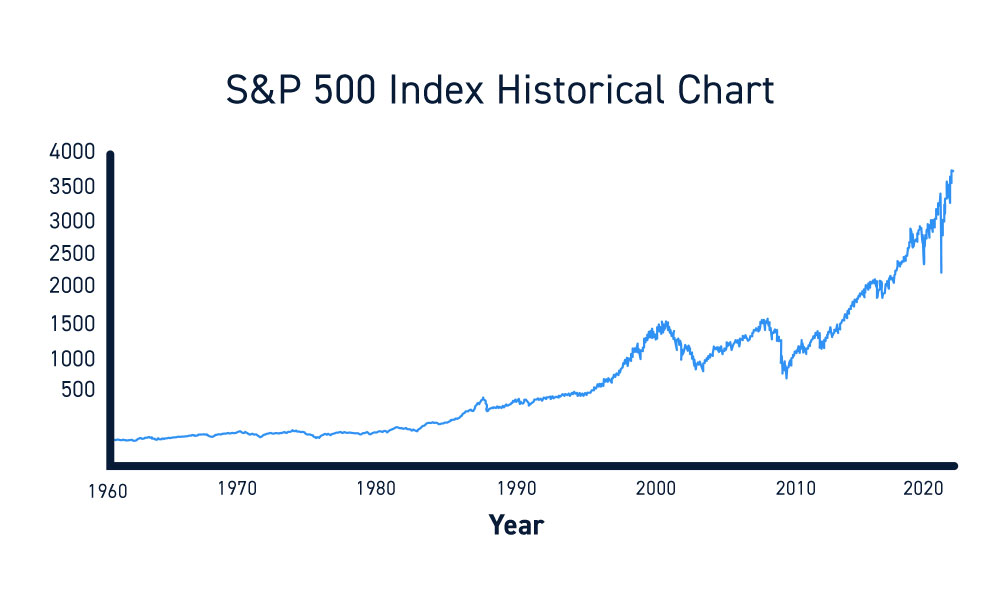
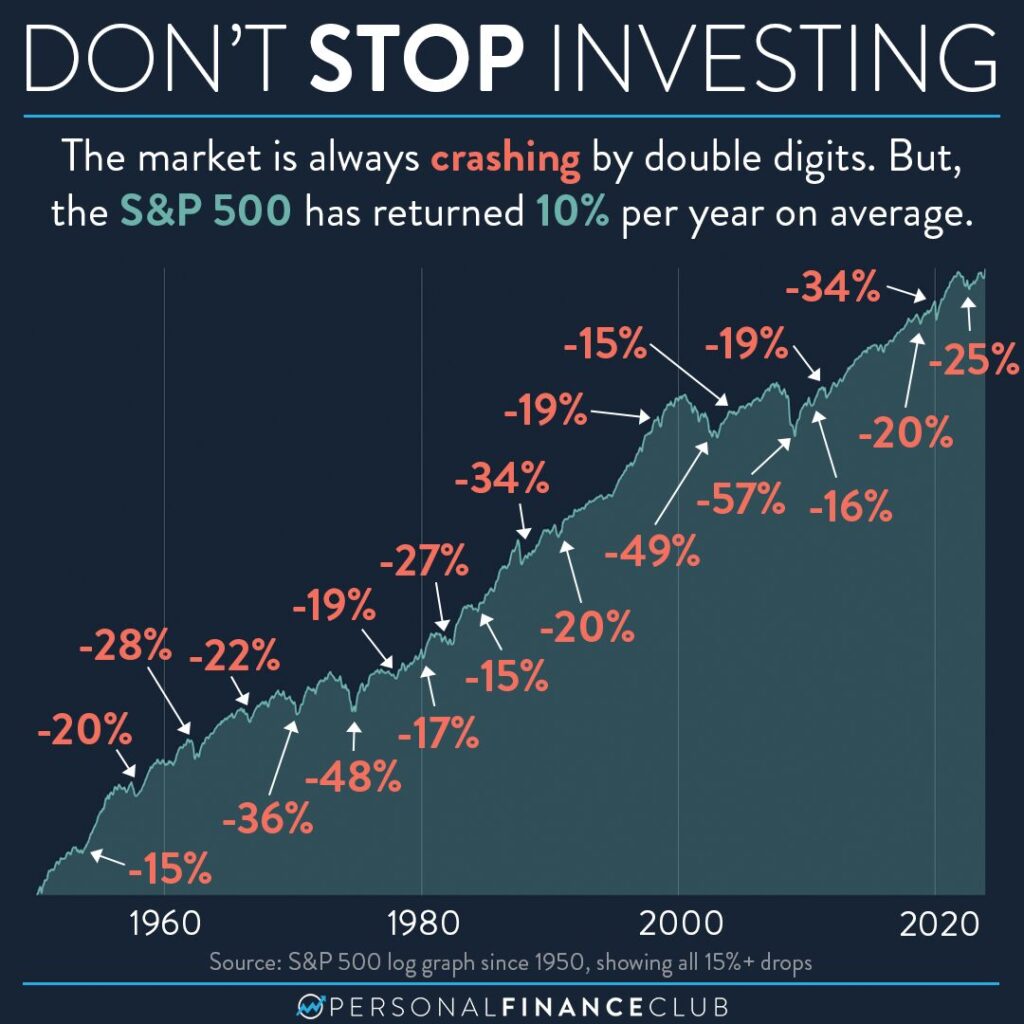
The S&P 500 has demonstrated remarkable resilience and growth potential over the long term, making it a cornerstone of wealth creation for many. Historically, the average annual return of the S&P 500, including reinvested dividends, has been approximately 10-12% since its inception. While past performance is not indicative of future results and markets can experience significant volatility in the short term, this long-term average highlights the power of compounding and the underlying growth of the U.S. economy. Investors who commit to a long-term investment horizon (typically 10 years or more) often benefit from riding out market fluctuations and capturing the upward trend driven by corporate innovation, productivity gains, and economic expansion. This historical track record underpins the common advice for long-term investors to “buy the market,” which often means investing in an S&P 500 index fund.
The Components and Their Influence
Understanding the S&P 500 also requires an appreciation of its underlying composition and how various sectors and individual companies contribute to its overall performance. The index is a dynamic reflection of the U.S. economy, with its weighting constantly shifting to mirror changes in market capitalization and industrial dominance.
Sectoral Representation
The S&P 500 is intentionally designed to represent a broad cross-section of the U.S. economy, categorizing its 500 companies into 11 major Global Industry Classification Standard (GICS) sectors. These include Information Technology, Healthcare, Financials, Consumer Discretionary, Communication Services, Industrials, Consumer Staples, Energy, Utilities, Real Estate, and Materials. The weighting of these sectors within the index is not fixed but changes based on the aggregate market capitalization of the companies within each sector. For instance, in recent years, the Information Technology sector has held the largest weighting, reflecting the dominant role of tech giants in the modern economy. This diverse sectoral representation helps provide a holistic view of the U.S. economic landscape and ensures that the index is not overly reliant on the performance of a single industry.
The Impact of Large-Cap Companies
Due to its market-capitalization weighting, a relatively small number of mega-cap companies can exert a disproportionately large influence on the S&P 500’s movements. Companies like Apple, Microsoft, Amazon, Google (Alphabet), and Nvidia, which boast market capitalizations in the trillions of dollars, collectively account for a significant percentage of the index’s total value. This means that a strong performance from these few giants can drive the entire index upward, even if a substantial number of smaller S&P 500 components are underperforming. Conversely, a significant downturn in one of these heavily weighted companies can exert downward pressure on the entire index. While this weighting methodology accurately reflects the market’s collective valuation, it also means that the “top 10” or “top 20” companies often dictate the overall direction and volatility of the S&P 500. Investors should be aware of this concentration, even within a seemingly diversified index.
Criticisms and Considerations for Investors
While the S&P 500 is an invaluable tool, it’s not without its critics or limitations. A comprehensive understanding requires acknowledging these aspects to make truly informed investment decisions and to ensure a well-rounded portfolio strategy.
Not a True “500 Companies” Average
A common misconception is that the S&P 500 equally represents all 500 companies. As discussed, its market-capitalization weighting means that the index is heavily influenced by its largest components. This implies that the performance of the “average” S&P 500 company might not be accurately reflected by the index’s overall movement. For example, if the top 10 companies surge while the other 490 remain flat or decline slightly, the S&P 500 index could still show a significant positive return. This “concentration risk” means that investors in S&P 500 index funds are, to some extent, making a concentrated bet on the continued success of a handful of mega-cap companies, particularly in the technology sector, which can dominate the index’s performance.
Beyond the S&P 500: Other Investment Avenues
While an S&P 500 index fund provides excellent exposure to large-cap U.S. equities, it does not constitute a fully diversified investment portfolio. A truly diversified strategy often includes exposure to other asset classes and market segments to further reduce risk and capture different growth drivers. This could include:
- Small-cap and Mid-cap stocks: Companies outside the S&P 500 that can offer higher growth potential (though also higher risk).
- International equities: Stocks from developed and emerging markets outside the U.S. to tap into global growth and provide geographical diversification.
- Fixed income: Bonds and other debt instruments for stability, income, and capital preservation, especially during equity market downturns.
- Alternative investments: Such as real estate, commodities, or private equity, which can offer diversification benefits and different risk-return profiles.
A well-constructed portfolio often incorporates several of these elements to create a robust and resilient investment strategy tailored to an individual’s financial goals and risk tolerance, moving beyond sole reliance on the S&P 500.
Active vs. Passive Investing Debate
The remarkable long-term performance and low cost of S&P 500 index funds have fueled the active vs. passive investing debate. Passive investing, which involves simply tracking an index like the S&P 500, posits that it is exceedingly difficult and expensive for active fund managers to consistently beat the market after fees. Numerous studies have shown that the vast majority of actively managed funds fail to outperform their S&P 500 benchmark over extended periods. This makes a compelling case for simply “buying the market” through a low-cost S&P 500 ETF or mutual fund. While active management may appeal to those seeking to capitalize on perceived market inefficiencies or specific investment themes, the S&P 500 has become the poster child for the efficacy of a disciplined, low-cost, passive investment approach for the vast majority of long-term investors.
In conclusion, the S&P 500 Index is an indispensable tool in the financial world, serving as a vital benchmark for the U.S. stock market and economy. Its comprehensive nature, robust methodology, and accessibility through various investment vehicles make it a cornerstone of modern investment strategy. While offering significant diversification and long-term growth potential, understanding its market-cap weighting and considering broader portfolio diversification are crucial for investors seeking to build truly resilient financial futures.
aViewFromTheCave is a participant in the Amazon Services LLC Associates Program, an affiliate advertising program designed to provide a means for sites to earn advertising fees by advertising and linking to Amazon.com. Amazon, the Amazon logo, AmazonSupply, and the AmazonSupply logo are trademarks of Amazon.com, Inc. or its affiliates. As an Amazon Associate we earn affiliate commissions from qualifying purchases.