
For over a century, the question “How’s the Dow doing today?” has served as the shorthand for the health of the American economy. Whether you are a seasoned institutional trader or a retail investor checking a smartphone app during a lunch break, the Dow Jones Industrial Average (DJIA) remains the most iconic barometer of financial sentiment. However, understanding how the Dow is doing involves much more than simply looking at a green or red number on a screen. It requires an analysis of macroeconomic indicators, corporate earnings, and the psychological state of the global marketplace.
In today’s fast-paced financial environment, the Dow’s performance is a snapshot of how the world’s largest companies are navigating inflation, interest rate shifts, and geopolitical tensions. To truly answer how the Dow is doing, one must look beneath the surface of the price movements to understand the mechanics and the “why” behind the numbers.
Understanding the Dow Jones Industrial Average (DJIA)
Before diving into daily fluctuations, it is essential to understand what the Dow Jones Industrial Average actually is. Established in 1896 by Charles Dow and Edward Jones, the index originally consisted of just 12 industrial companies. Today, it comprises 30 prominent “blue-chip” companies listed on stock exchanges in the United States. While the term “Industrial” remains in the name, the index now includes leaders in technology, healthcare, financial services, and consumer goods.
What the Dow Represents in Today’s Economy
The Dow is often criticized for being too narrow—representing only 30 companies in a sea of thousands. However, its value lies in its selectivity. The companies included in the DJIA are industry leaders with massive market capitalizations and global footprints. When the Dow moves significantly, it indicates how the “titans of industry” are faring. Because these companies—such as Apple, Microsoft, UnitedHealth, and Goldman Sachs—are so deeply integrated into the global economy, their performance serves as a proxy for broader economic health. If the Dow is “doing well,” it generally suggests that consumer spending is resilient, corporate profits are stable, and investor confidence is high.
How the Index is Calculated
Unlike the S&P 500 or the Nasdaq Composite, which are market-capitalization-weighted, the Dow is a price-weighted index. This means that companies with higher stock prices have a greater influence on the index’s movements than those with lower stock prices, regardless of the company’s actual size. To account for stock splits and changes in the list of companies, the index uses the “Dow Divisor.” This mathematical constant ensures that a 10-point move in a component stock results in a consistent move in the index level, maintaining historical continuity. Understanding this weighting is crucial for investors; it explains why a major move in a high-priced stock like UnitedHealth Group can sometimes swing the entire index more than a move in a lower-priced stock like Coca-Cola.
Analyzing Current Market Performance Factors
When an investor asks how the Dow is doing today, they are usually reacting to immediate catalysts. The stock market does not move in a vacuum; it responds to a complex web of data points that shift by the minute. Currently, three primary factors dictate whether the Dow is climbing toward new highs or retreating into correction territory.
Key Drivers of Today’s Market Movements
The primary driver of the Dow’s daily performance is corporate earnings. Since the DJIA consists of only 30 companies, each quarterly report carries significant weight. If a heavyweight like Boeing reports manufacturing delays or JPMorgan Chase warns of slowing loan growth, the Dow can feel the impact immediately. Beyond earnings, geopolitical stability plays a massive role. In an interconnected global economy, conflicts in energy-producing regions or trade disputes between major powers create uncertainty. Markets hate uncertainty, and the Dow often reacts to these external shocks with increased volatility as investors move toward “safe-haven” assets like gold or treasury bonds.
The Role of Interest Rates and Inflation
In the current economic cycle, nothing influences the Dow more than the Federal Reserve’s monetary policy. Inflation has been the “specter” haunting the markets for the past several years. When inflation is high, the Federal Reserve raises interest rates to cool the economy. For the companies in the Dow, higher rates mean higher borrowing costs and potentially lower consumer demand. Consequently, every time the Fed chairman speaks or a Consumer Price Index (CPI) report is released, the Dow reacts violently. Investors are constantly trying to “price in” whether the Fed will pivot to lower rates or keep them “higher for longer.” A Dow that is doing well in a high-interest-rate environment is a sign of immense corporate resilience.
The Psychology of “Checking the Dow” Every Day

For many, checking the Dow is a daily ritual, similar to checking the weather. However, there is a psychological trap in focusing too heavily on daily fluctuations. The “noise” of the daily market can often lead to poor financial decision-making, driven by fear or greed rather than logic.
Short-Term Noise vs. Long-Term Growth
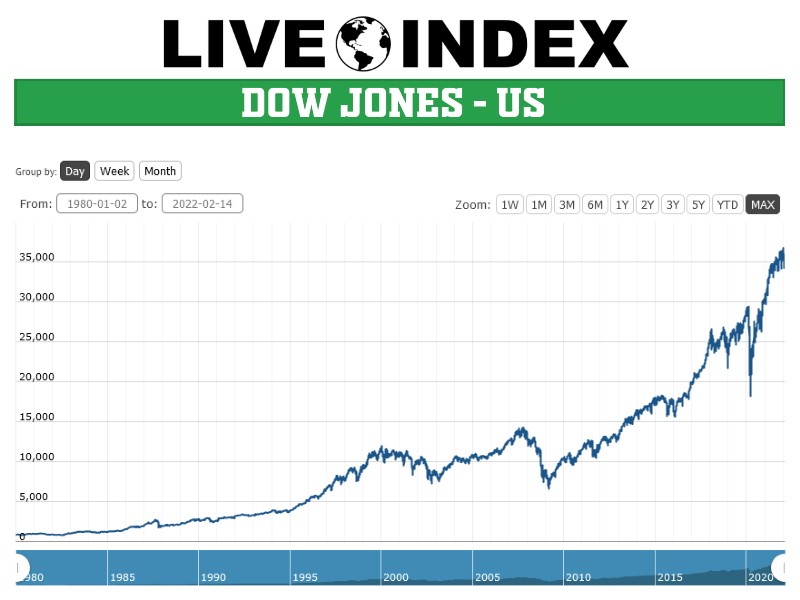
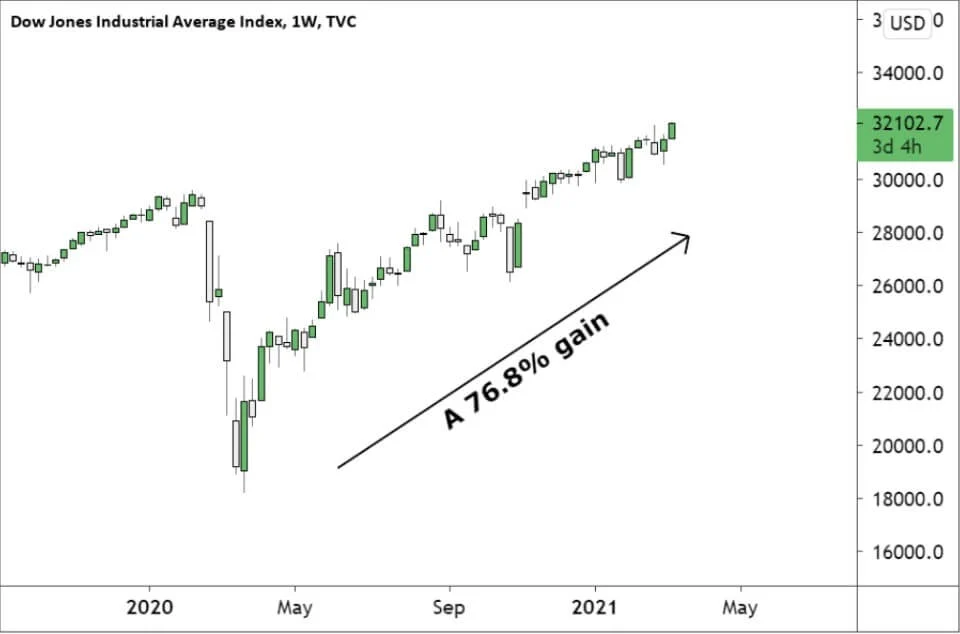
The most important thing to remember when looking at the Dow’s daily performance is that the stock market is a “voting machine” in the short term but a “weighing machine” in the long term. Daily price movements are often driven by sentiment, rumors, or algorithmic trading. A 400-point drop in a single day might feel catastrophic, but in the context of a five-year or ten-year chart, it is often a mere blip. Historical data shows that despite wars, recessions, and pandemics, the Dow has a long-term upward trajectory. For the personal investor, the key is to distinguish between a “bad day for the Dow” and a “bad environment for your portfolio.”
Avoiding Emotional Investing Decisions
Financial media often thrives on sensationalism. Headlines like “Dow Plunges” or “Markets in Turmoil” are designed to trigger an emotional response. When the Dow is “doing poorly” today, the instinct for many is to sell to “prevent further losses.” Conversely, when the Dow is “hitting record highs,” FOMO (Fear Of Missing Out) drives people to buy at the peak. Successful investing requires a “stomach for volatility.” Instead of reacting to the daily ticker, investors should focus on their specific financial goals and risk tolerance. The Dow is a tool for measurement, not a command to act.
Sector Performance Within the DJIA
To get a granular answer to how the Dow is doing, one must look at which sectors are leading and which are lagging. The 30 stocks in the Dow represent various “buckets” of the economy, and they rarely move in perfect unison.
Blue-Chip Stability in Volatile Times
The Dow is famous for its “Value” and “Income” components. During times of economic contraction, investors often flock to the defensive sectors within the Dow. This includes healthcare (Amgen, Johnson & Johnson) and consumer staples (Walmart, Procter & Gamble). These companies provide goods and services that people need regardless of the economy’s health. If the Dow is holding steady while the tech-heavy Nasdaq is crashing, it usually indicates a “flight to quality” where investors are seeking the safety of established dividends and proven business models.
Tech vs. Industrial Weights
In recent years, the Dow has evolved to include more growth-oriented technology firms. The inclusion of Salesforce, Apple, and Microsoft has changed the index’s DNA. This creates an interesting dynamic: the Dow can now be pulled in two directions. On a day when tech is rallying due to AI breakthroughs, the Dow might rise even if traditional industrials like Caterpillar or 3M are struggling. To understand how the Dow is doing, one must look at the “internal breadth” of the market—asking if the gains are widespread across all 30 stocks or if a few tech giants are carrying the entire weight of the index.
Strategies for the Modern Investor
Knowing how the Dow is doing today is only useful if you know what to do with that information. For the individual looking to build wealth, the Dow provides several strategic avenues.
Diversification Beyond the Dow
While the Dow is a great indicator, it should not be the entirety of an investment strategy. Because it only contains 30 large-cap US companies, it misses out on the growth potential of small-cap stocks, international markets, and emerging technologies that have not yet reached “blue-chip” status. A balanced portfolio uses the Dow as a foundation of stability but complements it with broader indices like the S&P 500 or total market funds. Diversification ensures that your financial future isn’t tied solely to the performance of 30 specific boardrooms.
The Importance of a Disciplined Investment Thesis
Ultimately, how the Dow is doing today matters less than your personal investment thesis. Are you investing for retirement twenty years away, or are you looking for short-term gains? If you are a long-term investor, a “down day” for the Dow is actually an opportunity to “buy the dip” through dollar-cost averaging. By investing a fixed amount regularly, you buy more shares when prices are low and fewer when prices are high.
In conclusion, when you ask “How’s the Dow Jones doing today?”, look beyond the numerical change. Look at the economic data, the sector performance, and the Federal Reserve’s stance. But most importantly, look at the Dow through the lens of your own financial journey. The index will always have its ups and downs, but for the disciplined investor, the Dow is simply a heartbeat—a constant, rhythmic reminder of the enduring power of the global markets.
aViewFromTheCave is a participant in the Amazon Services LLC Associates Program, an affiliate advertising program designed to provide a means for sites to earn advertising fees by advertising and linking to Amazon.com. Amazon, the Amazon logo, AmazonSupply, and the AmazonSupply logo are trademarks of Amazon.com, Inc. or its affiliates. As an Amazon Associate we earn affiliate commissions from qualifying purchases.