
In the intricate world of personal and business finance, a few seemingly small pieces of information hold immense power. Among these, your bank’s routing number stands out as a critical identifier, enabling a vast array of financial transactions that form the backbone of modern money management. For PNC customers, understanding how and where to locate this crucial nine-digit code is not merely a matter of convenience, but a fundamental skill for seamless financial operations. Whether you’re setting up direct deposit, paying bills online, initiating a wire transfer, or linking external accounts, the correct PNC routing number is your gateway to executing these tasks accurately and securely.

This comprehensive guide delves deep into the significance of your PNC routing number, demystifying its purpose and outlining every reliable method to find it. We’ll explore traditional avenues like your checkbook, navigate the intuitive interfaces of PNC’s online banking and mobile app, and even discuss the nuances of state-specific routing numbers and their implications for different types of transfers. By the end of this article, you’ll be equipped with the knowledge and confidence to always locate your PNC routing number with ease, ensuring your financial transactions are smooth, secure, and error-free.
Understanding the Importance of Your PNC Routing Number
Before we dive into the “how-to,” it’s essential to grasp the “why.” The routing number, often an overlooked detail, is a linchpin in the digital financial ecosystem, ensuring that your money reaches its intended destination without a hitch.
What Exactly is a Routing Number?
A routing transit number (RTN), commonly known as a routing number, is a nine-digit code used by financial institutions in the United States to identify themselves in financial transactions. Established by the American Bankers Association (ABA) in 1910, its primary purpose is to identify the specific financial institution on which a payment is drawn. Think of it as the bank’s unique address in the vast postal system of money transfers. When funds are sent or received, this number directs the transaction to the correct bank, much like a zip code directs mail to the right city.
Each digit in the routing number has a specific meaning, though customers typically don’t need to know the breakdown. The first four digits identify the Federal Reserve Bank district where the financial institution is located. The next four digits identify the individual bank. The ninth digit is a checksum digit used to validate the entire number, ensuring its accuracy. This system minimizes errors in the automated clearing house (ACH) network and wire transfer processes.
Why Do You Need It? Common Scenarios
Your PNC routing number is indispensable for a wide range of everyday financial activities. Without it, many common transactions simply wouldn’t be possible. Here are some of the most frequent scenarios where you’ll need this number:
- Direct Deposit: To receive your paycheck, government benefits, or tax refunds directly into your PNC account, your employer or the paying agency will require your routing number along with your account number.
- Automatic Bill Payments (ACH Debits): Setting up recurring payments for utilities, loans, rent, or subscriptions often involves providing your routing number to the payee so they can pull funds directly from your account.
- Sending ACH Transfers (Bill Pay): When you use your bank’s bill pay service to send money to individuals or businesses, the system uses the routing number to ensure the funds are routed correctly.
- Receiving ACH Transfers (External Transfers): If someone is sending you money from another bank account, they’ll need your routing number.
- Wire Transfers: Both sending and receiving domestic and international wire transfers necessitate a routing number. For international wires, a SWIFT/BIC code is also often required, but the domestic routing number is still fundamental.
- Linking External Accounts: When you link your PNC account to an external bank or financial app (like Venmo, PayPal, or investment platforms), you’ll typically be asked for your routing and account numbers for verification purposes.
- Tax Payments/Refunds: If you pay your federal or state taxes directly from your bank account or wish to receive your tax refund via direct deposit, your routing number will be required.
The Difference Between Routing and Account Numbers
It’s crucial not to confuse your routing number with your account number, as they serve distinct but complementary roles.
- Routing Number: Identifies your specific bank or financial institution. It tells the system which bank to send the money to. A bank may have one or several routing numbers, depending on its size and geographic footprint.
- Account Number: Identifies your specific account within that bank. It tells the system which account at that bank should receive or send the money. This number is unique to your individual checking, savings, or money market account.
Together, the routing number and account number form the complete address for your funds, ensuring that transactions are both institution-specific and account-specific. Providing one without the other, or mixing them up, will inevitably lead to transaction delays or failures.
Official and Direct Methods to Locate Your PNC Routing Number
PNC Bank provides multiple reliable avenues for customers to find their routing number, catering to various preferences and situations. Whether you prefer traditional paper records, digital convenience, or direct personal assistance, PNC has ensured access to this vital information is straightforward.
On Your PNC Checks (The Traditional Way)
For many, the physical checkbook remains the most familiar and accessible source for a routing number. If you have a PNC checking account and a supply of personalized checks, your routing number is prominently displayed.
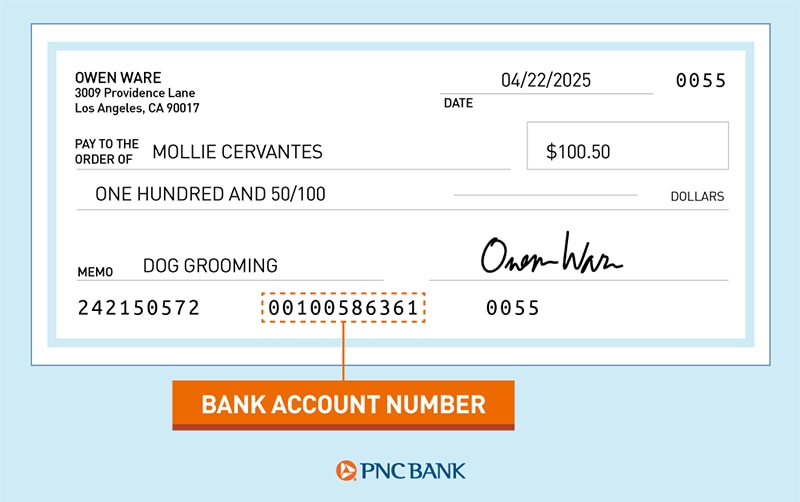
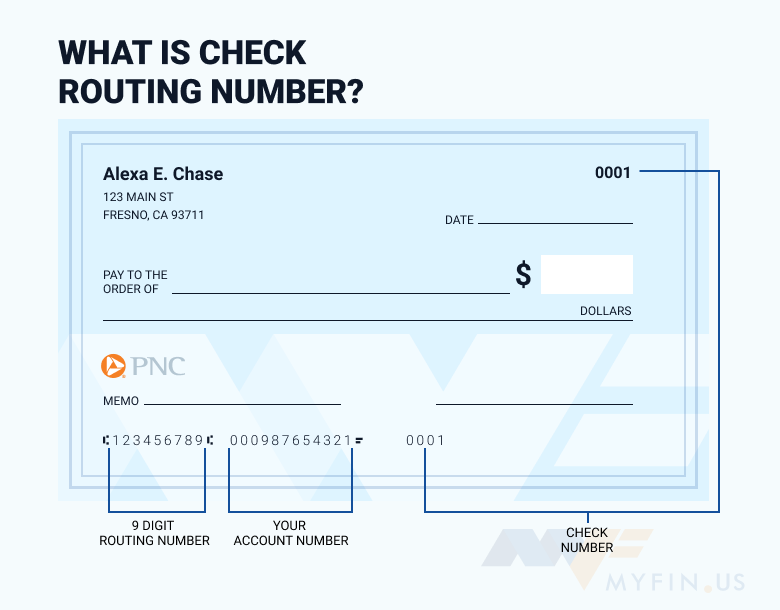
- Location: Look at the bottom left-hand corner of any check. You’ll typically see three sets of numbers separated by special symbols.
- Order: The first set of numbers (nine digits) is your routing number. The second set (usually 10-12 digits) is your specific account number. The third set (often 4 digits) is your check number, matching the number printed in the top right corner.
- Verification: Ensure you’re identifying the correct sequence. The routing number will always be the nine-digit number on the far left.
It’s important to note that while this method is reliable for checking accounts, savings accounts do not come with checks, and therefore this method won’t apply. Also, if you have multiple PNC accounts (e.g., business and personal), always confirm you are looking at a check linked to the correct account for your transaction.
Through PNC Online Banking (Your Digital Hub)
PNC’s robust online banking platform is an excellent digital resource for managing your accounts and finding key information, including your routing number.
- Login: Navigate to the PNC Bank website and log in to your online banking account using your user ID and password.
- Account Summary: Once logged in, you’ll typically see a summary of all your accounts.
- Access Account Details: Click on the specific account (e.g., “Checking” or “Savings”) for which you need the routing number.
- Find Routing Number: Look for a section titled “Account Details,” “Account Information,” or similar. Your routing number will usually be listed alongside your account number and other pertinent information. It might be explicitly labeled as “Routing Number” or “ABA Routing Number.”
- Print/Save: You can easily copy and paste this number or print the page for your records.
This method is highly convenient as it allows you to access your information from anywhere with internet access, and it’s particularly useful for savings accounts that don’t have checks.
Via the PNC Mobile App (Banking on the Go)
For those who prefer banking on their smartphone, the PNC Mobile App offers a quick and secure way to retrieve your routing number.
- Download & Login: If you haven’t already, download the PNC Mobile App from your device’s app store (iOS or Android) and log in with your credentials.
- Select Account: After logging in, tap on the specific account (e.g., “Checking” or “Savings”) for which you need the routing number.
- View Details: Look for an option like “Account Info,” “Account Details,” or a similar icon (sometimes a gear or three dots) that leads to more information about the account.
- Routing Number Display: The routing number, often labeled “ABA Routing Number,” will be displayed along with your account number.
- Security Feature: The app may require you to enter your password or use biometric authentication (fingerprint/Face ID) to view sensitive information like full account or routing numbers, enhancing security.
The mobile app is perfect for quick lookups when you’re on the go and need to provide your routing number instantly for a payment or setup.
Contacting PNC Customer Service (When All Else Fails)
If you’re unable to find your routing number using the digital or physical methods, or if you simply prefer direct assistance, PNC’s customer service team is readily available.
- Phone: Call PNC’s customer service line. The number is typically found on the back of your debit card, on the PNC website, or on your bank statements. Be prepared to verify your identity with personal information (e.g., account number, social security number, date of birth) for security reasons.
- Online Chat: Some banks offer an online chat feature within their website or app, allowing you to ask a representative directly.
- Secure Message: You might also be able to send a secure message through your online banking portal to request the information.
While slightly less immediate, customer service ensures accuracy and can address any specific queries you might have regarding different types of transfers.
Visiting a PNC Branch (In-Person Assistance)
For those who prefer face-to-face interaction or require additional assistance with their banking needs, a visit to a local PNC branch is always an option.
- Locate a Branch: Use the PNC website or mobile app to find the nearest branch location.
- Speak with a Teller/Representative: A PNC bank teller or customer service representative can quickly provide you with your routing number.
- Identification: Remember to bring a valid form of identification (e.g., driver’s license, passport) and your PNC debit card or account details to verify your identity.
This method is ideal if you have other banking errands to run or if you appreciate the assurance of direct, in-person verification.
Nuances and Specifics: State-Specific Routing Numbers and Transfers
While the core concept of a routing number is universal, certain specific scenarios, particularly involving geographic location or the type of transaction, can introduce nuances that are important to understand.
Does PNC Have Multiple Routing Numbers? (The State-Specific Factor)
Yes, like many large national banks, PNC Bank utilizes multiple routing numbers. The specific routing number assigned to your account often depends on the state where you opened your account or the primary geographic region served by the branch that established your account. This is a common practice for banks with a significant national footprint, allowing them to route transactions more efficiently through different Federal Reserve Bank districts.
- Impact: This means that a PNC customer in Ohio might have a different routing number than a PNC customer in Florida, even though both bank with PNC.
- Importance of Verification: It is absolutely critical to use the routing number associated with your specific account, as found on your checks, online banking, or mobile app. Do not rely on a routing number found online via a generic search for “PNC routing number,” as it might not be the correct one for your region and could lead to transaction delays or rejections. Always use the methods described in the previous section to find your unique routing number.
Routing Numbers for Wire Transfers vs. ACH Transfers
While the routing number is central to both ACH (Automated Clearing House) and wire transfers, there can sometimes be subtle differences, or additional information required, especially for wire transfers.
- ACH Transfers: These are typically for everyday transactions like direct deposits, bill payments, and interbank transfers. For these, your standard nine-digit routing number (the one on your check or in online banking) is usually sufficient.
- Wire Transfers: Wire transfers are generally faster and more expensive, often used for large sums or urgent payments.
- Domestic Wires: For most domestic wire transfers, the same standard routing number you use for ACH might be applicable. However, some banks have a specific routing number solely for wire transfers, which might be different from their ACH routing number. It is crucial to confirm with PNC directly (via online banking, customer service, or the dedicated wire transfer section of their website) to ensure you have the correct routing number for an incoming or outgoing wire.
- International Wires: For international wire transfers, in addition to your domestic routing number, you will almost certainly need a SWIFT/BIC (Society for Worldwide Interbank Financial Telecommunication / Bank Identifier Code) code. The SWIFT code identifies the bank and country for international transfers, acting as an international routing number. PNC’s SWIFT code is usually identifiable on their website or by contacting customer service.
Always clarify the exact routing number needed based on the type of transfer you are initiating or receiving to avoid complications.
Verifying Your Routing Number for International Transactions
For any international transaction, especially receiving money from abroad, double-checking all details is paramount.
- SWIFT/BIC Code: As mentioned, this is often the primary identifier for the international leg of the transfer. Ensure you have the correct SWIFT/BIC code for PNC Bank.
- Correspondent Banks: Sometimes, international wires might route through an intermediary “correspondent bank” before reaching PNC. Your sender might need details for this correspondent bank as well, which PNC’s international wire transfer department can provide.
- Full Bank Address: For international wires, providing the full legal name and physical address of PNC Bank (not just your branch address) can sometimes be required to ensure proper routing.
- Currency and Fees: Be aware of potential currency conversion rates and fees that may apply to international transactions.
When dealing with international funds, it’s always best to consult PNC’s dedicated resources for international transfers or speak directly with a representative to ensure all necessary information is accurately provided to the sender.
Best Practices for Security and Accuracy
Handling financial information, particularly account and routing numbers, demands a high degree of caution and attention to detail. Adhering to best practices ensures your transactions are successful and your financial data remains secure.
Always Double-Check Your Numbers
The most common cause of transaction errors or delays is incorrect information. Before finalizing any transaction that requires your routing and account numbers:
- Visual Confirmation: Carefully compare the numbers you’ve entered with the source (check, online banking, app).
- Read Aloud: Sometimes, reading the numbers aloud can help catch transposition errors.
- Ask for Verification: If someone is sending you money, ask them to read back the numbers they intend to use.
A few extra seconds of verification can save hours or days of resolving a mistaken transfer.
Protecting Your Financial Information
Your routing number, especially when combined with your account number, is sensitive information that should be protected.
- Secure Storage: Avoid writing down your full bank details in easily accessible places. If you must keep a physical record, store it securely.
- Digital Security: Only enter your routing and account numbers on secure, encrypted websites (look for “https://” in the URL and a padlock icon). Be wary of phishing attempts that try to trick you into revealing this information.
- Limit Sharing: Only provide your routing and account numbers to trusted individuals or legitimate businesses for valid financial purposes. Never share them via unsecured email or social media.
- Beware of Scams: Be cautious of unsolicited requests for your bank details, especially if they come with a sense of urgency or unusual circumstances.
What Happens If You Use the Wrong Routing Number?
Mistakes happen, but understanding the potential consequences of using an incorrect routing number can underscore the importance of accuracy:
- Transaction Rejection: In most cases, if the routing number is invalid or doesn’t match the account number provided, the transaction will be rejected and returned to the sender. This typically results in delays and potentially fees.
- Funds Sent to Wrong Bank: If the incorrect routing number corresponds to a valid bank, but one that doesn’t hold your account, the funds might be routed to the wrong institution. While banks have processes to rectify such errors, retrieving funds can be a lengthy and complicated process, involving investigations and possibly legal recourse.
- Fees: Both the sending and receiving banks might charge fees for failed transactions or for researching and correcting misdirected funds.
- Time Delays: Regardless of the outcome, using an incorrect routing number will always lead to significant delays in your transaction, which can have ripple effects for bill payments, payroll, or other time-sensitive financial obligations.
Leveraging PNC’s Financial Tools for Seamless Money Management
Beyond merely finding your routing number, PNC Bank offers a suite of digital tools designed to enhance your overall money management experience, making it easier to track, secure, and grow your finances.
Beyond Routing Numbers: Exploring PNC’s Digital Features
PNC’s online banking and mobile app are far more than just repositories for account details. They are comprehensive financial hubs equipped with features that streamline your daily financial tasks:
- Bill Pay: Schedule and manage all your bill payments from one central location, often using your routing and account numbers behind the scenes to ensure timely payments.
- Zelle®: Send and receive money instantly with friends and family using just their email address or U.S. mobile number, eliminating the need to share routing numbers for small transfers.
- Account Alerts: Set up customized alerts for low balances, large transactions, or direct deposits, helping you stay on top of your financial activity and spot potential fraud early.
- Budgeting Tools: Many banking apps integrate budgeting features, allowing you to categorize spending, set financial goals, and visualize your cash flow.
- External Account Linking: Securely link accounts from other financial institutions to PNC, giving you a holistic view of your financial landscape, often requiring your routing number for the initial setup.
By actively utilizing these features, you transform your banking platform from a simple information source into a powerful personal finance manager.
Enhancing Your Personal Financial Security with PNC
PNC also places a strong emphasis on security, offering features and advice to protect your financial well-being:
- Strong Authentication: Multi-factor authentication, biometric logins, and secure passwords are standard.
- Fraud Monitoring: PNC actively monitors accounts for suspicious activity and offers resources to report and resolve fraud.
- Security Education: The bank provides educational content to help customers understand common scams and best practices for online safety.
- Debit Card Controls: Manage your debit card directly from the app, allowing you to lock/unlock it, set spending limits, or report it lost/stolen instantly.
By staying informed and utilizing the security features provided by PNC, you can minimize risks associated with online banking and protect your financial information, including your vital routing number.
Finding your PNC routing number is a fundamental aspect of modern personal finance. It’s a key identifier that unlocks the ability to seamlessly move money for direct deposits, bill payments, and transfers. By familiarizing yourself with the reliable methods provided by PNC – your checkbook, online banking, mobile app, customer service, and branch visits – you ensure accuracy and efficiency in all your financial transactions. Remember to prioritize security, double-check every digit, and understand the nuances between different types of transfers to navigate your financial world with confidence and peace of mind.
aViewFromTheCave is a participant in the Amazon Services LLC Associates Program, an affiliate advertising program designed to provide a means for sites to earn advertising fees by advertising and linking to Amazon.com. Amazon, the Amazon logo, AmazonSupply, and the AmazonSupply logo are trademarks of Amazon.com, Inc. or its affiliates. As an Amazon Associate we earn affiliate commissions from qualifying purchases.