
In an ever-evolving economic landscape, the pursuit of increasing one’s income is a common and often essential goal for individuals and households alike. Whether driven by a desire for greater financial security, accelerated debt repayment, early retirement, or simply a higher quality of life, the strategies for boosting your earnings are diverse and require a thoughtful, multi-faceted approach. This guide will delve into practical, actionable steps to not only elevate your current income but also to build sustainable wealth over the long term. From enhancing your professional value to exploring new revenue streams and adopting astute financial management, we will uncover how a strategic mindset combined with diligent execution can pave the way to a significantly healthier financial future. Increasing your income isn’t merely about working harder; it’s about working smarter, diversifying your efforts, and continuously investing in your financial acumen.
Strategically Assessing Your Current Financial Landscape
Before embarking on any income-increasing ventures, a clear understanding of your present financial situation is paramount. This foundational step involves a candid evaluation of your existing income, expenditures, and financial objectives. Without this baseline, any efforts to grow your wealth might be misdirected or inefficient. A comprehensive financial assessment acts as your compass, guiding you toward the most impactful strategies.
Understanding Your Current Income Streams
Begin by meticulously itemizing all sources of income. This includes your primary salary or wages, any bonuses, commissions, dividends, rental income, or proceeds from existing side hustles. Detail the frequency and reliability of each stream. This exercise not only highlights your primary financial contributors but also exposes any vulnerabilities, such as an over-reliance on a single source. For many, the first step to increasing income is recognizing the absolute value and stability of their current earning mechanisms. Furthermore, consider the net income – what actually hits your bank account after taxes and deductions. This figure provides a realistic starting point for calculating how much more you truly need or desire.
Analyzing Your Expenses and Budget
A rigorous examination of your expenditures is as crucial as understanding your income. Utilize budgeting tools or spreadsheets to categorize every dollar spent over a typical month or even several months. Distinguish between fixed expenses (rent/mortgage, loan payments, insurance) and variable expenses (groceries, entertainment, dining out). The goal here is twofold: first, to identify areas where spending can be reduced to free up capital for investment or skill development; and second, to understand your true cost of living. Often, increasing net income can be achieved not only by earning more but also by spending less. This deep dive into your budget will reveal potential “leakage” where money is being spent unnecessarily, providing immediate opportunities to improve your financial standing.
Identifying Financial Goals and Gaps
With a clear picture of your income and expenses, the next logical step is to define your financial goals. Are you aiming to save for a down payment on a house, pay off high-interest debt, build an emergency fund, invest for retirement, or save for a child’s education? Quantify these goals with specific amounts and timelines. Once your goals are established, compare them against your current income and savings rate. The disparity between where you are and where you want to be represents your “financial gap.” This gap provides the motivation and direction for your income-increasing strategies. Understanding what you’re working towards makes the effort more tangible and sustainable, allowing you to prioritize the most effective paths to bridge that gap.
Enhancing Your Earning Potential Through Skill Development
In today’s dynamic job market, continuous learning and skill enhancement are not just advantages but necessities for sustainable career growth and increased income. Investing in yourself is often the highest-return investment you can make, directly impacting your ability to command a higher salary or to launch successful new ventures. The landscape of employment is constantly shifting, making adaptability and a proactive approach to skill acquisition vital.
Investing in High-Demand Skills
The most direct route to higher income in your current role or a new one is to acquire skills that are highly valued and in short supply. Research current industry trends and job market analyses to identify competencies that employers are actively seeking. These might include data analytics, digital marketing, project management, cybersecurity, advanced software proficiency, or even specialized soft skills like emotional intelligence and complex problem-solving. Online platforms, bootcamps, and professional associations offer myriad resources for upskilling. By becoming proficient in these areas, you make yourself indispensable, increasing your negotiation power for promotions, raises, or more lucrative job opportunities elsewhere. Focus on skills that align with your interests and career trajectory to ensure long-term engagement and success.
Leveraging Certifications and Further Education
Beyond informal learning, formal certifications and advanced degrees can significantly boost your earning potential. Professional certifications from recognized bodies (e.g., PMP for project management, CFA for finance, various IT certifications) provide concrete proof of expertise and often lead to immediate salary increases. Similarly, pursuing a master’s degree or specialized postgraduate diploma can unlock higher-level positions and executive roles that come with substantially larger compensation packages. Before committing to a program, carefully assess its return on investment (ROI) by researching typical salary increases for those with the qualification in your field. Consider factors like tuition costs, time commitment, and potential earnings growth. Many employers offer tuition reimbursement programs, which can ease the financial burden of further education, making it an even more attractive path to increased income.
Networking for Professional Growth and Opportunities
While skills and qualifications are foundational, networking plays a critical role in realizing their full income-generating potential. Building a robust professional network expands your visibility, exposes you to new opportunities, and provides access to valuable insights and mentorship. Attend industry conferences, join professional organizations, participate in online forums, and leverage platforms like LinkedIn to connect with peers, mentors, and potential employers or collaborators. A strong network can alert you to unadvertised job openings, provide referrals, facilitate collaborations on side projects, and offer strategic advice that could lead to significant income growth. Remember, networking is about building genuine relationships; offer value to others first, and opportunities will naturally follow. These connections are not just about finding a new job, but about creating a web of support and information that can fuel your career and entrepreneurial aspirations for years to come.
Exploring Diverse Income Generation Avenues
While enhancing your primary income stream is crucial, relying solely on one source can be precarious. Diversifying your income generation avenues provides a safety net against economic downturns and opens up significant potential for accelerated wealth accumulation. The digital age has democratized entrepreneurship, making it easier than ever to explore and monetize new opportunities outside of traditional employment.
Cultivating Profitable Side Hustles
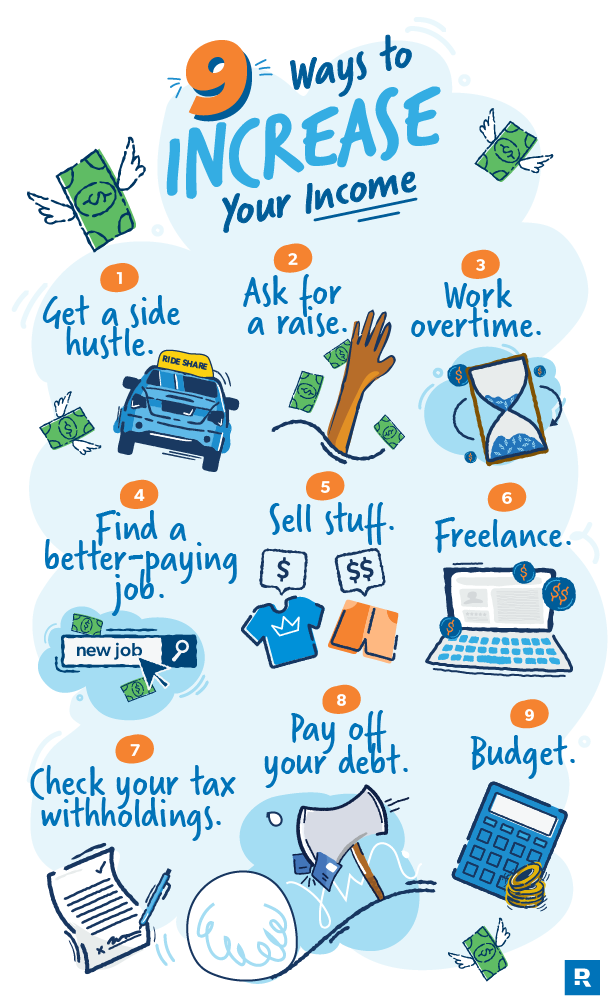
Side hustles are an excellent way to supplement your main income, test new skills, or even eventually transition into full-time entrepreneurship. These can range from leveraging existing hobbies to offering specialized services. Examples include freelance writing, graphic design, web development, virtual assistance, tutoring, social media management, content creation (blogging, vlogging, podcasting), or even selling crafts online. The key is to identify a skill or passion that has market demand and that you can perform flexibly around your primary commitments. Start small, validate your idea, and scale up as you gain experience and client base. Many successful businesses began as modest side hustles, proving that even a few extra hours a week can generate substantial additional income.
Embracing the Gig Economy and Freelancing
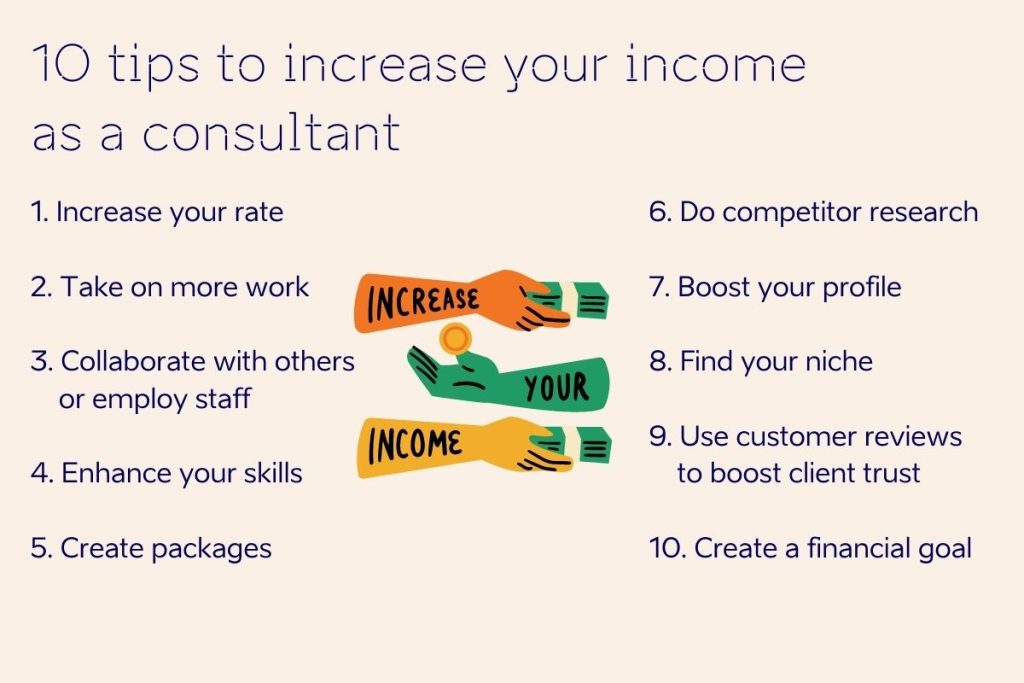
The gig economy offers unparalleled flexibility and access to a vast array of work opportunities for those looking to increase their income. Platforms like Upwork, Fiverr, TaskRabbit, and others connect freelancers with clients seeking specific services on a project basis. This model is ideal for those with in-demand skills such as coding, design, writing, translation, or administrative support. Freelancing allows you to set your own rates, choose your projects, and work from anywhere, effectively giving you control over your earning potential. It’s a powerful way to monetize your expertise without the constraints of a traditional employment contract, offering the freedom to take on as much or as little work as your schedule permits, directly translating into increased income.
Initiating or Scaling a Small Business
For those with an entrepreneurial spirit, starting or scaling a small business can lead to the most significant income growth. This path requires more commitment and risk than a side hustle, but the potential rewards are commensurately higher. Business ideas can stem from identifying an unmet need in the market, leveraging unique expertise, or developing an innovative product or service. Examples include e-commerce stores, local service businesses (e.g., catering, consulting, cleaning), digital product creation (e-books, online courses), or subscription boxes. The initial stages involve market research, business planning, securing initial capital, and building a strong brand. Scaling an existing business, whether through expanding product lines, entering new markets, or optimizing operations, also presents substantial opportunities for income expansion. This avenue offers not just financial returns, but also the fulfillment of building something from the ground up.
Passive Income Strategies
True financial freedom often lies in generating income that requires minimal ongoing effort. Passive income streams, once established, can continue to bring in money without actively trading your time for it. This can significantly increase your total income and free up your time for other pursuits. Examples include investing in dividend-paying stocks or real estate (rental properties), creating and selling digital products (e-books, stock photos, online courses that sell repeatedly), peer-to-peer lending, or earning royalties from creative works. While many passive income streams require an initial investment of time or capital, their long-term potential for wealth accumulation is immense. It’s about building assets that generate income for you, rather than constantly working for the income yourself.
Smart Financial Management and Investment for Growth
Increasing your income isn’t solely about earning more; it’s also profoundly about how you manage and grow the money you already have. Strategic financial management and astute investment decisions are critical components for maximizing your income potential and building enduring wealth. Earning more without managing it wisely is like filling a bucket with a hole in the bottom.
Optimizing Your Budget for Savings and Investment
Revisiting your budget, as discussed earlier, isn’t a one-time exercise. It’s an ongoing process of optimization. After increasing your income, resist the urge for “lifestyle creep,” where increased earnings lead to a proportional increase in spending. Instead, consciously allocate a larger portion of your newfound income towards savings and investments. Automate transfers to savings accounts, retirement funds, or investment portfolios immediately after payday. This “pay yourself first” strategy ensures that your increased earnings directly contribute to your financial goals rather than disappearing into discretionary spending. Regularly review your budget to identify areas for further cost reduction, freeing up even more capital for wealth-building activities.
Strategic Investing for Long-Term Wealth Accumulation
One of the most powerful ways to increase your income over time is through strategic investing. Compounding returns allow your money to grow exponentially, essentially earning money on your money. Start by understanding your risk tolerance and financial goals. For many, a diversified portfolio of low-cost index funds or exchange-traded funds (ETFs) is an excellent long-term strategy. Consider retirement accounts like 401(k)s or IRAs, which offer tax advantages, and brokerage accounts for more flexible investment options. Beyond stocks and bonds, exploring real estate, peer-to-peer lending, or even investing in your own business can provide significant returns. The key is to start early, invest consistently, and maintain a long-term perspective, allowing the power of compounding to work its magic.
Debt Management as a Path to Increased Disposable Income
High-interest debt, such as credit card balances or personal loans, acts as a significant drag on your disposable income. A crucial step in increasing your effective income is to strategically pay down and eliminate these debts. The money you save on interest payments can then be redirected towards savings, investments, or further income-generating activities. Consider strategies like the debt snowball (paying off smallest debts first for motivational wins) or the debt avalanche (paying off highest-interest debts first to save money). Refinancing high-interest debts into lower-interest options can also free up cash flow. By systematically reducing your debt burden, you reclaim a larger portion of your earnings, effectively increasing your available income and accelerating your journey to financial freedom.
Cultivating a Mindset for Sustainable Financial Growth
Beyond specific strategies and tools, the underlying mindset you adopt is perhaps the most critical factor in your long-term success in increasing income and building wealth. Financial growth isn’t a one-off event; it’s a continuous journey that demands resilience, adaptability, and a proactive attitude. Cultivating the right psychological approach ensures you stay motivated, make informed decisions, and overcome inevitable challenges.
Embracing Continuous Learning and Adaptation
The world of finance, technology, and industry is constantly evolving. To consistently increase your income, you must commit to continuous learning and adaptation. This involves staying informed about market trends, new technologies, and shifts in consumer behavior. Be open to acquiring new skills, even those outside your immediate comfort zone, and be willing to pivot when opportunities arise or when existing strategies become less effective. A flexible and curious mind is an invaluable asset that allows you to spot emerging trends and position yourself to capitalize on them, ensuring your income streams remain relevant and robust in a changing environment.
Developing Financial Discipline and Patience
Significant income growth and wealth accumulation rarely happen overnight. They are the result of consistent effort, diligent saving, smart investing, and often, delayed gratification. Developing strong financial discipline—sticking to a budget, consistently saving, and making thoughtful spending choices—is essential. Equally important is patience. Investment returns accrue over years, not months. Business ventures take time to mature. There will be setbacks and slow periods. A patient mindset allows you to weather these storms, stick to your long-term plan, and avoid impulsive decisions that could derail your progress. Discipline and patience are the bedrock upon which lasting financial success is built.

Seeking Mentorship and Expert Guidance
You don’t have to navigate the path to increased income alone. Seeking mentorship from individuals who have successfully achieved their financial goals can provide invaluable insights, guidance, and encouragement. A mentor can offer personalized advice, help you avoid common pitfalls, and open doors to new opportunities. Additionally, don’t hesitate to consult with financial experts—financial advisors, tax professionals, or business consultants—when needed. Their specialized knowledge can help you optimize your financial strategies, make more informed investment decisions, and navigate complex financial landscapes, ultimately accelerating your journey towards greater income and financial security. Investing in expert advice can often yield returns far exceeding its cost.
In conclusion, increasing your income is an achievable goal that demands a strategic, disciplined, and proactive approach. It begins with a clear understanding of your current financial standing, followed by a committed effort to enhance your skills and explore diverse income streams. Crucially, it involves intelligent financial management, from optimizing your budget and strategically investing to diligently managing debt. Finally, fostering a mindset of continuous learning, patience, and openness to guidance will serve as the compass and fuel for your journey. By integrating these strategies, you can not only elevate your income but also construct a robust financial future that offers security, freedom, and the ability to achieve your loftiest aspirations.
aViewFromTheCave is a participant in the Amazon Services LLC Associates Program, an affiliate advertising program designed to provide a means for sites to earn advertising fees by advertising and linking to Amazon.com. Amazon, the Amazon logo, AmazonSupply, and the AmazonSupply logo are trademarks of Amazon.com, Inc. or its affiliates. As an Amazon Associate we earn affiliate commissions from qualifying purchases.