
Understanding the ownership of a colossal, publicly traded company like Tesla is far more intricate than simply naming an individual. While a charismatic founder often defines a company’s public image, the actual financial ownership of a multi-billion-dollar enterprise is a complex tapestry woven from the stakes of countless investors, both institutional and individual. For financial professionals, savvy investors, or anyone seeking to comprehend the true locus of control and value in a global powerhouse, dissecting Tesla’s ownership structure provides critical insights into its market dynamics, corporate governance, and long-term financial trajectory. It’s not about a single person owning a company, but rather about a distributed network of capital and influence that shapes its destiny.
Elon Musk: The Visionary with a Significant Stake
At the heart of Tesla’s narrative, and indeed its ownership, stands Elon Musk. His vision, leadership, and often controversial public persona have been inextricably linked to the company’s meteoric rise. Yet, his ownership stake, while substantial, represents only a fraction of the company’s total equity.
Founder’s Enduring Equity
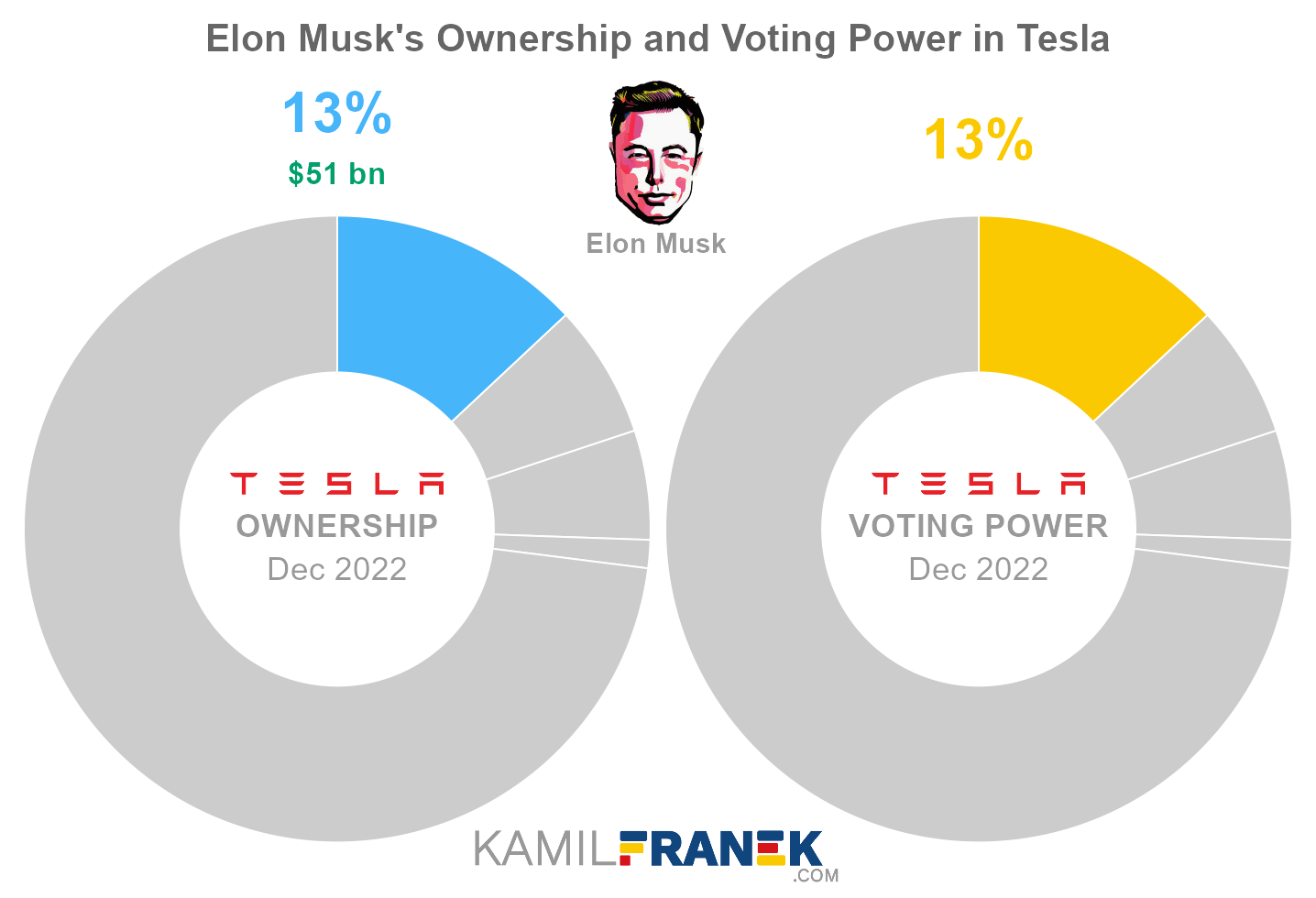
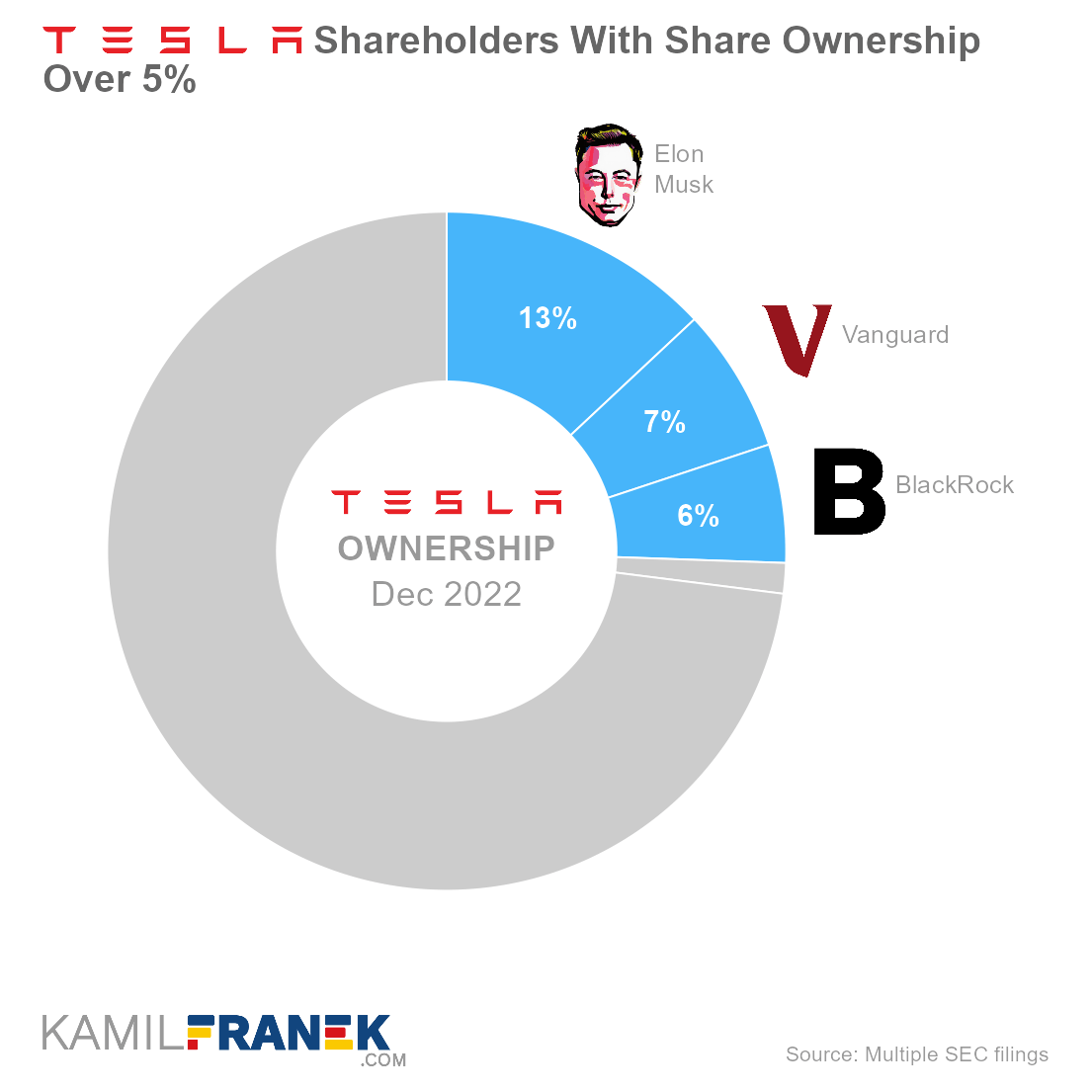
As of recent financial filings (which naturally fluctuate with stock sales, grants, and exercise of options), Elon Musk typically holds an ownership percentage in Tesla ranging from approximately 13% to 15%. This figure, while seemingly modest for a founder, makes him by far the largest individual shareholder. His stake has evolved significantly over time, from initial founder shares to performance-based stock option grants and strategic sales for liquidity or to fund other ventures. Each transaction has been scrutinized by the market, highlighting the immense financial implications tied to his personal holdings. This concentrated individual ownership provides him with unparalleled influence in key shareholder votes and strategic decisions, though it still falls far short of outright majority control.
Influence on Valuation and Investor Sentiment
Musk’s connection to Tesla extends far beyond his equity percentage. His public statements, ambitious pronouncements, and even his activity on social media can trigger significant shifts in Tesla’s stock price and market capitalization. Investors often weigh Musk’s leadership, entrepreneurial spirit, and ability to execute on ambitious projects as a core component of Tesla’s investment thesis. This intertwining of personal brand with corporate financial health means that confidence in Musk often directly translates to confidence in Tesla’s stock, influencing valuation metrics and investor sentiment across the board. His presence is a unique financial asset that contributes to the company’s premium valuation.
Performance-Based Compensation as Ownership
A significant portion of Musk’s “ownership” and financial incentive is tied to elaborate, performance-based compensation packages. These packages typically grant him tranches of stock options that vest only if Tesla achieves incredibly ambitious operational and market capitalization milestones. This structure ensures that his personal wealth is directly and heavily aligned with the long-term financial success and growth of the company. It functions as a powerful mechanism, incentivizing him to drive shareholder value through innovation and market expansion, further solidifying his unique position as both the company’s figurehead and its most financially invested driver.
The Institutional Behemoths: Pillars of Tesla’s Capital
While Elon Musk commands the headlines, the vast majority of Tesla’s shares are held by a formidable array of institutional investors. These entities, often managing trillions of dollars in assets, are the silent giants that form the bedrock of Tesla’s capital structure.
Major Fund Managers
The landscape of institutional ownership in Tesla is dominated by some of the world’s largest asset management firms. Giants like Vanguard Group, BlackRock Inc., State Street Corp., and Capital Group are consistently among the top holders of Tesla stock. Collectively, their holdings often represent a controlling interest, frequently exceeding 50% of the company’s outstanding shares. These firms manage portfolios for millions of clients, from pension funds and endowments to mutual funds and individual investors. Their sheer scale means that even relatively small percentage allocations within their massive portfolios translate into billions of dollars invested in Tesla.
Passive Investing’s Role
A substantial portion of these institutional holdings comes through passive investment vehicles. Many of these firms offer broad-market index funds and Exchange Traded Funds (ETFs) that track indices like the S&P 500 or the NASDAQ 100. Since Tesla is a major component of these indices, any investor buying an S&P 500 index fund is indirectly “owning” a piece of Tesla. This phenomenon means that millions of individuals and organizations globally, who may not even be actively choosing to invest in Tesla, hold its shares through their diversified, passively managed portfolios. This passive capital flow provides a consistent demand for Tesla stock, contributing to its stability and liquidity in the market.
Governance and Long-Term Stakes
While institutional investors are often perceived as passive, their collective power translates into significant influence over corporate governance. Through proxy voting, these firms cast ballots on crucial issues such as the election of board members, executive compensation, and significant corporate actions. While they may not always vocalize their opinions publicly, their engagement with management and their voting patterns can shape Tesla’s strategic direction, particularly regarding Environmental, Social, and Governance (ESG) policies. These institutions often take a long-term view, seeking sustainable financial returns, and thus act as critical stakeholders in ensuring responsible corporate management and financial health.
The Retail Army: Tesla’s Grassroots Investor Base
Beyond the titans of institutional finance, Tesla has cultivated a unique and remarkably influential base of individual, or “retail,” investors. This collective force, often referred to as the “Teslarati,” represents a grassroots movement that has significantly impacted the company’s market dynamics.
Democratized Investing and the “Teslarati”
The rise of accessible online trading platforms has democratized stock ownership, allowing millions of individual investors to buy shares with ease. Tesla has arguably become one of the most popular and passionately followed stocks among this segment. The “Teslarati” are not just investors; they are often brand loyalists, technology enthusiasts, and strong believers in Tesla’s mission to accelerate the world’s transition to sustainable energy. This fervent community of retail investors has collectively amassed substantial holdings, demonstrating that the power of many small investments can rival that of large institutional blocks.
Impact on Market Dynamics
The sheer volume and collective action of retail investors can significantly influence Tesla’s stock price, especially during periods of high volatility or major news events. Unlike large institutions that often operate with complex algorithms and long-term models, retail investors can be more reactive to sentiment, news, and social media trends. Their collective buying or selling can amplify market movements, contributing to rapid price swings that are characteristic of Tesla’s stock. This dynamic makes Tesla a fascinating case study in how a passionate retail base can inject a unique element of volatility and momentum into a blue-chip stock.
Investment Driven by Conviction
Many retail investors in Tesla are driven not merely by financial speculation but by a deep conviction in the company’s vision, leadership, and long-term potential. They often hold shares for extended periods, weathering market fluctuations out of a belief in Tesla’s transformative impact on industries like automotive, energy, and AI. This emotional investment, coupled with financial commitment, creates a unique dynamic where brand loyalty and future belief translate directly into sustained capital support for the company, setting Tesla apart from many other publicly traded entities.
The Financial Ecosystem of Tesla Ownership
The intricate web of Tesla’s ownership has profound implications for its market valuation, corporate governance, and future financial strategies. It creates a dynamic ecosystem where the interests of various stakeholders must be balanced.
Market Capitalization and Shareholder Value
Tesla’s market capitalization—its total outstanding shares multiplied by the current share price—is a direct reflection of how the market values this diverse ownership structure. Each share represents a fractional claim on the company’s assets and future earnings. The interplay between Elon Musk’s influence, institutional demand, and retail investor sentiment collectively determines Tesla’s multi-billion-dollar valuation, making it one of the world’s most valuable companies. Understanding “who owns Tesla” is therefore fundamentally about understanding how its value is distributed among its various financial backers.
Corporate Governance and Accountability
Given the diverse nature of Tesla’s ownership, robust corporate governance is paramount. The Board of Directors serves as the ultimate arbiter, representing the interests of all shareholders. With major institutional investors holding significant blocks and a highly engaged retail base, the board must navigate a complex landscape of expectations regarding financial performance, strategic direction, executive compensation, and ethical conduct. Transparent reporting, shareholder meetings, and proxy votes are crucial mechanisms through which accountability is maintained, ensuring that management decisions align with the collective financial interests of the ownership base.
Implications for Future Capital & Dividends
The current ownership structure also directly influences Tesla’s ability to raise future capital and its policies regarding shareholder returns. Should Tesla decide to issue new shares to fund expansion, the existing pool of institutional and retail investors would be the primary target for such offerings. Their willingness to invest more, often at certain valuations, dictates the success and terms of future capital raises. Furthermore, while Tesla has historically reinvested its earnings back into growth rather than issuing dividends, any future decision to distribute profits would significantly impact all shareholders, from the largest institutions to the smallest retail investor. The ownership base, therefore, dictates the financial lifeblood and wealth distribution mechanisms of the company.
Conclusion
The question of “who owns Tesla” reveals a fascinating and complex financial narrative. It’s not the exclusive domain of a single visionary, nor is it solely controlled by distant institutional titans. Instead, Tesla’s ownership is a vibrant, multi-layered tapestry woven from the significant but non-majority stake of its iconic founder, the immense collective capital of global asset managers, and the passionate, democratized investments of millions of retail shareholders. Each of these segments plays a critical role in shaping Tesla’s financial trajectory, influencing its market capitalization, governing its corporate decisions, and ultimately, determining its future as a multi-billion-dollar enterprise. To truly understand Tesla is to appreciate this dynamic interplay of financial interests that collectively hold the keys to one of the world’s most influential companies.
aViewFromTheCave is a participant in the Amazon Services LLC Associates Program, an affiliate advertising program designed to provide a means for sites to earn advertising fees by advertising and linking to Amazon.com. Amazon, the Amazon logo, AmazonSupply, and the AmazonSupply logo are trademarks of Amazon.com, Inc. or its affiliates. As an Amazon Associate we earn affiliate commissions from qualifying purchases.