
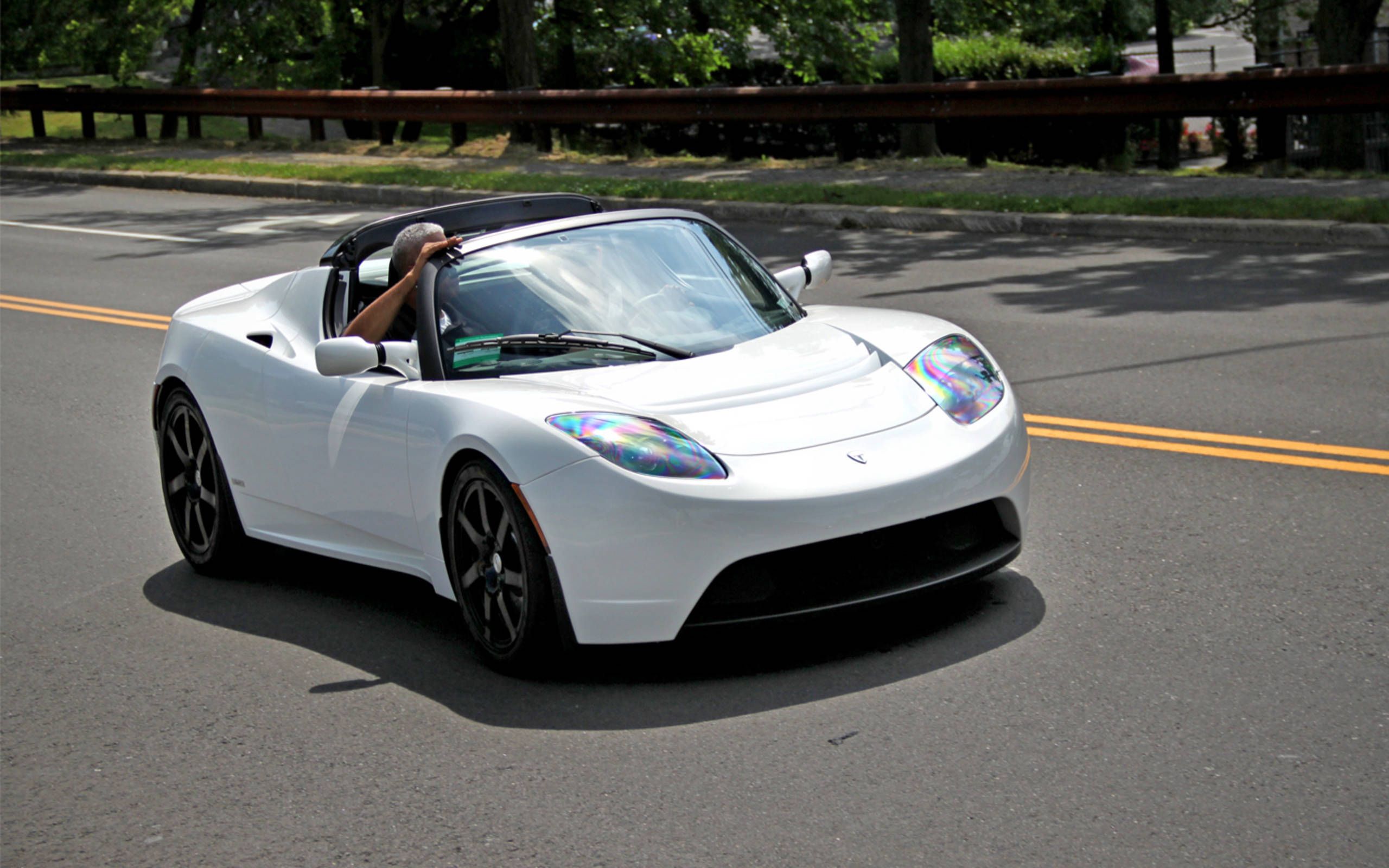
The automotive world, long dominated by internal combustion engines and legacy manufacturers, experienced a seismic shift with the arrival of Tesla. For many, the brand is synonymous with cutting-edge electric vehicles (EVs), revolutionary battery technology, and a distinct vision for the future of transportation. But before the Model S became a household name or the Cybertruck sparked global debate, there was an initial spark, a foundational product that defied skepticism and laid the groundwork for an electric revolution. The journey began not with a mass-market sedan, but with a high-performance sports car: the first Tesla, the Roadster, was officially released to the public on March 19, 2008.

This wasn’t just the launch of a new car; it was the debut of a company intent on proving that electric vehicles could be fast, desirable, and viable, challenging decades of assumptions about automotive engineering and sustainability. The Roadster wasn’t merely an alternative; it was a statement. It combined Silicon Valley ingenuity with automotive passion, setting a new benchmark for what electric technology could achieve and igniting a global conversation that continues to this day. Its release marked a pivotal moment, not just for Tesla, but for the entire technology and automotive landscape, demonstrating the transformative potential of electric powertrains and smart engineering.
The Dawn of an Electric Era: The Roadster’s Genesis
The story of the first Tesla Roadster is a testament to ambition, engineering prowess, and a willingness to challenge established norms. Born from a vision articulated by Tesla’s founders, including Martin Eberhard and Marc Tarpenning, and later driven by Elon Musk, the goal was clear: create an electric car that didn’t compromise on performance or aesthetics. They aimed to prove that an EV could outcompete gasoline-powered sports cars, not just on efficiency, but on sheer driving thrill.
From Concept to Reality: Engineering the First EV
Developing the Roadster was an immense undertaking. Tesla, a nascent company at the time, lacked the vast manufacturing infrastructure of traditional automakers. To expedite development and manage costs, they strategically partnered with Lotus Cars, leveraging the chassis of the Lotus Elise. However, calling the Roadster a mere “rebody” of the Elise would be a profound understatement. Tesla engineers embarked on a monumental task, stripping the Elise chassis down and rebuilding it from the ground up to accommodate an entirely new electric powertrain. This involved designing a proprietary electric motor, a complex battery pack, and a sophisticated power electronics system, all while ensuring the vehicle maintained a balanced weight distribution and exhilarating performance characteristics. Every component, from the charging port to the driver interface, had to be conceived, designed, and integrated with an electric future in mind. The engineering hurdles were immense, particularly in thermal management for the battery and ensuring robustness for high-performance driving.
Performance and Innovation: Beyond the Battery
The core technological marvel of the Roadster was its powertrain. It featured an AC induction motor, capable of producing 248 horsepower (later upgraded to 288 hp in the 2.5 Sport model). This propelled the lightweight sports car from 0 to 60 mph in a blistering 3.7 seconds (for the Sport model), a figure that rivaled many high-end gasoline-powered sports cars of its era. This performance was critical. It shattered the perception that electric cars were slow, golf-cart-like vehicles only suitable for short, mundane trips. Crucially, the Roadster demonstrated that electric propulsion could offer instant torque and a driving experience that was both powerful and eerily silent, devoid of gear changes. The true innovation, however, lay beneath the surface, in its meticulously engineered battery system, which was then the largest automotive lithium-ion battery pack in the world. This advanced power source was crucial for achieving a then-unprecedented range for an electric vehicle.
Challenging the Status Quo: Tesla’s Early Impact
The release of the Roadster was more than just a product launch; it was a defiant statement to an industry steeped in tradition. It challenged the prevailing wisdom about what an automobile could be, how it could be powered, and who could build it. Tesla, a Silicon Valley startup, brought a fresh, technology-first perspective to an industry often criticized for its slow pace of innovation.
Redefining Automotive Expectations
Before the Roadster, the prevailing image of an electric car was often limited to niche, low-speed urban commuters or experimental prototypes with limited range and lackluster performance. The Roadster flipped this narrative entirely. It presented an EV that was sleek, desirable, and, most importantly, thrilling to drive. Its impressive range of over 200 miles on a single charge (EPA rated at 244 miles for later models) effectively addressed the pervasive “range anxiety” that plagued early EV discussions. This wasn’t just an engineering feat; it was a psychological breakthrough, demonstrating that long-distance electric travel was not only possible but enjoyable. The Roadster proved that EVs didn’t have to be a compromise; they could be an upgrade, offering superior acceleration, a smoother ride, and the environmental benefits of zero tailpipe emissions.
Paving the Way for Mainstream EV Adoption
While the Roadster was a low-volume, high-priced luxury item (with an initial price tag exceeding $100,000), its impact far transcended its sales figures. It served as a powerful proof-of-concept, attracting attention from media, investors, and, crucially, other automotive manufacturers. Tesla’s bold move with the Roadster sent a clear signal that electric vehicles were not a fad but a legitimate and technologically superior alternative to gasoline cars. This success spurred established automakers to accelerate their own EV development programs, shifting from hesitant experimentation to serious investment in electric powertrains. The Roadster effectively demystified EV technology, showcasing its potential and inspiring a new generation of engineers and entrepreneurs to enter the electric vehicle space. It laid the emotional and technological groundwork for the acceptance and eventual proliferation of mainstream EVs like the Nissan Leaf, Chevrolet Volt, and later, Tesla’s own Model S.
Technological Underpinnings: The Roadster’s Blueprint
The Tesla Roadster was a convergence of advanced materials, sophisticated electronics, and a revolutionary approach to energy storage. It wasn’t just an assembly of parts; it was a carefully engineered system designed to maximize efficiency, performance, and reliability—a true tech product in automotive form.
Battery Technology and Range Anxiety Solutions
At the heart of the Roadster was its pioneering battery pack. Unlike most automotive batteries of the time, Tesla utilized thousands of small, commercially available lithium-ion cells (similar to those found in laptop batteries), organized into modules and then into a large pack. This approach allowed for excellent energy density and thermal management, crucial for both performance and longevity. The pack boasted approximately 53 kWh of usable energy, a massive capacity for its era. Tesla’s battery management system (BMS) was a critical technological innovation, monitoring each of the thousands of cells for voltage and temperature, ensuring optimal performance, preventing overheating, and maximizing the battery’s lifespan. This sophisticated BMS was a core differentiator and became a foundational technology for all subsequent Tesla vehicles, directly addressing and mitigating the notorious range anxiety associated with early EVs.
Software, Connectivity, and Over-the-Air Updates
Even in its inaugural vehicle, Tesla showed early signs of its software-first philosophy. While not as feature-rich as later models, the Roadster integrated advanced software for managing the powertrain, battery, and user interface. More significantly, the Roadster was one of the first production cars to incorporate the capability for over-the-air (OTA) software updates. This was a radical concept for the automotive industry, which typically required dealership visits for software fixes or upgrades. OTA updates allowed Tesla to remotely improve vehicle performance, add new features, and address potential bugs, fundamentally changing the relationship between the manufacturer and the vehicle owner. This tech-centric approach foreshadowed the automotive industry’s eventual shift towards vehicles as “computers on wheels,” a trend that Tesla would lead for years to come.
Design Philosophy: Form Meets Function
Beyond its internal technology, the Roadster’s design also played a crucial role in its tech appeal. While borrowing the Lotus Elise chassis, Tesla’s design team meticulously crafted an aerodynamic and visually striking body. The design wasn’t merely aesthetic; it was functional, optimized for efficiency and performance. The lightweight carbon fiber body panels contributed to its nimble handling and extended its range. The sleek lines, aggressive stance, and distinct Tesla badging immediately differentiated it, marking it as a vehicle of the future. The interior, though sparse by modern Tesla standards, was driver-focused and hinted at the minimalist, digital-first approach that would define future Tesla cabins.
The Legacy of the First: Shaping Future Tesla Innovations
The Roadster was more than just a standalone product; it was the crucible where Tesla forged its core technologies, engineering philosophies, and market strategy. Its lessons and triumphs directly influenced every subsequent Tesla vehicle and product, cementing its place as a cornerstone of the company’s technological journey.
From Roadster to Model S: Scaling the Technology
The most immediate legacy of the Roadster was the invaluable experience and data it provided. The development of its battery pack, motor, power electronics, and software laid the technical foundation for the more ambitious, mass-market Model S. Tesla learned how to scale battery manufacturing, refine thermal management systems, and develop more efficient electric motors. The Roadster proved that a high-performance EV could be reliable and marketable, giving Tesla the confidence and credibility to pursue a larger, more complex vehicle architecture. The core technologies perfected in the Roadster, particularly in battery cell packaging and management, were directly scaled and improved for the Model S, which then went on to redefine the luxury sedan segment.
Autopilot and AI: A Vision Born Early
While the Roadster itself didn’t feature advanced driver-assistance systems like Autopilot, the very existence of a software-defined vehicle with OTA update capabilities hinted at a future where cars would be intelligent and constantly improving. Tesla’s early focus on integrated software, sensors, and data collection set the stage for its later ventures into artificial intelligence and autonomous driving. The underlying electronic architecture and data-centric approach pioneered with the Roadster were essential precursors to the development of Autopilot and Full Self-Driving capabilities, which rely heavily on sophisticated software, real-time data processing, and machine learning—all hallmarks of a true tech company, not just a car manufacturer.
Beyond the Vehicle: Tesla’s Broader Tech Ecosystem
The Roadster’s success also validated Tesla’s broader vision to accelerate the world’s transition to sustainable energy. It was the first step in building an interconnected ecosystem of energy technologies, illustrating Tesla’s ambition to be more than just an automotive company.
Supercharger Network: Infrastructure as Innovation
One of the significant technological hurdles for EVs was charging infrastructure. While the Roadster used standard charging methods, its existence highlighted the need for faster, more widespread charging solutions to support long-distance travel. The lessons learned from early Roadster owners and their charging habits directly influenced Tesla’s revolutionary decision to build its proprietary Supercharger network. This network, introduced after the Roadster but directly inspired by the challenges it uncovered, was itself a massive technological and logistical undertaking, providing ultra-fast DC charging and dramatically reducing range anxiety for future Tesla owners. The Supercharger network became a critical differentiator and a testament to Tesla’s commitment to end-to-end technological solutions, not just vehicle production.

The Future of Mobility: AI and Sustainability
The Roadster wasn’t just a car; it was a powerful symbol of what was possible when technological innovation met environmental consciousness. It encapsulated Tesla’s long-term vision: a future where transportation is electric, autonomous, and seamlessly integrated with sustainable energy generation and storage. The technological foundation laid by the Roadster continues to inform Tesla’s ongoing developments in battery storage (Powerwall, Megapack), solar energy, and advanced AI for robotics and autonomous systems. It underscored that Tesla was not just building cars, but rather components of a larger, interconnected sustainable tech ecosystem. The Roadster’s release was the initial spark that ignited a new era of thinking about mobility, energy, and the role of technology in shaping a greener, more advanced future.
In conclusion, the release of the first Tesla Roadster on March 19, 2008, was a watershed moment in technological history. It was a bold statement, a high-performance demonstration of electric vehicle viability, and the critical first step in establishing Tesla as a disruptive force in the global automotive and energy sectors. The Roadster’s engineering, its groundbreaking battery technology, and its software-centric approach not only paved the way for subsequent Tesla models but profoundly influenced the entire industry’s embrace of electric mobility, forever changing our perception of what a car, and a technology company, could be.
aViewFromTheCave is a participant in the Amazon Services LLC Associates Program, an affiliate advertising program designed to provide a means for sites to earn advertising fees by advertising and linking to Amazon.com. Amazon, the Amazon logo, AmazonSupply, and the AmazonSupply logo are trademarks of Amazon.com, Inc. or its affiliates. As an Amazon Associate we earn affiliate commissions from qualifying purchases.