
The automotive industry, a behemoth built on over a century of internal combustion engine (ICE) innovation, was ripe for disruption by the turn of the 21st century. Environmental concerns were escalating, fuel prices were volatile, and the digital revolution was beginning to reshape every facet of modern life. It was within this context of burgeoning change that a small, ambitious startup with a radical vision emerged, poised to challenge the status quo and ignite an electric automotive revolution. That company was Tesla Motors, and its inaugural vehicle would not only mark a pivotal moment in its own history but fundamentally alter the trajectory of vehicle technology worldwide.

The Dawn of an Electric Automotive Revolution
The narrative of Tesla often begins with its charismatic CEO, Elon Musk, but the company’s genesis predates his direct involvement. Founded in July 2003 by Martin Eberhard and Marc Tarpenning, Tesla Motors was conceived with a singular, audacious goal: to prove that electric vehicles could be not just efficient and environmentally friendly, but also exhilarating, high-performance, and desirable. This vision was a direct challenge to the prevailing perception of EVs as golf carts or utilitarian, range-limited compromises.
Setting the Stage: The Need for Change
For decades, electric vehicles had largely been relegated to the periphery of the automotive industry. Early attempts, like GM’s EV1 in the 1990s, demonstrated technical feasibility but ultimately failed to gain widespread commercial traction, often due to perceived limitations in range, performance, and charging infrastructure, coupled with a lack of serious commitment from established automakers. Public and scientific awareness of climate change, however, was growing, putting increasing pressure on industries to adopt more sustainable practices. The confluence of these factors created a vacuum for a new kind of automotive company – one unburdened by legacy ICE investments and fully committed to an electric future.
Traditional car manufacturers, deeply entrenched in their production lines and supply chains for gasoline-powered cars, were slow to innovate in the EV space. Their efforts were often half-hearted, producing compliance cars rather than genuinely competitive alternatives. This technological inertia left a wide-open playing field for a nimble, tech-first company to reimagine the automobile from the ground up, leveraging advancements in battery technology, power electronics, and software development.
The Genesis of Tesla Motors
Eberhard and Tarpenning, both Silicon Valley veterans, brought a distinctive technological perspective to the automotive world. They recognized that the key to a compelling electric vehicle lay not just in batteries, but in a holistic engineering approach that integrated advanced power electronics, efficient motor design, and sophisticated battery management systems. Their initial strategy was to build a high-performance, low-volume sports car – a “halo product” – to demonstrate the viability and excitement of electric propulsion, thereby generating capital and credibility to fund the development of more affordable, mass-market EVs.
Elon Musk joined Tesla as chairman in 2004, leading the Series A round of investment. His significant financial contribution and strategic vision quickly propelled him to a central role, ultimately becoming CEO. Musk’s foresight was crucial in emphasizing not just the performance aspect but also the imperative of scaling production and building out a comprehensive charging infrastructure, transforming Tesla from a niche automaker into a potential global force for sustainable energy. The stage was set for their first product, a car designed not just to be an electric vehicle, but to be an electric vehicle that outperformed its gasoline counterparts in critical areas.
Unveiling the Roadster: A Bold Statement
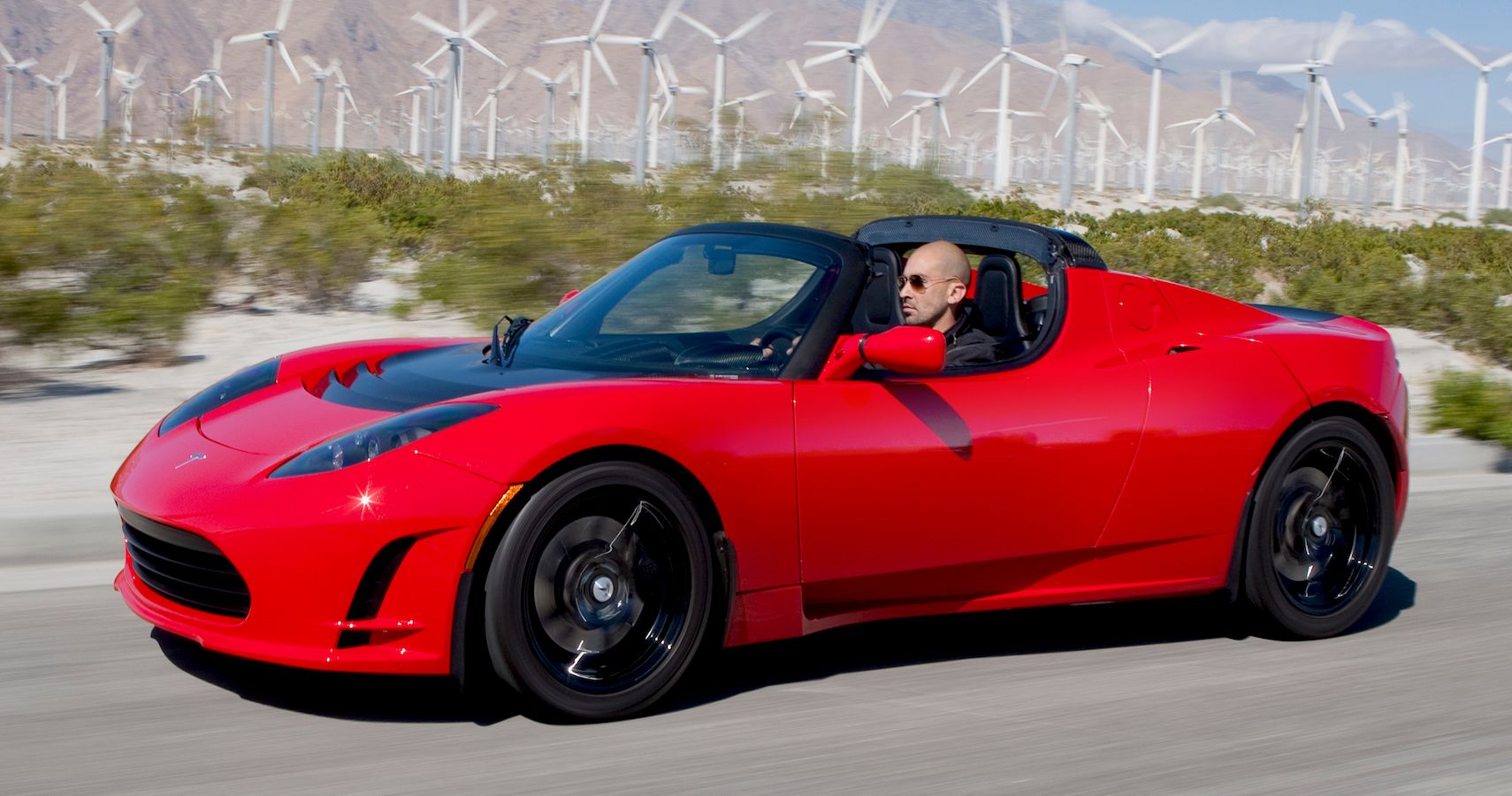
The culmination of Tesla’s early efforts and technological ambition was the Roadster, a vehicle that fundamentally challenged assumptions about electric cars. Its reveal was a statement, its release a watershed moment.
The Official Debut and Release Date
The Tesla Roadster was officially unveiled to the public on July 19, 2006, at a private event in Santa Monica, California. This initial reveal was a significant milestone, showcasing a fully functional prototype and signaling Tesla’s serious intent. However, the true “release” in terms of customer deliveries took a little longer. The first production Tesla Roadsters were delivered to customers in early 2008, specifically starting in March 2008. The first production car, VIN 001, was delivered to Elon Musk himself. This timeline – a public unveiling in 2006 followed by customer deliveries in 2008 – is crucial for understanding the journey from prototype to market. It demonstrated the considerable effort involved in industrializing cutting-edge electric vehicle technology.
Engineering Marvel: Technology of the First Tesla
The Roadster was far more than just an electric motor bolted into an existing chassis. While it famously utilized a modified Lotus Elise chassis for its lightweight and nimble handling characteristics, the true technological innovation lay beneath its sleek exterior.
- Battery Technology: At its core, the Roadster housed an impressive 6,831 lithium-ion battery cells, similar in type to those used in laptop computers, packaged into a 992-pound (450 kg) battery pack. This sophisticated battery pack, offering 53 kWh of energy storage, was a monumental engineering feat for its time. Tesla developed a proprietary battery management system (BMS) to meticulously monitor and balance each cell, preventing overheating and optimizing performance and longevity – a critical technological differentiator.
- Powertrain: The Roadster featured an AC induction motor producing 248 horsepower (later models increased to 288 hp). This motor delivered instant torque, propelling the car from 0 to 60 mph in a blistering 3.7 seconds (for the later Sport model). This performance rivaled many high-end sports cars of the era, shattering the myth that EVs were slow or sluggish.
- Range and Charging: With an EPA-rated range of 244 miles (393 km) on a single charge, the Roadster demonstrated that electric cars could offer practical driving distances, far surpassing anything previously seen from an EV. Charging initially required specialized equipment, but Tesla also offered a mobile connector, allowing charging from various outlets.
- Software Integration: Even in its early days, Tesla understood the importance of software. The Roadster incorporated advanced software for its BMS, motor control, and user interface, laying the groundwork for the software-defined vehicle approach that would become a hallmark of future Tesla models. This digital integration was a radical departure from traditional automotive engineering.
Market Reception and Early Impact
The Roadster’s reception was a mixture of awe, skepticism, and intense interest. It was undeniably expensive, with a base price exceeding $100,000, placing it squarely in the luxury sports car segment. This high price point was a deliberate strategy to fund the research and development necessary for future, more affordable vehicles, adhering to Tesla’s “secret master plan.”
Despite its cost, the Roadster garnered significant attention from early adopters, technology enthusiasts, and environmentally conscious celebrities. It became a status symbol, not just for wealth, but for forward-thinking and a commitment to innovation. The car’s impressive performance and range proved to a skeptical public and traditional automakers that electric vehicles were not only viable but could be genuinely exciting and desirable. It began to shift the narrative, moving EVs from a niche curiosity to a serious contender in the automotive landscape.

Paving the Way: The Roadster’s Legacy and Technological Advancement
The Roadster was more than just a car; it was a proof of concept, a mobile laboratory, and a profound statement about the future of transportation technology. Its short production run, ending in 2012 after approximately 2,500 units, belied its immense influence.
Overcoming Early Hurdles and Iterations
The journey from concept to customer delivery for the Roadster was fraught with challenges. Tesla, as a nascent automaker, faced immense difficulties in manufacturing, supply chain management, and quality control. Initial production was slow, and there were issues with early powertrains and other components, requiring significant iteration and improvement. These early struggles, however, forged Tesla’s engineering resolve and its commitment to continuous improvement through software updates and hardware revisions, a practice uncommon in the traditional auto industry. The Roadster evolved through several generations, with performance and reliability enhancements progressively rolled out, often through over-the-air (OTA) software updates – a groundbreaking concept at the time.
From Roadster to Mainstream: Technological Evolution
The technological lessons learned from the Roadster were invaluable and directly informed the design and engineering of subsequent Tesla models.
- Powertrain and Battery Management: The foundational work on battery chemistry, thermal management, and inverter technology developed for the Roadster was scaled and refined for the Model S, Tesla’s first mass-market luxury sedan. This allowed for larger battery packs, greater efficiency, and more robust performance suitable for a wider range of vehicles. The modularity of Tesla’s battery architecture, first explored in the Roadster, became a key advantage.
- Software-Defined Vehicle Architecture: The Roadster’s reliance on sophisticated software for its operation, from power delivery to diagnostics, established Tesla’s philosophy of building “computers on wheels.” This approach enabled features like OTA updates for performance improvements, new functionalities, and bug fixes, revolutionizing how automotive products could evolve post-sale. This was a radical departure from the static, hardware-centric model of traditional carmakers.
- Electric Vehicle Performance: The Roadster irrevocably set the bar for EV performance, demonstrating that electric propulsion could offer superior acceleration and a thrilling driving experience. This paved the way for the ludicrous performance of subsequent Teslas, which consistently outmatch many gasoline-powered sports cars.
Redefining Automotive Technology
The Roadster’s success spurred a seismic shift across the entire automotive industry. It validated the electric vehicle concept as a serious, high-performance alternative to ICE vehicles, forcing established manufacturers to accelerate their own EV programs. Beyond simply proving electric power, the Roadster and Tesla’s subsequent models initiated a broader technological redefinition of the automobile:
- Focus on EVs: It made electric vehicles “cool” and desirable, transforming them from niche eco-cars into mainstream contenders.
- Software-First Approach: Tesla demonstrated that software could be a primary differentiator in vehicles, leading to features like advanced driver-assistance systems (ADAS) and comprehensive infotainment systems.
- Direct-to-Consumer Model and Technology: While not directly a vehicle technology, Tesla’s direct sales model, enabled by digital platforms and a tech-savvy approach, bypassed traditional dealerships, offering a streamlined buying and service experience. This model, a technological innovation in retail, further underscored Tesla’s departure from industry norms.
Tesla’s Enduring Technological Vision
The legacy of the first Tesla car, the Roadster, is intrinsically linked to the company’s ongoing technological vision. It established a precedent for innovation that continues to drive Tesla’s advancements in critical areas, shaping not only the automotive sector but the broader energy landscape.
Continuous Innovation in Powertrain and Battery Technology
Tesla’s commitment to pushing the boundaries of electric powertrain technology remains unwavering. The experience gained from the Roadster’s battery pack development led to the pioneering of advanced cylindrical battery cells and sophisticated thermal management systems that maximize energy density, power output, and longevity. The company’s Gigafactories are not just manufacturing plants but enormous laboratories where battery cell design, manufacturing processes, and module integration are continuously optimized. Efforts like the 4680 battery cell and structural battery packs represent ongoing advancements aimed at further increasing range, reducing weight, and lowering costs, thereby making electric vehicles more accessible and efficient. Furthermore, the development of the Supercharger network, an extensive and proprietary fast-charging infrastructure, was a crucial technological enabler, solving a primary hurdle to widespread EV adoption.
The Software-Defined Car and AI Integration
Building on the Roadster’s foundational software, Tesla has evolved the concept of the “software-defined car” to an unprecedented degree. Its vehicles are fundamentally advanced computing platforms, receiving regular, mandatory over-the-air (OTA) updates that introduce new features, improve performance, and enhance safety, transforming a car’s capabilities throughout its lifespan. This software-centric approach extends to every aspect of the vehicle, from powertrain management and energy efficiency to the intuitive user interface and sophisticated driver-assistance systems.
The integration of artificial intelligence (AI) is central to Tesla’s autonomous driving ambitions. Autopilot and the Full Self-Driving (FSD) beta utilize neural networks, vast amounts of real-world driving data, and custom AI chips to perceive the environment and make driving decisions. This represents a monumental leap in automotive technology, moving beyond traditional rule-based programming to adaptive, machine learning-driven intelligence, with the goal of ultimately achieving fully autonomous transportation. The continuous improvement of these systems through data collection and software updates is a hallmark of Tesla’s tech strategy.
Shaping the Future of Mobility and Beyond
The first Tesla car, the Roadster, was a powerful harbinger of a future where transportation is electric, connected, and intelligent. Tesla’s ongoing technological evolution continues to influence not only how we drive but also how we generate, store, and consume energy. The integration of automotive technology with energy solutions – such as solar power generation, battery energy storage (Powerwall, Megapack), and grid services – underscores Tesla’s broader vision as an energy innovation company.
From the initial challenge laid down by the Roadster to the current pursuit of full autonomy and sustainable energy ecosystems, Tesla’s journey since its first car’s release has been a relentless quest for technological advancement. It started with a simple question about when the first Tesla car was released, but the answer reveals a narrative of ambition, innovation, and a profound impact on the technological landscape of the 21st century. The Roadster didn’t just break new ground; it charted a completely new course for the automotive industry, proving that electric vehicles could be at the forefront of technological prowess and performance, setting the stage for an electric future that is now rapidly unfolding.
aViewFromTheCave is a participant in the Amazon Services LLC Associates Program, an affiliate advertising program designed to provide a means for sites to earn advertising fees by advertising and linking to Amazon.com. Amazon, the Amazon logo, AmazonSupply, and the AmazonSupply logo are trademarks of Amazon.com, Inc. or its affiliates. As an Amazon Associate we earn affiliate commissions from qualifying purchases.