
The story of Tesla’s inception is not merely one of a car company being founded; it is the tale of a profound technological disruption that reshaped the automotive industry and accelerated the global transition to sustainable energy. Born from a vision to prove electric vehicles (EVs) could be superior in performance, safety, and efficiency to their gasoline counterparts, Tesla’s journey began with audacious technological bets and an unwavering commitment to innovation. Its origins are deeply rooted in engineering challenges, battery science, and the integration of cutting-edge software, effectively positioning it as a tech company first, and an automaker second.

The Spark of Innovation: Pre-Tesla Electric Vehicle Ambitions
Before Tesla became a household name synonymous with EVs, the concept of practical, high-performance electric cars was largely dismissed or relegated to niche projects. The early 2000s saw a landscape dominated by internal combustion engines, with electric vehicles often perceived as glorified golf carts or impractical experiments. Yet, a small group of engineers and entrepreneurs harbored a different vision, believing that technology had advanced sufficiently to overcome the historical limitations of EVs.
The Founding Visionaries and Their Early Concepts
Tesla Motors was officially incorporated in July 2003 by Martin Eberhard and Marc Tarpenning. Their initial motivation stemmed from a desire to reduce dependence on fossil fuels and address the inefficiencies of traditional gasoline cars. Both had backgrounds in the technology sector – Eberhard in hardware and Tarpenning in software and engineering – and brought a distinctly Silicon Valley approach to the automotive challenge. They envisioned an electric sports car that would not only be environmentally friendly but also exhilarating to drive, challenging the prevailing notion that EVs were inherently slow and boring. Their focus was firmly on the technological viability and superiority of electric propulsion. They believed that by starting at the high end, they could fund research and development for more affordable mass-market vehicles down the line, much like how many groundbreaking technologies filter down from premium applications.
Identifying the Market Gap for High-Performance EVs
Eberhard and Tarpenning observed a critical gap in the market: while there were attempts at electric vehicles, none offered compelling performance or desirable aesthetics. They recognized that for EVs to gain widespread acceptance, they needed to appeal to drivers not just on ecological grounds, but also on desirability and capability. Their analysis led them to the conclusion that a significant technological hurdle – battery cost and energy density – was decreasing, making a viable electric sports car a realistic proposition. They saw that advances in lithium-ion battery technology, particularly those used in laptops and consumer electronics, offered a path to creating a battery pack with sufficient range and power for a compelling vehicle. This was a crucial insight, moving beyond traditional automotive battery thinking and embracing consumer electronics advancements for automotive applications.
Engineering the Impossible: Early Technological Hurdles and Breakthroughs
The ambition to build an electric sports car required significant engineering prowess and a willingness to challenge conventional automotive design and manufacturing. Tesla’s early days were characterized by intense problem-solving in areas where traditional car companies had little experience. The fundamental challenge was integrating high-voltage battery systems, electric powertrains, and sophisticated control software into a safe, reliable, and high-performance package.
From AC Propulsion to the Roadster: Adapting Existing Tech
Initially, Tesla explored licensing existing electric vehicle technology. Their search led them to AC Propulsion, a small engineering company that had developed the tzero, a high-performance electric sports car prototype. The tzero showcased the potential of AC induction motors and a lightweight design to deliver impressive acceleration. Tesla’s founders were deeply impressed by the tzero’s performance and initially considered licensing its powertrain. However, they soon realized that to scale and meet their ambitious goals, they needed to develop much of the technology in-house or significantly adapt what was available. They did, however, license some AC Propulsion patents for their motor design in the early Roadster development, indicating an initial strategy of building upon existing foundational EV tech before fully verticalizing their operations. This early decision marked a critical step in their technological independence.
Battery Pack Development: The Core of Tesla’s Early Strategy
The most significant technological hurdle and differentiator for Tesla was its approach to battery technology. Instead of developing large, custom-made automotive battery cells, Tesla opted to use thousands of small, commercially available lithium-ion cells (specifically 18650 cells, similar to those found in laptop batteries). This decision was revolutionary and highly controversial at the time. Traditional automakers viewed it as unsafe and impractical due to the complexity of managing thousands of individual cells.
Tesla’s engineers, however, saw the advantages: lower cost per kilowatt-hour, readily available supply, and the potential for superior energy density. They developed sophisticated battery management systems (BMS) to monitor and balance each cell’s charge and temperature, ensuring safety, longevity, and optimal performance. This proprietary BMS technology became a cornerstone of Tesla’s intellectual property and a critical enabler for the Roadster’s impressive range and power. It was an audacious engineering gamble that paid off, proving that consumer-grade cells could be reliably and safely deployed in an automotive context with the right technological oversight.
Software and Power Electronics: Beyond Traditional Automotive Design
Another key technological area where Tesla diverged from traditional automotive design was in its emphasis on software and power electronics. From the outset, Tesla viewed the car as a computer on wheels. The Roadster, despite its initial simplicity compared to later models, relied heavily on software for motor control, battery management, thermal management, and user interface. Updates could be pushed wirelessly, a concept almost unheard of in the automotive industry at the time.
The power electronics, which convert the DC power from the battery into AC power for the motor and manage charging, were also designed with a focus on efficiency and compact packaging. Tesla’s engineers integrated these systems tightly, optimizing for performance and range. This deep integration of software, electrical engineering, and mechanical design was fundamentally different from the modular, supplier-dependent approach common in legacy automakers, giving Tesla unprecedented control over its vehicle’s performance and future capabilities.
The Roadster: A Proof of Concept for Electric Performance
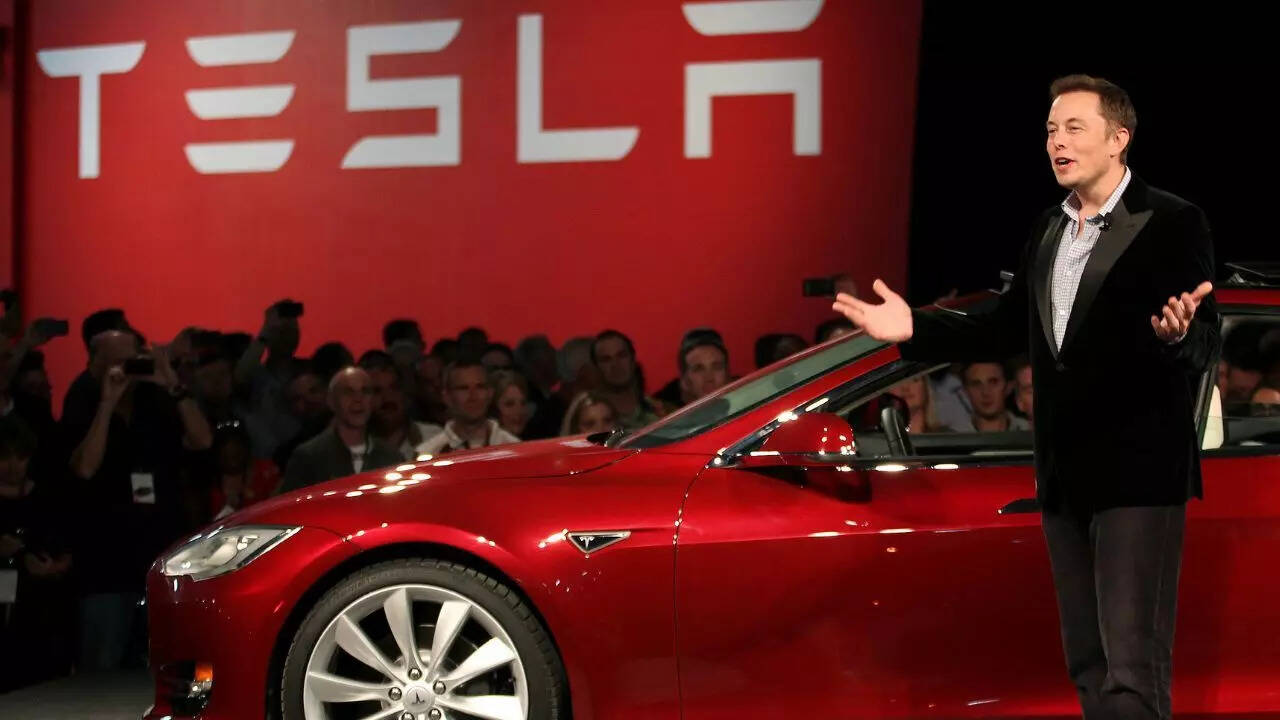
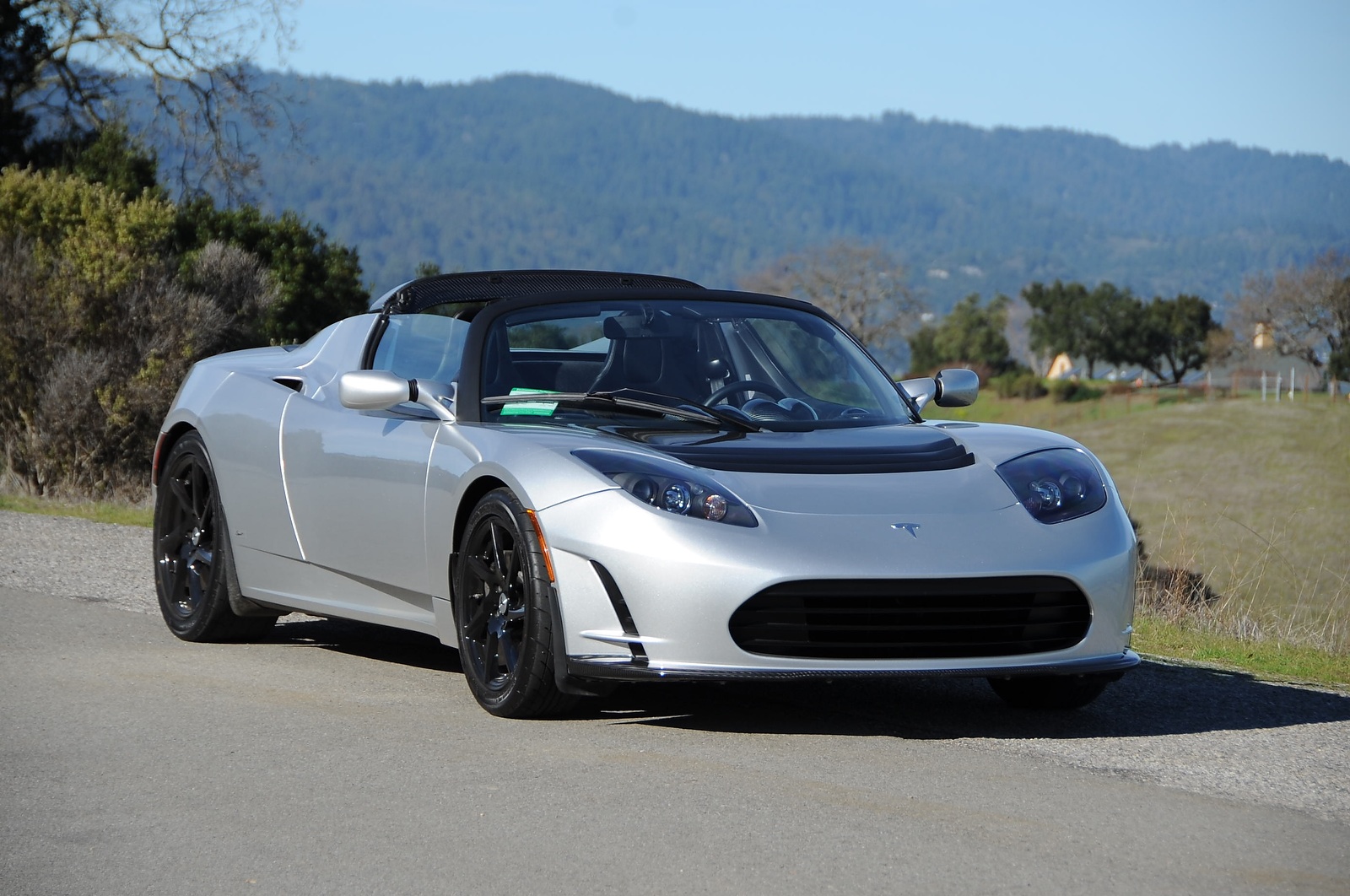
The Tesla Roadster, launched in 2008, was more than just a car; it was a technological declaration. It served as a powerful proof of concept, demonstrating to a skeptical world that electric vehicles could be fast, stylish, and offer a substantial range. It was the physical manifestation of Tesla’s early technological bets and a stark contrast to the utilitarian image often associated with EVs.
Challenging Perceptions: Performance Meets Electric
The Roadster was designed to shatter preconceived notions about electric cars. With its ability to accelerate from 0 to 60 mph in under 4 seconds (for later versions) and offer a range of over 200 miles on a single charge, it directly challenged the performance of gasoline-powered sports cars. This was a critical technological achievement, proving that an all-electric powertrain could deliver exhilarating driving dynamics, not just environmental benefits. The focus was on torque delivery, regenerative braking, and a low center of gravity due to the battery pack, all contributing to a unique and engaging driving experience that was technologically distinct from its ICE counterparts. The Roadster established Tesla’s technological credibility and paved the way for future, more ambitious models.
Building an Ecosystem: Supercharging and Future Vehicle Integration
Even with the Roadster, the seeds of a broader technological ecosystem were being planted. While the Supercharger network would come later with the Model S, the early discussions and planning around charging infrastructure and battery swapping concepts were happening internally. The technological vision extended beyond individual vehicles to a comprehensive energy and transportation solution. The Roadster’s existence also informed the design and engineering principles for future vehicles, particularly the Model S. Lessons learned from the Roadster’s battery thermal management, motor control software, and power electronics were directly applied and scaled up for the mass-market sedan, illustrating a methodical technological progression from a niche product to a broader platform.
Scaling the Vision: From Niche to Mainstream Technology
The success of the Roadster provided the technological validation needed to pursue Tesla’s larger mission: to accelerate the world’s transition to sustainable energy by bringing compelling electric vehicles to the mass market. This required a monumental scaling of their technological capabilities, from design and engineering to manufacturing.
Model S and the Vertical Integration of Tech
The Model S, introduced in 2012, represented a quantum leap in Tesla’s technological ambition. It moved beyond adapting existing sports car chassis to a clean-sheet design, allowing for full optimization of the electric powertrain, battery packaging, and interior space. Crucially, Tesla embarked on a strategy of extreme vertical integration, designing and manufacturing most of its critical components in-house. This included the electric motors, battery packs, power electronics, and sophisticated software. This approach gave Tesla unparalleled control over its technology stack, enabling rapid iteration, deeper optimization, and a cohesive user experience that traditional automakers, relying heavily on a vast supplier network, struggled to replicate. The large central touchscreen, wirelessly upgradable software, and full-stack EV architecture set a new technological benchmark for the automotive industry.
Advancing Autonomous Driving and AI Capabilities
From the outset, Tesla saw the potential for software to revolutionize not just propulsion but also driving itself. While the initial focus was on “Autopilot” as an advanced driver-assistance system, the long-term vision involved full self-driving capabilities. This required massive investments in AI, machine learning, and sensor technology. Tesla’s strategy of collecting vast amounts of real-world driving data from its fleet through its vehicle sensors provided an invaluable training ground for its AI models, a technological advantage that grew exponentially with each car sold. The continuous over-the-air software updates allowed Tesla to deploy new features and improve existing ones, including Autopilot capabilities, long after a car had left the factory, fundamentally changing the relationship between the automaker and the vehicle owner through technology.
Manufacturing Innovation: The Gigafactory Concept
To support its ambitious production targets and further verticalize its operations, Tesla introduced the concept of the Gigafactory. These massive facilities were designed to produce batteries, powertrains, and eventually entire vehicles under one roof, integrating advanced robotics, automation, and process engineering. The Gigafactory itself is a testament to Tesla’s technological approach, viewing manufacturing as a critical part of its product. The goal was to optimize every step of the production process, from raw materials to finished vehicles, to reduce costs, improve efficiency, and accelerate innovation. This holistic approach, treating the factory as a complex machine that builds machines, further underscored Tesla’s identity as a technology company rather than a traditional manufacturer.
The Enduring Technological Legacy and Future Outlook
Tesla’s start was defined by a series of bold technological choices that defied convention and ultimately reshaped an entire industry. From the audacious decision to use laptop batteries in a sports car to the vision of a software-defined vehicle and autonomous driving, its journey has been one of continuous engineering challenge and triumph.
Continuous Innovation as a Business Model
For Tesla, innovation is not just a department; it’s the core of its business model. The company’s origins instilled a culture where technological advancement is pursued relentlessly across all facets of its operations – from battery chemistry and electric motor design to manufacturing processes and artificial intelligence for autonomous driving. This constant push for the next technological breakthrough, combined with a willingness to experiment and iterate quickly, has allowed Tesla to maintain a significant lead in several key areas of EV technology. Its over-the-air updates ensure that vehicles continue to evolve and improve over their lifespan, making them more like continuously upgrading tech devices than static automotive products.
Tesla’s Impact on the Broader Tech Landscape
Tesla’s technological influence extends far beyond the automotive sector. Its pioneering work in large-scale lithium-ion battery production has driven down costs and spurred innovation across the energy storage industry. Its software-first approach to vehicle design has forced traditional automakers to rethink their own strategies, accelerating their investments in software development, connectivity, and over-the-air updates. Furthermore, its pursuit of artificial intelligence for autonomous driving has pushed the boundaries of machine learning and computer vision in real-world applications. The story of “how Tesla started” is fundamentally a narrative about how a focused, technologically driven vision can disrupt established industries and redefine the possibilities of sustainable transportation and energy. It illustrates that at its core, Tesla began as, and remains, a technology company dedicated to solving some of humanity’s most pressing challenges through engineering and innovation.
aViewFromTheCave is a participant in the Amazon Services LLC Associates Program, an affiliate advertising program designed to provide a means for sites to earn advertising fees by advertising and linking to Amazon.com. Amazon, the Amazon logo, AmazonSupply, and the AmazonSupply logo are trademarks of Amazon.com, Inc. or its affiliates. As an Amazon Associate we earn affiliate commissions from qualifying purchases.