
Tesla, a name synonymous with electric vehicles and disruptive innovation, continues to command global attention, not just as an automotive manufacturer but as a multifaceted technology company pushing the boundaries in AI, energy, and robotics. From its pioneering role in making EVs desirable and mainstream to its ambitious ventures into autonomous driving and humanoid robots, Tesla’s trajectory is one of relentless technological pursuit. Understanding “what’s happening” with Tesla requires a deep dive into its core technological advancements, its ongoing challenges, and its audacious vision for the future, all viewed through the lens of a company constantly redefining what’s possible.
Electrifying the Future: Innovations in Automotive Technology
At its heart, Tesla remains an automotive company, albeit one with a software-first, technology-driven philosophy. The past few years have seen the company solidify its position in the EV market while simultaneously pushing the envelope in battery technology, vehicle performance, and manufacturing efficiency. The journey from niche luxury EVs to a diversified lineup aimed at broader market appeal underscores Tesla’s commitment to accelerating the world’s transition to sustainable energy through its primary product offerings.
The Evolving EV Lineup: From Mass Market to Cybertruck
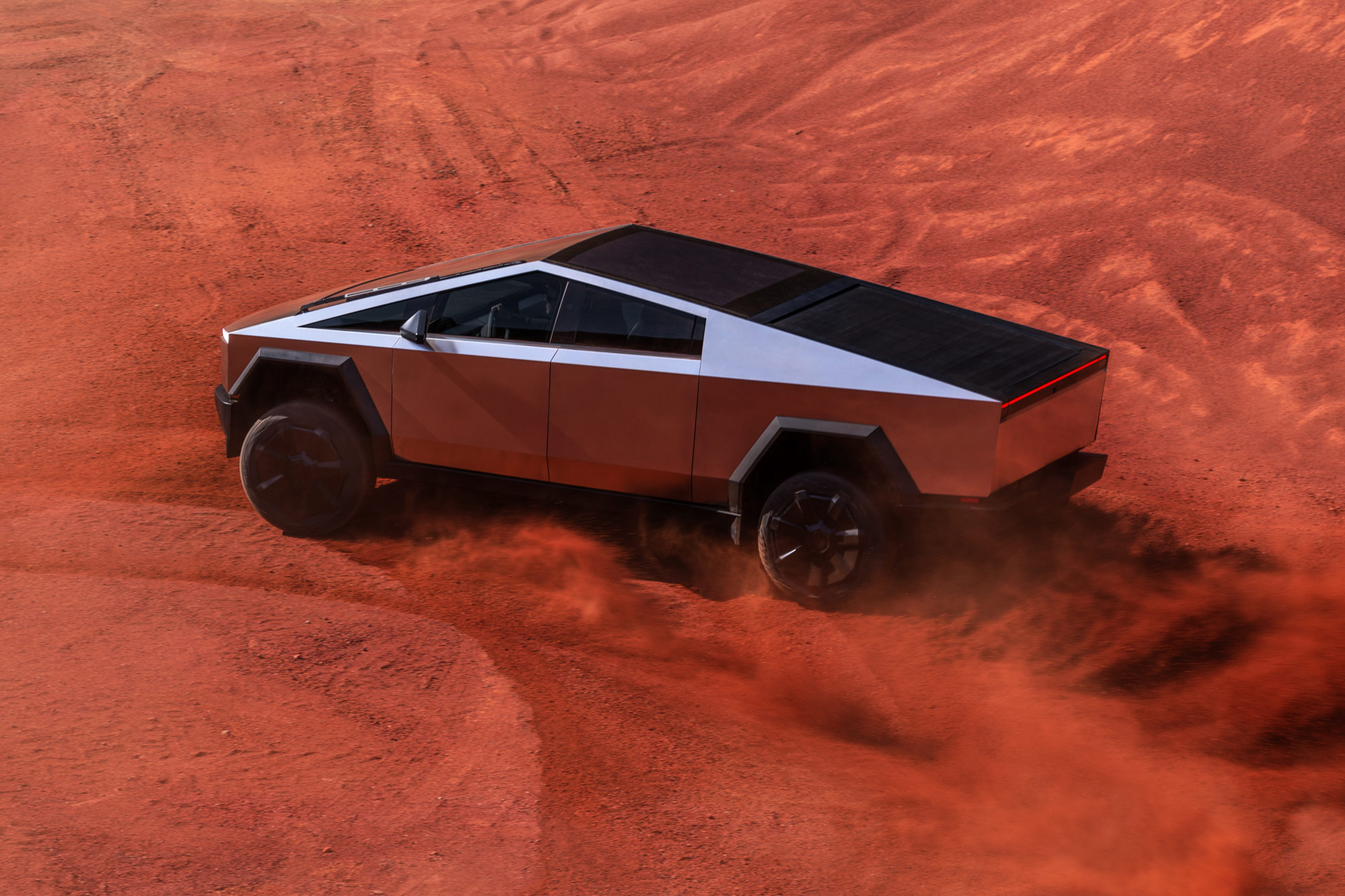
Tesla’s vehicle portfolio has matured significantly. The Model 3 and Model Y have become global best-sellers, proving that EVs can achieve mass-market appeal without compromising on performance or design. These vehicles represent Tesla’s engineering prowess in integrating powerful electric powertrains with minimalist interiors and advanced software. More recently, the long-awaited Cybertruck has begun deliveries, introducing a radical, utilitarian design alongside groundbreaking manufacturing techniques like its stainless-steel exoskeleton and steer-by-wire system. While its initial rollout has been slower than some anticipated, the Cybertruck embodies Tesla’s willingness to challenge conventional automotive design and manufacturing, pushing innovation in materials and assembly processes. Beyond these, the next-generation platform for a smaller, more affordable EV is reportedly in development, signaling a continued focus on expanding market reach and driving down costs. This continuous evolution of the product line, marrying high performance with sustainability, is central to Tesla’s technological narrative.
Battery Day and Beyond: Pushing Energy Density and Cost Efficiency
The backbone of any electric vehicle is its battery, and Tesla has consistently been at the forefront of battery technology innovation. “Battery Day” in 2020 showcased ambitious plans for a new 4680 cell design, promising significant improvements in energy density, power, and most critically, cost reduction. While the full-scale production and integration of 4680 cells have faced manufacturing hurdles, the underlying technological goals remain paramount. Tesla’s strategy involves not just improving the cells themselves but also revolutionary changes in how battery packs are integrated into the vehicle structure, moving towards a “structural battery pack” design. This approach aims to reduce weight, increase range, and simplify manufacturing, essentially turning the battery into a structural component of the car. Furthermore, Tesla’s efforts in vertical integration, including potential for in-house cathode production and refining, highlight a comprehensive strategy to control costs and secure supply chains for this vital component, showcasing a deep technological commitment to mastering the entire battery ecosystem.
Performance and Range: The Relentless Pursuit of Excellence
Tesla vehicles are renowned not just for their electric propulsion but for their blistering performance and impressive range. Constant software updates bring incremental improvements to acceleration, braking, and energy efficiency, enhancing the driving experience over time—a unique feature in the automotive industry. The Ludicrous and Plaid modes demonstrate the extreme capabilities of electric powertrains, pushing the boundaries of what consumers expect from a passenger vehicle. This relentless pursuit of performance is intertwined with range optimization, achieved through aerodynamic design, efficient power electronics, and sophisticated battery management systems. Tesla’s engineering teams continuously work on reducing energy consumption and maximizing the effective capacity of their battery packs, ensuring that range anxiety becomes a thing of the past for an ever-increasing segment of the driving population.
The Dawn of Autonomy and Artificial Intelligence
Perhaps no area captures Tesla’s technological ambition and public scrutiny more than its ventures into artificial intelligence, particularly in autonomous driving and humanoid robotics. These endeavors represent a long-term vision that extends far beyond automotive manufacturing, positioning Tesla as a leader in generalized AI. The progress and challenges in these domains are critical to understanding the company’s future trajectory.
Full Self-Driving (FSD): Navigating the Road to Level 5
Tesla’s Full Self-Driving (FSD) beta program is arguably the most advanced and widely deployed autonomous driving system currently available to consumers. Utilizing an all-camera vision-based approach, FSD aims to achieve Level 5 autonomy—where a vehicle can operate entirely without human intervention under all conditions. The development process is iterative, with frequent software updates pushed to a vast fleet of user vehicles, gathering unprecedented amounts of real-world driving data. This data is fed back into Tesla’s neural networks, allowing the system to learn and improve at an accelerated pace. While FSD has demonstrated remarkable capabilities, it continues to face significant regulatory, ethical, and technological challenges. The transition from supervised autonomy (Level 2/3, requiring driver vigilance) to truly unsupervised (Level 4/5) is proving to be a monumental task, necessitating near-perfect perception, prediction, and planning capabilities in infinitely varied driving scenarios. Nevertheless, Tesla’s commitment to a vision-only approach, eschewing lidar, represents a bold bet on the power of AI and neural networks to replicate and surpass human driving abilities.
Project Optimus: Tesla’s Humanoid Robot Ambition
Beyond vehicles, Tesla’s most surprising and ambitious AI venture is Project Optimus, its humanoid robot. Unveiled as a concept, and later demonstrated in prototype form, Optimus is designed to perform repetitive and dangerous tasks, initially in Tesla’s own factories, with a broader vision for general-purpose robotic assistance in homes and workplaces. The technological underpinnings of Optimus leverage much of the AI expertise developed for FSD, particularly in real-world perception, planning, and motor control. The robot’s sophisticated limb design, integrated sensors, and reliance on neural networks to interpret its environment and execute complex tasks showcase a profound commitment to robotics and AI. While still in its early stages, Optimus represents Tesla’s long-term bet on the future of labor and automation, aiming to address the global labor shortage and unlock unprecedented productivity gains through advanced robotics.
Dojo Supercomputer: Powering the AI Ecosystem
To train the massive neural networks required for both FSD and Optimus, Tesla has developed its own custom-built supercomputer, Dojo. Dojo is designed for high-bandwidth, low-latency AI training, specifically optimized for video data processing—a critical requirement for vision-based autonomous systems. By designing its own chips and architecture, Tesla aims to achieve significant cost and performance advantages over traditional GPU-based supercomputers. Dojo is not merely an incremental improvement; it represents a strategic investment in the fundamental infrastructure needed to accelerate Tesla’s AI development. Its existence underscores the company’s understanding that leadership in AI requires not just brilliant algorithms but also cutting-edge hardware to process the vast datasets necessary for machine learning at scale. Dojo is a testament to Tesla’s holistic approach to AI, from data collection to hardware acceleration, ensuring that its AI ambitions have the computational horsepower to succeed.
Expanding Beyond the Car: Energy and Industrial Solutions
Tesla’s mission statement—”to accelerate the world’s transition to sustainable energy”—clearly indicates that its ambitions extend far beyond just electric vehicles. The company is a significant player in renewable energy generation and storage, with a growing suite of products and a global infrastructure network supporting its automotive division and broader energy goals. This diversification into energy solutions positions Tesla as a holistic provider in the sustainable energy ecosystem.
Solar and Energy Storage: Decentralizing the Grid

Tesla Energy offers integrated solar panels and Powerwall battery storage systems for residential customers, as well as larger-scale Powerpack and Megapack solutions for commercial and utility-scale applications. These products are critical components in decentralizing energy grids, enabling homes and businesses to generate, store, and manage their own clean energy. The technological advancements in these products focus on efficiency, reliability, and seamless integration with existing energy infrastructure. The Powerwall, for instance, provides backup power, optimizes solar self-consumption, and can participate in virtual power plants, intelligently discharging stored energy back to the grid during peak demand. The Megapack, a massive battery storage unit, is designed to stabilize grids, integrate intermittent renewable energy sources, and prevent blackouts on a utility scale. These energy solutions leverage Tesla’s expertise in battery technology and power electronics, extending its impact on sustainable energy far beyond transportation.
The Gigafactory Network: Manufacturing at Scale
The “Gigafactory” concept is a cornerstone of Tesla’s strategy, representing not just massive production facilities but also hubs of manufacturing innovation. These factories integrate vehicle assembly, battery production, and even some material processing under one roof, aiming for unprecedented levels of vertical integration and efficiency. Technologically, Gigafactories are laboratories for advanced robotics, automation, and lean manufacturing principles. Each new Gigafactory, whether in Berlin, Texas, or Shanghai, incorporates lessons learned from previous iterations, aiming to be a “machine that builds the machine” with ever-increasing efficiency and reduced waste. The scale of these operations is critical for achieving the economies of scale necessary to drive down costs and meet global demand, showcasing Tesla’s commitment to industrializing advanced technologies.
Supercharging Infrastructure: Fueling the EV Revolution
A key enabler of widespread EV adoption is a robust charging infrastructure. Tesla’s Supercharger network is widely regarded as the most extensive, reliable, and user-friendly fast-charging network globally. This proprietary technology ensures that Tesla owners can travel long distances with confidence. Recent developments include opening up the Supercharger network to non-Tesla EVs in many regions, a strategic move that not only accelerates the overall transition to EVs but also positions Tesla as a dominant infrastructure provider. The continuous expansion and technological upgrades to the Supercharger V3 and V4 stations, offering faster charging speeds and improved user experience, are vital for overcoming range anxiety and cementing Tesla’s leadership in the EV ecosystem.
Manufacturing Prowess and Production Challenges
Tesla’s ambition is matched by its emphasis on manufacturing technology. Elon Musk famously stated that the “machine that builds the machine” is more complex than the product itself. This philosophy drives continuous innovation in factory automation, supply chain management, and assembly processes, even as it presents significant challenges in scaling production.
The “Machine That Builds the Machine”: Innovation in Production
Tesla’s approach to manufacturing involves radical re-thinking of traditional automotive production. This includes large casting machines (“Giga Press”) that reduce the number of parts needed for car frames from hundreds to just a few, significantly simplifying assembly and reducing weight. The development of structural battery packs, where the battery itself becomes a structural component of the vehicle, further streamlines manufacturing processes and improves structural rigidity. Tesla also invests heavily in proprietary automation and robotics, aiming to achieve unprecedented levels of efficiency and speed on the assembly line. This “machine that builds the machine” philosophy is a core technological differentiator, allowing Tesla to iterate on its manufacturing processes as rapidly as it iterates on its software.
Scaling Production: Hurdles and Breakthroughs
While innovative, scaling these new manufacturing technologies has proven to be incredibly challenging. The “production hell” experienced with the Model 3 and more recently with the Cybertruck highlights the difficulties of bringing groundbreaking production processes to mass scale. These hurdles often involve fine-tuning highly complex automated systems, optimizing supply chains for new components, and training a workforce on novel assembly methods. However, Tesla has consistently demonstrated its ability to overcome these challenges, achieving record production numbers and improving gross margins. The continuous ramp-up of Gigafactories in Texas and Berlin, and the sustained output from Shanghai, are testaments to Tesla’s ability to refine its manufacturing processes and achieve higher levels of throughput and quality over time.
Supply Chain Resilience and Vertical Integration
In a world plagued by supply chain disruptions, Tesla’s strategy of vertical integration has become a significant technological advantage. By bringing more component manufacturing in-house—from battery cell production to software development and even semiconductor design—Tesla gains greater control over its supply chain, reduces reliance on external vendors, and can more rapidly innovate and adapt. This strategy minimizes vulnerabilities to external shocks and allows for tighter integration between hardware and software, leading to optimized performance and cost efficiency. The development of custom AI chips for FSD (Dojo D1 chip) and the exploration of in-house material processing for batteries exemplify this commitment to vertical integration, positioning Tesla as a more resilient and self-sufficient technology company.
The Road Ahead: Future Technologies and Vision
Tesla’s story is one of continuous forward momentum, driven by a long-term vision that consistently looks beyond the immediate horizon. The company’s future technological roadmap is as ambitious as its past, promising new product categories, deeper AI integration, and sustained disruption across multiple industries.
Next-Gen Platforms and Unannounced Products
Beyond the current lineup, Tesla is known to be working on its “next-generation platform,” which promises even more radical manufacturing efficiency and cost reduction, likely underpinning a smaller, more affordable vehicle. This platform is expected to leverage advanced robotics, AI-driven automation, and potentially even more integrated structural components, setting new benchmarks for vehicle manufacturing. Speculation also surrounds other potential products, from electric vans and buses to even more futuristic concepts like flying cars or advanced tunneling machines via The Boring Company, all demonstrating Tesla’s expansive vision for technological innovation.
AI Integration Across All Segments
The thread of artificial intelligence runs through every aspect of Tesla’s future. It’s not just about FSD or Optimus; AI is increasingly being integrated into manufacturing processes for predictive maintenance and quality control, into energy management systems for optimizing grid stability, and into vehicle diagnostics for proactive service. The company’s ongoing investment in custom AI hardware and software development signifies a deep commitment to AI as a foundational technology that will permeate all its products and operations, driving efficiency, intelligence, and autonomy across the board.
Sustained Innovation: A Culture of Disruption
Ultimately, what’s happening with Tesla is a story of sustained innovation. The company fosters a culture of disruption, constantly challenging established norms in automotive, energy, and AI sectors. From pioneering over-the-air software updates for vehicles to building its own supercomputers and developing humanoid robots, Tesla consistently pushes the boundaries of technological possibility. This relentless pursuit of innovation, despite the significant challenges and controversies it often attracts, positions Tesla not merely as a car company but as a pivotal force in shaping the future of technology and sustainable living on a global scale. As the world grapples with climate change and the need for more efficient systems, Tesla’s technological endeavors will continue to be a focal point of discussion and development.
aViewFromTheCave is a participant in the Amazon Services LLC Associates Program, an affiliate advertising program designed to provide a means for sites to earn advertising fees by advertising and linking to Amazon.com. Amazon, the Amazon logo, AmazonSupply, and the AmazonSupply logo are trademarks of Amazon.com, Inc. or its affiliates. As an Amazon Associate we earn affiliate commissions from qualifying purchases.