
In the rapidly evolving landscape of clean energy, few names evoke as much intrigue and technological promise as Oklo. Named after a region in Gabon where natural nuclear fission reactors operated spontaneously two billion years ago, Oklo Inc. is not merely a utility company; it is a technology firm aiming to fundamentally redefine how humanity generates and consumes power. At its core, Oklo is developing advanced “fast fission” reactors designed to provide clean, reliable, and affordable energy on a scale that was previously thought impossible for nuclear technology.

As the world grapples with the dual pressures of decarbonization and an insatiable demand for electricity—driven largely by the explosion of artificial intelligence and high-performance computing—Oklo represents a paradigm shift. By moving away from the massive, multi-billion-dollar light-water reactors of the 20th century and toward compact, fast-neutron modular designs, the company is positioning itself at the intersection of nuclear physics and modern industrial efficiency.
Understanding the Fast Fission Breakthrough
To understand what Oklo is, one must first understand the technological leap it represents over traditional nuclear power. Most commercial nuclear reactors today are “thermal” reactors. They use water to slow down neutrons, which then split uranium-235 atoms to release energy. While effective, this process is relatively inefficient, utilizing less than 5% of the energy potential available in uranium ore and leaving behind a significant amount of radioactive waste.
The Physics of Fast Neutrons
Oklo utilizes a “fast fission” spectrum. In a fast reactor, neutrons are not slowed down by a moderator like water. Instead, they move at high speeds, allowing them to interact with a broader range of isotopes, including those currently considered “waste” in the traditional nuclear cycle. This technological choice is transformative. It allows for a much higher utilization of fuel and the ability to “burn” through long-lived transuranic elements. Essentially, Oklo’s technology can turn the nuclear industry’s greatest liability—spent fuel—into its greatest asset.
Liquid Metal Coolant vs. Traditional Water Systems
A defining technical characteristic of Oklo’s Aurora powerhouse is its use of liquid metal coolant rather than high-pressure water. Traditional reactors require massive containment structures and complex pumping systems to keep water liquid at high temperatures. Oklo employs a pool-type design often utilizing liquid sodium or similar metallic coolants.
Because metals have high thermal conductivity and remain liquid at high temperatures without the need for extreme pressure, the reactor operates at atmospheric pressure. This removes the risk of “loss of coolant” accidents that have historically plagued traditional designs. The technology relies on the laws of physics—specifically natural convection—to circulate heat, making the system inherently safer and mechanically simpler.
The Aurora Powerhouse: Small Modular Reactor (SMR) Architecture
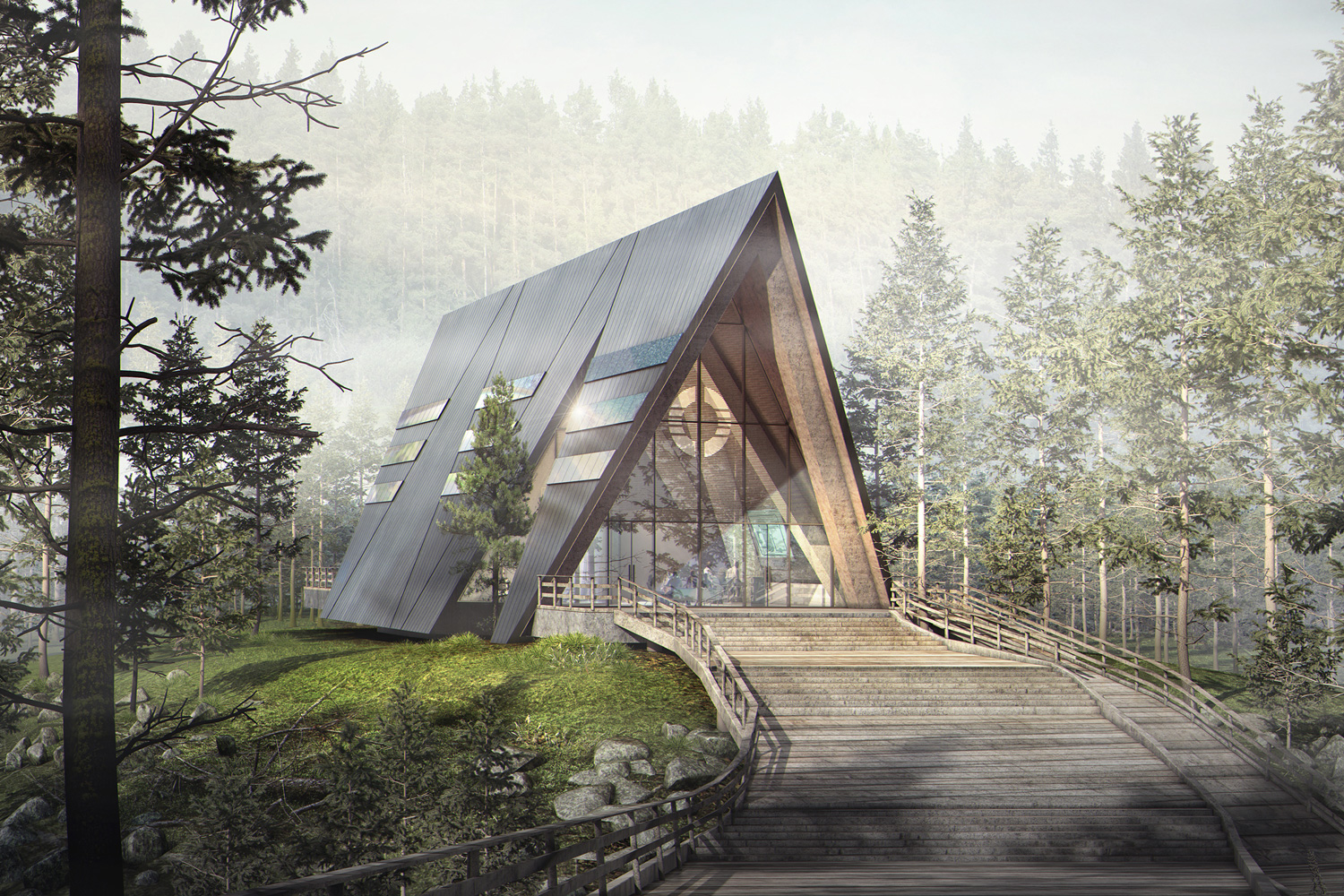
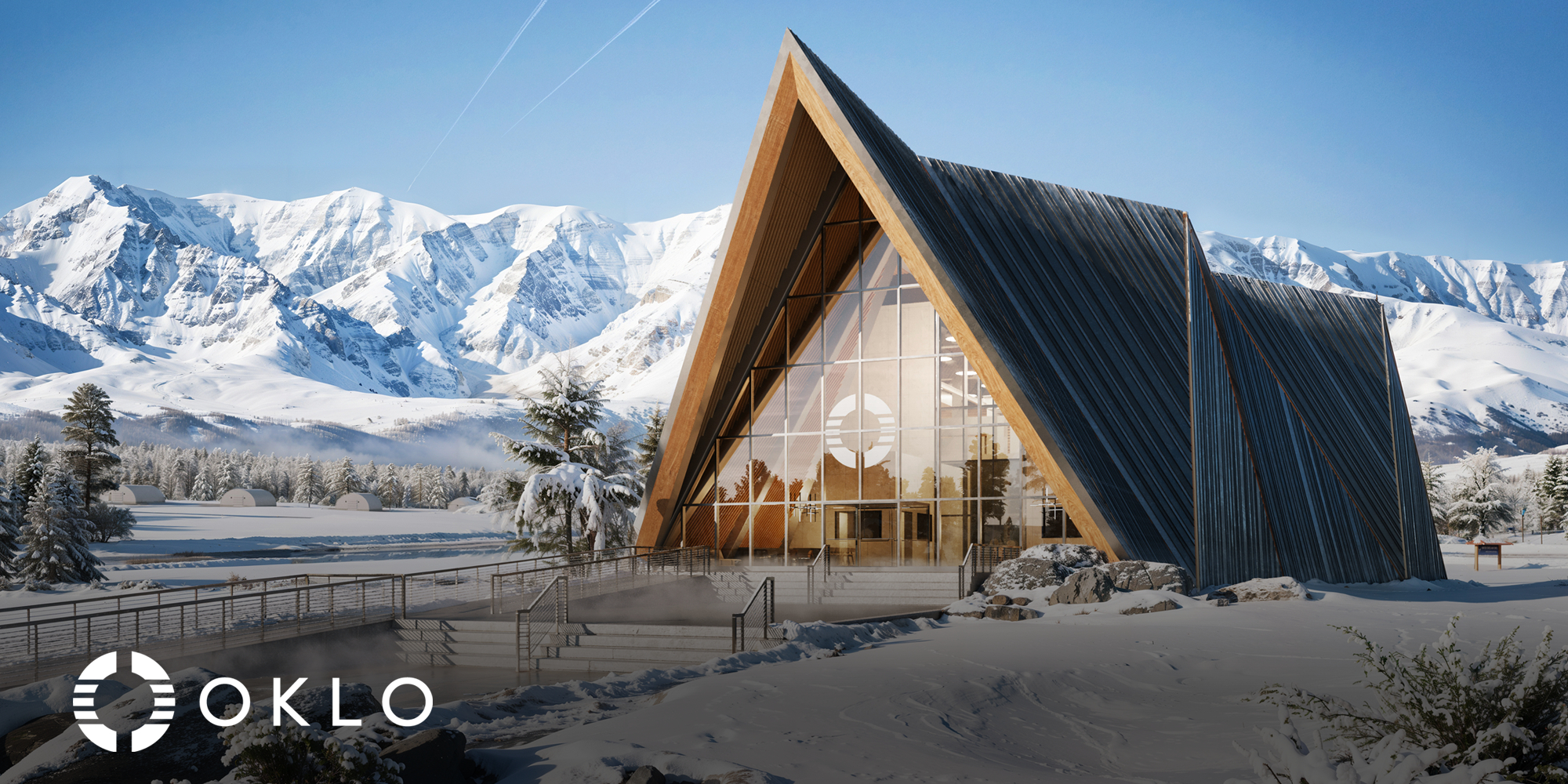
Oklo’s flagship product, the Aurora powerhouse, is a masterpiece of minimalist engineering. Unlike the sprawling industrial complexes associated with traditional nuclear power, the Aurora is designed to be compact, aesthetically integrated, and modular. It is classified as a Small Modular Reactor (SMR) or “micro-reactor,” with power outputs typically ranging from 15 megawatts (MW) to 50 MW.
Modular Construction and Rapid Deployment
The “modular” in SMR refers to the ability to manufacture components in a controlled factory environment and transport them to the site for assembly. This is a departure from the “stick-built” construction of the past, where every reactor was a bespoke multi-year civil engineering project.
For the tech sector, this modularity is revolutionary. It allows for a “plug-and-play” energy solution where powerhouses can be deployed in clusters. If a data center campus grows, the operator can simply add more Aurora units. This scalability mirrors the architecture of modern cloud computing—horizontal scaling rather than vertical over-building.
Passive Safety Systems and Inherent Security
The Aurora design prioritizes “passive safety.” This means the reactor does not require human intervention, computer feedback, or external power to shut down safely in the event of an anomaly. The physics of the fuel and the coolant naturally regulate the reaction; as the temperature rises, the physical properties of the core cause the reaction to slow down automatically.
Furthermore, because the reactor can operate for decades without refueling, the core can be sealed, significantly reducing the risks associated with fuel handling and proliferation. This “nuclear battery” concept allows Oklo to envision deployment in remote areas, industrial sites, and even military installations where traditional grid connectivity is fragile or non-existent.
High-Assay Low-Enriched Uranium (HALEU) and the Circular Fuel Economy
One of the most significant technological hurdles for the next generation of nuclear energy is the fuel itself. Oklo’s reactors are designed to run on High-Assay Low-Enriched Uranium (HALEU), which contains a higher concentration of the fissile isotope U-235 (between 5% and 20%) than the fuel used in existing reactors.
The Potential of Recycled Nuclear Waste
While HALEU is currently in short supply, Oklo’s fast-fission technology provides a unique solution: the ability to use recycled nuclear fuel. The United States currently has thousands of tons of spent nuclear fuel sitting in dry cask storage. This “waste” contains vast amounts of untapped energy.
Oklo is working on fuel fabrication technologies that can take this used material, process it, and turn it into fresh fuel for the Aurora powerhouse. This creates a circular fuel economy, effectively solving the nuclear waste problem by converting it into a carbon-free energy source. By doing so, Oklo is changing the narrative of nuclear power from one of environmental concern to one of extreme sustainability.
Reducing the Long-Term Environmental Footprint
By utilizing fast neutrons to split heavier isotopes, Oklo’s technology significantly reduces the radiotoxicity of the remaining waste. The byproduct of a fast reactor remains radioactive for centuries rather than the hundreds of thousands of years associated with traditional waste. This technological achievement simplifies geological storage requirements and drastically lowers the long-term environmental burden of power generation.
Synergies with Modern Tech: AI, Data Centers, and the Grid of the Future
The timing of Oklo’s emergence is not coincidental. We are currently witnessing a massive divergence between energy supply and demand. The rise of Large Language Models (LLMs) and the infrastructure required for generative AI have led to an explosion in data center energy requirements. Traditional renewable sources like solar and wind, while essential, are intermittent and struggle to provide the 24/7 “baseload” power that high-performance computing requires.
Meeting the Exponential Demand of LLMs
A single AI-driven search query can consume ten times the electricity of a standard Google search. As companies like OpenAI, Microsoft, and Google scale their infrastructure, they are hitting a “power wall”—the inability to get enough electricity from the existing grid to power their chips.
Oklo offers a bespoke solution for the tech industry. Because of its small footprint and passive safety, an Aurora powerhouse can be co-located directly with a data center. This “behind-the-meter” power generation bypasses the congested national grid and provides a dedicated, carbon-free source of electricity that runs 99% of the time. This is why prominent tech figures, such as Sam Altman, have taken significant leadership and investment roles in the company; they recognize that the future of AI is fundamentally a problem of energy density.
Microgrids and Energy Independence
Beyond data centers, Oklo is a pioneer in the “microgrid” movement. As the centralized grid becomes more vulnerable to extreme weather and cyber-attacks, industrial facilities and municipalities are looking for energy independence. Oklo’s technology allows for a decentralized energy architecture. A remote mining operation or a small island community could deploy an Oklo reactor and gain complete energy sovereignty, operating independently of a fragile regional or national infrastructure.
Challenges and the Technological Roadmap Ahead
While the technology behind Oklo is grounded in decades of research—drawing heavily from the Experimental Breeder Reactor II (EBR-II) which operated successfully for thirty years—the path to global deployment is not without its hurdles.
The primary challenge is regulatory. The Nuclear Regulatory Commission (NRC) in the United States has historically been geared toward large-scale light-water reactors. Oklo is currently leading the charge in navigating a new regulatory framework for advanced fission. This involves proving that their passive safety systems and novel coolants meet or exceed existing safety standards through rigorous modeling and pilot programs.
Furthermore, the supply chain for HALEU and the infrastructure for fuel recycling must be scaled alongside the reactors themselves. Oklo is actively engaged in developing these vertical integrations, ensuring that they are not just building a reactor, but an entire ecosystem of advanced energy production.
In conclusion, Oklo represents the “Napa Valley” of nuclear innovation—a blend of high-tech Silicon Valley agility and rigorous nuclear physics. It is a company that views energy not as a commodity to be managed, but as a technological frontier to be conquered. By mastering fast fission, modular design, and fuel recycling, Oklo is paving the way for a future where energy is no longer a constraint on human or technological progress, but a clean, abundant foundation for the next century of innovation.
aViewFromTheCave is a participant in the Amazon Services LLC Associates Program, an affiliate advertising program designed to provide a means for sites to earn advertising fees by advertising and linking to Amazon.com. Amazon, the Amazon logo, AmazonSupply, and the AmazonSupply logo are trademarks of Amazon.com, Inc. or its affiliates. As an Amazon Associate we earn affiliate commissions from qualifying purchases.