
For investors, analysts, and market watchers, the release of a company’s quarterly earnings report is a pivotal event. It offers a transparent look into financial health, operational performance, and future outlook. When the company in question is NVIDIA (NVDA), a titan in the semiconductor industry and a driving force behind the artificial intelligence revolution, the anticipation surrounding its earnings call reaches fever pitch. Knowing “when does NVDA report earnings next” isn’t just a matter of scheduling; it’s a critical piece of information that can dictate market sentiment, influence portfolio decisions, and even set the tone for the broader tech sector.

NVIDIA’s financial disclosures are particularly impactful due to its central role in several high-growth markets. From powering advanced gaming graphics and professional visualization to its dominance in data centers for AI training and inference, and its increasing presence in automotive and robotics, NVIDIA’s performance provides a valuable barometer for technological progress and economic trends. Therefore, understanding the rhythm of its earnings announcements and what to expect from them is paramount for anyone navigating the intricate world of modern finance and technology.
Understanding NVIDIA’s Earnings Schedule
Publicly traded companies, by regulatory mandate, must regularly disclose their financial performance to shareholders and the broader market. For most companies listed on U.S. exchanges, this means reporting earnings on a quarterly basis. NVIDIA is no exception, adhering to a strict calendar that sees it releasing financial results four times a year.
The Regular Cadence of Quarterly Reports
NVIDIA’s fiscal year typically ends in late January, which means its quarterly periods don’t perfectly align with calendar quarters. Instead, its quarters often end in April (Q1), July (Q2), October (Q3), and January (Q4). Following the close of each fiscal quarter, there’s a period of internal review, auditing, and preparation before the official earnings report and accompanying conference call are released. This process usually takes several weeks.
This regular cadence is predictable in its frequency but the exact dates vary slightly each quarter and year. The consistency, however, allows investors to plan their research and analysis cycles around these key announcements.
How Earnings Dates Are Announced
The primary and most reliable source for NVIDIA’s upcoming earnings date is its official Investor Relations website. Companies typically announce the exact date and time of their earnings release and subsequent conference call a few weeks in advance. This announcement is often made via a press release, which is then picked up by major financial news outlets and data providers.
Additionally, regulatory filings with the U.S. Securities and Exchange Commission (SEC), such as Form 10-Q for quarterly reports and Form 10-K for annual reports, will contain the detailed financial statements shortly after the earnings release. Financial news services (like Bloomberg, Reuters, Wall Street Journal) and financial data platforms (like Yahoo Finance, Google Finance, Investing.com) aggregate and disseminate these dates widely, making them accessible to the public. However, always cross-reference with NVIDIA’s official IR page for the most accurate information.
Key Dates to Monitor for NVDA
While specific dates change, investors can generally anticipate NVIDIA’s earnings reports to occur roughly three to four weeks after the close of its fiscal quarter. For example, if a quarter ends in late October, the earnings report might be expected in mid-to-late November.
To determine the next earnings date, one should:
- Check NVIDIA’s Investor Relations Website: This is the definitive source. Look for press releases titled “NVIDIA to Announce Financial Results for…”
- Consult Reputable Financial News Sites: Major financial news outlets will report these dates as soon as they are announced.
- Utilize Financial Calendars: Many brokerage platforms and financial data websites offer earnings calendars that track upcoming announcements for thousands of companies.
Staying informed about these dates is the first step in preparing for an event that can significantly impact the stock’s performance and provide critical insights into the company’s trajectory.
Why NVIDIA’s Earnings Reports Matter to Investors
NVIDIA’s earnings reports are far more than just dry financial statements; they are crucial narrative points that influence investor confidence, analyst ratings, and ultimately, the stock’s valuation. Given NVIDIA’s significant market capitalization and its role as a proxy for key technological advancements, its performance reverberates across the entire market.
Beyond the Headline Numbers: Revenue and EPS
While the immediate focus often lands on two headline figures – total revenue and earnings per share (EPS) – the true value of an earnings report lies in the details.
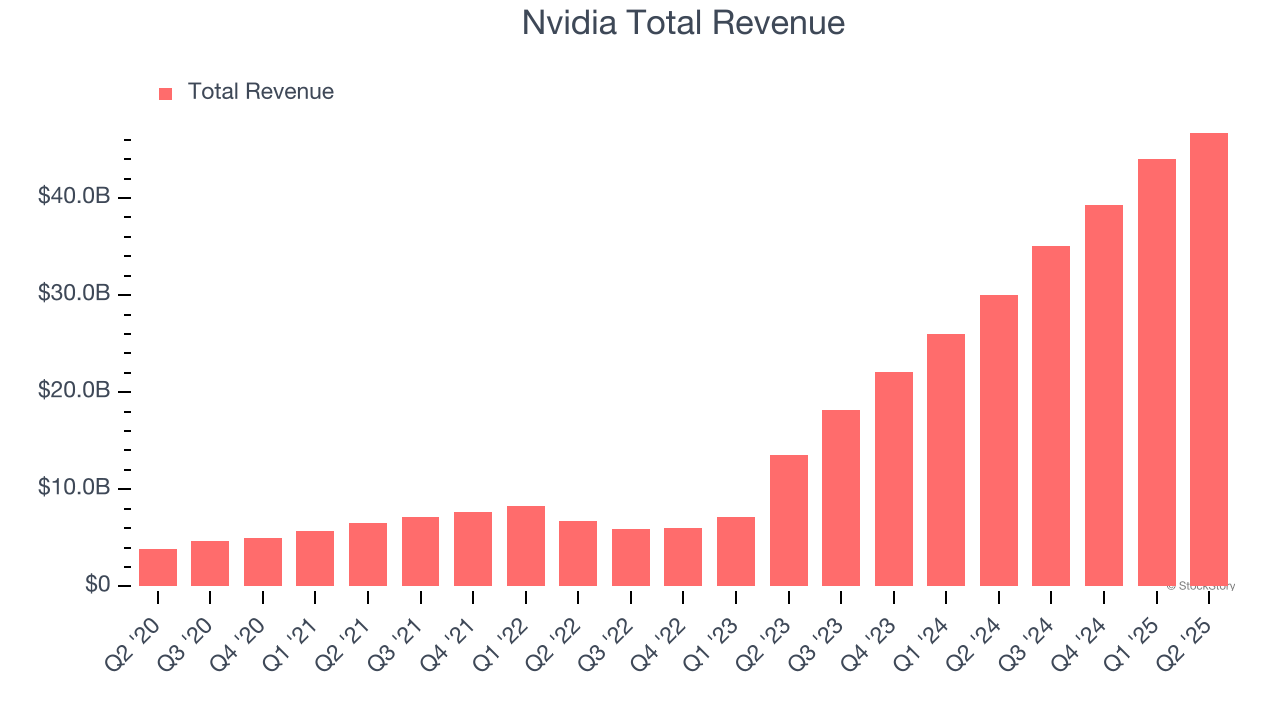
- Revenue: This figure indicates the total sales generated during the quarter, reflecting demand for NVIDIA’s products and services. Strong revenue growth, especially exceeding analyst expectations, is a powerful indicator of market expansion and competitive strength.
- Earnings Per Share (EPS): This represents the portion of a company’s profit allocated to each outstanding share of common stock. It’s a key profitability metric. Both actual EPS and whether it “beats” or “misses” consensus estimates are closely watched.
However, intelligent investors look beyond these initial numbers to understand the underlying drivers and trends.
Growth Drivers and Market Commentary
NVIDIA’s business is highly diversified within its technological scope. Its earnings calls provide management with an opportunity to elaborate on performance across its key segments:
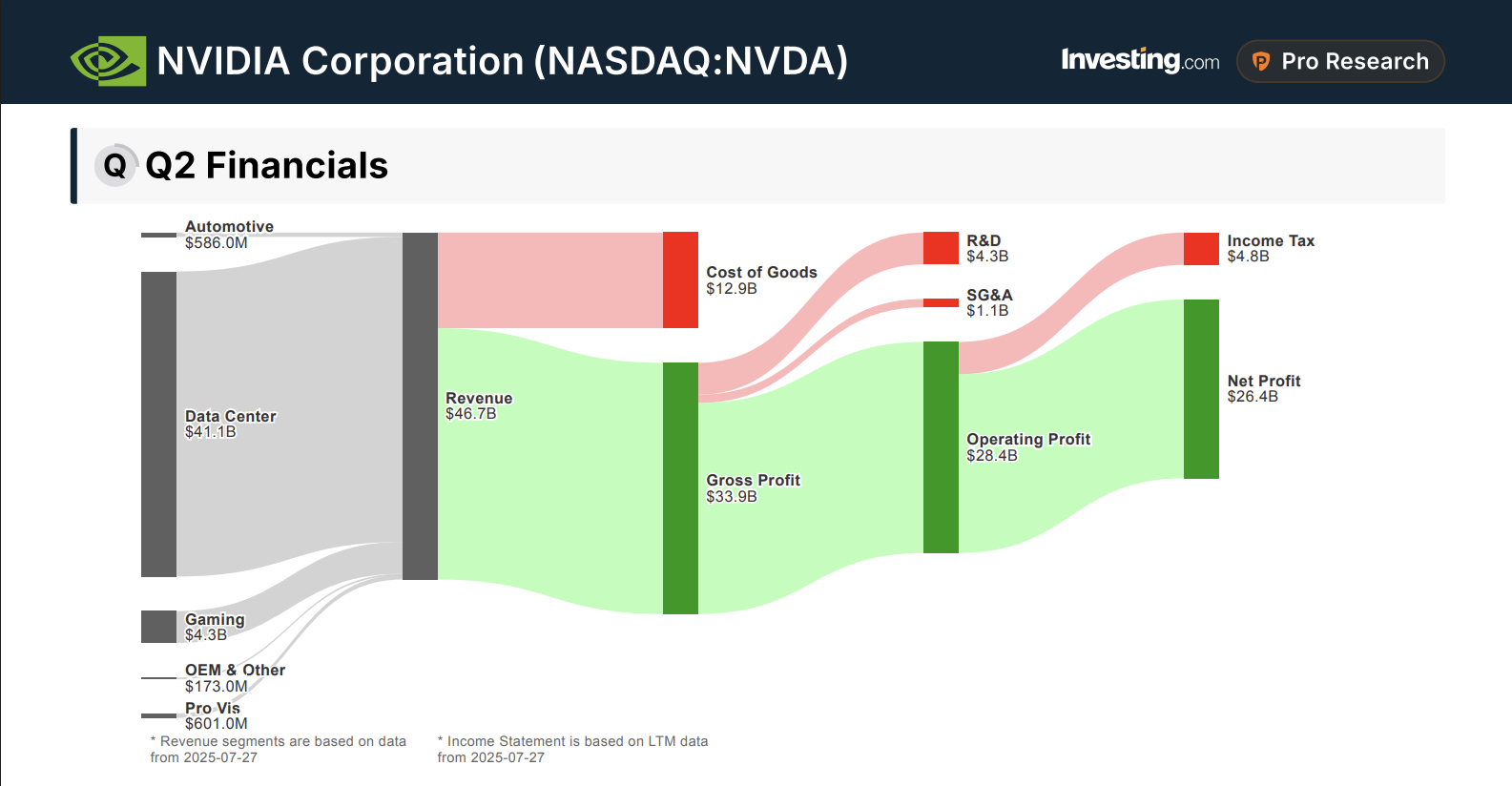
- Data Center: This segment, heavily driven by AI and accelerated computing, is often the star performer and a primary focus for growth investors. Commentary here can shed light on AI adoption rates, cloud spending, and competitive dynamics.
- Gaming: Historically NVIDIA’s core business, this segment reflects consumer spending habits, GPU upgrade cycles, and competitive pressure from rivals.
- Professional Visualization: This includes workstation GPUs for design, engineering, and content creation. It often indicates enterprise spending trends.
- Automotive: While smaller, this segment is crucial for future growth, encompassing autonomous driving platforms and in-vehicle infotainment.
Management’s commentary during the conference call and in the earnings release offers qualitative insights into demand trends, supply chain dynamics, new product ramps, and strategic initiatives. This narrative context is often as important as the numbers themselves.
Impact on Stock Price and Volatility
NVIDIA’s stock is known for its volatility, and earnings reports are often catalysts for significant price swings.
- Positive Surprises: Strong revenue beats, higher-than-expected EPS, and optimistic guidance can send the stock soaring, sometimes by double-digit percentages in a single day.
- Negative Surprises: Conversely, missed expectations, weak guidance, or concerning trends in key segments can trigger sharp sell-offs.
This volatility makes earnings season a high-stakes period for options traders and short-term investors, while long-term holders also monitor these events for fundamental shifts in the company’s outlook. The market’s reaction is not always rational and can be influenced by pre-report “whisper numbers” and prevailing investor sentiment.
A Bellwether for the Tech Sector
NVIDIA is not just another tech company; it’s a bellwether for several critical technological frontiers, particularly AI and advanced computing. Its performance is often seen as an indicator of the health and direction of the broader semiconductor industry, data center infrastructure spending, and the pace of AI adoption. A strong quarter from NVIDIA can lift investor confidence across related industries, while a weak report can send ripples through the entire tech ecosystem. This makes NVIDIA’s earnings a macroeconomic event for the technology world, closely watched by economists and industry analysts alike.
What to Look For in an NVDA Earnings Report
To truly grasp the implications of an NVIDIA earnings report, investors need to dive deeper than the headlines. A comprehensive analysis involves scrutinizing several key metrics and management’s forward-looking statements.
Revenue and Earnings Per Share (EPS) Guidance
While past performance is reported, future guidance is often the most impactful element for stock price movement. NVIDIA typically provides guidance for its next fiscal quarter, including expected revenue and sometimes gross margin.
- Revenue Guidance: Analysts widely track this. If management’s forecast for the upcoming quarter is above or below consensus estimates, it can significantly alter investor sentiment, as it reflects the company’s internal expectations for demand and market conditions.
- EPS Guidance: Though less common to be specific on EPS, insights into future profitability drivers are critical. Guidance often reflects anticipated capital expenditures, R&D investments, and operating expenses.
Segment Performance Breakdown
NVIDIA provides a detailed breakdown of revenue and often profit margins by its major reporting segments:
- Data Center: This is crucial. Look for growth rates, customer commentary (e.g., cloud service providers, enterprise AI), and any insights into demand for its Hopper and Blackwell architectures.
- Gaming: Analyze GPU unit sales, average selling prices (ASPs), and trends in the consumer market.
- Professional Visualization & Automotive: While smaller, consistent growth and new design wins in these areas demonstrate diversification and future potential.
Understanding which segments are driving growth and where challenges lie offers a granular view of the company’s health.
Gross Margins and Profitability Trends
Gross margin (revenue minus cost of goods sold, divided by revenue) is a critical indicator of NVIDIA’s pricing power and cost efficiency.
- High Gross Margins: Suggests strong product differentiation, brand loyalty, and efficient production.
- Trending Margins: Changes in gross margin can signal shifts in product mix (e.g., selling more lower-margin products), competitive pressures, or changes in manufacturing costs.
Operating expenses (R&D, SG&A) also matter. Are they growing in line with revenue, or is the company investing heavily in future growth, potentially at the expense of short-term profitability?
Inventory Levels and Supply Chain Insights
In the semiconductor industry, inventory management is key.
- Rising Inventory: Could signal slowing demand or overproduction, potentially leading to future price cuts.
- Falling Inventory: Might indicate strong demand, efficient supply chain management, or even supply constraints.
Management’s commentary on supply chain resilience, component availability, and manufacturing capacity provides crucial context for future sales potential.
Shareholder Return Strategies
While NVIDIA has historically focused on reinvesting profits for growth, its earnings reports also provide updates on capital allocation strategies, including:
- Dividends: While relatively small, any changes are noted.
- Share Buybacks: Repurchasing shares reduces the number of outstanding shares, which can boost EPS and demonstrate confidence from management.
These actions reflect management’s view on the company’s valuation and its ability to generate excess cash flow.
Strategies for Investors Around Earnings Season
Navigating earnings season, especially for a high-volatility stock like NVIDIA, requires a thoughtful and disciplined approach. Both short-term traders and long-term investors need strategies to manage risk and capitalize on opportunities.
Before the Report: Researching Analyst Expectations and Whisper Numbers
Preparation is key. Before NVIDIA’s earnings release:
- Review Analyst Estimates: Major financial news sites and brokerage platforms publish consensus estimates for revenue and EPS. Understand what the market is generally expecting.
- Look for “Whisper Numbers”: These are unofficial, often higher or lower, estimates circulating among traders and institutional investors. While anecdotal, they can sometimes influence post-earnings reaction more than consensus figures.
- Assess News Flow: Has there been any significant industry news, competitor updates, or macroeconomic data that might influence NVIDIA’s performance or outlook?
- Examine Valuation: How is the stock currently valued relative to its peers and its historical metrics? Is a lot of future growth already priced in?
During the Conference Call: Listening to Management’s Commentary
The live earnings conference call, which typically follows the release of the written report, is an invaluable resource.
- Listen for Nuance: Management’s tone, emphasis, and responses to analyst questions can provide context not found in the written release.
- Focus on Guidance: Pay close attention to any updates or reiterations of forward-looking guidance.
- Identify Key Themes: What are the company’s strategic priorities? What challenges or opportunities are they highlighting?
Many investors will read the transcript or listen to the replay of the call, even if they can’t attend live.
After the Report: Analyzing the Reaction and Long-Term Implications
The market’s immediate reaction can be swift and sometimes overdone.
- Don’t Overreact to Short-Term Volatility: A significant price movement immediately after the report doesn’t always reflect the long-term fundamentals.
- Evaluate Against Expectations: Did the company beat, meet, or miss expectations? How did management’s guidance compare to what analysts were anticipating?
- Re-evaluate Your Investment Thesis: Has anything fundamentally changed about NVIDIA’s business model, competitive landscape, or growth prospects that warrants a change in your long-term investment decision?
Managing Risk and Volatility
Given the potential for large price swings, risk management is paramount.
- Position Sizing: Avoid over-committing capital to a single stock, especially before a high-stakes event like earnings.
- Options Strategies: Some investors use options (e.g., straddles, strangles) to either hedge existing positions or speculate on significant price movement without directional bias. These are complex and carry their own risks.
- Long-Term Perspective: For long-term investors, minor fluctuations post-earnings might be less concerning than the overall trend and fundamental health of the company. It’s often wiser to focus on whether the earnings report confirms or contradicts your long-term thesis.
- Diversification: Never put all your eggs in one basket. Diversifying your portfolio across different sectors and asset classes can mitigate the impact of any single company’s earnings volatility.
In conclusion, knowing when NVIDIA reports its earnings next is merely the first step. The true value comes from understanding the comprehensive data, management commentary, and market dynamics that accompany this critical financial disclosure. For anyone invested in or considering NVIDIA, a meticulous approach to earnings season is not just recommended, but essential for informed decision-making in the fast-paced world of tech finance.
aViewFromTheCave is a participant in the Amazon Services LLC Associates Program, an affiliate advertising program designed to provide a means for sites to earn advertising fees by advertising and linking to Amazon.com. Amazon, the Amazon logo, AmazonSupply, and the AmazonSupply logo are trademarks of Amazon.com, Inc. or its affiliates. As an Amazon Associate we earn affiliate commissions from qualifying purchases.