
The question “how many visually impaired people in the world?” extends far beyond a simple demographic count. It uncovers a profound human reality and, crucially for the technology sector, reveals a vast, underserved market that is actively driving some of the most innovative advancements in assistive technology. For hundreds of millions globally, sight is either compromised or absent, presenting daily challenges that range from navigation and communication to education and employment. It is precisely this global scale of visual impairment that has spurred a dedicated segment of the tech industry to develop solutions aimed at fostering independence, enhancing quality of life, and bridging the accessibility gap.
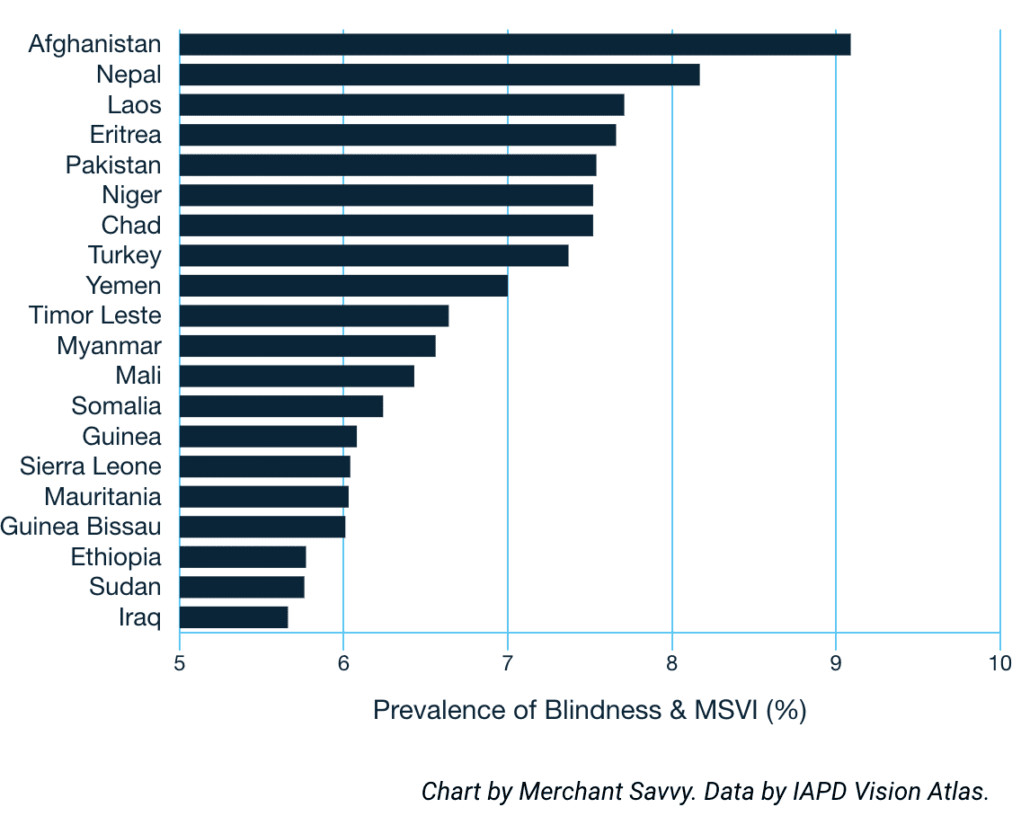
This article delves into the sheer magnitude of visual impairment worldwide, exploring how this significant population has become a catalyst for technological evolution. From the foundational tools of yesterday to the cutting-edge AI-powered solutions of tomorrow, we will examine how technology is responding to this critical need, the challenges that persist, and the promising future of an increasingly accessible world shaped by constant innovation.
Understanding the Global Landscape of Visual Impairment
Before exploring the technological responses, it’s essential to grasp the scope of visual impairment globally. It’s a condition with varied definitions, causes, and impacts, affecting people across all age groups and socio-economic strata.
Defining Visual Impairment and Blindness
Visual impairment encompasses a spectrum, not just absolute blindness. According to definitions often adopted by global health organizations, “visual impairment” refers to a decrease in vision that cannot be fully corrected by ordinary eyeglasses or contact lenses. This category typically includes “low vision,” where an individual still has some sight but experiences significant difficulty with everyday tasks, and “blindness,” which denotes a severe loss of vision, often defined as a visual acuity worse than 20/400 (or 6/120) with the best possible correction, or a very restricted visual field. It’s crucial to understand that even individuals with “low vision” require and benefit immensely from assistive technologies, making the overall population needing technological aid much larger than just those classified as blind.
The Magnitude of the Challenge
While precise, up-to-the-minute figures can fluctuate, conservative estimates from leading health bodies suggest that hundreds of millions of people globally live with some form of visual impairment, a substantial portion of whom are classified as blind. This staggering number represents a significant percentage of the world’s population, underscoring the universal relevance of accessibility solutions. The prevalence is often higher in developing regions due to factors like limited access to healthcare, nutrition, and preventative measures, but visual impairment remains a significant concern in developed nations as well, particularly among aging populations. The impact extends beyond the individual, affecting families, communities, and national economies.
The Socio-Economic Implications
Visual impairment presents profound socio-economic challenges. For individuals, it can impede access to education, limit employment opportunities, and restrict participation in social and cultural activities, leading to isolation and reduced independence. For societies, there are economic costs associated with healthcare, rehabilitation, and lost productivity. However, investing in solutions, particularly technological ones, can significantly mitigate these challenges, enabling greater inclusion, fostering economic independence, and allowing visually impaired individuals to contribute more fully to their communities. This realization forms the bedrock of the assistive technology sector.
Tech’s Response: Aiding Independence and Empowerment
The tech industry’s engagement with visual impairment has evolved dramatically over decades, moving from rudimentary aids to sophisticated digital solutions. This journey reflects a growing understanding of diverse user needs and the expanding capabilities of technology itself.
Evolution of Assistive Technologies
Historically, assistive technologies for the visually impaired included tactile systems like Braille, walking canes, and guide dogs. While these remain indispensable, the advent of electronics marked a turning point. Early innovations like magnifiers with built-in lighting, CCTVs (closed-circuit televisions) for text enlargement, and basic audio output devices laid the groundwork for the digital revolution that was to come. Each step forward aimed to compensate for visual loss, providing alternative sensory input or amplifying remaining vision.
The Digital Revolution and Accessibility
The widespread adoption of personal computers and, more significantly, the internet and smartphones, ushered in a new era of accessibility. Suddenly, information previously locked behind visual interfaces became accessible through software. Screen readers like JAWS and NVDA transformed how visually impaired individuals interacted with computers, converting text and graphical elements into speech or Braille. Mobile operating systems (iOS with VoiceOver, Android with TalkBack) integrated robust accessibility features directly, making smartphones powerful assistive devices right out of the box. This integration meant that countless apps, from banking to navigation, became potentially usable, drastically expanding independence.
Key Categories of Assistive Tech
Today’s assistive technology landscape is diverse and continually expanding, catering to various levels of visual impairment and specific needs:
- Screen Readers and Magnifiers: Software tools that convert digital text into speech or enlarge on-screen content, essential for computer and mobile phone usage.
- Braille Displays and Notetakers: Hardware devices that provide tactile output of digital text, often portable for reading on the go, or dedicated devices for typing and note-taking in Braille.
- Navigation Tools: GPS-enabled apps tailored for pedestrian navigation (e.g., Seeing AI, Aira), often integrating haptic feedback, audio cues, and even human assistance to guide users safely.
- Computer Vision Applications: Apps and devices that use cameras and artificial intelligence to “see” and interpret the environment, reading text aloud, identifying objects, recognizing faces, and describing scenes.
AI and Emerging Technologies: A New Frontier for Accessibility
The convergence of artificial intelligence, advanced sensors, and wearable computing is ushering in a revolutionary phase for assistive technologies, promising an even greater degree of independence and integration for visually impaired individuals.
Artificial Intelligence at the Forefront
AI is arguably the single most transformative force in modern assistive technology. Its ability to process vast amounts of data, recognize patterns, and make intelligent decisions mimics human cognitive functions in ways that are immensely beneficial for those with visual impairment.
- Image Recognition for Describing Surroundings: AI-powered apps (like Microsoft’s Seeing AI or Google’s Lookout) can identify objects, currency, colors, and even gauge emotions from facial expressions, providing real-time audio descriptions of the user’s environment.
- Natural Language Processing (NLP): Improves the naturalness and accuracy of text-to-speech engines, making information more pleasant and easier to consume. NLP also enhances voice command systems, allowing for more intuitive and flexible interaction with devices.
- Machine Learning for Personalized Assistance: AI can learn user preferences, anticipate needs, and adapt interfaces. For instance, a smart navigation system could learn a user’s preferred routes, common destinations, and even adjust for personal walking pace or safety considerations.

Wearable Tech and Smart Devices
Wearable technology is becoming an extension of the visually impaired user, offering discreet and always-on assistance. Smart glasses, for example, can overlay information, read signs, or connect to remote assistants. Haptic vests or bracelets provide directional cues or alerts through vibrations. The concept of “digital eyes” – cameras coupled with AI that translate the visual world into auditory or tactile information – is moving from niche prototypes to more integrated consumer products.
Virtual and Augmented Reality (VR/AR) for Training and Navigation
While often associated with gaming, VR and AR hold significant potential for accessibility. VR can create safe, simulated environments for visually impaired individuals to practice navigation skills, learn new routes, or experience places without real-world risk. AR, through smart glasses or smartphone overlays, could potentially provide enhanced visual information for those with low vision, highlighting objects, increasing contrast, or simplifying complex scenes.
Robotics and Autonomous Systems
The future could see the integration of robotics. Guiding robots, for example, could offer dynamic and intelligent navigation assistance, learning from the environment and adapting to new situations. Autonomous vehicles also present a huge opportunity, promising independent and safe transportation for visually impaired individuals, provided their interfaces are designed with robust accessibility features from the outset.
Challenges and Future Directions in Assistive Tech
Despite the incredible strides, the journey towards universal accessibility through technology faces ongoing challenges and requires continuous innovation and thoughtful development.
Bridging the Digital Divide
A significant barrier remains access. The most advanced assistive technologies are often expensive, limiting their reach in lower-income communities or developing countries. Furthermore, consistent internet access, digital literacy, and the availability of support infrastructure are not universal, exacerbating the digital divide for visually impaired individuals who could otherwise benefit. Efforts to create more affordable, open-source, and widely distributed solutions are crucial.
The Importance of User-Centric Design
True innovation in assistive technology cannot happen in a vacuum. It requires deep engagement with the visually impaired community at every stage of development. User-centric design ensures that solutions are genuinely useful, intuitive, and address real-world needs rather than making assumptions. This involves extensive testing, feedback loops, and co-creation processes.
Ethical Considerations and Data Privacy
As AI becomes more integrated, ethical considerations become paramount. Questions surrounding data privacy, algorithmic bias (e.g., if an object recognition system performs poorly on certain skin tones), and the potential for over-reliance on technology need careful thought and regulation. Ensuring that these technologies empower without compromising privacy or agency is critical.
The Road Ahead: Personalization and Integration
The future of assistive tech points towards greater personalization, where devices and software adapt precisely to an individual’s specific visual impairment, cognitive abilities, and preferences. We can also expect more seamless integration of these technologies into everyday objects and environments, moving beyond dedicated devices to a truly smart and accessible ecosystem where assistance is ambient and context-aware.
The Economic and Social Impact of an Accessible Future
The global population of visually impaired people isn’t just a challenge; it’s a powerful impetus for economic growth and social progress driven by technology.
Market Opportunity and Investment
With hundreds of millions needing visual assistance, the assistive technology market is substantial and growing. This represents a significant opportunity for innovation, investment, and job creation. Companies that prioritize accessibility are not only fulfilling a social responsibility but also tapping into a lucrative market segment that rewards well-designed, effective solutions. This drives competition and accelerates technological progress.
Fostering Inclusion and Productivity
Technology’s ability to unlock independence for visually impaired individuals has profound social and economic benefits. It facilitates better educational outcomes, higher employment rates, and greater participation in civic and cultural life. When individuals can fully engage with society and the economy, it benefits everyone through increased diversity, broader perspectives, and enhanced collective productivity.

A Call for Universal Design
Ultimately, the goal isn’t just to create specialized assistive technologies but to advocate for “universal design” – the concept that products and environments should be inherently usable by all people, to the greatest extent possible, without the need for adaptation or specialized design. By embedding accessibility principles from the initial design phase of all technology, from websites to smart home devices, we move closer to a truly inclusive digital and physical world.
In conclusion, the question of “how many visually impaired people in the world” unveils a story of immense human need met with extraordinary technological ingenuity. This vast and diverse global population is not merely a recipient of aid but a powerful force propelling the development of cutting-edge assistive technologies. From the foundational tools that opened digital doors to the AI-powered innovations that promise to revolutionize independence, technology continues to adapt, empower, and connect. As we look forward, sustained innovation, user-centric design, and a commitment to universal accessibility will be key to building a future where visual impairment is no longer a barrier but a catalyst for ever-more inclusive technological advancement.
aViewFromTheCave is a participant in the Amazon Services LLC Associates Program, an affiliate advertising program designed to provide a means for sites to earn advertising fees by advertising and linking to Amazon.com. Amazon, the Amazon logo, AmazonSupply, and the AmazonSupply logo are trademarks of Amazon.com, Inc. or its affiliates. As an Amazon Associate we earn affiliate commissions from qualifying purchases.