
When evaluating the market capitalization and fiscal health of a global behemoth like Microsoft, investors and analysts often look at balance sheets, quarterly earnings, and product roadmaps. However, one of the most critical indicators of a company’s operational efficiency and growth potential is its human capital. As of the most recent fiscal filings, Microsoft employs approximately 221,000 people globally. This figure is not merely a headcount; it represents a massive investment in payroll, a strategic distribution of global resources, and a primary driver of the company’s ability to generate value for its shareholders.
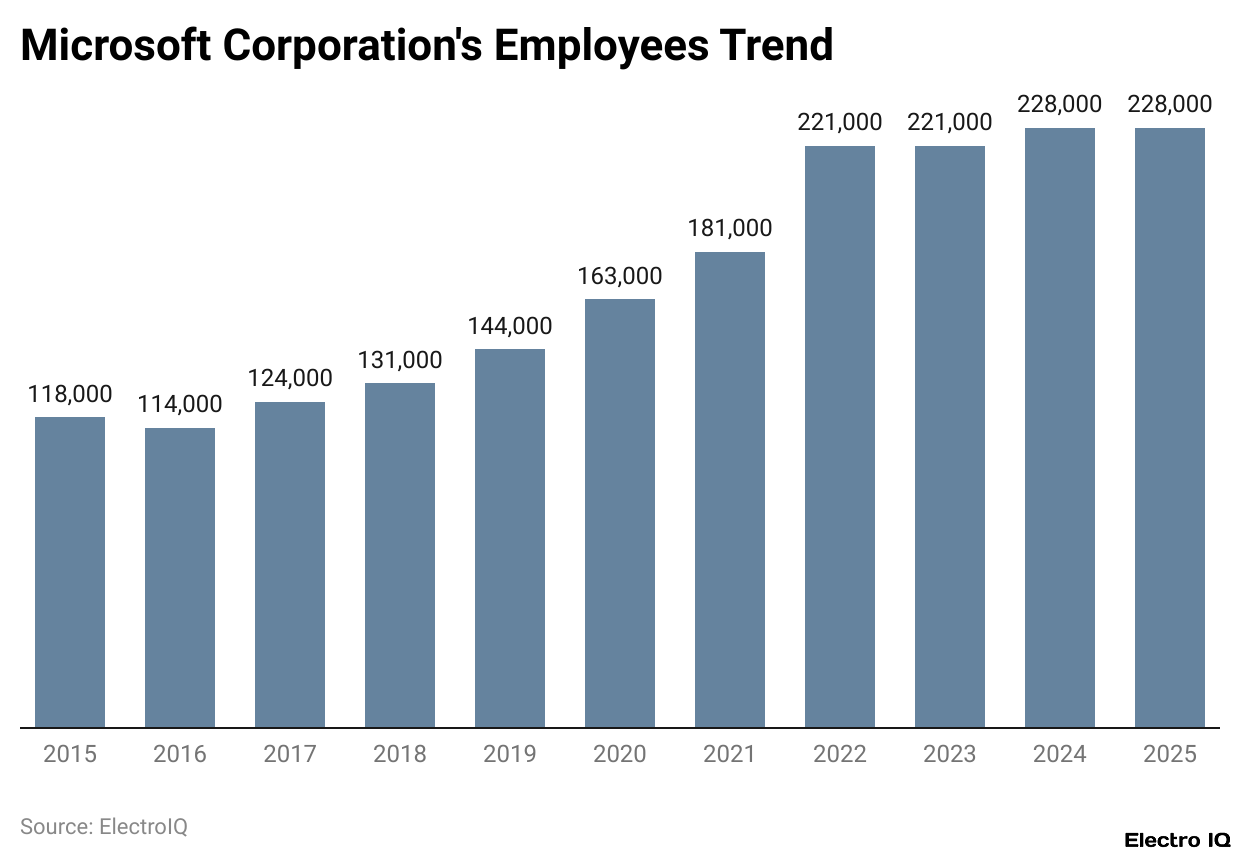
Understanding the scale of Microsoft’s workforce requires a deep dive into how these 221,000 individuals are distributed, the financial cost of maintaining such a vast talent pool, and how the company’s labor efficiency compares to its peers in the “Magnificent Seven.” From a financial perspective, the number of employees is a double-edged sword: it is the engine of innovation but also the company’s largest recurring operating expense.
The Evolution of Microsoft’s Global Headcount
To understand the current scale of Microsoft, one must look at the trajectory of its growth over the last decade. In 2014, when Satya Nadella took the helm as CEO, the company employed roughly 128,000 people. The subsequent decade saw a meteoric rise in headcount, driven by the aggressive expansion of the Azure cloud platform, the acquisition of LinkedIn, the integration of GitHub, and most recently, the monumental acquisition of Activision Blizzard.
The Pandemic Surge and the Correction
Between 2020 and 2022, Microsoft, like many of its tech peers, entered a period of hyper-hiring. As the world shifted toward remote work and digital transformation accelerated, Microsoft added tens of thousands of employees to meet the demand for cloud services and collaboration tools like Microsoft Teams. By mid-2022, the headcount had surged to over 220,000.
However, the fiscal reality of 2023 brought a necessary correction. In a move to optimize operational margins amidst fluctuating macroeconomic conditions, Microsoft announced a reduction of approximately 10,000 roles, or less than 5% of its total workforce. For investors, this was seen as a strategic “rebalancing” rather than a sign of distress. It signaled a shift from broad-based expansion to a more surgical focus on high-growth areas, specifically Artificial Intelligence (AI) and cloud infrastructure.
Geographical Distribution and Cost Management
Microsoft’s workforce is divided almost equally between the United States and international markets. Approximately 60% of the workforce is based in the U.S., with a heavy concentration in the Puget Sound region of Washington State. The remaining 40% is spread across more than 100 countries.
From a business finance perspective, this global distribution is a strategic hedge against localized economic downturns and a method of optimizing labor costs. By placing engineering hubs in regions with high talent density but lower cost-of-living indices than Silicon Valley or Seattle—such as India, Ireland, and various Eastern European hubs—Microsoft manages to maintain a high-caliber workforce while controlling the “cost of revenue” associated with human labor.
Efficiency Metrics: Revenue and Profit per Employee
In the world of high-stakes investing, the raw number of employees is less important than the “Revenue per Employee” (RPE) and “Net Income per Employee” (NIPE) metrics. These figures reveal how effectively a company is leveraging its human capital to generate top-line growth and bottom-line profit.
Analyzing Revenue per Employee
For the fiscal year 2023, Microsoft reported annual revenue of approximately $211 billion. With a headcount of roughly 221,000, this equates to a Revenue per Employee of nearly $954,000. While this is significantly higher than the average S&P 500 company, it is a nuanced figure when compared to other tech giants.
For instance, companies like Apple often boast a higher RPE due to their high-margin hardware sales and lean retail models. However, Microsoft’s model is increasingly software-and-service-centric. The transition to a “Software as a Service” (SaaS) model via Microsoft 365 and the high-margin growth of Azure allows the company to scale revenue without a linear increase in headcount. This “non-linear scaling” is the holy grail of business finance, as it suggests that every additional dollar of revenue requires less incremental labor cost.
Net Income per Employee
The more telling metric is Profit (Net Income) per Employee. Microsoft’s ability to maintain high operating margins—often exceeding 40%—means that each employee contributes significantly to the company’s net profit. In 2023, Microsoft’s net income was approximately $72.3 billion, translating to roughly $327,000 in profit for every single person on the payroll.

This efficiency is a primary reason why Microsoft maintains its trillion-dollar valuation. It demonstrates that the management team is adept at directing its massive workforce toward the most profitable activities. It also provides a “cushion” that allows the company to reinvest billions into R&D and acquisitions without jeopardizing its dividend payments or share buyback programs.
The Financial Impact of Compensation and Stock-Based Incentives
Maintaining a workforce of 221,000 highly skilled professionals is an expensive endeavor. In the tech industry, compensation is not just about base salaries; it involves a complex mix of bonuses, benefits, and, most importantly, Stock-Based Compensation (SBC).
Stock-Based Compensation as a Strategic Lever
Microsoft utilizes SBC as a primary tool for talent retention and alignment of employee interests with those of the shareholders. In recent years, Microsoft’s SBC expenses have totaled billions of dollars annually. While this is a non-cash expense on the income statement, it has a dilutive effect on shares.
However, from a cash flow perspective, SBC is a masterstroke. It allows Microsoft to preserve its massive cash reserves—currently totaling over $80 billion—for strategic acquisitions and capital expenditures in AI infrastructure. By paying employees partially in equity, the company reduces its immediate cash burn and ensures that its workforce is incentivized to drive the stock price higher through innovation and operational excellence.
The Cost of Talent in the AI Arms Race
As Microsoft pivots heavily into Generative AI through its partnership with OpenAI and the development of its “Copilot” ecosystem, the cost per employee is expected to rise. AI researchers and specialized engineers command salaries significantly higher than general software developers.
For the “Money” side of the business, this presents a challenge: how to absorb higher labor costs while maintaining industry-leading margins. Microsoft’s strategy appears to involve a “trim-and-pivot” approach. By reducing headcount in legacy divisions or underperforming segments (such as certain hardware lines), the company reallocates those financial resources to hire the world’s most expensive AI talent. This is a classic example of capital reallocation within a workforce.
Investing in Scale: What Headcount Tells Shareholders
For a retail or institutional investor, the number of people working for Microsoft is a proxy for the company’s “moat.” A workforce of 221,000 provides a level of scale that is almost impossible for startups to replicate. It allows Microsoft to simultaneously compete in cloud computing, gaming, enterprise software, cybersecurity, and consumer electronics.
The Risks of Over-Expansion
While scale is a strength, it also introduces “diseconomies of scale.” A massive workforce can lead to bureaucratic friction, slowing down the speed of innovation. From a financial monitoring perspective, an investor should watch for signs that headcount growth is outpacing revenue growth. If RPE begins to trend downward over several consecutive quarters, it may indicate that the company is becoming bloated or that its recent hires are not yet productive.
Fortunately, Microsoft’s recent financial performance suggests the opposite. The company has shown a remarkable ability to integrate large acquisitions (like the 10,000+ employees from Activision Blizzard) while maintaining its focus on profitability. The integration of large-scale workforces is a core competency of the Microsoft leadership team, and their track record in this area reduces the “execution risk” typically associated with mega-cap companies.
The Future Workforce: AI-Driven Efficiency
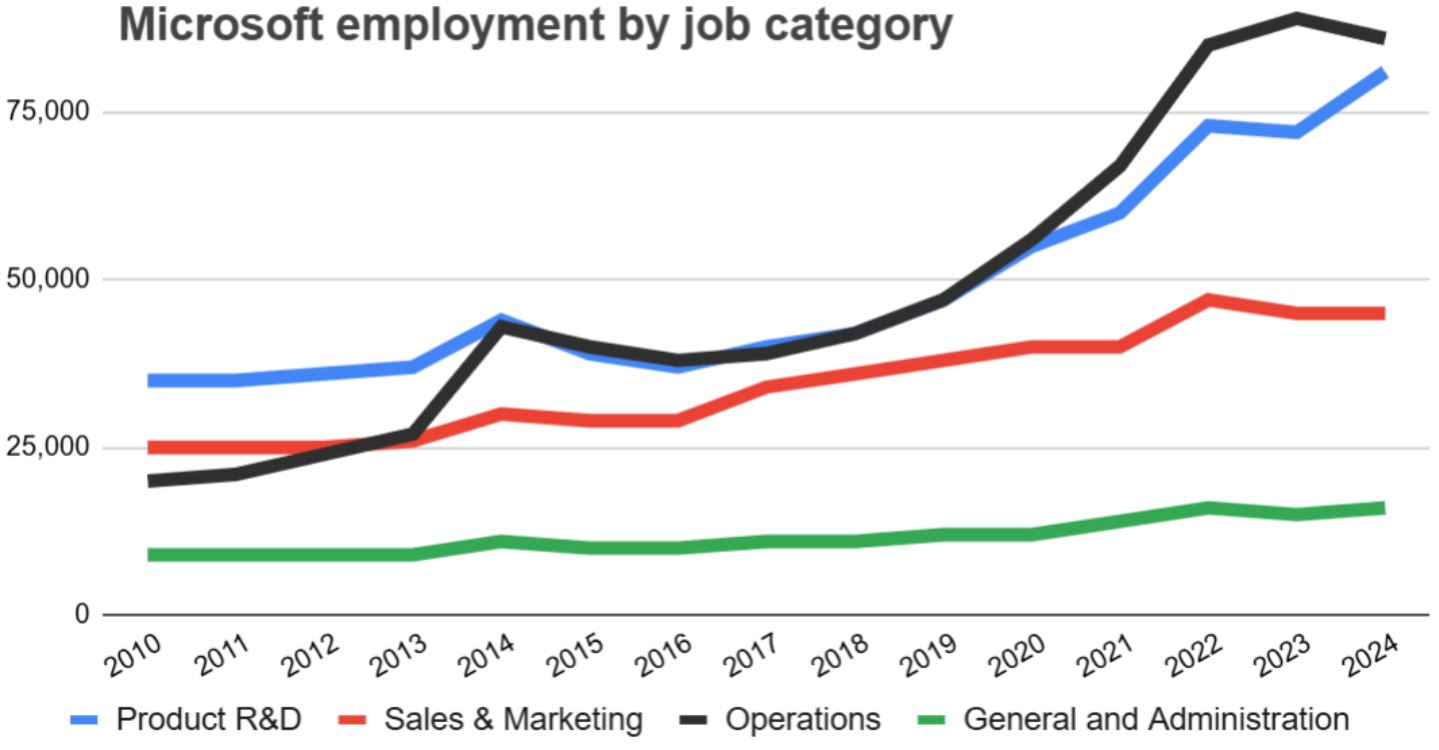
Looking ahead, the question isn’t just how many people work for Microsoft, but how they work. Microsoft is at the forefront of the “AI-augmented” workforce. By deploying its own AI tools internally, the company aims to increase the productivity of its developers and sales teams.
If successful, this could lead to a scenario where Microsoft can grow its revenue at a double-digit rate while keeping its headcount relatively flat. This would result in an expansion of margins that could drive the next leg of the stock’s valuation. For the savvy investor, the stability of the headcount in the face of rising revenue is the ultimate signal of a high-efficiency business model.
In conclusion, the 221,000 people who work for Microsoft represent one of the most powerful financial engines in the world. Their collective output fuels a corporation that sits at the center of the global economy. By analyzing the workforce through the lens of revenue efficiency, compensation strategy, and strategic reallocation, it becomes clear that Microsoft’s human capital is managed with the same fiscal rigor as its investment portfolio. For those focused on the “money” behind the tech, the headcount is not just a statistic—it is a testament to the enduring scale and profitability of the Microsoft empire.
aViewFromTheCave is a participant in the Amazon Services LLC Associates Program, an affiliate advertising program designed to provide a means for sites to earn advertising fees by advertising and linking to Amazon.com. Amazon, the Amazon logo, AmazonSupply, and the AmazonSupply logo are trademarks of Amazon.com, Inc. or its affiliates. As an Amazon Associate we earn affiliate commissions from qualifying purchases.