
Applying for a mortgage is often described as one of life’s most significant financial milestones, a journey that culminates in the dream of homeownership. Far from being a mere transaction, it’s a detailed process that demands careful preparation, diligent research, and a clear understanding of financial obligations. For many, the prospect can seem daunting, riddled with complex terminology, endless paperwork, and a myriad of choices. However, by breaking down the application into manageable steps and understanding the underlying principles, you can navigate this process with confidence and clarity.
This comprehensive guide is designed to demystify the mortgage application, providing you with the knowledge and tools needed to secure the best possible financing for your new home. We’ll delve into everything from preparing your finances and understanding different loan types to the step-by-step application process and finally, the exciting moment of closing. Your path to homeownership begins with a well-informed mortgage application.
Preparing for Your Mortgage Application: Laying the Groundwork
Before you even begin looking at properties, the most crucial step in applying for a mortgage is to get your financial house in order. Lenders will scrutinize your financial history and current status to assess your ability to repay a substantial loan. The more prepared you are, the smoother your application process will be, and the better terms you’re likely to secure.
Understanding Your Creditworthiness
Your credit score is arguably the most influential factor in your mortgage application. Lenders use it to gauge your financial reliability. A higher credit score (typically FICO scores above 740) signals less risk, potentially qualifying you for lower interest rates and more favorable loan terms. Conversely, a lower score can lead to higher rates or even application rejection.
Begin by obtaining your credit reports from the three major bureaus: Equifax, Experian, and TransUnion. You are entitled to a free report from each annually via AnnualCreditReport.com. Scrutinize these reports for any inaccuracies, such as accounts you don’t recognize or incorrect payment histories, and dispute them promptly. To improve your credit score, focus on consistent on-time payments, reducing outstanding debt (especially credit card balances), and avoiding opening new credit lines or making large purchases in the months leading up to your application. This period of financial stability is vital.
Assessing Your Financial Health
Beyond your credit score, lenders will want a holistic view of your financial health. This involves a deep dive into your income, existing debts, and assets.
- Income Stability: Lenders prefer to see a stable and consistent employment history, typically two years in the same line of work. Be prepared to provide proof of income through pay stubs, W-2 forms for the past two years, and if you’re self-employed, two years of tax returns and profit and loss statements.
- Debt-to-Income (DTI) Ratio: This critical metric compares your total monthly debt payments (including the estimated new mortgage payment) to your gross monthly income. Most lenders prefer a DTI ratio below 43%, though some may accept slightly higher depending on other factors. A lower DTI indicates you have more disposable income to cover your mortgage payments and reduces the lender’s risk. You can calculate it by dividing your total monthly debt payments by your gross monthly income.
- Savings and Assets: You’ll need funds for a down payment, which can range from 3% to 20% or more of the home’s purchase price, and closing costs, typically 2% to 5% of the loan amount. Lenders will also want to see reserves – an emergency fund, usually two to six months of mortgage payments – to ensure you can weather unexpected financial disruptions. Provide bank statements, investment account statements, and any other documentation of your assets.
Determining Your Budget and Affordability
Understanding what you can realistically afford is paramount. This goes beyond the sticker price of a house and includes ongoing costs like property taxes, homeowner’s insurance, and potential homeowner’s association (HOA) fees.
- Pre-qualification vs. Pre-approval: Start with a pre-qualification to get an estimate of how much you might borrow based on self-reported information. However, a pre-approval is far more valuable. This involves a formal application and credit check, providing you with a conditional commitment from a lender for a specific loan amount. A pre-approval letter makes you a more attractive buyer to sellers and streamlines your home search by narrowing down your price range.
- Factors Influencing Affordability: The principal and interest (P&I) of your loan payment are just two components. Factor in property taxes (T) and homeowner’s insurance (I) – often combined as PITI. Also, consider potential private mortgage insurance (PMI) if your down payment is less than 20% of the home’s value, and utility costs specific to the property.
Navigating the Mortgage Lender Landscape
Once your finances are in order, the next step is to explore your options for lenders and the various mortgage products available. This market is diverse, and choosing the right lender and loan type can significantly impact your financial future.
Types of Mortgage Lenders
You have several avenues for securing a mortgage, each with its own advantages and disadvantages:
- Banks: Large national banks (e.g., Chase, Wells Fargo) and smaller regional banks often offer a wide range of loan products and may provide existing customers with relationship discounts. They typically have established processes and robust customer service infrastructure.
- Credit Unions: These member-owned financial cooperatives are known for competitive interest rates and lower fees, often prioritizing member service over profit. Membership requirements usually apply but are often easy to meet.
- Online Lenders: Companies like Rocket Mortgage or Better.com offer streamlined digital application processes, often with competitive rates and quick approvals. They can be a convenient option for tech-savvy borrowers comfortable with less in-person interaction.
- Mortgage Brokers: These professionals act as intermediaries, working with multiple lenders to find the best loan product and rates for your specific situation. They can be particularly helpful for complex financial scenarios or if you want someone to shop rates for you, but they charge a fee, either to you or the lender.
Comparing Mortgage Products and Rates
Understanding the different types of mortgages is crucial for choosing the one that best fits your financial goals and risk tolerance.
- Fixed-Rate Mortgages (FRMs): The interest rate remains constant for the entire loan term, typically 15 or 30 years. This provides predictable monthly payments, making budgeting easier and protecting you from rising interest rates. It’s ideal if you plan to stay in your home for a long time.
- Adjustable-Rate Mortgages (ARMs): The interest rate is fixed for an initial period (e.g., 3, 5, 7, or 10 years) and then adjusts periodically based on a specific index. ARMs often start with lower rates than FRMs, which can be appealing if you anticipate moving before the fixed-rate period ends or if interest rates are expected to fall. However, your payments can increase significantly if rates rise.
- Government-Insured Loans:
- FHA Loans: Insured by the Federal Housing Administration, these are popular for first-time homebuyers or those with lower credit scores and smaller down payments (as low as 3.5%). They require mortgage insurance premiums (MIP).
- VA Loans: Guaranteed by the Department of Veterans Affairs, these loans are available to eligible active-duty service members, veterans, and surviving spouses. They offer 0% down payment and no private mortgage insurance (PMI).
- USDA Loans: Backed by the U.S. Department of Agriculture, these loans are for low-to-moderate-income borrowers purchasing homes in eligible rural areas, often requiring no down payment.
- Conventional Loans: These are not government-insured and typically require better credit scores and higher down payments than FHA loans (though some conventional loans allow as little as 3% down). If your down payment is less than 20%, you’ll likely need to pay private mortgage insurance (PMI).
When comparing offers, look beyond just the interest rate. Consider the Annual Percentage Rate (APR), which includes the interest rate plus other loan costs and fees, offering a more accurate measure of the total cost of borrowing. Request detailed loan estimates from multiple lenders and compare them line by line to ensure you’re getting the best deal.
The Mortgage Application Process: Step-by-Step
With your finances in order and a chosen lender (or broker), you’re ready to dive into the formal application. This phase is about providing the lender with all necessary documentation to verify your financial standing and the property’s value.
Gathering Required Documentation
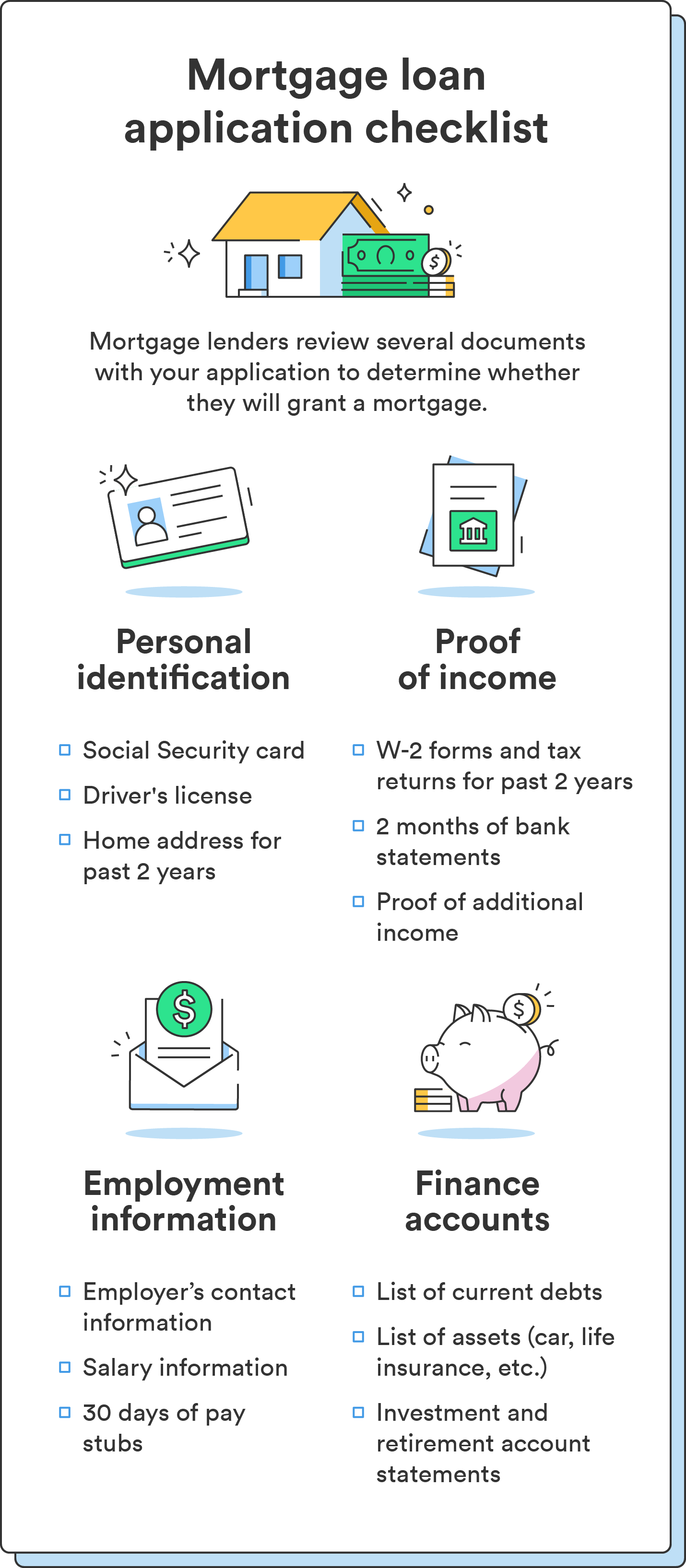
This is where the preparation from the first section pays off. Lenders require a vast array of documents to verify every aspect of your financial life. Having these organized and readily accessible will significantly speed up the process. Common documents include:
- Personal Identification: Government-issued ID (driver’s license, passport), Social Security card.
- Income Verification: Pay stubs (most recent 30 days), W-2 forms (past two years), federal tax returns (past two years), 1099 forms (if self-employed or contract work), profit and loss statements (for business owners).
- Asset Verification: Bank statements (past two months for all checking and savings accounts), investment account statements (brokerage, retirement funds), gift letters (if receiving down payment funds from family).
- Employment Verification: Contact information for your employer, employment history (past two years).
- Debt Documentation: Statements for all existing loans (student loans, car loans), credit card statements.
- Residential History: Current landlord contact information (if renting), past mortgage statements (if you previously owned a home).
Submitting Your Application
Once you have all your documents, you’ll complete a Uniform Residential Loan Application (Form 1003). This can be done online, in person with a loan officer, or through your mortgage broker. Be meticulously truthful and thorough; any discrepancies can cause delays or even lead to denial. The lender will run a hard inquiry on your credit, which will temporarily lower your score by a few points, but this is a necessary step.
Underwriting and Approval
This is the most intensive phase, where the lender’s underwriting department evaluates your financial profile and the property itself.
- Underwriting: The underwriter meticulously reviews all your submitted documents to verify income, employment, assets, and debts. They assess the risk involved in lending to you, ensuring you meet all lender and loan program requirements. They might request additional documents or clarifications, so be responsive.
- Appraisal and Inspection: The lender will order a professional appraisal of the property to ensure its value supports the loan amount. This protects both you and the lender. You should also arrange for an independent home inspection to identify any potential structural or mechanical issues with the property, which is for your protection, not required by the lender.
- Conditional Approval: If everything looks good, the underwriter issues a conditional approval, meaning your loan is approved pending certain conditions (e.g., sale of a previous home, additional documentation, specific repairs to the property based on the appraisal).
- Final Approval: Once all conditions are met, you receive final approval, also known as “clear to close.” This is a major milestone!
From Approval to Closing: Finalizing Your Home Loan
You’ve made it through the bulk of the process. The final steps involve reviewing detailed disclosures, preparing funds, and signing the mountain of paperwork that officially makes you a homeowner.
Understanding Your Loan Estimate and Closing Disclosure
Federal regulations are in place to ensure transparency in the mortgage process, particularly regarding costs.
- Loan Estimate (LE): Within three business days of applying for a mortgage, you’ll receive a Loan Estimate. This document provides a detailed breakdown of your loan terms, estimated monthly payments, and estimated closing costs. Review it carefully and compare it to other lenders’ estimates.
- Closing Disclosure (CD): At least three business days before your scheduled closing date, you’ll receive a Closing Disclosure. This is a final, comprehensive breakdown of all your loan terms, final closing costs, and cash to close. It’s crucial to compare the CD with your initial LE to identify any significant changes or unexpected fees. Ask your lender or real estate agent about any discrepancies immediately.
Preparing for Closing Day
The days leading up to closing are for final preparations:
- Final Walkthrough: Conduct a final walkthrough of the property, typically 24-48 hours before closing, to ensure it’s in the agreed-upon condition and that any agreed-upon repairs have been completed.
- Arranging Funds: You’ll need to bring funds for your down payment and closing costs, typically via a cashier’s check or wire transfer. Your lender will provide the exact amount. Do not use personal checks, as they are usually not accepted.
- Review All Documents: Take the time to review the Closing Disclosure and any other documents you’ve received. Prepare a list of questions for the closing agent.
The Closing Process
Closing day is where all the hard work culminates. You, your real estate agent, and the closing agent (an attorney or title company representative) will meet.
- Signing Documents: You will sign numerous legal documents, including the promissory note (your promise to repay the loan), the deed of trust or mortgage (giving the lender a lien on the property), and various disclosures. Read everything before signing, and don’t hesitate to ask questions.
- Transfer of Funds and Title: Once all documents are signed and funds are disbursed, the ownership of the property officially transfers to you, and the lender’s lien is recorded.
- Receiving Your Keys! Congratulations! You are now a homeowner.
Common Pitfalls and How to Avoid Them
Even with meticulous planning, the mortgage application process can present challenges. Being aware of common pitfalls can help you avoid unnecessary stress and delays.
Don’t Make Major Financial Changes
During the mortgage application and underwriting process, stability is key. Avoid anything that could alter your financial profile or perceived risk:
- Don’t open new credit accounts or apply for new loans: This includes credit cards, car loans, or student loans.
- Don’t make large purchases: Buying a new car or furniture on credit will increase your debt and potentially your DTI.
- Don’t change jobs or become self-employed: A significant change in employment can disrupt the income verification process.
- Don’t make large, unexplained deposits: Lenders need to source any substantial deposits in your bank accounts to rule out undisclosed loans.
Be Proactive and Responsive
The mortgage process often involves back-and-forth communication with your lender and underwriter.
- Provide requested documents promptly: Delays in submitting requested paperwork are a leading cause of closing delays.
- Communicate regularly: Stay in touch with your loan officer. If you anticipate any changes or have questions, reach out immediately.

Understand All Fees and Terms
Don’t let excitement overshadow diligence when it comes to understanding costs.
- Ask questions: If you don’t understand a fee, a term, or a clause in a document, ask for clarification until you do. There are no “dumb” questions when it comes to a transaction of this magnitude.
- Beware of hidden costs: Ensure all fees are clearly itemized on your Loan Estimate and Closing Disclosure. If something seems off, question it.
Applying for a mortgage is undeniably a detailed and sometimes complex undertaking, but it is a profoundly rewarding one. With careful preparation, thorough research, and a proactive approach, you can navigate the process successfully. Remember to focus on maintaining a strong financial profile, comparing lender offers diligently, and being responsive to requests for information. By doing so, you’ll be well on your way to securing the financing you need and unlocking the door to your new home. Don’t hesitate to lean on the expertise of your loan officer, real estate agent, and other financial professionals throughout this exciting journey.
aViewFromTheCave is a participant in the Amazon Services LLC Associates Program, an affiliate advertising program designed to provide a means for sites to earn advertising fees by advertising and linking to Amazon.com. Amazon, the Amazon logo, AmazonSupply, and the AmazonSupply logo are trademarks of Amazon.com, Inc. or its affiliates. As an Amazon Associate we earn affiliate commissions from qualifying purchases.