
The dream of homeownership is a cornerstone of financial stability for many, and for America’s service members, veterans, and eligible surviving spouses, the VA Home Loan program stands as a powerful pathway to achieving that dream. Often lauded for its significant benefits, the VA loan, backed by the U.S. Department of Veterans Affairs, helps millions secure financing with favorable terms. Among the most frequently asked questions about this program is, “What is the VA home loan interest rate?” The answer, however, isn’t a single, fixed number; it’s a dynamic figure influenced by a confluence of factors, yet consistently competitive within the mortgage landscape.
Understanding the VA Home Loan Program’s Unique Advantages
Before delving into the intricacies of interest rates, it’s crucial to grasp what makes the VA home loan such a valuable financial tool. Unlike conventional mortgages, the VA itself does not directly lend money; rather, it guarantees a portion of the loan for approved lenders, reducing their risk and allowing them to offer more advantageous terms to eligible borrowers. This guarantee is the foundation upon which many of the program’s unparalleled benefits are built.
Who Qualifies for a VA Loan?
Eligibility is primarily determined by service history. Generally, active-duty service members, veterans, National Guard members, Reservists, and certain surviving spouses qualify. Specific service requirements vary based on the period of service, but obtaining a Certificate of Eligibility (COE) is the first concrete step in confirming one’s eligibility. The COE validates a borrower’s service and entitlement, signaling to lenders that the VA will back a portion of the loan.
Key Benefits Beyond Interest Rates
While interest rates are a primary concern, the VA loan offers several other compelling financial advantages that significantly impact the overall cost and accessibility of homeownership:
- No Down Payment Requirement: For many eligible borrowers, the VA loan allows for 100% financing, eliminating the substantial hurdle of accumulating a down payment that can often deter first-time homebuyers. This feature alone can save tens of thousands of dollars upfront.
- No Private Mortgage Insurance (PMI): Unlike conventional loans with less than a 20% down payment or FHA loans, VA loans do not require private mortgage insurance. PMI is a monthly premium that protects the lender in case of default, adding a significant recurring cost to a mortgage payment. The absence of PMI on a VA loan translates to substantial monthly savings for borrowers.
- Limited Closing Costs: The VA restricts the fees lenders can charge to veterans, ensuring that closing costs remain reasonable. Sellers are also permitted to pay certain closing costs on behalf of the buyer, further reducing the borrower’s out-of-pocket expenses.
- No Prepayment Penalties: VA loan borrowers can pay off their mortgage early without incurring any penalties, offering financial flexibility and the potential for substantial interest savings over the life of the loan.
- Assumable Mortgages: In many cases, a VA loan can be assumed by another qualified veteran, even if the new borrower is not the original one. This can be an attractive feature for future buyers if the original loan has a lower interest rate than current market rates.
These combined benefits create a powerful financial package, making VA loans often the most affordable and accessible option for eligible individuals, even before considering the interest rate itself.
The Dynamics of VA Loan Interest Rates
The actual interest rate you secure on a VA home loan is not determined by the VA itself. The Department of Veterans Affairs sets the program guidelines and guarantees, but individual lenders—banks, credit unions, and mortgage companies—are responsible for setting their own rates. This creates a competitive marketplace, much like for conventional mortgages.
Not Set by the VA Itself
While the VA provides the framework, it is crucial to understand that they do not dictate specific interest rates. Instead, they operate more like a robust guarantor, allowing private lenders to offer rates that are often more favorable than those available to non-VA borrowers due to the reduced risk. This competition among lenders is a significant factor in keeping VA rates attractive.
Factors Influencing Your Rate
Several key factors contribute to the specific interest rate a lender will offer you for a VA home loan:
- Overall Market Conditions: Mortgage interest rates are intrinsically linked to broader economic factors, including inflation, Federal Reserve policy, and the yield on U.S. Treasury bonds. When the economy is strong and inflation is a concern, rates tend to rise. Conversely, during periods of economic uncertainty or lower inflation, rates may fall. These market fluctuations affect all mortgage products, including VA loans.
- Your Credit Score: A higher credit score signals to lenders that you are a reliable borrower with a history of responsible debt management. While the VA program itself doesn’t set a minimum credit score, individual lenders typically require a score of 620 or higher, with better scores often qualifying for the lowest available interest rates.
- Your Debt-to-Income (DTI) Ratio: This ratio compares your total monthly debt payments to your gross monthly income. Lenders use DTI to assess your ability to manage additional debt. A lower DTI ratio generally indicates less financial risk and can help you secure a better rate. While the VA has specific DTI guidelines, lenders may have stricter overlays.
- Loan Type: The choice between a fixed-rate VA loan and an adjustable-rate VA loan (ARM) will impact the initial interest rate. Fixed-rate loans offer stability, with the interest rate remaining constant for the life of the loan. ARMs typically start with a lower introductory rate that can fluctuate after an initial fixed period, potentially rising or falling with market conditions.
- Discount Points: These are upfront fees paid to the lender at closing in exchange for a lower interest rate over the life of the loan. One point typically costs 1% of the loan amount. Borrowers must weigh the immediate cost against the long-term savings.
- Lender-Specific Overlays and Fees: Each lender has its own risk assessment models and operational costs, which can lead to variations in the rates and fees they offer, even for the same borrower profile. This underscores the importance of shopping around.
Comparing Lender Rates
Because lenders set their own rates, it is absolutely critical to shop around and compare offers from multiple VA-approved lenders. A slight difference in interest rate can translate to thousands of dollars in savings over the life of a 30-year mortgage. Don’t assume the first quote you receive is the best; actively solicit offers and leverage them to negotiate.
How VA Loan Rates Compare to Conventional Mortgages
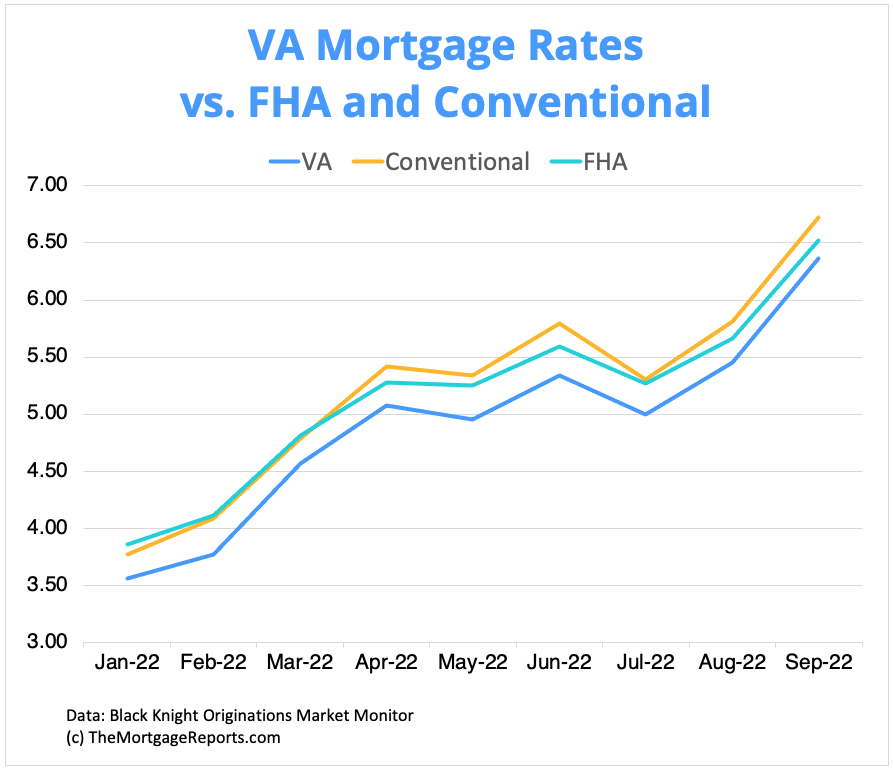
When evaluating the attractiveness of a VA loan interest rate, it’s essential to consider its position relative to other mortgage products in the market, particularly conventional and FHA loans. Generally, VA loan interest rates tend to be among the most competitive available.
Often Lower Than FHA or Conventional
Due to the government backing, VA loan interest rates are frequently lower than those offered for FHA (Federal Housing Administration) or conventional loans for borrowers with similar credit profiles. This lower rate is a direct benefit of the reduced risk for lenders. While the difference might seem marginal at first glance, even a quarter-point difference can result in significant savings over a 30-year term.
The Impact of No PMI
Beyond the nominal interest rate, the absence of private mortgage insurance (PMI) is a massive financial advantage that makes the “effective” cost of a VA loan considerably lower than many conventional or FHA loans. For example, a conventional loan with less than 20% down will require PMI, which can add hundreds of dollars to a monthly payment. FHA loans also have both an upfront and an annual mortgage insurance premium, regardless of down payment size. Eliminating this cost means a VA loan with a slightly higher nominal interest rate might still result in a lower overall monthly payment and total cost compared to alternatives.
The VA Funding Fee
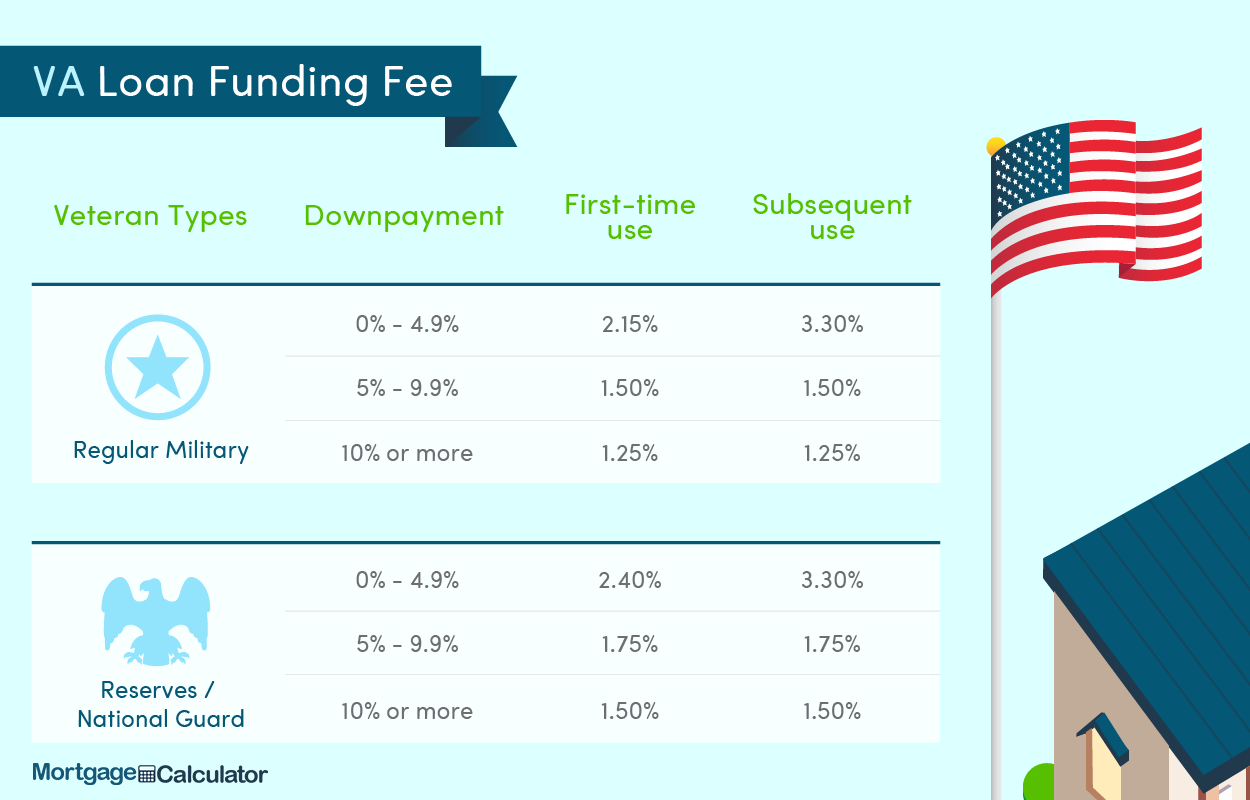
It’s important to acknowledge the VA Funding Fee, which is typically charged on most VA loans. This one-time fee helps to ensure the program continues without cost to the American taxpayer. The fee amount varies depending on the type of loan, whether it’s a first-time or subsequent use of the benefit, and the down payment amount. For instance, a first-time user with no down payment typically pays a 2.15% funding fee. However, certain veterans are exempt from paying this fee, including those receiving VA disability compensation, those eligible for compensation due to a service-connected disability but receiving retirement pay, and surviving spouses of veterans who died in service or from a service-connected disability. While it adds to the loan amount or is paid upfront, the funding fee often pales in comparison to the long-term savings from no down payment, no PMI, and competitive interest rates.
Strategies for Securing the Best VA Interest Rate
Obtaining a VA loan is a fantastic benefit, but proactive strategies can help you secure the absolute best interest rate possible, maximizing your financial advantage.
Boost Your Credit Score
Your credit score is arguably the most influential factor in determining your interest rate. Lenders use it as a primary indicator of risk. Before applying for a mortgage, take steps to improve your credit: pay bills on time, reduce outstanding debt, dispute any errors on your credit report, and avoid opening new credit lines. A higher score—ideally above 740—will put you in the best position for top-tier rates.
Shop Around Extensively for Lenders
Do not settle for the first offer. Contact at least three to five VA-approved lenders and request rate quotes. Lenders offer varying rates and fees, even on the same day. Use competing offers to negotiate for a better deal. Most importantly, ensure you are comparing “apples to apples” by looking at the Annual Percentage Rate (APR), which includes the interest rate plus certain closing costs, giving a more complete picture of the loan’s true cost.
Consider Discount Points
Discount points can be a valuable tool for reducing your interest rate. If you plan to stay in the home for many years, paying one or two points upfront can lead to substantial savings over the life of the loan. Calculate the break-even point—how long it will take for the monthly savings to offset the initial cost of the points—to determine if this strategy makes sense for your financial situation.
Understand Loan Types (Fixed vs. Adjustable)
Decide whether a fixed-rate or adjustable-rate mortgage (ARM) is right for you. A fixed-rate loan offers predictability with a consistent payment, which is ideal if you plan to stay in your home long-term or prefer payment stability. An ARM typically offers a lower initial interest rate, but that rate can change after an introductory period. If you anticipate selling or refinancing within a few years, an ARM might offer initial savings, but it also carries the risk of higher payments later.
Lock in Your Rate Strategically
Once you receive a favorable rate quote, inquire about locking it in. A rate lock guarantees your interest rate for a specific period (e.g., 30, 45, or 60 days) while your loan processes. This protects you from market fluctuations. Time your rate lock strategically; if rates are falling, you might wait, but if they are rising, an early lock can secure your initial favorable offer.
The Process of Getting a VA Home Loan
Navigating the VA home loan process doesn’t have to be daunting. Understanding the key steps can streamline your path to homeownership.
Obtain Your Certificate of Eligibility (COE)
This is the foundational document. You can apply for your COE online through the VA’s eBenefits portal, through your lender, or by mail. It verifies your eligibility for the VA home loan benefit.
Pre-Approval and Rate Quotes
Once you have your COE, work with a VA-approved lender to get pre-approved. This involves a thorough review of your financial situation and credit history, providing you with a conditional commitment for a loan amount and an initial rate quote. This step is crucial for understanding what you can afford and for making competitive offers on homes.
Underwriting and Closing
After your offer on a home is accepted, the loan moves into underwriting. This is where the lender verifies all financial information, conducts an appraisal (which must meet VA minimum property requirements), and reviews all necessary documentation. Once approved, you proceed to closing, where you sign the final documents and the home becomes yours.
In conclusion, the VA home loan interest rate is not a fixed figure but rather a dynamic market rate that is consistently competitive due to the VA’s guarantee. When combined with the unparalleled benefits of no down payment and no PMI, the VA loan often presents the most financially advantageous path to homeownership for eligible service members and veterans. By understanding the factors that influence rates and employing smart strategies, borrowers can secure a low interest rate, maximizing the immense value of their earned VA benefit.
aViewFromTheCave is a participant in the Amazon Services LLC Associates Program, an affiliate advertising program designed to provide a means for sites to earn advertising fees by advertising and linking to Amazon.com. Amazon, the Amazon logo, AmazonSupply, and the AmazonSupply logo are trademarks of Amazon.com, Inc. or its affiliates. As an Amazon Associate we earn affiliate commissions from qualifying purchases.