
The question of what “backs” cryptocurrency is fundamental to understanding its value, its role in the global financial landscape, and its potential as an investment. Unlike traditional currencies or assets that often have tangible backing or government guarantees, cryptocurrency derives its value from a unique confluence of technological innovation, economic principles, and market dynamics. For investors, financial professionals, and anyone engaging with digital assets, a clear understanding of these underlying mechanisms is crucial for informed decision-making.
Understanding Traditional Asset Backing
To appreciate the distinct backing of cryptocurrency, it’s helpful to first review how traditional assets derive their value and trust. These established models provide a contrast that highlights the revolutionary nature of digital assets.
Fiat Currency: Trust and Government Backing
Most national currencies today are “fiat currencies,” meaning their value is not derived from a physical commodity like gold or silver. Instead, their value is based on government decree (fiat) and the collective trust in the issuing government and its central bank. The strength of a nation’s economy, its political stability, its monetary policy, and its ability to tax and enforce legal tender laws all contribute to the perceived value and stability of its currency. This trust is maintained through a combination of economic management, regulatory oversight, and the promise of convertibility for goods and services within that economy. Essentially, fiat currency is backed by the full faith and credit of the government.
Commodities and Equities: Tangible and Intangible Value
Other traditional assets have different forms of backing. Commodities like gold, silver, oil, or agricultural products are backed by their intrinsic material value, their utility in industrial or consumer applications, and their supply and demand dynamics. An ounce of gold has value because it is rare, durable, and has applications in jewelry, electronics, and as a store of value.
Equities, or stocks, represent ownership shares in a company. Their value is backed by the company’s assets (both tangible like property and intangible like intellectual property), its profitability, future earnings potential, and the overall market’s perception of its growth prospects. A stock’s price reflects investors’ expectations of future dividends and capital appreciation, driven by the underlying business’s performance and market position.
The Decentralized Nature of Cryptocurrency
Cryptocurrencies fundamentally depart from these models by removing central authorities and tangible assets as primary backing mechanisms. Their backing is inherently distributed and digital, relying on technology and collective agreement.
Cryptographic Security and Blockchain Technology
At its core, cryptocurrency is backed by advanced cryptography and the decentralized blockchain network. Each transaction is encrypted and immutable once recorded on the blockchain, making it virtually impossible to counterfeit or double-spend. This cryptographic security provides a high degree of integrity and trust in the system itself, replacing the need for a central bank or financial institution to verify transactions. The distributed ledger, maintained by a vast network of independent computers (nodes), ensures transparency and resistance to censorship or manipulation. The very security and integrity of the network, sustained by complex mathematical proofs, serve as a foundational layer of “backing.”
Network Effect and Community Consensus
Another critical element of cryptocurrency’s backing is its network effect and the consensus mechanisms of its community. For a cryptocurrency to have value, there must be a robust network of users, developers, miners (or validators), and exchanges that collectively agree on its rules and utility. The more participants that adopt and use a particular cryptocurrency, the stronger its network effect becomes, enhancing its utility and perceived value. This collective agreement and active participation create a self-sustaining ecosystem where the currency is accepted as a medium of exchange or a store of value, much like a traditional currency gains value from widespread acceptance. The governance models, often driven by community proposals and voting, further reinforce this consensus-driven backing.
Scarcity, Utility, and Demand: The Pillars of Crypto Value
Beyond technology and network, economic principles of supply and demand are powerful drivers of cryptocurrency value, acting as a form of backing through market forces.
Capped Supply and Deflationary Mechanics

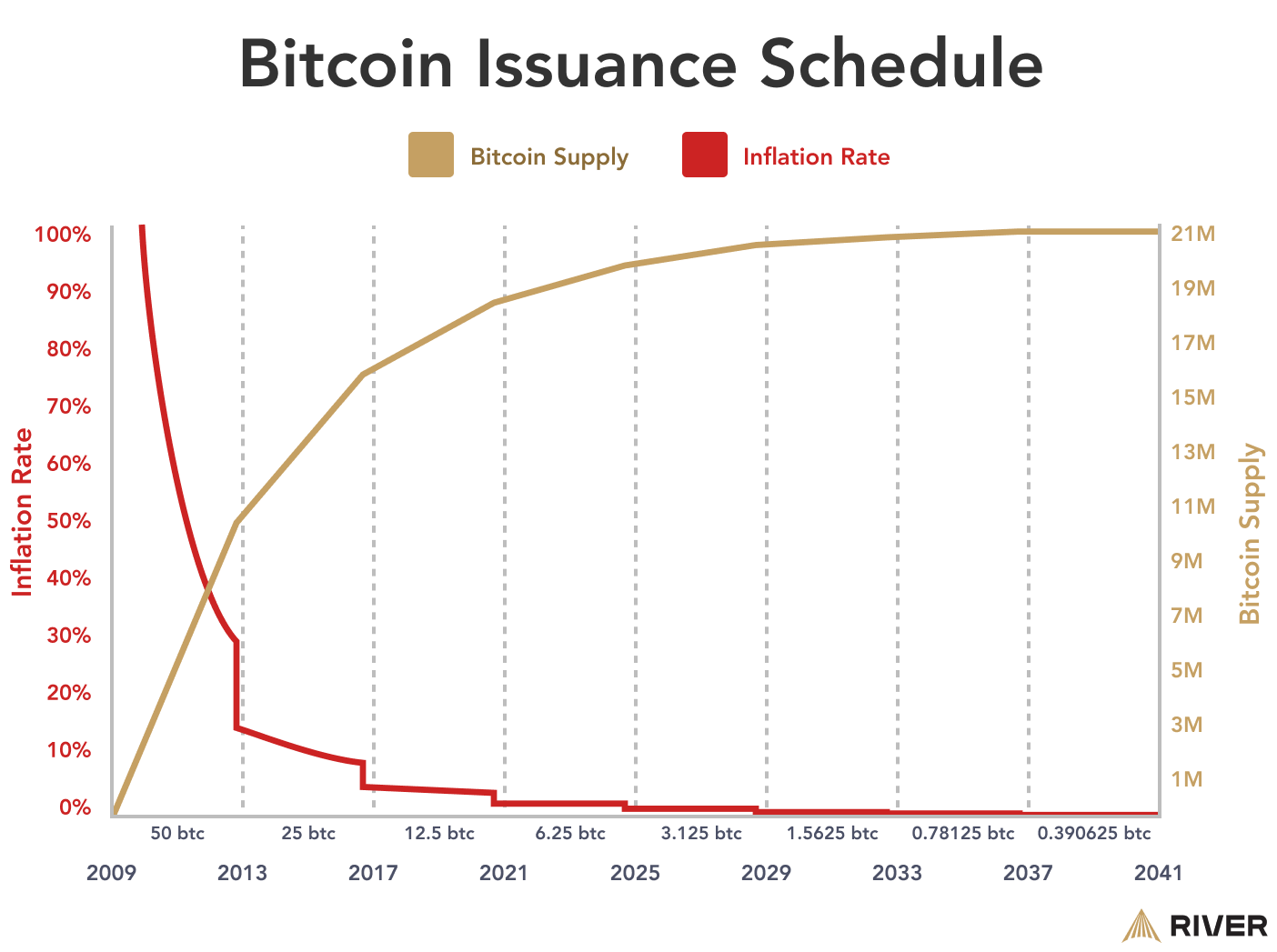
Many cryptocurrencies, most notably Bitcoin, are designed with a fixed or capped maximum supply. This inherent scarcity is a fundamental economic principle that contributes to value. Unlike fiat currencies, which central banks can print in unlimited quantities, Bitcoin’s supply is capped at 21 million coins. This hard cap, combined with a predictable rate of new coin issuance (halving events), creates a deflationary asset model where scarcity can drive up value as demand increases. Other cryptocurrencies may have different supply mechanisms, but the principle of controlled or limited supply is a common feature intended to protect against inflation and maintain value over time. This scarcity mirrors the value proposition of precious metals like gold.
Utility: Beyond Speculation
While early cryptocurrency adoption was heavily driven by speculative interest, a growing number of digital assets are backed by genuine utility within their respective ecosystems. For example:
- Transaction Fees: Many cryptocurrencies are used to pay for transaction fees on their native blockchain, creating a constant demand for the token to facilitate network operations.
- Staking and Governance: Tokens can be “staked” to secure a network or participate in governance decisions, locking up supply and creating economic incentives for holding the asset.
- Decentralized Applications (dApps): Some tokens are integral to the functioning of decentralized applications, acting as currency within a specific platform for services, content, or computational resources.
- Store of Value: For many, Bitcoin, in particular, has emerged as a digital store of value, analogous to “digital gold,” due to its scarcity, censorship resistance, and global accessibility, particularly in regions with unstable fiat currencies.
The more real-world problems a cryptocurrency or its underlying platform solves, and the more widely adopted these solutions become, the stronger its utility backing. This functional value moves beyond mere speculation, providing a tangible reason for demand.
Market Demand and Investor Sentiment
Ultimately, like any asset traded on an open market, cryptocurrency value is significantly influenced by market demand and investor sentiment. Positive news, technological breakthroughs, increased institutional adoption, regulatory clarity, and a general bullish market trend can drive demand and push prices higher. Conversely, regulatory crackdowns, security breaches, negative sentiment, or macroeconomic downturns can lead to decreased demand and price depreciation. This market-driven backing is volatile but reflects the collective belief of participants in the asset’s future potential and current utility. While not a direct “backing” in the traditional sense, sustained market demand is crucial for liquidity and perceived worth.
The Role of Collateral and Stablecoins
Within the broader crypto ecosystem, a specific class of digital assets, known as stablecoins, attempts to introduce more traditional forms of backing to mitigate price volatility.
Asset-Backed Stablecoins
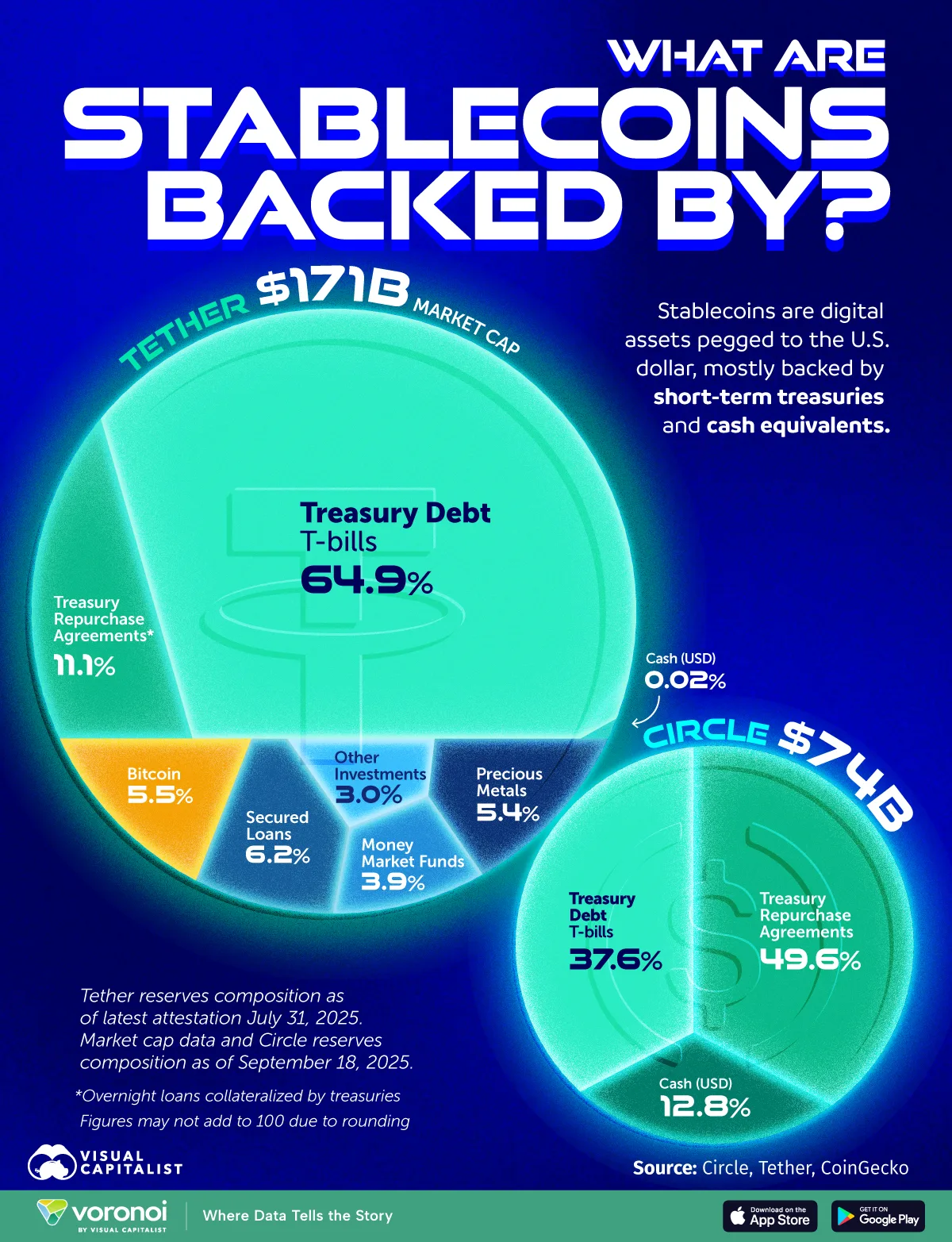
Many stablecoins aim to maintain a stable value, typically pegged to a fiat currency like the US dollar, or a basket of currencies or commodities. They achieve this by being “backed” by reserves held by an issuer. For example, a US dollar-pegged stablecoin might have an equivalent amount of US dollars, short-term government bonds, or other highly liquid assets held in a bank account for every stablecoin in circulation. These reserves theoretically allow holders to redeem their stablecoins for the underlying traditional asset at a 1:1 ratio. This model provides a more direct, albeit centralized, form of backing, linking the digital asset to real-world financial instruments.
Algorithmic Stablecoins and Over-Collateralization
More innovative (and sometimes riskier) stablecoins use algorithms and smart contracts to maintain their peg without direct fiat reserves. Some achieve this through over-collateralization with other cryptocurrencies. For instance, a stablecoin might require users to deposit $1.50 worth of Ether (ETH) to mint $1.00 worth of the stablecoin. If the value of the collateral drops, the system can automatically liquidate a portion of it to maintain the peg. Other algorithmic stablecoins rely on burning and minting mechanisms or arbitrage opportunities to maintain price stability. While these methods are complex and have seen varying degrees of success, they represent attempts to create programmatic backing for digital assets, relying on code and economic incentives rather than central bank trust or physical reserves.
Regulatory Scrutiny and Future Prospects
As cryptocurrencies mature, the concept of their “backing” is increasingly intersecting with regulatory frameworks, which could profoundly impact their stability and investor confidence.
Investor Protection and Market Stability
Governments and financial regulators worldwide are grappling with how to classify and regulate cryptocurrencies. Clarity on issues like consumer protection, anti-money laundering (AML), and market integrity could provide a new layer of “backing” through legal recognition and enforceable standards. For instance, requiring stablecoin issuers to undergo regular audits and hold transparent reserves would enhance the credibility and stability of these assets, akin to how banks are regulated to ensure depositor confidence. This regulatory evolution aims to mitigate risks associated with decentralization while fostering innovation.
Evolution of Digital Asset Frameworks
The ongoing development of digital asset frameworks, including discussions around central bank digital currencies (CBDCs) and clearer guidelines for various crypto assets, will shape how the market perceives crypto’s backing. As institutional adoption grows and more traditional financial services integrate crypto, the legal and operational infrastructure surrounding these assets will become an increasingly important component of their overall perceived value and stability. Ultimately, the “backing” of cryptocurrency is a multifaceted and evolving concept, rooted in technology, economics, and increasingly, regulatory certainty and widespread adoption. Understanding these layers is key to navigating the complex and dynamic world of digital finance.
aViewFromTheCave is a participant in the Amazon Services LLC Associates Program, an affiliate advertising program designed to provide a means for sites to earn advertising fees by advertising and linking to Amazon.com. Amazon, the Amazon logo, AmazonSupply, and the AmazonSupply logo are trademarks of Amazon.com, Inc. or its affiliates. As an Amazon Associate we earn affiliate commissions from qualifying purchases.