
The Amazon Rainforest, an unparalleled biodiversity hotspot and a critical regulator of global climate patterns, spans a vast swathe of South America. While often singularly referred to, its immense territory is, in fact, distributed across nine sovereign nations. Understanding “what countries the Amazon rainforest is in” is not merely a geographical exercise; it is an entry point into a complex web of economic dependencies, development challenges, resource management dilemmas, and critical investment opportunities that define the future of this irreplaceable ecosystem. From the vast agricultural frontiers of Brazil to the oil and gas reserves of Ecuador and Peru, and the burgeoning ecotourism industries in various nations, each country’s relationship with its portion of the Amazon is deeply intertwined with its national economy, development aspirations, and financial stability. This article delves into the monetary dimensions of the Amazon, exploring how these nations balance economic growth with environmental stewardship, the financial implications of resource exploitation, and the promising avenues for sustainable economic development and investment.

The Amazon’s Multinational Economic Footprint
The sheer scale of the Amazon rainforest means its economic influence is felt across an entire continent, touching diverse national economies in unique ways. Its multinational distribution creates a fascinating panorama of varying financial strategies, resource management policies, and developmental priorities.
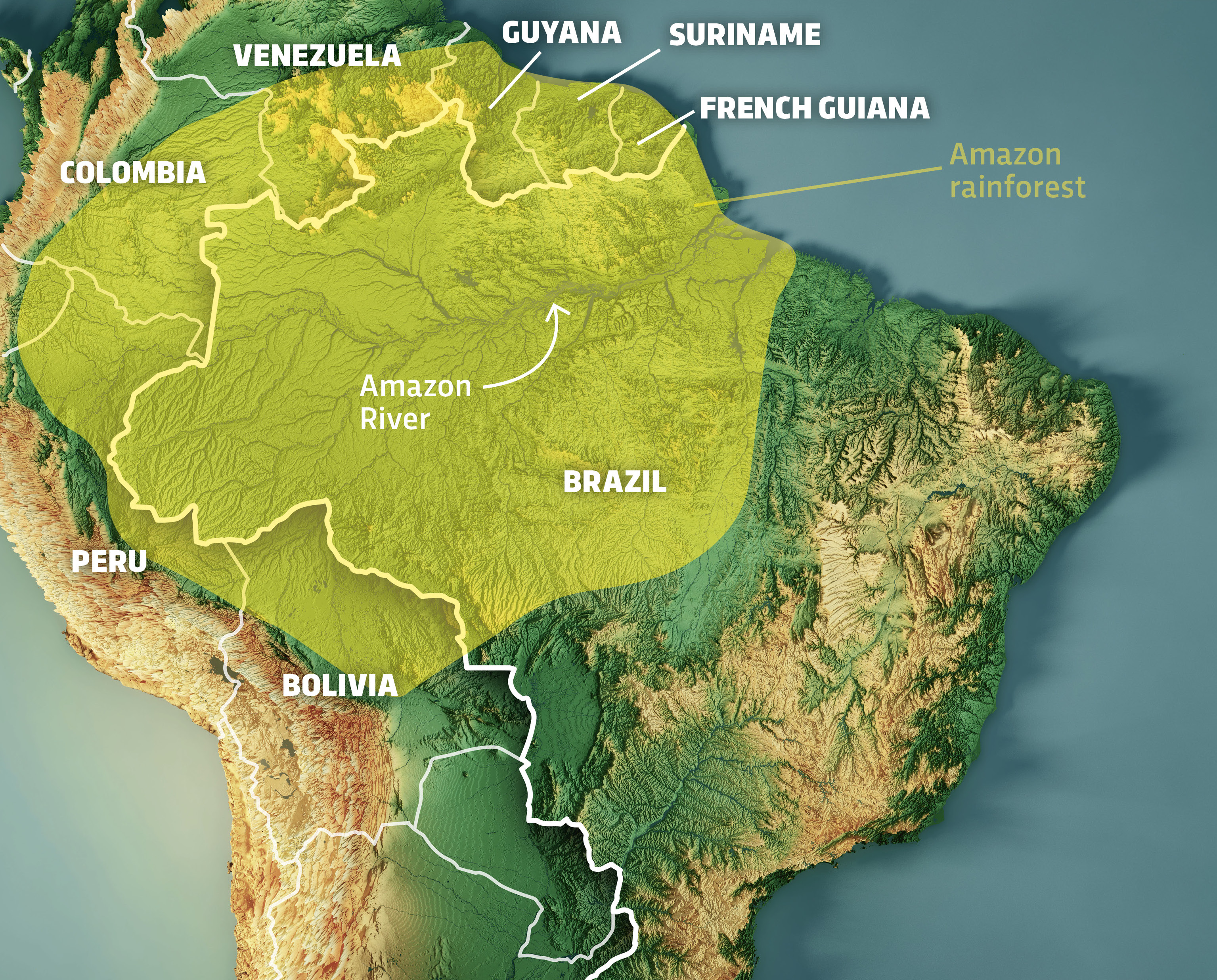
Geographical Extent and Sovereignty: A Primer
The Amazon Rainforest is predominantly located in Brazil, which hosts approximately 60% of the forest. The remaining 40% is shared among eight other countries: Peru, Colombia, Bolivia, Ecuador, French Guiana (an overseas department of France), Guyana, Suriname, and Venezuela. Each nation exercises sovereignty over its respective Amazonian territory, leading to distinct approaches to resource utilization, land management, and economic integration of the region. This mosaic of national jurisdictions means that no single economic policy can universally govern the Amazon, necessitating a nuanced understanding of each country’s financial landscape.
For Brazil, the Amazon represents a significant frontier for agriculture, mining, and hydroelectric power, deeply influencing its national GDP and export markets. In Peru and Ecuador, the Amazon basin is vital for oil and gas extraction, a crucial revenue stream for their national budgets. Bolivia leverages its Amazonian lands for cattle ranching and soy production, while Colombia explores a more diversified approach, including sustainable forestry and bioprospecting. The Guianas (Guyana, Suriname, and French Guiana), with their smaller populations and vast forest cover, often grapple with logging and mining pressures, alongside nascent ecotourism industries. Venezuela, while possessing a portion, has seen its economic focus primarily on its northern oil reserves, though its Amazonian territories also hold valuable resources.
Diverse Economies, Shared Resource: How Each Country Benefits Uniquely
The economic benefits derived from the Amazon are as varied as the countries themselves. Brazil’s economic engine in the Amazon often revolves around large-scale commodity production, with soy and beef sectors contributing billions to its economy, albeit with significant environmental trade-offs. The timber industry also plays a role, alongside the vast potential of its mineral resources. Peru and Ecuador rely heavily on the revenues generated from crude oil exports originating from their Amazonian territories, which form a substantial part of their national income and fuel public spending.
Conversely, countries like Guyana and Suriname, with smaller economies, see logging and gold mining as significant contributors to their GDP, often attracting foreign investment in these sectors. For all nations, the Amazon provides invaluable ecosystem services — water regulation, climate stabilization, biodiversity – which, while not easily quantifiable in traditional economic terms, underpin agricultural productivity, public health, and long-term economic resilience. There’s a growing recognition of the “bioeconomy” potential, where sustainable use of biodiversity through pharmaceuticals, cosmetics, and sustainable food products can unlock new revenue streams without compromising the forest.
Resource Riches and Development Dilemmas
The Amazon is a trove of natural resources, offering immense potential for economic development. However, the pursuit of these riches often creates profound development dilemmas, pitting short-term financial gains against long-term ecological and economic sustainability.
Traditional Economic Activities: Agriculture, Mining, Logging, and Their Financial Drivers/Impacts
Historically, the primary economic drivers in the Amazon have been resource extraction and land conversion. Agriculture, particularly cattle ranching and soy cultivation, is a dominant force, especially in Brazil and Bolivia. These industries are fueled by global demand for food and feed, attracting substantial capital investment and generating significant export revenues. However, they are also the leading causes of deforestation, turning vast tracts of forest into pastures and fields, which contribute to carbon emissions and biodiversity loss. The financial incentive is clear: convert land to produce commodities for a global market.
Mining, both legal and illegal, for gold, iron ore, bauxite, and other minerals, is another major economic activity across the Amazonian countries. In regions like Madre de Dios in Peru or parts of the Brazilian Amazon, gold mining provides direct income to thousands, but at a severe environmental cost, including mercury pollution of rivers and widespread habitat destruction. The allure of quick profits from high-value minerals drives significant informal economies and attracts both domestic and international capital, often with inadequate environmental oversight.
Logging, legal and illegal, for timber and pulp, also contributes substantially to the economies of many Amazonian nations. The demand for tropical hardwoods in construction and furniture markets globally generates significant income, but often at the expense of sustainable forest management practices. These traditional economic activities, while providing immediate financial benefits and jobs, present a critical dilemma: how to generate wealth and improve living standards for local populations without irreversibly degrading the natural capital that underpins future prosperity.
The Cost of Deforestation: Short-term Gains vs. Long-term Financial and Ecological Losses
The economic calculus of deforestation is increasingly being scrutinized. While converting forest to farmland or mining sites can yield immediate financial returns, the long-term costs are staggering. Deforestation contributes significantly to climate change, leading to increased frequency and intensity of extreme weather events that can devastate agricultural productivity, infrastructure, and human health – all with substantial economic price tags. The loss of biodiversity means losing potential sources for new medicines, crops, and industrial materials, representing a forfeiture of future economic opportunities.
Furthermore, deforestation degrades vital ecosystem services. The Amazon’s role in regulating rainfall patterns across South America is critical for agricultural output far beyond its borders. Destroying the forest can lead to droughts in productive agricultural regions, causing billions in economic losses. The financial implications extend to public health costs associated with air and water pollution, and the increased incidence of zoonotic diseases. Economists are increasingly attempting to quantify these “externalities,” revealing that the true cost of deforestation far outweighs the short-term gains, pushing for policies that integrate natural capital accounting into national economic frameworks.
Investing in Sustainability: New Economic Paradigms
Recognizing the unsustainable nature of traditional extractive models, Amazonian nations and international partners are increasingly exploring and investing in new economic paradigms that prioritize sustainability, conservation, and long-term value creation.
Ecotourism and Bioeconomy: Generating Revenue Through Conservation
Ecotourism presents a powerful model for generating revenue through the preservation of the Amazon’s natural beauty and biodiversity. Countries like Ecuador, Peru, and Colombia have developed robust ecotourism sectors, attracting international visitors eager to experience the rainforest, its wildlife, and indigenous cultures. This industry creates jobs for local communities as guides, lodge operators, and service providers, offering direct financial incentives for conservation. The value of an intact forest, alive with unique species, becomes a marketable asset.
The bioeconomy refers to economic activities that utilize renewable biological resources from land and sea to produce food, materials, and energy. In the Amazon, this includes the sustainable harvesting of non-timber forest products like Brazil nuts, açai berries, and medicinal plants, which can be processed and marketed globally. Investment in research and development for bioprospecting – seeking valuable compounds from Amazonian flora and fauna for pharmaceutical or cosmetic industries – represents another significant opportunity. These ventures can create high-value products, foster local entrepreneurship, and generate income without destroying the forest, positioning the Amazon not just as a resource base but as an innovation hub for sustainable products.
Carbon Credits and International Finance: Monetizing Environmental Services
The Amazon’s immense capacity to absorb carbon dioxide makes it a vital global carbon sink. This ecosystem service can be monetized through carbon credit schemes. Under these mechanisms, countries or projects that prevent deforestation or engage in reforestation can earn verifiable carbon credits, which can then be sold to companies or nations seeking to offset their own greenhouse gas emissions. This provides a direct financial incentive for conservation and sustainable land management. Programs like REDD+ (Reducing Emissions from Deforestation and Forest Degradation) offer financial compensation to developing countries for maintaining their forests.
Beyond carbon credits, significant international finance is being directed towards Amazonian conservation. Philanthropic organizations, multilateral development banks (e.g., World Bank, Inter-American Development Bank), and governmental aid agencies provide grants, loans, and technical assistance for projects focused on sustainable development, indigenous land rights, and protected area management. These financial flows are critical for building capacity, implementing conservation strategies, and providing alternative livelihoods to communities dependent on extractive industries.
Indigenous Economies and Sustainable Livelihoods: The Role of Local Communities in Value Creation
Indigenous communities, who have been stewards of the Amazon for millennia, possess invaluable traditional knowledge about sustainable resource management. Supporting indigenous economies and fostering sustainable livelihoods within these communities is a key investment strategy. This includes initiatives that empower indigenous groups to sustainably manage their territories, develop community-based enterprises (e.g., eco-tourism, sustainable agroforestry, handicrafts), and market their products ethically. These approaches not only enhance their economic well-being but also reinforce their role in protecting the forest, which they have a vested interest in preserving. Financial investments in these local, community-driven models yield significant returns in terms of both conservation outcomes and social equity.
Financial Tools and Strategies for Amazonian Conservation
Effective conservation of the Amazon requires not just good intentions but robust financial mechanisms and strategic investments. A range of innovative financial tools and policy strategies are being deployed to address the economic complexities of protecting this global asset.
Debt-for-Nature Swaps and Green Bonds: Innovative Financing Mechanisms
Debt-for-nature swaps are innovative financial instruments where a portion of a developing country’s foreign debt is forgiven in exchange for commitments to invest in environmental conservation. This mechanism has been used in several Amazonian countries, converting financial obligations into local currency investments for protected areas, sustainable development projects, or conservation funds. It offers a dual benefit: debt relief for nations and critical funding for environmental programs.
Green bonds are another growing area of financing. These are fixed-income financial instruments used to raise capital specifically for projects with environmental benefits, such as renewable energy, sustainable land use, and biodiversity conservation. Amazonian countries and development banks can issue green bonds to attract investors looking for environmentally conscious financial products, channeling private capital towards sustainable development initiatives within the rainforest.
International Aid and Philanthropic Investment: Global Financial Contributions
The Amazon is recognized as a global common good, and its preservation often relies on international aid and philanthropic investment. Bilateral aid from developed nations, grants from large foundations, and contributions from global environmental funds (e.g., Global Environment Facility) constitute a significant portion of the financial resources dedicated to Amazonian conservation. These funds support a wide array of activities, from scientific research and policy development to on-the-ground protected area management and community empowerment programs. The financial contribution of these global partners underscores the shared responsibility in safeguarding the Amazon.

Policy, Regulation, and Enforcement: The Financial Implications of Governance
Effective governance is paramount for financial sustainability in the Amazon. Robust policies, regulations, and enforcement mechanisms are essential to deter illegal activities like logging, mining, and land grabbing, which siphon off national resources and undermine sustainable economies. Investing in monitoring technologies (e.g., satellite imagery, AI for deforestation detection), strengthening law enforcement agencies, and establishing clear land tenure systems all have significant financial implications but yield substantial economic returns by protecting natural assets and ensuring fair resource allocation. Financial incentives for compliance, such as tax breaks for sustainable businesses or penalties for environmental crimes, play a crucial role. Transparent governance also attracts responsible foreign direct investment, channeling capital towards sustainable sectors rather than exploitative ones.
The Amazon rainforest, shared by nine nations, is much more than a geographical entity; it is an economic powerhouse and a financial challenge simultaneously. The question of “what countries is the Amazon rainforest in” quickly morphs into an inquiry about each nation’s economic ties to this irreplaceable resource. From the vast revenues generated by traditional extractive industries to the burgeoning potential of ecotourism and sustainable bioeconomies, the financial stakes are enormous. Moving forward, the balance sheet for the Amazon demands a shift: from short-term exploitation to long-term sustainable investment. This requires innovative financial tools, robust international partnerships, empowered local communities, and unwavering political will to ensure that the economic benefits of the Amazon contribute to the well-being of its people and the planet, rather than jeopardizing its very existence. The global financial community has a critical role to play in investing in a future where the Amazon continues to thrive, delivering invaluable services and sustainable prosperity to all.
aViewFromTheCave is a participant in the Amazon Services LLC Associates Program, an affiliate advertising program designed to provide a means for sites to earn advertising fees by advertising and linking to Amazon.com. Amazon, the Amazon logo, AmazonSupply, and the AmazonSupply logo are trademarks of Amazon.com, Inc. or its affiliates. As an Amazon Associate we earn affiliate commissions from qualifying purchases.