
In today’s digitally driven world, subscription services have become an integral part of our financial landscape. From streaming entertainment to software licenses, consumers increasingly weigh the costs and benefits of recurring payments. Among these, Amazon Prime stands out as a colossal offering, bundling an array of services under a single subscription fee. For many, the question isn’t just “how to upgrade to Amazon Prime,” but “how does upgrading impact my personal finance, and is it a worthwhile investment?” This article delves into Amazon Prime not merely as a service, but as a significant financial decision, guiding you through the considerations, costs, and value propositions from a purely monetary perspective.

Understanding the Financial Commitment of Amazon Prime
Before diving into the upgrade process itself, a robust financial assessment is paramount. Amazon Prime isn’t a one-size-fits-all offering; its cost varies based on subscription duration and eligibility for specific discounts. Understanding these nuances is the first step in making a financially sound decision.
Annual vs. Monthly Subscriptions: A Cost-Benefit Analysis
The most common decision points for Prime revolve around its payment frequency:
- Annual Subscription: Typically offered at a reduced effective rate, paying annually provides a significant discount compared to paying month-to-month. For instance, if an annual subscription costs $139 and a monthly subscription is $14.99, paying monthly for 12 months would total $179.88, representing a saving of nearly $41 by opting for the annual plan. This upfront lump sum, while larger, offers long-term financial efficiency for committed users.
- Monthly Subscription: This option provides greater flexibility, allowing users to cancel at any time without a long-term commitment. It’s ideal for those who anticipate needing Prime only for specific periods (e.g., holiday shopping, a few months of intense streaming) or for those who prefer to spread out their expenses rather than making a large single payment. However, this flexibility comes at a premium, making it the more expensive choice over a full year.
From a financial planning standpoint, if you anticipate using Prime for more than nine or ten months out of the year, the annual subscription almost invariably presents a better value. It’s a classic example of balancing immediate cash flow needs against long-term savings.
Exploring Special Discounts: Optimizing Your Investment
Amazon recognizes diverse financial situations and offers reduced-price Prime memberships to eligible individuals, transforming the upgrade into a more accessible financial decision for many.
- Student Prime: College students enrolled in two- or four-year colleges or universities can often access Prime at a significantly reduced rate, typically 50% off the standard annual fee. This discount not only includes all the standard Prime benefits but often comes with an extended free trial period (e.g., six months). For students often operating on tighter budgets, this represents substantial savings, allowing them to leverage Prime’s benefits—from textbook shipping to educational streaming—without a heavy financial burden.
- EBT/Medicaid Recipients: Individuals receiving qualifying government assistance (such as EBT, Medicaid, or other specific programs) are also eligible for a discounted monthly Prime membership, again usually at a 50% reduction from the standard monthly rate. This initiative aims to make the convenience and access of Prime more equitable, offering substantial savings to households managing limited incomes.
- Free Trial Offerings: Amazon frequently provides free trial periods, typically 30 days, for new customers. This is an invaluable financial tool. It allows prospective members to thoroughly evaluate Prime’s benefits and integrate them into their lifestyle before committing any money. This trial period should be used strategically to assess actual usage of shipping benefits, video streaming, music, and other services to determine if the paid subscription genuinely provides sufficient value to justify its cost.
By diligently exploring these discount avenues, potential Prime members can significantly reduce their financial outlay, making the upgrade a more economically viable choice.
Evaluating the Financial Return on Investment (ROI)
The true value of Amazon Prime extends far beyond its price tag. To properly evaluate the financial ROI, one must quantify the various benefits and compare them against the subscription cost. This involves looking at direct savings, avoided costs, and the imputed value of included services.
Quantifying Shipping Savings and Convenience
The most iconic benefit of Prime is undoubtedly its expedited shipping. For frequent Amazon shoppers, this translates into tangible savings:
- Free Two-Day Shipping: For non-Prime members, fast shipping often incurs additional charges, which can range from a few dollars to upwards of $15 per order. If a customer places multiple orders per month, these fees quickly accumulate. A simple calculation: if you typically pay $5 for shipping on 10 orders per year, Prime immediately saves you $50. The more you shop, the higher the direct saving.
- Same-Day/One-Day Delivery: In eligible areas, Prime offers even faster delivery options at no extra charge, a service that would be prohibitively expensive for non-members. This convenience, while harder to put an exact dollar figure on, translates to saved time and peace of mind, which carries an intrinsic value in a busy world.
- Reduced Need for Local Shopping: With reliable and fast delivery, Prime members might reduce trips to physical stores, potentially saving on gas, parking, and impulse purchases, indirectly contributing to household savings.
Valuing Digital Entertainment and Services
Amazon Prime bundles a suite of digital services that, if purchased à la carte, would significantly exceed the Prime membership fee.
- Prime Video: Access to a vast library of movies and TV shows, including Amazon Originals. Comparable streaming services often cost $8-$15 per month. If you would otherwise subscribe to a similar service, Prime Video offers substantial savings.
- Amazon Music Prime: Ad-free access to millions of songs and thousands of playlists. While not as extensive as Amazon Music Unlimited, it offers enough content to potentially replace a basic paid music streaming service, which can cost $5-$10 per month.
- Prime Reading/First Reads: A rotating selection of free eBooks and magazines, plus early access to new releases. For avid readers, this can reduce spending on new books.
- Amazon Photos: Unlimited full-resolution photo storage. Cloud storage solutions can cost anywhere from $5-$15 per month for comparable services.
- Prime Gaming (Twitch Prime): Free games, in-game content, and a free monthly Twitch channel subscription. For gamers, this offers direct monetary value in terms of content acquisition.
By totaling the estimated monthly cost of these individual services (if purchased separately), one can often see that the aggregate value easily surpasses the Prime membership fee, demonstrating a strong financial ROI.
Exclusive Deals, Discounts, and Early Access

Beyond shipping and digital content, Prime membership unlocks specific financial advantages during shopping events:
- Prime Day: An annual sales event exclusively for Prime members, offering deep discounts on a wide range of products. Strategic shopping during Prime Day can lead to significant savings on larger purchases, effectively offsetting a portion, or even all, of the annual membership fee.
- Whole Foods Market Discounts: Prime members receive exclusive discounts and 5% back on select items when shopping at Whole Foods Market, a significant benefit for those who frequently shop there.
- Amazon Pharmacy Savings: Prime members often get access to prescription savings and free two-day delivery on eligible orders, reducing healthcare costs.
- Prime Early Access to Lightning Deals: Getting a head start on popular limited-time deals can mean securing coveted items at reduced prices before they sell out.
Considering these direct and indirect savings, a diligent financial evaluation will likely reveal that for a household that utilizes even a fraction of Prime’s bundled services, the membership often pays for itself, sometimes multiple times over.
The Practical ‘How-To’ of Upgrading: A Financial Transaction Guide
Once the financial decision is made, the actual process of upgrading to Amazon Prime is straightforward, but it’s important to manage the financial aspects of the transaction carefully.
Navigating the Upgrade Process
The upgrade path typically involves a few simple steps, whether converting from a trial or signing up for the first time:
- Visit the Amazon Prime Sign-Up Page: This is usually accessible from the Amazon homepage or by searching for “Amazon Prime.”
- Choose Your Membership Type: Select either the annual or monthly option, keeping your financial assessment in mind. If eligible, ensure you select the student or EBT/Medicaid discounted options.
- Confirm Payment Method: Amazon will prompt you to select or add a payment method. This is a crucial financial decision point.
- Review and Confirm: Before finalizing, review the total cost, billing cycle, and terms.
The ease of the process belies the financial commitment, emphasizing the importance of prior budgetary review.
Payment Methods and Auto-Renewal Management
Managing your payment method and understanding auto-renewal is vital for financial control:
- Accepted Payment Methods: Amazon accepts major credit cards, debit cards, and sometimes Amazon gift cards (though recurring subscriptions often require a linked card). Choose a card that offers rewards or cashback for online purchases if available, maximizing your financial benefit.
- Auto-Renewal: By default, Prime memberships are set to auto-renew. While convenient, this requires regular monitoring. Mark your calendar for renewal dates, especially if you opted for a monthly plan, to re-evaluate your usage and financial need before the next billing cycle.
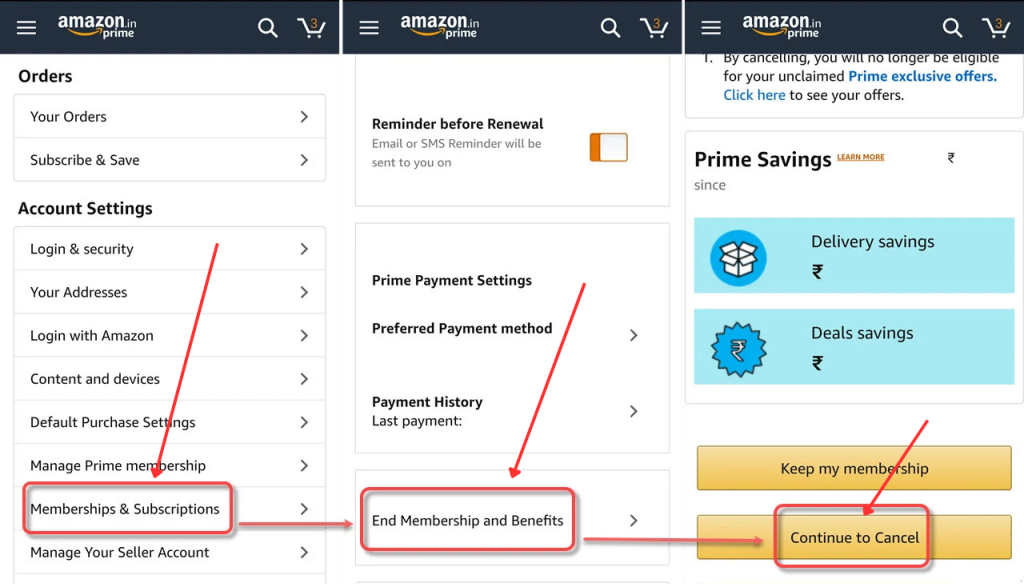
- Managing Your Subscription: Through your Amazon account settings, you can view your next billing date, change your payment method, or turn off auto-renewal. Turning off auto-renewal does not immediately cancel your current membership; it simply ensures you won’t be charged for the next period, giving you full control over your future financial commitment.
Maximizing Your Prime Investment: Smart Financial Usage
Upgrading to Prime is only half the battle; truly leveraging its financial potential requires active and strategic usage. Don’t just pay for Prime; make it work for your money.
Leveraging Prime for Household Savings
Prime isn’t just for individual benefit; its features can be utilized for broader household financial efficiency:
- Amazon Household: This feature allows two adults and up to four teens and four children in the same household to share eligible Prime benefits at no extra cost. This means one Prime subscription can provide free shipping, Prime Video, and other perks to multiple family members, effectively spreading the cost and multiplying the value. It’s a key strategy for reducing the per-person cost of Prime.
- Grocery Shopping: Beyond Whole Foods discounts, Prime members can often get free grocery delivery from Amazon Fresh and Whole Foods (depending on minimum order value and location). This can save on gas, time, and potential impulse purchases at physical stores, offering a significant indirect financial benefit.
- Bulk Buying & Subscribe & Save: Prime members often get additional discounts on bulk purchases and through the Subscribe & Save program, allowing for consistent savings on everyday essentials.
Utilizing Lesser-Known Financial Perks
Many Prime benefits are overlooked, representing missed opportunities for financial gain:
- Prime Wardrobe: Try on clothes at home for free and only pay for what you keep. This reduces the risk of buyer’s remorse and the cost associated with returns (like return shipping, if applicable for non-Prime members), streamlining your fashion budget.
- Amazon Family/Baby Registry: Prime members often get additional discounts (e.g., 20% off diaper subscriptions) and an extended return window for baby registry items, a valuable perk for new parents managing significant expenses.
- Early Access Deals: Beyond Prime Day, Prime members get 30-minute early access to certain Lightning Deals, allowing them to snag limited-quantity items at significant markdowns before they sell out to the general public.
By consciously integrating Prime’s various features into daily financial planning and shopping habits, members can ensure they extract maximum value from their subscription, transforming it from a mere expense into a valuable financial asset.
Conclusion: A Prudent Financial Decision
Upgrading to Amazon Prime is more than just clicking a button; it’s a financial decision that demands careful consideration. By understanding the cost structures, evaluating the myriad benefits against those costs, and strategically utilizing the included services, consumers can transform their Prime membership into a genuine financial asset. From discounted annual rates and specialized membership options for students and low-income families to the compounded savings from shipping, digital entertainment, and exclusive deals, the financial ROI can be substantial for the engaged user.
Ultimately, the question of “how to upgrade to Amazon Prime” becomes secondary to “is upgrading to Amazon Prime a wise financial move for me?” By meticulously assessing your spending habits, leveraging available discounts, and actively engaging with the full spectrum of Prime’s offerings, you can ensure that your investment in Prime truly enhances your personal financial well-being.
aViewFromTheCave is a participant in the Amazon Services LLC Associates Program, an affiliate advertising program designed to provide a means for sites to earn advertising fees by advertising and linking to Amazon.com. Amazon, the Amazon logo, AmazonSupply, and the AmazonSupply logo are trademarks of Amazon.com, Inc. or its affiliates. As an Amazon Associate we earn affiliate commissions from qualifying purchases.