
In an increasingly digital world, subscription services have become a ubiquitous part of modern life, offering convenience and access to a myriad of benefits. Among these, Amazon Prime stands out as a colossal offering, bundling a vast array of services under a single membership. For many consumers, the question isn’t just “what is Amazon Prime?” but more crucially, “what is the cost of Amazon Prime?” This seemingly simple question opens a gateway to a deeper financial exploration, encompassing not only the direct subscription fees but also the less obvious monetary implications, potential savings, and the overall value proposition for one’s personal finance.
Understanding the financial commitment to Amazon Prime requires a nuanced perspective, moving beyond the mere sticker price to evaluate its true economic impact on a household budget. Is it an essential utility, a justifiable luxury, or an expenditure that could be better allocated elsewhere? This article delves into the financial intricacies of Amazon Prime, providing a comprehensive guide for consumers to make informed decisions about their spending and derive maximum financial benefit from, or critically assess, this pervasive subscription service.
Understanding Amazon Prime’s Subscription Tiers and Pricing
Amazon Prime is not a one-size-fits-all service when it comes to pricing. Amazon has strategically developed several tiers and options to cater to different segments of its vast customer base, each with its own financial implications. A clear understanding of these options is the first step in assessing the true cost relative to individual needs and budget constraints.
The Standard Monthly Subscription: Flexibility at a Premium
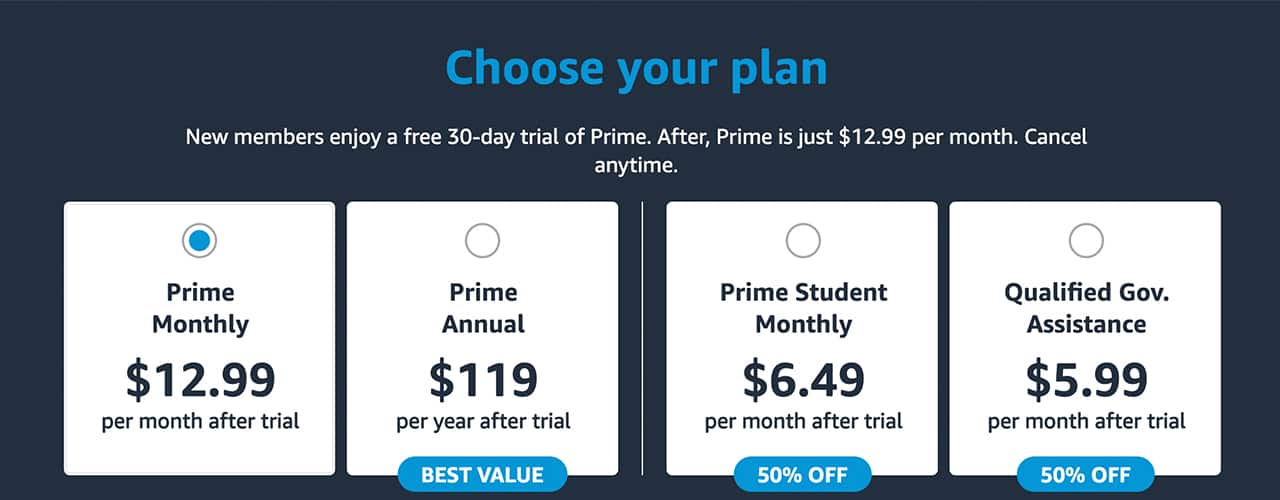
For those who prefer flexibility or are unsure about a long-term commitment, the standard monthly Amazon Prime membership is often the default choice. This option allows subscribers to cancel at any time, providing agility without being locked into an annual contract. However, this flexibility comes at a financial premium. The monthly cost, when annualized, typically exceeds the direct annual subscription fee. This tier is ideal for individuals who might only need Prime for specific peak seasons, such as holiday shopping, or for those whose financial situation necessitates smaller, more manageable recurring payments, even if it means a higher cumulative spend over 12 months. From a budgeting perspective, while it offers immediate relief by spreading the cost, it’s crucial to acknowledge the higher effective price paid for the same basket of services compared to its annual counterpart.
The Annual Membership: Maximizing Savings for Long-Term Users
For committed Amazon shoppers and regular users of Prime’s various benefits, the annual membership presents a clear financial advantage. Paying for a full year upfront results in a significant discount compared to paying month-to-month. This option is designed for customers who have integrated Amazon Prime deeply into their purchasing habits and lifestyle, consistently utilizing benefits like expedited shipping, Prime Video, and exclusive deals. From a personal finance standpoint, if your usage justifies continuous membership, committing to the annual plan is a straightforward way to optimize your spending on Prime. It requires a larger single outlay, which needs to be budgeted for, but it offers substantial savings over time, representing a more cost-effective approach for dedicated users.
Discounted Options: Prime for Students and Qualifying EBT/Medicaid Recipients
Recognizing that not all customers have the same disposable income, Amazon offers substantially discounted Prime memberships for specific demographics. Students, for instance, can often access Prime at a significantly reduced rate, typically half the standard price, and often include an extended free trial period. This acknowledges the often-limited budgets of students while providing them access to essential benefits like free shipping for textbooks and supplies, and entertainment.
Similarly, individuals who qualify for EBT or Medicaid benefits can also access Prime at a reduced monthly rate. These initiatives underscore Amazon’s effort to broaden access to its services, making Prime more affordable for those with tighter financial constraints. For eligible individuals, these discounted tiers represent a remarkable opportunity to access Prime’s extensive benefits at a fraction of the standard cost, making the service financially viable where it might otherwise be out of reach. It’s a critical financial decision to explore eligibility for these programs before committing to a higher-priced tier.
Prime Video Only: A Niche, Cost-Effective Alternative
For consumers primarily interested in streaming content and less so in the shipping or other ancillary benefits, Amazon offers a “Prime Video only” subscription. This standalone option is considerably cheaper than a full Prime membership. This tier is a strategic response to the competitive streaming market, allowing Amazon to capture subscribers who might otherwise opt for services like Netflix or Hulu exclusively. From a financial perspective, if your primary motivation for considering Prime is its video library, opting for Prime Video only is a smart budgeting move, preventing you from paying for a host of services you won’t use. It’s a classic example of tailoring expenditure to actual consumption, maximizing financial efficiency.
Beyond the Sticker Price: Hidden Costs and Potential Savings
The direct subscription fee is only one dimension of Amazon Prime’s financial impact. A comprehensive financial assessment must also consider the less obvious ways Prime can influence your spending, both positively through savings and negatively through increased consumption.
The Allure of “Free” Shipping: Calculating Its True Financial Impact
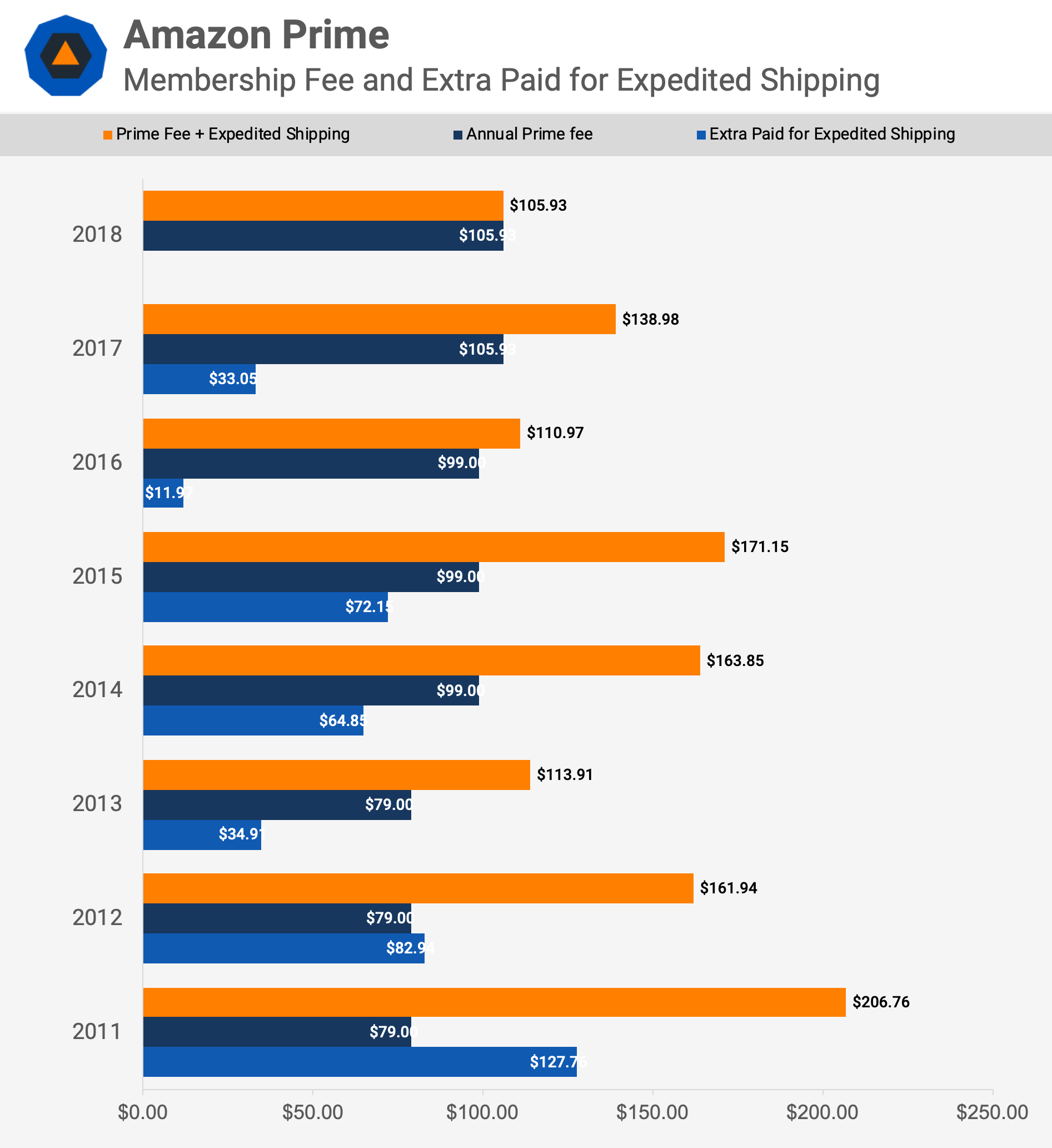
One of Prime’s most touted benefits is “free two-day shipping.” While seemingly a direct saving by eliminating shipping fees, its true financial impact is more complex. For infrequent shoppers, the savings on shipping might not justify the annual membership cost. For frequent purchasers, however, the cumulative savings on shipping fees can quickly add up, potentially surpassing the subscription cost. The challenge lies in accurately calculating how much you would have spent on shipping without Prime versus the membership fee. Moreover, “free” shipping can subtly encourage more frequent, smaller purchases that might otherwise be consolidated, potentially leading to increased overall spending on products themselves. It’s vital for a savvy consumer to differentiate between genuinely needed purchases and those driven by the convenience of “free” shipping.
Digital Entertainment Value: Prime Video, Music, and Gaming Savings
Beyond shipping, Prime bundles significant digital entertainment services, including Prime Video, Amazon Music Prime, and Prime Gaming. If you subscribe to separate streaming services for movies, TV shows, or music, the value proposition of Prime becomes considerably stronger. Consolidating these entertainment expenses into a single Prime membership could lead to substantial savings. For example, if you would otherwise pay for a separate video streaming service and a basic music streaming service, Prime could effectively replace both at a lower combined cost. A financial assessment here involves comparing the quality and breadth of Prime’s offerings against dedicated alternatives and quantifying the direct savings if Prime can genuinely serve as a substitute for other paid entertainment subscriptions.
Exclusive Deals and Discounts: How Prime Can Pay for Itself
Prime members gain access to exclusive deals, early access to lightning deals, and specific discounts on a range of products, particularly during sales events like Prime Day. For strategic shoppers, these exclusive offers can translate into tangible financial savings. By leveraging these discounts on items they were planning to buy anyway, members can effectively recoup a portion, if not all, of their annual subscription cost. However, a crucial caveat exists: the temptation to buy items because they are on sale, rather than because they are needed, can lead to impulse purchases that erode any potential savings and increase overall expenditure. Financial discipline is key to ensuring these “savings” truly contribute to your bottom line rather than inflating your spending.
The Trap of Increased Spending: The “Amazon Effect” on Your Budget
Perhaps the most insidious “hidden cost” of Amazon Prime is its potential to encourage increased overall spending. The seamless one-click ordering, fast delivery, and constant promotions create an ecosystem designed for effortless consumption. The psychological effect of having “free” shipping and immediate gratification can lower the barrier to impulse purchases. Financial planners often observe that Prime members, on average, tend to spend more on Amazon annually than non-members. This isn’t necessarily a direct cost of Prime itself, but rather an indirect consequence of its convenience and integration into daily life. Actively monitoring your Amazon spending and differentiating between needs and wants becomes paramount when assessing the full financial impact of your Prime membership.
Is Amazon Prime Worth the Investment? A Financial Decision Framework
Deciding whether Amazon Prime is a worthwhile investment is a highly personal financial calculation. It requires an honest assessment of individual habits, needs, and existing expenditures. A structured framework can help illuminate whether the benefits truly outweigh the costs for you.
Assessing Your Usage Patterns: Do You Optimize Prime’s Benefits?
The core of this financial assessment lies in an honest review of how you actually use, or intend to use, Prime. Do you order frequently enough for the shipping benefits to make a difference? Do you regularly watch Prime Video, listen to Prime Music, or use Prime Gaming? Are you leveraging the exclusive deals and discounts? If you find yourself primarily using only one or two benefits, such as just the shipping or just Prime Video, it’s worth questioning if a full Prime membership is financially optimal. Perhaps a Prime Video-only subscription or simply paying for shipping on individual orders would be more cost-effective. A detailed log of your Amazon purchases and Prime benefit usage over a few months can provide invaluable data for this assessment.
Comparing Prime’s Value Against Alternatives: Streaming, Shipping, and Shopping
No financial decision exists in a vacuum. It’s essential to compare Prime’s offerings and costs against alternative services. For shipping, consider if local retailers or other online stores offer competitive pricing and shipping options. For streaming, how does Prime Video’s library compare to Netflix, Disney+, or HBO Max in terms of content you value, and at what price point? For music, can Spotify or Apple Music better meet your needs? By conducting a comparative analysis of features and costs for each component of Prime against standalone alternatives, you can ascertain if Prime truly offers superior cumulative value or if you’d be better off curating a suite of specialized subscriptions. This comparison helps you avoid paying for redundant services or for features you don’t fully utilize within Prime.
Quantifying the Time Savings: The Hidden Financial Benefit of Convenience
While not a direct monetary saving, the convenience offered by Prime, particularly expedited shipping, can translate into significant time savings. Avoiding trips to physical stores, the ability to quickly reorder essentials, and receiving items promptly can free up valuable time. For individuals with demanding schedules or those who value their time highly, this convenience has an intrinsic, albeit unquantifiable, financial value. Time saved can be time spent on income-generating activities, personal development, or leisure, all of which contribute to overall well-being and, indirectly, financial health. When weighing the costs, consider what your time is worth to you and how Prime genuinely contributes to efficiency in your life.
The Opportunity Cost of Prime: Where Else Could That Money Go?
Every dollar spent on Amazon Prime is a dollar that cannot be spent or saved elsewhere. This is the essence of opportunity cost. Could the annual Prime fee be better allocated towards an emergency fund, an investment portfolio, debt reduction, or another subscription service that provides more direct value to your life or career? For those on a tight budget, even a relatively small annual fee can represent a significant portion of discretionary spending. Critically examining the opportunity cost ensures that your Prime subscription is a conscious, prioritized financial decision, rather than an automatic renewal.
Strategies for Optimizing Your Prime Membership and Minimizing Expense
If, after careful consideration, you determine that Amazon Prime offers sufficient value, there are still strategies you can employ to minimize its financial impact and ensure you’re getting the most out of your investment.
The Annual vs. Monthly Debate: A Cost-Benefit Analysis
As highlighted earlier, the annual subscription nearly always offers a better financial deal than the monthly option for continuous users. If you’re a year-round Prime user, switching from a monthly to an annual plan can immediately save you a noticeable percentage on your membership fees. The larger upfront payment requires a slight adjustment to your budgeting, but the long-term savings are undeniable. For those with sporadic usage, carefully timing your monthly subscriptions to align with peak shopping periods (e.g., holidays) and canceling during off-peak times could be more economical, though this requires more active management.
Sharing Prime Benefits: Family Plans and Household Sharing
Amazon allows Prime members to share certain benefits with another adult in their household at no additional cost. This “Amazon Household” feature can significantly amplify the value of a single Prime membership. If two adults in the same household are separately paying for Prime, consolidating under one account and utilizing the sharing feature is an immediate and substantial financial saving. This effectively halves the cost per person while retaining most of the core benefits. Additionally, up to four teens and four children can be added to an Amazon Household, granting them specific permissions and access.
Utilizing Free Trials Wisely: Making an Informed Decision
Amazon frequently offers free trial periods for Prime, especially for new members or during promotional events. These trials are invaluable opportunities to test the service without any financial commitment. However, it’s crucial to utilize them wisely. Actively engage with all the benefits during your trial period—order items, watch Prime Video, listen to music—to get a real sense of its utility in your daily life. Crucially, set a reminder to cancel before the trial ends if you don’t intend to subscribe, to avoid unexpected charges. A well-utilized free trial is the best way to make an informed, data-driven financial decision about committing to a paid membership.
Monitoring Your Spending: Avoiding Impulse Buys Enabled by Prime
As discussed, one of Prime’s biggest “hidden costs” is its propensity to encourage increased spending. To combat this, implement financial discipline strategies. Regularly review your Amazon purchase history to identify patterns of impulse buying. Consider setting a monthly budget specifically for Amazon purchases. Utilize wish lists to defer purchases and re-evaluate their necessity after a cooling-off period. Turning off one-click ordering can also add a small but effective friction point, forcing a moment of reconsideration before completing a purchase. Proactive spending management ensures that the convenience of Prime doesn’t inadvertently lead to budgetary overruns.
Future Outlook: Potential Price Changes and Value Evolution
The cost of Amazon Prime is not static, and historically, it has seen price adjustments. Anticipating future changes and understanding the factors influencing them is another layer of financial preparedness.
Historical Price Trends: A Look Back at Prime’s Financial Journey
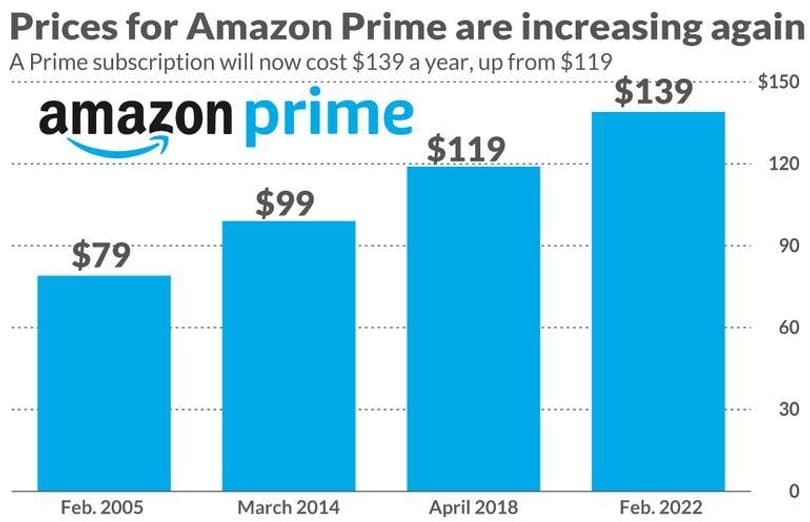
Since its inception, Amazon Prime’s price has gradually increased, reflecting both inflationary pressures and the continuous expansion of its service offerings. What started primarily as a shipping service has blossomed into an entertainment, shopping, and convenience powerhouse. Each price hike has been accompanied by new features or enhancements, attempting to justify the increased financial commitment. Reviewing these historical trends provides context and helps members understand that future price adjustments are a distinct possibility.
Factors Influencing Future Pricing: Inflation, Service Expansion, and Competition
Several factors could influence future Prime pricing. General inflation and rising operational costs (fuel, labor, logistics) are constant pressures. The continued expansion of Prime’s benefits, such as investing more heavily in original content for Prime Video or adding new digital services, also incurs significant costs that Amazon might pass on. Furthermore, the competitive landscape of e-commerce and streaming services plays a role; Amazon must balance its pricing to remain attractive while maximizing profitability. Members should stay informed about Amazon’s announcements regarding new services and economic conditions that might signal upcoming price changes.
Proactive Budgeting: Preparing for Potential Subscription Adjustments
Given the likelihood of future price changes, proactive budgeting is a wise financial strategy. Consider setting aside a slightly higher amount for your “subscription services” category than the current Prime cost, building a small buffer that can absorb minor price increases without disrupting your budget. Alternatively, keep an eye on your renewal date and Amazon’s communications. If a price hike is announced, re-evaluate your usage and financial situation using the framework outlined above. This preparedness ensures you can make a calm, informed decision rather than being caught off guard by an unexpected increase.
Conclusion
The question “what is the cost of Amazon Prime?” is far more intricate than simply reading a price tag. It demands a holistic financial perspective that accounts for direct fees, potential savings, and indirect influences on spending habits. For many, Prime genuinely offers substantial value, consolidating various services into a cost-effective package and enhancing daily convenience. For others, a deeper financial analysis might reveal that the benefits do not justify the expenditure, or that alternative solutions offer better value for money.
Ultimately, the decision to subscribe, renew, or cancel Amazon Prime is a personal financial one. By critically assessing your usage, comparing alternatives, understanding all financial implications, and employing smart budgeting strategies, consumers can ensure that their relationship with Amazon Prime is one of informed choice, maximizing its financial benefits while safeguarding their personal wealth.
aViewFromTheCave is a participant in the Amazon Services LLC Associates Program, an affiliate advertising program designed to provide a means for sites to earn advertising fees by advertising and linking to Amazon.com. Amazon, the Amazon logo, AmazonSupply, and the AmazonSupply logo are trademarks of Amazon.com, Inc. or its affiliates. As an Amazon Associate we earn affiliate commissions from qualifying purchases.