
In the vast and intricate world of computing, the processor, often referred to as the Central Processing Unit (CPU), stands as the undisputed brain of any digital device. It is the component responsible for executing instructions, performing calculations, and managing the overall flow of data, making it central to everything from gaming and content creation to complex scientific simulations. When we talk about processors, two names typically dominate the conversation: Intel and AMD. While Intel has long been a household name, Advanced Micro Devices (AMD) has emerged as a formidable innovator, consistently pushing the boundaries of performance, efficiency, and value in the semiconductor industry.
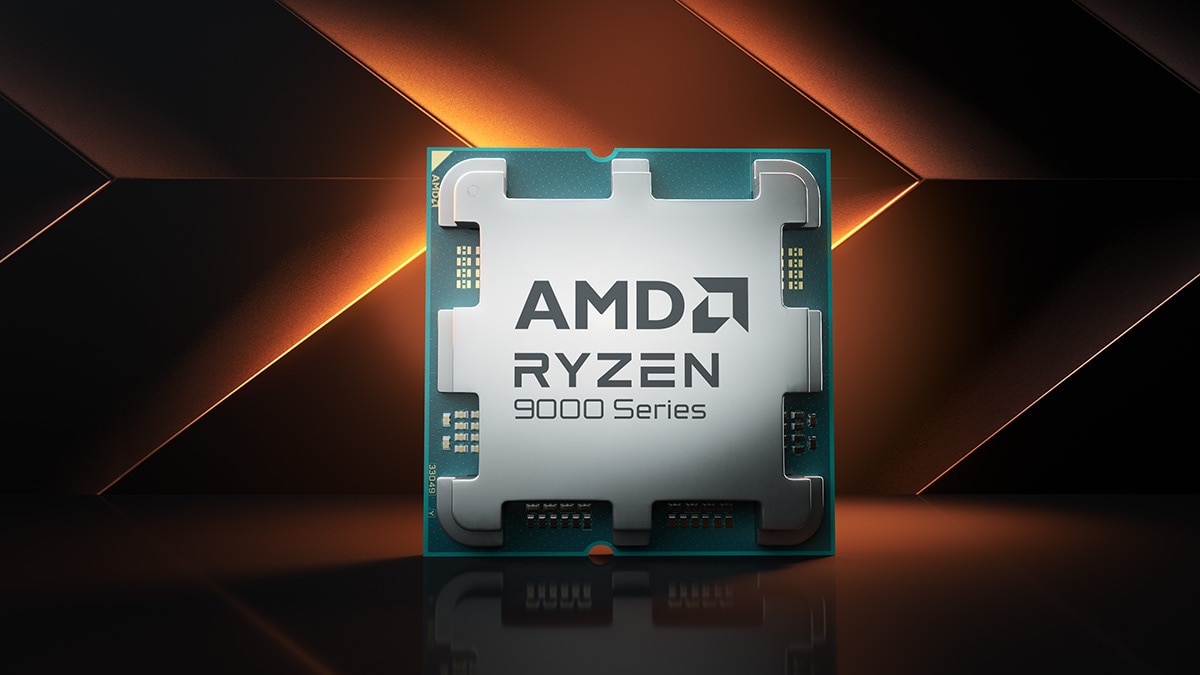
An AMD processor, at its core, is a sophisticated microchip designed and manufactured by Advanced Micro Devices, Inc. These processors are engineered to power a wide array of devices, including desktop computers, laptops, servers, gaming consoles, and even specialized embedded systems. What sets AMD apart, beyond its technological prowess, is its relentless pursuit of innovation, often challenging the status quo and offering compelling alternatives that drive competition and benefit consumers globally. Understanding what an AMD processor is involves delving into its history, architecture, diverse product lines, and its significant impact on the modern technological landscape. This exploration reveals not just a piece of silicon, but a testament to relentless engineering and strategic vision that continues to shape the future of computing.
The Core of Computing: Understanding AMD Processors
At the heart of every computer lies the processor, a marvel of miniaturization and engineering complexity. AMD’s contribution to this vital component has been foundational, evolving from early chips to today’s multi-core powerhouses. To truly grasp “what is an AMD processor,” one must appreciate its journey and the principles guiding its operation.
A Brief History of Advanced Micro Devices (AMD)
Founded in 1969 by Jerry Sanders and a team of engineers, Advanced Micro Devices began its journey primarily as a manufacturer of integrated circuits. Its entry into the x86 processor market, which defines modern personal computing, came in the early 1980s, initially as a second-source manufacturer for Intel. This relationship, while offering stability, also set the stage for one of the most enduring rivalries in tech history. AMD’s pivotal moment arrived with its K5 and K6 series processors in the mid-to-late 1990s, demonstrating its capability to design competitive CPUs independently. The early 2000s saw AMD achieve significant milestones with its Athlon and Opteron processors, which introduced groundbreaking technologies like integrated memory controllers and 64-bit computing (x86-64 architecture), often outpacing Intel in innovation during that period.
While subsequent years presented challenges, including a period where Intel held a significant performance lead, AMD’s resilience paid off spectacularly with the launch of its Zen architecture in 2017. This architectural redesign marked a dramatic return to competitiveness, propelling AMD back to the forefront of processor innovation with its Ryzen and EPYC product lines, redefining performance-per-dollar and multi-core supremacy.
How a Processor Works (Simplified)
Regardless of the manufacturer, a processor’s fundamental role remains consistent: to process instructions. Think of the CPU as the central command center that interprets and executes the commands issued by software. It fetches instructions from memory, decodes them, executes the required operations (arithmetic, logic, data movement), and then stores the results back in memory or registers. This cycle occurs billions of times per second.
Modern processors, including those from AMD, achieve immense processing power through several key concepts:
- Cores: Independent processing units within a single chip. Each core can handle a separate stream of instructions.
- Threads: Logical execution paths. Many AMD processors utilize Simultaneous Multi-threading (SMT), which AMD calls “Hyper-Threading,” allowing each physical core to handle two threads concurrently, improving efficiency by keeping the core busy even when one thread is waiting for data.
- Clock Speed: Measured in gigahertz (GHz), this indicates how many instruction cycles a core can perform per second. Higher clock speeds generally mean faster performance, though it’s not the sole determinant.
- Cache Memory: Small, extremely fast memory built directly into the CPU. It stores frequently accessed data, reducing the time the processor spends waiting for data from slower main system memory (RAM). AMD processors feature multiple levels of cache (L1, L2, L3) to optimize data access.
Key Components and Architecture
AMD’s recent success is largely attributable to its revolutionary Zen architecture. This modular design approach allowed AMD to create scalable processors for various market segments using a common foundation. Key architectural features include:
- Chiplet Design: Instead of a single, large monolithic die, AMD uses smaller “chiplets” (e.g., CPU core complexes and an I/O die) connected via high-speed interconnects like Infinity Fabric. This modularity improves manufacturing yields, reduces costs, and allows for greater scalability in core counts.
- High Instructions Per Cycle (IPC): Zen architecture significantly improved the number of instructions each core could process per clock cycle, directly boosting performance without solely relying on higher clock speeds.
- Integrated Graphics (APUs): A distinguishing feature of many AMD processors, particularly in the consumer segment, is the integration of powerful Radeon graphics directly onto the CPU die. These Accelerated Processing Units (APUs) provide respectable gaming and multimedia capabilities without requiring a separate discrete graphics card, making them ideal for budget-friendly builds, small form factor PCs, and laptops.
- Advanced Instruction Sets: AMD processors support various instruction sets (e.g., SSE, AVX, FMA) that accelerate specific types of computations, crucial for applications ranging from multimedia encoding to scientific simulations.
Diverse Offerings: AMD Processor Families
AMD’s strategy hinges on providing a comprehensive range of processors tailored for distinct market segments, ensuring that whether you’re a casual user, a hardcore gamer, a content creator, or an enterprise customer, there’s an AMD solution designed for your needs.
Ryzen: Powering Desktops and Laptops
The Ryzen family represents AMD’s flagship consumer CPU line, synonymous with its resurgence in the desktop and laptop markets. Since its introduction in 2017, Ryzen has consistently delivered strong multi-core performance and excellent value.
- Ryzen 3, 5, 7, 9 (Desktop): These processors cater to different performance tiers. Ryzen 3 (e.g., 4 cores, 8 threads) is ideal for everyday computing and light gaming. Ryzen 5 (e.g., 6 cores, 12 threads) offers a superb balance for gaming and productivity. Ryzen 7 (e.g., 8 cores, 16 threads) targets serious gamers and professional users needing more horsepower for demanding applications. At the pinnacle, Ryzen 9 (e.g., 12-16 cores, 24-32 threads) provides extreme multi-threaded performance for professional content creation, heavy multi-tasking, and enthusiasts.
- Ryzen Threadripper (High-End Desktop – HEDT): For users who demand workstation-class power in a desktop form factor, Threadripper processors offer an astonishing number of cores (up to 64 cores, 128 threads), copious PCIe lanes, and quad-channel memory support. They are designed for extreme content creation, 3D rendering, video editing, and complex simulations.
- Ryzen Mobile Processors: Optimized for laptops, these processors prioritize power efficiency and integrated graphics performance. Ryzen mobile CPUs (identified by model numbers like 5000U/H, 6000U/H, 7000U/H series) are found in ultrabooks, gaming laptops, and mobile workstations, offering excellent battery life combined with strong CPU and integrated GPU performance, often leveraging AMD’s powerful RDNA-based graphics.
Common to all Ryzen processors is their strong emphasis on multi-core performance, making them highly suitable for modern applications that can utilize multiple threads, such as video editing, 3D rendering, software compilation, and simultaneous streaming while gaming.
EPYC: The Server Workhorse
Beyond consumer computing, AMD makes a significant impact in the data center and enterprise space with its EPYC processors. These are designed from the ground up to meet the demanding requirements of servers, cloud computing, and high-performance computing (HPC).
- High Core Counts: EPYC processors boast an even greater number of cores than Threadripper, with current generations offering up to 128 cores per socket (256 threads), enabling them to handle massive workloads and virtualization tasks efficiently.
- Memory Bandwidth and Capacity: They support a large number of memory channels (typically 8 or 12 per socket) and enormous RAM capacities, crucial for databases, big data analytics, and in-memory computing.
- PCIe Lane Abundance: EPYC CPUs provide a vast number of PCIe lanes, allowing for extensive connectivity to GPUs, NVMe SSDs, and network adapters, essential for scalable server infrastructures.
- Security Features: AMD’s “Infinity Guard” security suite, including technologies like Secure Encrypted Virtualization (SEV), provides advanced hardware-level security to protect sensitive data and virtualized environments from attacks.
EPYC processors offer a compelling total cost of ownership (TCO) for enterprises, delivering high performance and features that were once only achievable with multi-socket configurations on a single-socket system.
Radeon Graphics (Integrated & Discrete)

While discrete Radeon GPUs are separate products, AMD’s unique position in the market is significantly strengthened by its integrated graphics. Many Ryzen consumer CPUs are APUs (Accelerated Processing Units), combining Zen CPU cores with powerful Radeon graphics (e.g., Vega or RDNA-based architectures) on the same chip. These APUs offer:
- Cost-Effectiveness: Eliminate the need for a separate discrete GPU for entry-level gaming, esports, and general multimedia tasks.
- Space and Power Efficiency: Ideal for compact PCs (SFF), HTPCs, and laptops where space and power consumption are critical.
- Consoles: AMD’s custom APU solutions power both the Sony PlayStation 5 and Microsoft Xbox Series X/S, showcasing their prowess in integrated high-performance CPU and GPU technology for demanding gaming environments.
This synergy between CPU and integrated GPU is a hallmark of AMD’s approach, providing a distinct advantage in specific market segments.
AMD vs. The Competition: A Performance Overview
The competitive landscape for processors is primarily defined by the rivalry between AMD and Intel. For decades, Intel often held the performance crown, but AMD’s Zen architecture has dramatically shifted this dynamic, fostering intense competition that ultimately benefits consumers.
Key Metrics for Comparison
When comparing processors, several metrics are crucial:
- Clock Speed (GHz): While important, raw clock speed is less meaningful without considering the IPC.
- Core/Thread Count: More cores/threads generally mean better performance in multi-threaded workloads.
- Instructions Per Cycle (IPC): How much work each core can do in one clock cycle. A higher IPC means better performance at the same clock speed.
- Power Consumption (TDP): Thermal Design Power (TDP) indicates the maximum heat a cooling system needs to dissipate. Lower TDP often means better power efficiency, especially important for laptops.
- Pricing: AMD has historically offered a strong performance-per-dollar proposition.
- Manufacturing Process (Nanometers): Smaller process nodes (e.g., 7nm, 5nm) generally lead to more transistors, better power efficiency, and higher core counts within the same power envelope.
Gaming Performance
In the gaming arena, AMD has made tremendous strides. While historically Intel often held a slight edge in raw single-core gaming performance, especially at lower resolutions, AMD’s recent Ryzen generations have closed this gap significantly, sometimes surpassing Intel in specific titles, particularly with their X3D V-Cache technology. For gamers, the choice often comes down to:
- Raw FPS: Both companies offer processors capable of high frame rates in modern games.
- Value: AMD often provides a better performance-per-dollar ratio, allowing gamers to allocate more of their budget to a powerful discrete GPU.
- Streaming & Gaming: AMD’s higher core/thread counts can be advantageous for streamers who game and encode simultaneously, though modern discrete GPUs also handle much of the encoding workload.
Productivity and Content Creation
This is where AMD has particularly shined with its Ryzen and Threadripper lines. Applications like video editing (Adobe Premiere Pro, DaVinci Resolve), 3D rendering (Blender, Cinema 4D), CAD software, scientific simulations, and software development (compiling code) are heavily multi-threaded.
- Multi-threaded Dominance: AMD’s higher core and thread counts, combined with efficient architecture, often give them a significant lead in these workloads, drastically reducing rendering times and improving overall workflow efficiency.
- Value for Professionals: Professionals can often achieve workstation-level performance from AMD consumer platforms at a more accessible price point.
Power Efficiency and Mobile Computing
For laptops, power efficiency is paramount. AMD’s advancements in process technology (e.g., TSMC’s 7nm and 6nm nodes) and architectural refinements have led to highly competitive mobile processors.
- Battery Life: Modern Ryzen mobile processors deliver excellent battery life without sacrificing performance.
- Performance per Watt: AMD’s mobile CPUs often offer a superior balance of performance and efficiency, making them a popular choice for thin-and-light laptops and powerful mobile workstations.
The Impact and Future of AMD Processors
AMD’s journey from a formidable challenger to a market leader in various segments has had a profound impact on the technology industry, fostering innovation and reshaping consumer expectations.
Driving Innovation and Competition
AMD’s return to strong competitiveness with Zen architecture has revitalized the entire processor market. Without AMD’s aggressive innovation and strategic pricing, Intel might not have felt the same pressure to accelerate its own technological development. This healthy rivalry has led to:
- Faster Innovation Cycles: Both companies are now releasing new generations of processors more frequently, each packed with performance improvements and new features.
- Better Value for Consumers: The competition has driven down prices and pushed up performance across the board, giving consumers more powerful options at various price points.
- Architectural Diversity: AMD’s chiplet design pioneered a new way of building processors, influencing industry trends and demonstrating the viability of modular approaches.
Role in Emerging Technologies
AMD processors are not just powering today’s computing needs; they are also integral to the technologies of tomorrow:
- High-Performance Computing (HPC): EPYC processors are central to many supercomputers and research clusters, accelerating scientific discovery, climate modeling, and medical research.
- Artificial Intelligence (AI) and Machine Learning (ML): While GPUs often take the lead in AI training, AMD CPUs provide the foundational compute for data pre-processing, model inference, and orchestrating AI workloads, often in tandem with AMD Instinct accelerators.
- Gaming Consoles: As mentioned, AMD’s custom APUs are at the heart of the latest generation of game consoles, showcasing their ability to deliver powerful, integrated solutions for highly specialized and performance-critical applications.
- Edge Computing: Smaller, power-efficient AMD embedded processors are finding homes in IoT devices, industrial control systems, and edge servers, bringing intelligence closer to the data source.
Future Outlook
The future for AMD processors appears bright. The company continues to invest heavily in R&D, focusing on:
- Advanced Process Nodes: Leveraging cutting-edge manufacturing processes (e.g., 4nm, 3nm and beyond) to pack more transistors, improve efficiency, and enhance performance.
- Next-Generation Architectures: Continual evolution of the Zen core design, bringing further IPC improvements and new features.
- Integrated Solutions: Further integrating CPU, GPU, and potentially AI accelerators into more cohesive and powerful chip designs.
- Software Optimization: Working closely with developers to optimize software and games for AMD hardware, ensuring peak performance.
- Sustainability: Designing more power-efficient processors to reduce energy consumption and environmental impact in data centers and consumer devices.
In an era defined by data and computation, AMD’s trajectory suggests it will remain a pivotal player, pushing the boundaries of what’s possible in computing and ensuring a dynamic, competitive market that benefits users worldwide.

Conclusion
An AMD processor is far more than just a microchip; it represents a powerful force in the technology world, driving innovation and competition across virtually every segment of computing. From its humble beginnings as a second-source manufacturer to its current standing as a leader in high-performance computing, AMD’s journey is a testament to persistent engineering and strategic vision.
Whether you’re building a top-tier gaming PC, a professional workstation for content creation, a robust server for enterprise applications, or powering the next generation of gaming consoles, AMD offers compelling, high-performance, and often value-rich solutions. Its Zen architecture has not only propelled its own product lines to new heights but has also invigorated the entire processor industry, fostering an environment where consumers benefit from rapid advancements and competitive pricing. As we look to the future, AMD’s commitment to cutting-edge research and development ensures its continued prominence, shaping the digital experiences that define our modern world. Understanding “what is an AMD processor” is to understand a crucial engine of technological progress that continues to redefine the boundaries of performance and possibility.
aViewFromTheCave is a participant in the Amazon Services LLC Associates Program, an affiliate advertising program designed to provide a means for sites to earn advertising fees by advertising and linking to Amazon.com. Amazon, the Amazon logo, AmazonSupply, and the AmazonSupply logo are trademarks of Amazon.com, Inc. or its affiliates. As an Amazon Associate we earn affiliate commissions from qualifying purchases.