
Apple Inc. (AAPL) stands as a titan in the global economy, a company whose every move, from product launches to financial decisions, reverberates across markets worldwide. For investors, both seasoned and novice, understanding the nuances of how a company manages its shares is crucial. Among these nuances, stock splits are particularly noteworthy, representing strategic maneuvers designed to enhance accessibility and liquidity. The question of “how many times did Apple stock split?” is not merely a historical curiosity but a gateway to understanding critical investment dynamics.
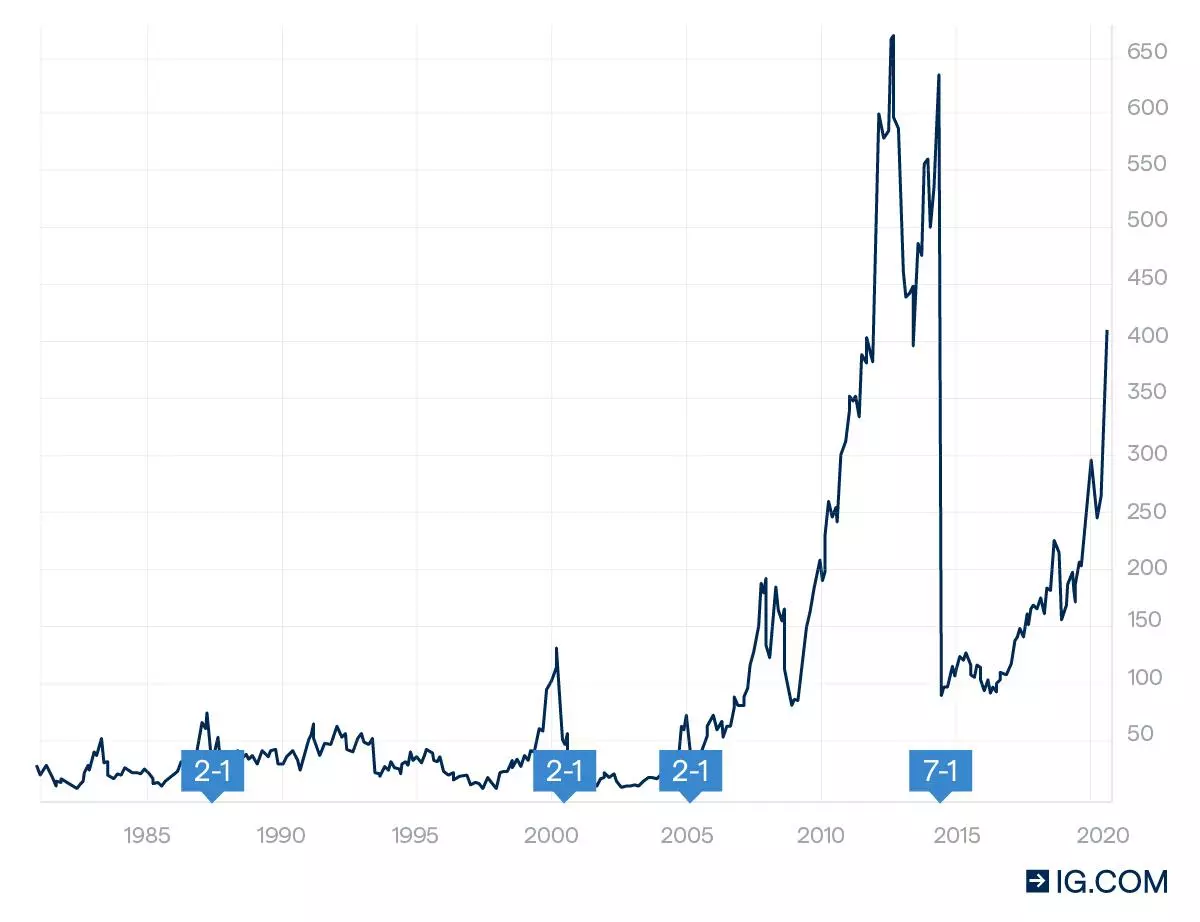
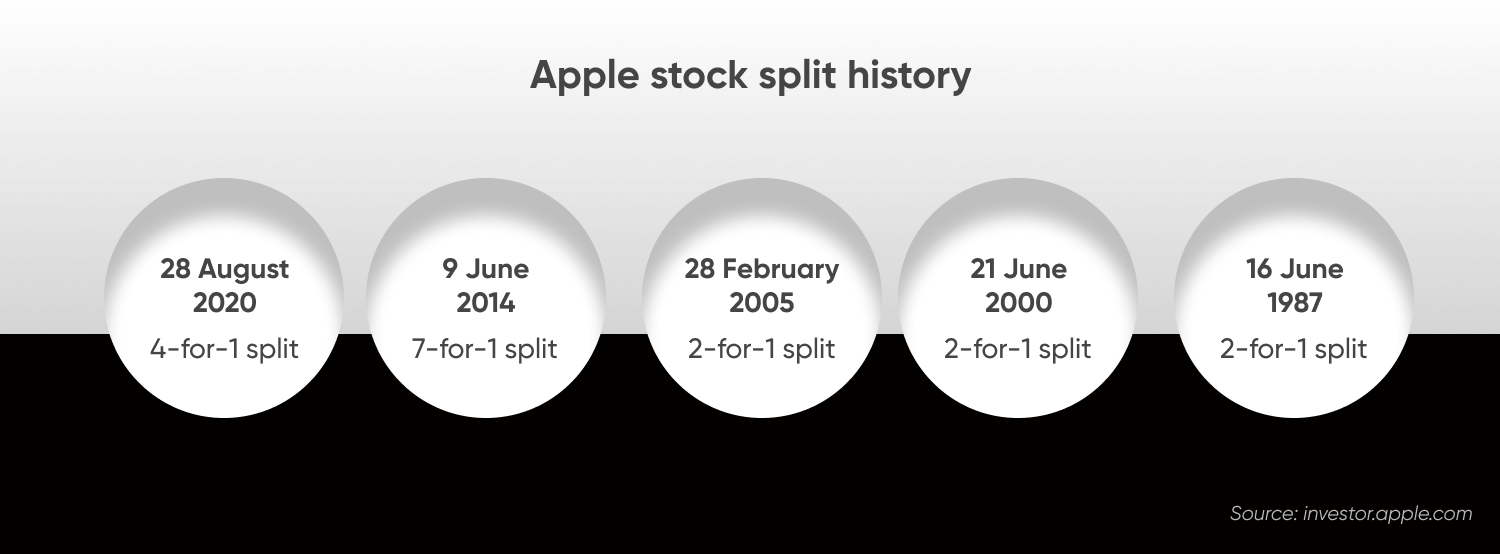
To date, Apple has split its stock a total of five times. Each split was a deliberate decision, reflecting different eras in the company’s phenomenal growth trajectory and market valuation. These events, while not altering the fundamental value of an investor’s holdings at the moment of the split, have profoundly influenced market perception, investor participation, and the company’s long-term stock performance. This article delves into the “Money” aspect of these events, exploring the mechanics, historical context, and investor implications of Apple’s stock splits.
The Mechanics of a Stock Split: Why Companies Do It
A stock split is a corporate action where a company increases the number of its outstanding shares by dividing existing shares into multiple new shares. While the number of shares an investor owns increases, the price per share decreases proportionally, meaning the total market value of their investment remains unchanged immediately after the split. For example, in a 2-for-1 split, an investor holding 100 shares at $100 each ($10,000 total) would suddenly own 200 shares at $50 each ($10,000 total). This seemingly simple adjustment is driven by several strategic financial objectives.
Enhancing Stock Accessibility and Liquidity
One of the primary reasons companies execute stock splits is to make their shares more accessible to a broader range of investors, particularly retail investors. When a company’s stock price soars into the hundreds or even thousands of dollars per share, it can become prohibitively expensive for individual investors to buy in round lots (typically 100 shares) or even single shares. A lower per-share price resulting from a split makes the stock appear more affordable, encouraging smaller investors to purchase shares.
This increased accessibility often leads to greater liquidity. Liquidity refers to how easily a stock can be bought or sold without significantly affecting its price. With more shares outstanding and a lower price point, more transactions typically occur, making the stock easier to trade. Higher liquidity can also make a stock more attractive to institutional investors who manage large portfolios and require the ability to enter and exit positions efficiently.
Signaling Confidence and Growth
Stock splits are almost always a response to a significant appreciation in a company’s stock price. Companies rarely split their stock if its price is stagnant or declining. Therefore, announcing a stock split can be interpreted by the market as a vote of confidence from management regarding the company’s future prospects and continued growth. It signals that the company believes its high valuation is justified and expects continued success, which can positively influence investor sentiment.
This signal is particularly potent when a company like Apple, known for its strategic foresight, decides to split. It reinforces the narrative of a thriving, expanding enterprise, indirectly supporting its brand image in the financial markets and attracting investors who associate high stock prices with successful, growing companies.
Psychological Impact on Investors
Beyond the purely financial mechanics, stock splits have a significant psychological impact. Investors often feel they are “getting more” shares, even though the total value of their holding is unchanged. There’s a certain satisfaction in seeing one’s share count multiply, which can boost confidence and encourage continued investment.
Furthermore, a lower per-share price can make a stock seem “cheaper” and more attractive, even if its underlying valuation (e.g., price-to-earnings ratio) remains the same. This perception can draw in new investors who might have previously viewed the stock as too expensive or out of reach, contributing to increased demand and potentially long-term price appreciation.
Apple’s Stock Split Journey: A Historical Perspective
Apple’s journey through five stock splits mirrors its incredible evolution from a niche computer company to a global technology behemoth. Each split marked a significant milestone, reflecting periods of substantial growth and market capitalization expansion.
The Early Splits (1987, 2000)
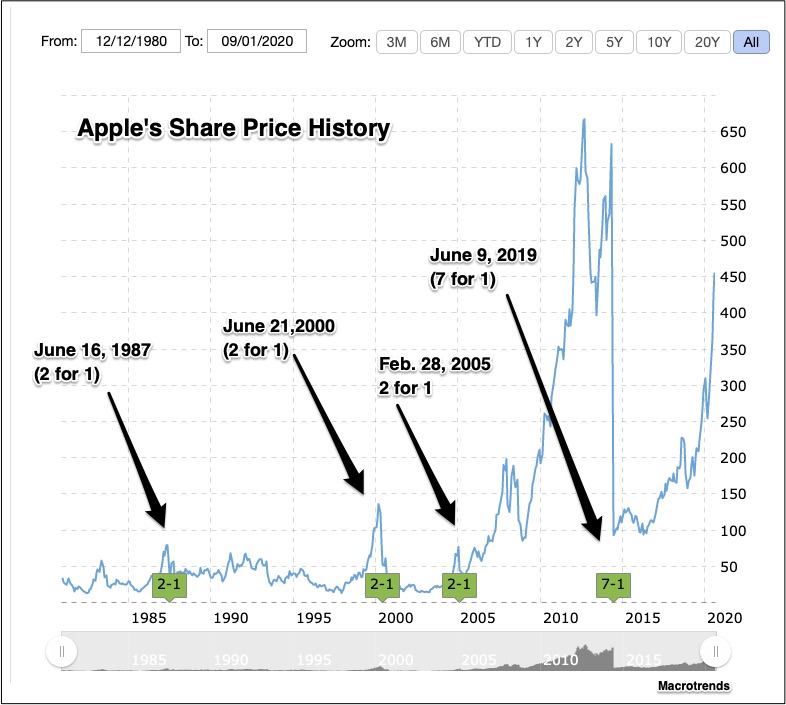
Apple’s first stock split occurred on May 15, 1987, a 2-for-1 split. This happened relatively early in the company’s history, less than seven years after its initial public offering (IPO) in December 1980. At this point, Apple was primarily known for its Macintosh computers. The split came during a period of strong growth for the personal computing industry, making Apple’s shares more accessible as it solidified its position in the emerging tech landscape.
The second split came on June 21, 2000, another 2-for-1 split. This split occurred during the dot-com bubble, a time of immense speculation and rapid growth in technology stocks. While Apple itself would face challenges in the immediate aftermath of the bubble burst, this split reflected the significant appreciation its stock had experienced in the late 1990s. It was a period preceding the company’s major resurgence led by products like the iPod, iTunes, and eventually the iPhone.
The iPhone Era Split (2014)
Perhaps the most significant and widely remembered split occurred on June 9, 2014, a substantial 7-for-1 split. By 2014, Apple had undergone a dramatic transformation under Steve Jobs and then Tim Cook, propelled by the phenomenal success of the iPod, iPhone, and iPad. The company’s stock price had surged to unprecedented levels, making it one of the most valuable companies globally.
This 7-for-1 split was a bold move, significantly reducing the per-share price and making Apple stock incredibly affordable for a vast new wave of retail investors. It was a clear signal of Apple’s confidence in its continued innovation and market dominance, and it coincided with a period of sustained growth in both revenue and profitability. The split played a crucial role in broadening Apple’s investor base and maintaining liquidity for its increasingly valuable shares.
The Post-Pandemic / Tech Boom Split (2020)
Apple’s most recent stock split took place on August 31, 2020, a 4-for-1 split. This split came amidst the unprecedented market rally of 2020, fueled by increased digital adoption during the COVID-19 pandemic and massive fiscal and monetary stimulus. Apple’s stock price had once again reached lofty heights, exceeding $500 per share before the split.
The 2020 split served similar purposes to its predecessors: to make the stock more accessible and attractive to a broader pool of investors at a time of heightened retail participation in the stock market. It also preceded a period where Apple’s market capitalization surpassed $2 trillion and later $3 trillion, further cementing its status as the world’s most valuable company.
The Future of Apple Splits
Given Apple’s consistent growth and tendency for its stock price to appreciate significantly over time, it’s not unreasonable to consider the possibility of future stock splits. While the rise of fractional share ownership has somewhat mitigated the “affordability” argument for splits, the psychological impact and the desire to maintain broad investor appeal remain strong drivers. Should Apple’s stock price again climb into the high hundreds or thousands of dollars, another split could certainly be on the horizon.
Impact on Investors: What a Stock Split Means for Your Portfolio
For individual investors, understanding the implications of a stock split is essential for managing expectations and making informed financial decisions.
No Change in Fundamental Value (Initially)
It’s crucial to reiterate that a stock split, by itself, does not change the fundamental value of your investment. It’s akin to exchanging a $100 bill for two $50 bills – the total amount of money you have remains the same, just in a different denomination. Similarly, the company’s market capitalization (total value of outstanding shares) remains constant immediately after a split. The company’s earnings, assets, liabilities, and business operations are entirely unaffected.
However, the increased accessibility and potential for higher trading volume post-split can lead to increased demand for the stock, which can contribute to price appreciation over the long term. This appreciation is a secondary effect, not a direct outcome of the split itself.
Long-Term Growth and Accessibility
The true benefit of a stock split for investors is often seen in the long term. By lowering the entry barrier, splits can attract a larger and more diverse group of investors. This broader ownership base can lead to increased trading activity and potentially a more stable and robust share price over time. For long-term investors, the splits mean their initial investment, assuming Apple’s continued success, has compounded into a significantly larger number of shares, each representing a portion of a much more valuable company.
For example, an investor who bought one share of Apple stock before the first split in 1987 would, through subsequent splits (2:1 in 1987, 2:1 in 2000, 7:1 in 2014, and 4:1 in 2020), now own 112 shares (1 * 2 * 2 * 7 * 4 = 112). This illustrative calculation highlights the power of compounding growth facilitated by splits, making the stock more attainable at various stages of its journey.
Dividend Adjustments and Other Considerations
If a company pays dividends, the per-share dividend amount will also be adjusted proportionally after a stock split. For instance, in a 2-for-1 split, if the dividend was $1.00 per share, it would typically become $0.50 per share, meaning your total dividend income remains the same. This ensures that the total cash payout to shareholders doesn’t change due to the split.
For options traders, stock splits also lead to adjustments in option contracts, where the number of shares underlying each contract and the strike price are modified to reflect the split ratio. While this is a more advanced topic, it ensures that the value and terms of options contracts remain fair post-split.
The Broader Implications of Stock Splits in the Market
Beyond individual companies and investors, stock splits also carry broader implications for the financial markets as a whole, influencing index composition and investor behavior.
Attracting Different Investor Demographics
Stock splits historically played a crucial role in segmenting the investor market. High-priced stocks were often seen as exclusive to institutional investors or very wealthy individuals. By lowering the per-share price, splits democratized access, allowing smaller retail investors to participate in the ownership of blue-chip companies. This increased retail participation can contribute to market stability and broader wealth distribution, albeit on a small scale per individual.
Index Inclusion and Weighting
For price-weighted indices like the Dow Jones Industrial Average (DJIA), a stock’s price directly impacts its weighting within the index. A very high-priced stock can disproportionately influence the index’s movements. Stock splits can reduce a company’s share price, making it more palatable for inclusion or to reduce its outsized influence in such indices, promoting a more balanced representation. Apple, for instance, was included in the DJIA in 2015, not long after its 7-for-1 split, a move that was facilitated by its now lower per-share price.
The Modern Trend: Fractional Shares and Tech Innovation
The landscape of stock ownership is continuously evolving. The rise of fintech platforms offering fractional share ownership has somewhat diminished the strict necessity of stock splits for accessibility. Investors can now buy a fraction of a high-priced share (e.g., $100 worth of a $1000 stock), making any stock instantly affordable.
Despite this innovation, stock splits continue to be relevant. They retain their psychological power, serving as significant corporate announcements that grab investor attention. They also reinforce a company’s commitment to broad market participation and can still enhance liquidity in traditional trading environments. For Apple, a company that has consistently aimed for broad consumer appeal, its stock splits align with its overarching philosophy of accessibility.
In conclusion, Apple’s five stock splits – in 1987, 2000, 2005 (though often misremembered as 2000 for its 2-for-1 ratio, the actual 2-for-1 split was in 2000, and a smaller adjustment happened in 2005 via a spin-off, not a traditional split), 2014, and 2020 – are more than just historical footnotes. They are strategic financial maneuvers that reflect the company’s monumental growth, its commitment to investor accessibility, and its confidence in future performance. While a split doesn’t directly create value, it facilitates broader participation and signals a company’s success, factors that have undoubtedly contributed to Apple’s enduring appeal as a cornerstone investment for millions globally. For any investor, understanding these splits offers a deeper appreciation of the dynamics at play in the ever-evolving financial markets.
aViewFromTheCave is a participant in the Amazon Services LLC Associates Program, an affiliate advertising program designed to provide a means for sites to earn advertising fees by advertising and linking to Amazon.com. Amazon, the Amazon logo, AmazonSupply, and the AmazonSupply logo are trademarks of Amazon.com, Inc. or its affiliates. As an Amazon Associate we earn affiliate commissions from qualifying purchases.