
In the intricate world of personal finance, your bank account number serves as a unique identifier, a digital fingerprint for your funds. While it’s a piece of information you might not need daily, when the occasion arises – be it setting up direct deposit, initiating a wire transfer, or linking accounts for a new financial service – knowing exactly where to find it becomes crucial. Many people know their routing number by heart, or their debit card details, but the core account number can sometimes feel elusive. Fortunately, your bank has made this essential data accessible through multiple channels, both physical and digital. Understanding these pathways not only simplifies your financial tasks but also empowers you to manage your money more efficiently and securely. This guide will walk you through the most common and reliable methods to locate your bank account number, ensuring you’re always prepared for whatever financial transaction comes your way.
Understanding Your Bank Account Number
Before diving into how to find it, it’s vital to grasp what an account number truly is and why it’s distinct from other common banking identifiers. This foundational knowledge will prevent confusion and ensure you’re looking for the correct information.
What is an Account Number?
Your bank account number is a unique sequence of digits, typically ranging from 8 to 12 characters, assigned by your bank to identify your specific checking or savings account. Think of it as the individual address for your particular financial holdings within the bank’s system. It’s different from your debit card number, which is linked to a payment network (like Visa or Mastercard) and designed for transactions. It’s also distinct from your bank’s routing number, which identifies the financial institution itself, telling other banks where to send or receive funds. While a routing number directs money to the right bank, your account number directs it to the right account within that bank. Both are necessary for many transactions, but they serve different, equally critical functions. Understanding this distinction is the first step in confident financial management.
Why You Might Need It
The occasions requiring your bank account number are more common than you might think, making it an indispensable piece of information for various financial activities. Perhaps one of the most frequent needs is when setting up direct deposit for your paycheck, government benefits, or tax refunds. Employers and agencies require both your routing and account numbers to ensure funds land directly in your designated account. Similarly, when initiating an electronic funds transfer (EFT), such as paying bills online through a third-party service or sending money to another individual via certain platforms, your account number is often requested.
For larger, more formal transfers like wire transfers, especially international ones, your account number (along with the routing number or SWIFT/BIC code) is absolutely essential. Linking your bank account to external financial tools – think budgeting apps, investment platforms, peer-to-peer payment services like Venmo or PayPal (for bank withdrawals), or even new savings accounts at different institutions – also frequently requires this number for verification and transaction purposes. Furthermore, if you’re dealing with loan applications, setting up automatic bill payments, or needing to verify your account for any legal or official purpose, your account number will almost certainly be part of the required documentation. Being able to quickly locate it streamlines these processes, saving you time and potential frustration.
Common Places to Locate Your Account Number Physically
Before the advent of widespread digital banking, physical documents were the primary source for finding your account number. While online methods are now popular, these traditional sources remain reliable and are often the first place people check.
On Your Checks
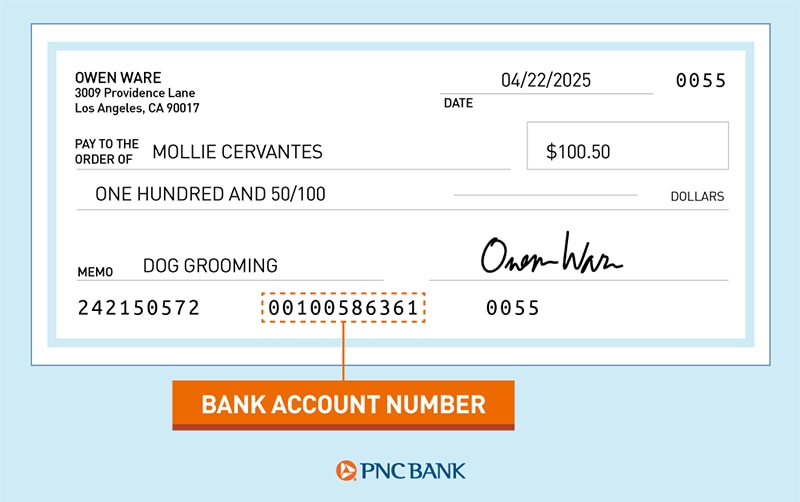
If you still use paper checks, this is arguably the easiest and most familiar place to find your account number. Look at the bottom of a personalized check. You’ll typically see three groups of numbers printed in a special font. From left to right, these usually represent:
- Routing Number: The nine-digit number identifying your bank.
- Account Number: This is your specific account number, usually the second set of digits, though occasionally it might be in the third position, particularly on business checks. It can vary in length.
- Check Number: The sequential number of the check itself, matching the number in the top right corner.
It’s crucial to identify the correct set of numbers. The account number is generally the one in the middle, distinct from the routing number’s consistent nine digits and the shorter check number. Double-check with your bank’s website or statement if you’re unsure about the exact placement on your specific checks, as formats can sometimes vary slightly by institution.
Bank Statements
Whether you receive paper statements in the mail or access them digitally and print them out, your bank statement is a comprehensive record of your account activity and details. Your account number is prominently displayed on almost all bank statements. Typically, you’ll find it near the top of the statement, often close to your name and address, or within the section that summarizes your account details for the statement period. It will usually be clearly labeled as “Account Number,” “Acct. No.,” or simply listed under your account type (e.g., “Checking Account”). This is a highly reliable source as statements are designed to provide a clear overview of your financial relationship with the bank, including key identifiers.
Account Opening Documents
When you first opened your bank account, you would have received a set of documents outlining the terms and conditions, fee schedules, and initial account information. This “welcome kit” or “new account package” almost always includes your full account number. These documents might include the initial deposit slip, a summary sheet, or a customer agreement. While these might not be as readily accessible as a recent check or statement, if you keep your important financial paperwork organized, these original documents are a definitive source for your account number. It’s a good practice to keep these initial records in a secure place, as they contain other vital information about your account setup.
Digital and Online Methods for Retrieval
In today’s digital age, your bank account number is usually just a few clicks away. Most financial institutions offer robust online platforms and mobile applications that provide instant access to your account details from almost anywhere.
Online Banking Portal
Your bank’s online banking portal is often the quickest and most convenient way to find your account number. Here’s a general step-by-step guide:
- Log In: Go to your bank’s official website and log in to your online banking account using your username and password.
- Navigate to Accounts: Once logged in, look for a section labeled “Accounts,” “My Accounts,” “Account Summary,” or similar.
- Select Your Account: Click on the specific checking or savings account for which you need the number. This will usually take you to a detailed view of that account’s transactions and information.
- Find Account Details: Within the account’s detailed view, look for a section titled “Account Details,” “Account Information,” “Account Summary,” or “Routing & Account Numbers.” Your full account number should be displayed there, often alongside the routing number. Some banks might require an additional verification step (like entering a password or a one-time code) to view the full number for security reasons.

Mobile Banking App
Similar to the online portal, your bank’s mobile app offers a streamlined way to access your account number on the go. The process is very similar to the online banking portal:
- Open and Log In: Launch your bank’s mobile app on your smartphone or tablet and log in using your credentials, fingerprint, or facial recognition.
- Select Account: Navigate to your list of accounts and tap on the relevant checking or savings account.
- Access Details: Look for an option like “Account Details,” “Account Info,” or an icon (like a gear or three dots) that expands to show more information. Your account number should be displayed here. Some apps might present it in a way that requires you to tap to reveal the full number for security.
Digital Statements
If you’ve opted for paperless statements, you can access your bank statements as PDF documents within your online banking portal or mobile app.
- Access Statements Section: In your online banking or mobile app, find the “Statements” or “Documents” section.
- Download or View: Select the most recent statement (or any statement) for the relevant account and download it or view it directly in your browser/app.
- Locate Number: Once the digital statement is open, you will find your account number typically near the top, just as you would on a physical paper statement. You can also use the search function (Ctrl+F or Command+F) within the PDF viewer to search for “Account Number” to quickly pinpoint it.
Direct Assistance from Your Bank
When all else fails, or if you prefer speaking to a human, your bank’s customer service channels are always available to help you retrieve your account number.
Calling Customer Service
This is a reliable method if you’re unable to find your number through other means.
- Find the Number: Locate your bank’s customer service number, usually found on their official website, the back of your debit card, or on your bank statements.
- Prepare for Verification: When you call, the representative will need to verify your identity to protect your account from fraud. Be prepared to provide information such as your full name, address, date of birth, Social Security number (last 4 digits often suffice), and possibly answers to security questions you set up.
- State Your Request: Clearly explain that you need your account number for a specific checking or savings account. Once your identity is verified, the representative will provide you with the number.
Visiting a Branch
For those who prefer face-to-face interaction or need a more secure method of retrieval, visiting a local branch is an excellent option.
- Bring ID: Be sure to bring valid, government-issued photo identification (such as a driver’s license or passport). The bank teller will need this to verify your identity.
- Speak to a Teller or Representative: Explain your need for your account number. They can look up your account details in their system and provide you with the number. They might even print it out for you on a secure document.
- Account Access: This method offers peace of mind as you are directly interacting with a bank employee in a secure environment. It’s also ideal if you need to perform other transactions or have complex queries.
Secure Messaging within Online Portals
Many banks offer a secure messaging service within their online banking portals or mobile apps. This allows you to communicate directly with a bank representative without needing to make a phone call or visit a branch.
- Access Message Center: Log in to your online banking or mobile app and look for a “Message Center,” “Secure Mail,” or “Contact Us” section.
- Compose a Message: Send a secure message requesting your account number. Since you’re already logged into your verified account, additional identity verification steps might be minimal or happen automatically.
- Await Response: A bank representative will typically respond within a business day or two with the requested information. This method is convenient for non-urgent requests.
Important Security Considerations
While finding your account number is crucial, protecting it is even more so. Your bank account number, especially when paired with a routing number, can be used to initiate transactions. Safeguarding this information is a critical aspect of your personal financial security.
Protecting Your Account Information
Always treat your account number as sensitive data. Avoid sharing it unnecessarily. When you do share it, ensure it’s with trusted entities like your employer, government agencies, or reputable financial institutions you’ve initiated a relationship with. Be wary of unsolicited requests for your account number via email, text, or phone calls, as these are common tactics in phishing and fraud schemes. Never click on links in suspicious emails that claim to be from your bank and ask for personal information. Instead, always navigate directly to your bank’s official website or use their verified app. When disposing of old checks, statements, or any document containing your account number, always shred them to prevent identity theft.
When to Share
You should only share your account number when it’s genuinely required to facilitate a legitimate financial transaction or service that you are actively setting up or authorizing. This includes:
- Setting up direct deposit with your employer.
- Authorizing automatic bill payments with a trusted service provider (e.g., utility company, mortgage lender).
- Initiating a wire transfer to a known recipient.
- Linking your account to a legitimate investment or budgeting app that you have personally vetted and authorized.
- Responding to verification requests when you call your bank’s official customer service line (after you’ve initiated the call).
Always verify the legitimacy of the requesting party. If in doubt, contact your bank directly using a phone number from their official website or the back of your card, rather than one provided in an email or text.

Verifying Requests
Before providing your account number to anyone, always take a moment to verify the request. Legitimate organizations and your bank will never ask for your full account number, PIN, or online banking password via unsolicited email or text message. If you receive such a request, it is almost certainly a scam. If a caller claims to be from your bank and asks for your account number, politely decline and offer to call them back on the official customer service number. This simple step can prevent significant financial fraud. Trust your instincts; if something feels off, err on the side of caution and protect your financial data.
Locating your bank account number is a fundamental aspect of modern personal finance. Whether you prefer traditional paper methods or the convenience of digital platforms, your bank offers numerous secure avenues for retrieval. By understanding these options and, more importantly, adhering to robust security practices, you empower yourself to manage your finances effectively while safeguarding your valuable assets. Knowing where to find your account number means you’re always prepared, always secure, and always in control of your money.
aViewFromTheCave is a participant in the Amazon Services LLC Associates Program, an affiliate advertising program designed to provide a means for sites to earn advertising fees by advertising and linking to Amazon.com. Amazon, the Amazon logo, AmazonSupply, and the AmazonSupply logo are trademarks of Amazon.com, Inc. or its affiliates. As an Amazon Associate we earn affiliate commissions from qualifying purchases.