
In an increasingly digital world, where contactless payments, mobile wallets, and online banking dominate daily transactions, the humble Automated Teller Machine (ATM) might seem like a relic of a bygone era. Yet, the question “Where is the nearest ATM to me?” remains a frequent and vital query for millions globally. Despite the push towards a cashless society, physical cash retains an irreplaceable role in our personal finance ecosystems, serving as a lifeline for immediate liquidity, a budgeting tool, and a necessary medium for countless everyday transactions.
Understanding how to efficiently locate an ATM, coupled with smart usage strategies, is not just about convenience; it’s a fundamental aspect of effective personal financial management. From avoiding exorbitant fees to ensuring transaction security, navigating the world of ATMs requires a blend of technological savvy and financial prudence. This article delves into the enduring relevance of ATMs, the best methods for finding them, strategies to optimize their use, and the security measures essential for protecting your money in a constantly evolving financial landscape.

Navigating the Cash Landscape: Why ATMs Still Matter
While digital payment methods offer unparalleled speed and convenience, the complete eradication of physical cash is a distant, if not improbable, scenario. ATMs stand at the forefront of ensuring cash accessibility, providing a crucial bridge between digital accounts and tangible currency.
The Enduring Relevance of Physical Cash
The necessity of physical cash often becomes apparent in situations where digital alternatives fall short or are unavailable.
- Small Businesses and Local Markets: Many independent vendors, farmers’ markets, street vendors, and small family-run businesses still operate predominantly on a cash basis, either due to a lack of infrastructure for digital payments or to avoid transaction fees. Having cash readily available ensures you can support these local economies without hassle.
- Emergencies and Contingencies: In unexpected scenarios, such as power outages, internet disruptions, or system failures that cripple electronic payment networks, physical cash can be your only reliable means of payment. It acts as a crucial fallback, providing peace of mind during crises.
- Budgeting and Financial Discipline: For many individuals, using cash for certain expenses (e.g., groceries, entertainment) is a powerful budgeting tool. The physical act of handing over money creates a more tangible connection to spending, often leading to greater financial discipline than swiping a card. This “cash envelope” method is a classic personal finance strategy.
- Privacy and Anonymity: Cash transactions offer a level of privacy that digital payments cannot. For those who prefer to keep certain expenditures off their digital footprint, cash remains the preferred option.
- Tipping and Small Payments: Tipping service providers, paying for parking meters, or making small purchases often still necessitates physical currency, particularly in regions where digital tipping is not yet widespread.
Beyond Withdrawals: The Multifaceted Role of ATMs
Modern ATMs are far more than mere cash dispensers. They have evolved into sophisticated financial kiosks, offering a range of services that extend the functionality of a traditional bank branch.
- Deposits (Checks and Cash): Many ATMs allow users to deposit checks and cash directly into their accounts, often with immediate credit for cash deposits and faster processing for checks than traditional mail or even mobile deposit methods might offer. This is particularly valuable outside of banking hours.
- Balance Inquiries and Mini-Statements: Quick access to your account balance and a condensed transaction history (mini-statement) helps users stay on top of their finances without needing to log into online banking or visit a teller.
- Fund Transfers: While not universally available, some advanced ATMs facilitate transfers between linked accounts, providing a convenient option for moving money between, for instance, a checking and savings account.
- Bill Payments: In some regions and for specific billers, ATMs can be used to pay utility bills, credit card bills, or other recurring expenses, adding another layer of convenience to personal financial management.
- Prepaid Card Reloads: Certain ATMs allow users to reload funds onto prepaid debit cards, offering flexibility for managing spending or providing allowances to family members.
These extended functionalities underscore the ATM’s continued importance as a comprehensive financial tool, catering to a broad spectrum of money management needs beyond simple cash withdrawals.
Smart Strategies for Locating Your Next ATM
The quest for the nearest ATM has been simplified dramatically by technology. Gone are the days of aimlessly driving around or relying solely on visible bank signs. Today, a combination of digital tools and traditional awareness can pinpoint an ATM’s location with remarkable precision.
Leveraging Digital Tools and Apps
Your smartphone is arguably the most powerful ATM locator you possess, offering a multitude of applications and features designed to help you find cash quickly.
- Bank-Specific Apps: Nearly every major financial institution offers a mobile app that includes an ATM and branch locator. These are often the most reliable as they highlight ATMs within your bank’s surcharge-free network, preventing unexpected fees. Examples include apps from Chase, Bank of America, Wells Fargo, Citibank, and regional credit unions.
- Payment Network Locators: Global payment networks like Visa and Mastercard (and their associated networks like Plus, Cirrus, and Maestro) provide online ATM locators on their websites and sometimes within their mobile apps. These tools are incredibly useful for international travel or when you’re far from your primary bank’s network, as they show any ATM that accepts cards from their respective networks.
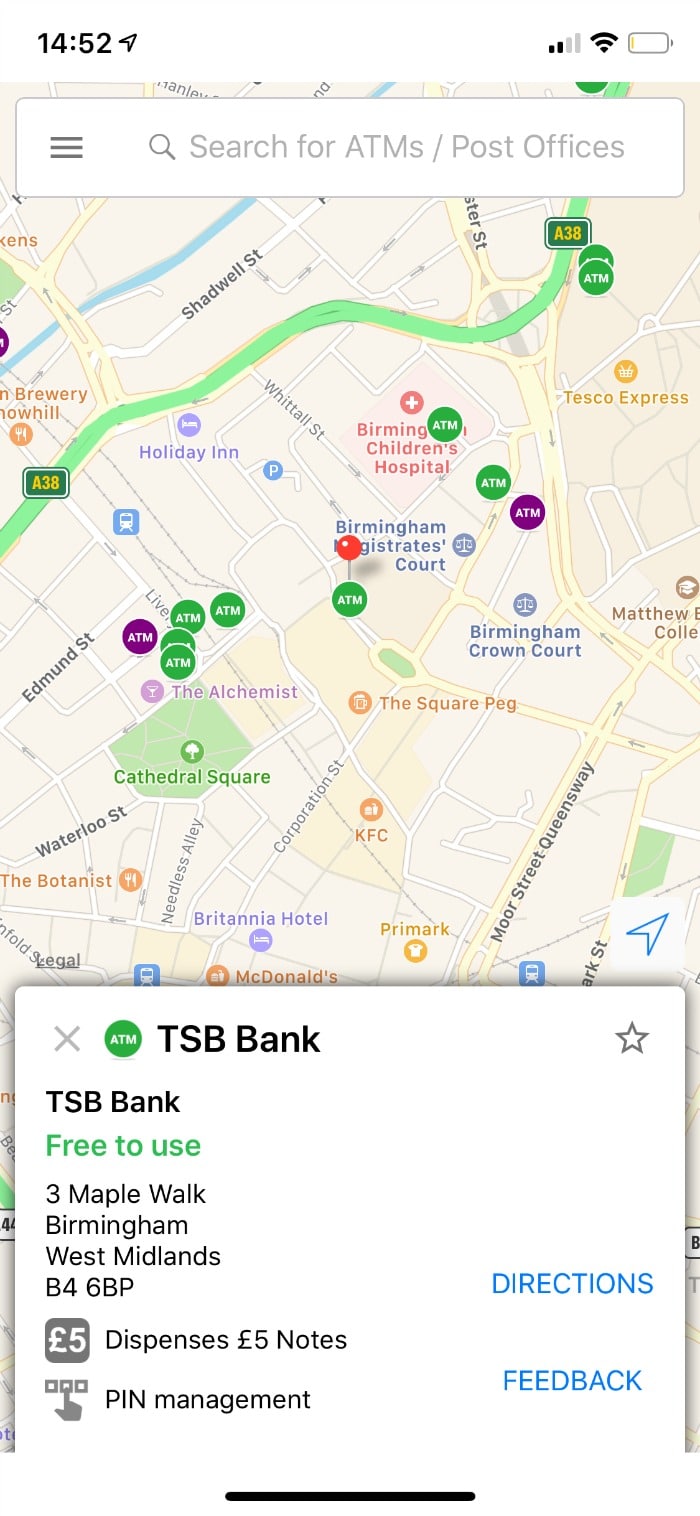
- General Map Applications (Google Maps, Apple Maps): Universal mapping services are excellent for finding ATMs. Simply open the app and search “ATM near me” or “bank near me.” The results will typically display nearby ATMs, often with details like bank affiliation, operating hours, and user reviews. You can then use the app’s navigation feature to get directions.
- Third-Party Financial Apps and Independent ATM Locators: Apps like Allpoint, MoneyPass, or other independent ATM locators specialize in identifying ATMs that are part of surcharge-free networks, regardless of your bank. These are invaluable for avoiding fees, especially if your bank participates in one of these larger networks. Some digital wallets or personal finance apps also integrate ATM location services.
Traditional Approaches and Local Knowledge
While technology is paramount, sometimes the simplest methods are the most effective, particularly when digital tools are unavailable or less precise.
- Bank and Credit Union Branches: The most straightforward approach is to look for physical bank branches. Most, if not all, will have ATMs on-site, accessible even outside of banking hours.
- Supermarkets, Convenience Stores, and Gas Stations: Many larger retailers, convenience stores, and gas stations host ATMs, often as a service to their customers. These are typically independent ATMs, which may incur higher fees, but their widespread presence makes them highly convenient.
- Shopping Malls, Airports, and Train Stations: High-traffic areas like transportation hubs and shopping centers are almost guaranteed to have multiple ATMs, catering to travelers and shoppers.
- Asking Locals: When all else fails, a simple query to a local resident or store employee can quickly lead you to the nearest cash machine. Local knowledge can often trump even the most sophisticated digital search, especially in unfamiliar areas.
Understanding ATM Fees and Maximizing Your Money
One of the most frustrating aspects of using an ATM can be the unexpected fees that chip away at your withdrawal. A proactive understanding of these charges and strategies to avoid them is crucial for smart financial management.
The Mechanics of Surcharges and Out-of-Network Fees
ATM fees typically come in two forms, which can sometimes be levied concurrently:
- ATM Operator Surcharge: This is a fee charged by the owner of the ATM (which might not be your bank) for the convenience of using their machine. This fee is usually disclosed on the ATM screen before you complete your transaction, allowing you to cancel if you deem it too high. Independent ATMs, often found in convenience stores or bars, are particularly prone to high surcharges.
- Out-of-Network Fee (Your Bank’s Fee): If you use an ATM that is not part of your bank’s network, your own bank might charge you a fee for using an “out-of-network” ATM. This fee is separate from the ATM operator’s surcharge.
Combined, these fees can significantly inflate the cost of a withdrawal, making a $20 cash withdrawal potentially cost $25 or more.
- International Transaction Fees: When withdrawing cash abroad, you might face additional fees. Besides the ATM operator’s surcharge and your bank’s out-of-network fee, there could be a foreign transaction fee (often a percentage of the withdrawal amount) and currency conversion fees.
Strategies to Minimize or Avoid ATM Costs
With a little planning and awareness, you can largely mitigate or completely avoid ATM fees.
- Stick to Your Bank’s Network: The most straightforward way to avoid fees is to use an ATM owned and operated by your own bank or a partner bank. Use your bank’s mobile app or website locator to find these ATMs.
- Utilize Surcharge-Free Networks: Many banks and credit unions participate in larger shared ATM networks like Allpoint, MoneyPass, or Co-op Network. These networks offer thousands of surcharge-free ATMs nationwide and sometimes internationally. Check if your bank is part of such a network and use their respective locators.
- Get Cash Back at Point-of-Sale: When making a debit card purchase at supermarkets, drug stores, or other retailers, you can often request “cash back” at the register. This is typically a fee-free way to get cash, effectively turning the store into your personal ATM.
- Plan Larger, Less Frequent Withdrawals: If you know you’ll need cash, plan to withdraw a larger sum less frequently rather than numerous small withdrawals. This minimizes the number of times you incur fees.
- Consider Online Banks or Credit Unions with Fee Reimbursement: Many online-only banks and some credit unions offer accounts that reimburse ATM fees, or they have extensive fee-free networks. If you frequently use ATMs outside your network, this could be a significant money-saver.
- Travel Smart: For international travel, look for debit cards specifically designed for travelers that offer no foreign transaction fees and ATM fee reimbursements. Travel credit cards might also offer cash advance options, though these usually come with high fees and interest rates, making them a last resort.
Security Best Practices for ATM Transactions
While convenient, ATMs can also be targets for criminals. Protecting your personal and financial information is paramount. Adhering to simple security protocols can significantly reduce your risk.
Protecting Your Personal and Financial Information
Vigilance and awareness are your best defenses against ATM fraud.
- Be Aware of Your Surroundings: Before approaching an ATM, scan the area. Avoid using ATMs in secluded or poorly lit locations, especially at night. If you feel uncomfortable or notice suspicious individuals, find another ATM.
- Inspect the ATM for Tampering (Skimmers): Before inserting your card, quickly check the card reader for any loose parts, unusual attachments, or misalignments. Skimming devices are designed to capture your card information. Also, check the keypad and the area around it for any overlays that might be recording your PIN.
- Cover the Keypad: Always use your free hand to shield the keypad when entering your PIN. This prevents “shoulder surfing” by onlookers or hidden cameras from capturing your code.
- Memorize Your PIN: Never write your PIN down or share it with anyone. If you must carry it, store it separately from your card and disguise it.
- Beware of “Helpful” Strangers: If someone offers to “help” you with your transaction, politely decline. Criminals sometimes use this tactic to distract you while they steal your card or cash.
- Keep Your Transactions Private: Stand close to the ATM and avoid openly displaying your cash. Put your cash and card away immediately after the transaction.
Post-Transaction Vigilance
Your responsibility for security doesn’t end when you walk away from the ATM.
- Keep Your Receipt: Always take your receipt and keep it until you’ve verified the transaction against your bank statement. This provides a record in case of discrepancies.
- Monitor Your Bank Statements: Regularly review your bank statements (online or paper) for any unauthorized transactions. Report suspicious activity to your bank immediately.
- Report Suspicious Activity: If you suspect an ATM has been tampered with, or if you encounter any unusual circumstances, report it to the bank owning the ATM and, if necessary, to law enforcement.
The Future of Cash and ATMs in a Digital Economy
The financial landscape is continually evolving, and while cash and ATMs remain vital, their role and form are adapting to new technologies and consumer preferences.
The Blurring Lines: Digital Wallets and Cardless Withdrawals
The integration of digital technology is redefining the ATM experience.
- NFC/QR Code Withdrawals: Many modern ATMs now support cardless withdrawals using Near Field Communication (NFC) technology or QR codes. Users can initiate a withdrawal through their bank’s mobile app, then tap their phone or scan a QR code at the ATM to receive cash, enhancing both convenience and security (as there’s no physical card to skim).
- Interoperability with Digital Payment Systems: As digital wallets become more prevalent, ATMs may increasingly integrate with these platforms, allowing users to manage their cash within a broader digital ecosystem.

Adapting to Evolving Consumer Needs
ATMs are not static machines; they are evolving to meet future demands.
- ATMs as Multi-Service Kiosks: The trend towards ATMs offering more comprehensive services, from video tellers to cryptocurrency transactions (in some niche markets), suggests a future where these machines act as powerful, localized financial hubs.
- Balancing Convenience with Security: As new technologies are introduced, the challenge will be to maintain robust security protocols without sacrificing user convenience. Biometric authentication (fingerprint, facial recognition) is one promising avenue for enhancing ATM security.
- Environmental Impact: As the world moves towards sustainability, the environmental footprint of ATMs, from energy consumption to paper receipts, will likely come under scrutiny, driving innovations in eco-friendly operations.
In conclusion, “Where is the nearest ATM to me?” is a question that encapsulates a fundamental human need for financial access and flexibility. While the digital revolution continues to reshape how we manage our money, the ATM persists as a cornerstone of personal finance, offering not just cash but a suite of essential banking services. By understanding their utility, employing smart location strategies, navigating fees wisely, and prioritizing security, individuals can ensure that ATMs remain a powerful and indispensable tool in their financial toolkit, now and in the foreseeable future.
aViewFromTheCave is a participant in the Amazon Services LLC Associates Program, an affiliate advertising program designed to provide a means for sites to earn advertising fees by advertising and linking to Amazon.com. Amazon, the Amazon logo, AmazonSupply, and the AmazonSupply logo are trademarks of Amazon.com, Inc. or its affiliates. As an Amazon Associate we earn affiliate commissions from qualifying purchases.