
Amazon, a name synonymous with e-commerce, cloud computing, and a myriad of technological innovations, is a global powerhouse whose corporate identity is deeply intertwined with its physical footprint. While the common perception might point to a single, monolithic headquarters, the reality of Amazon’s expansive operations reflects a sophisticated strategy of distributed presence, designed to foster growth, attract talent, and reinforce its brand across diverse regions. Understanding “where Amazon headquarters is located” goes beyond a simple address; it delves into the strategic brand decisions that have shaped one of the world’s most influential companies.
The Evolving Face of Amazon’s Corporate Identity
The journey of Amazon’s headquarters from a humble Seattle garage to a multi-city corporate empire is a testament to its relentless growth and evolving brand strategy. Its physical locations are not just offices; they are strategic outposts that embody its corporate identity, operational philosophy, and market ambitions.

Seattle: The Genesis of a Global Brand
Amazon’s story famously began in Bellevue, Washington, and quickly moved to Seattle. From its inception in Jeff Bezos’s garage in 1994, Seattle became the cradle of what would grow into an unparalleled global brand. The city’s vibrant tech scene, coupled with its unique Pacific Northwest culture, undoubtedly played a role in shaping Amazon’s early ethos. The company’s original headquarters was modest, reflecting its startup roots, but as Amazon scaled, so did its physical presence in Seattle.
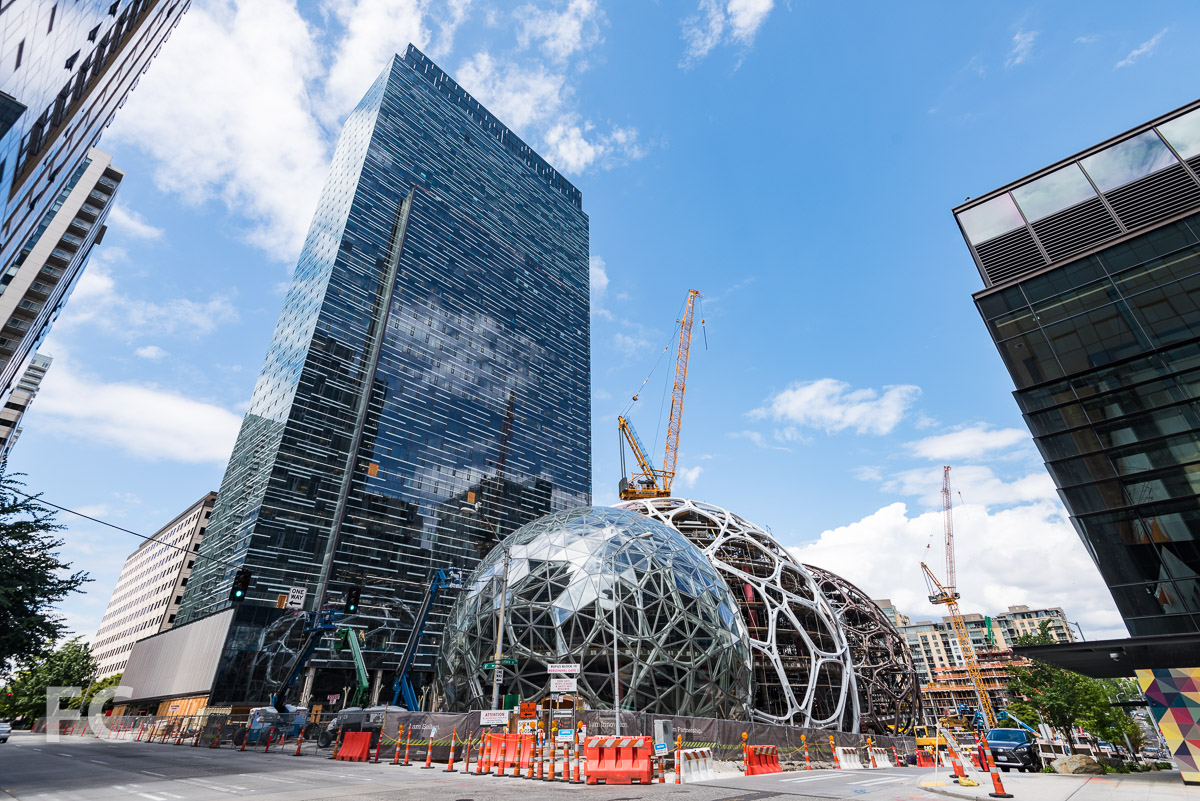
The main campus in Seattle, often referred to as Amazon’s “urban campus,” is not a single, isolated building but a collection of interconnected high-rises and innovative structures spread across the vibrant South Lake Union and Denny Triangle neighborhoods. This integration into the urban fabric of Seattle became a distinctive feature of its corporate identity. Buildings like the iconic “Spheres,” massive glass domes housing thousands of plant species, are more than just workspaces; they are architectural brand statements. They reflect Amazon’s aspiration to foster innovation, sustainability, and a unique employee experience, directly contributing to its brand image as a forward-thinking and unconventional company. This sprawling campus represented Amazon’s original “corporate identity” – a dynamic, integrated part of a thriving city, rather than an isolated corporate park. It allowed the brand to draw on the local talent pool, engage with community initiatives, and grow symbiotically with its founding city.
The Rationale Behind a Distributed Corporate Presence
As Amazon transformed from an online bookseller into a diversified tech conglomerate, the idea of a single, centralized headquarters became increasingly impractical, and strategically limiting. The decision to expand beyond a single primary location was a deliberate move to adapt to its gargantuan scale and global ambitions. A distributed corporate presence offers several strategic advantages crucial for a brand of Amazon’s magnitude. Firstly, it allows for a broader reach in talent acquisition. By establishing major hubs in different geographies, Amazon can tap into diverse talent pools, attracting specialized skills and perspectives that might be concentrated in specific regions. This mitigates over-reliance on a single labor market and fosters a more robust and diverse workforce, which in turn strengthens the brand’s adaptability and innovation capacity.
Secondly, multiple hubs provide market access and influence. Each major corporate office can serve as a strategic base for regional operations, allowing Amazon to better understand and cater to local market nuances, consumer behaviors, and regulatory environments. This localized approach is critical for a global brand aiming for deep penetration and relevance in diverse markets. Lastly, a distributed model offers a degree of resilience and risk diversification. Operational disruptions in one location do not paralyze the entire corporate structure, ensuring continuity and stability – a critical aspect for maintaining brand trust and operational integrity on a global scale. This strategic decentralization reflects a mature brand that understands the need for agility and robustness in an ever-changing global landscape.
HQ2 and the “Race for Amazon”: A Masterclass in Brand Storytelling and Economic Impact
One of the most significant moments in Amazon’s recent corporate history, which profoundly impacted its brand perception and strategic footprint, was the search for its “HQ2.” This widely publicized event was not merely a search for office space; it was a sophisticated exercise in brand storytelling, economic leverage, and corporate identity projection.
The HQ2 Phenomenon: Unpacking a Branding Spectacle
In 2017, Amazon announced its intention to establish a second North American headquarters, prompting cities across the continent to vie for the opportunity. This ignited a highly competitive public bidding process that captured national headlines for over a year. From a branding perspective, the HQ2 search was a masterstroke. It generated an unprecedented level of media attention, solidifying Amazon’s image as an economic engine, a job creator, and a major driver of regional prosperity. The sheer volume of proposals, the public discussions, and the intense rivalry among cities amplified Amazon’s brand power, positioning it as a prize jewel that municipalities were desperate to win. This competition inherently underscored the immense value and prestige associated with having Amazon’s brand physically rooted in a city.
The strategic value of making cities compete was multi-layered. It allowed Amazon to negotiate favorable tax incentives and infrastructure improvements, demonstrating its market power. More importantly, it allowed Amazon to meticulously vet potential locations for talent, connectivity, and quality of life, ensuring that its new hub would align perfectly with its corporate culture and strategic objectives. This public “contest” transformed a standard corporate expansion into a national conversation, effectively leveraging public interest to reinforce Amazon’s brand narrative as a transformative force in the economy. It was a demonstration of how a brand can actively shape perceptions and garner immense goodwill (and political leverage) through strategic public engagement.
From HQ2 to “National Landing”: Rebranding and Regional Integration
After a lengthy and highly publicized selection process, Amazon ultimately announced in November 2018 that it would split its HQ2 into two locations: Arlington, Virginia (specifically the Crystal City, Pentagon City, and Potomac Yard neighborhoods) and Long Island City, New York. While the New York plan was later canceled due to local opposition, the Arlington site proceeded, eventually being rebranded as “National Landing.”
The selection of Arlington, VA, and the subsequent rebranding of the area to “National Landing” (a name coined by the developer JBG Smith, but heavily influenced by Amazon’s presence) exemplifies the symbiotic relationship between Amazon’s brand and regional development. Amazon’s arrival wasn’t just about constructing buildings; it was about integrating its corporate identity into the very fabric of an existing community and contributing to its revitalization. This move cemented Amazon’s reputation as a catalyst for urban renewal and economic growth. The planned architecture for the Arlington campus, particularly the distinctive “Helix” building, is designed to be another iconic brand statement, mirroring the innovation and unique design ethos of The Spheres in Seattle. These architectural choices are deliberate acts of brand communication, signaling Amazon’s commitment to design, sustainability, and creating inspiring workspaces. They are physical manifestations of the brand’s forward-looking identity, becoming landmarks that symbolize Amazon’s influence and vision in the Mid-Atlantic region.
The Global Brand Footprint: Beyond the Primary Headquarters
While Seattle and Arlington serve as Amazon’s primary North American corporate headquarters, the company’s brand footprint is truly global, extending through a vast network of international corporate offices, research and development centers, and operational facilities. These locations are crucial for maintaining Amazon’s worldwide presence and adapting its brand to diverse markets.
International Hubs: Tailoring the Brand to Local Markets

Amazon’s strategy for global expansion relies heavily on establishing significant corporate and R&D hubs in key international markets. Cities like London, Hyderabad, Dublin, Bangalore, and Luxembourg host thousands of Amazon employees, serving as critical centers for regional operations, software development, customer service, and specialized technological innovation. For instance, London houses a major European corporate hub, critical for Amazon’s vast UK and continental European operations, while Hyderabad and Bangalore in India are major centers for software development and IT services, reflecting the region’s strong tech talent pool.
These international locations are not mere satellite offices; they are strategic outposts that enable Amazon to tailor its brand to local cultures and economies. By establishing a physical presence and employing local talent, Amazon can better understand regional consumer behaviors, regulatory frameworks, and cultural nuances. This localized approach is vital for ensuring brand acceptance and relevance in highly diverse markets. It allows Amazon to adapt its services, marketing campaigns, and even product offerings to resonate more effectively with local populations, thus strengthening its global brand equity and demonstrating cultural sensitivity – a crucial aspect of responsible global branding. These hubs are instrumental in projecting Amazon as a global brand that is simultaneously integrated into local communities.
Operational Centers vs. Corporate Identity: Distinguishing Roles
It is essential to distinguish between Amazon’s primary corporate headquarters and its vast network of operational centers, such as fulfillment centers, data centers, and customer service centers. While all these facilities are integral to Amazon’s overall operations and contribute to the brand experience, they serve distinctly different roles in shaping its corporate identity and public perception.
Fulfillment centers, often massive warehouses located near major transportation arteries, are the backbone of Amazon’s e-commerce logistics. They are critical for ensuring rapid delivery, a core promise of the Amazon brand. However, their primary role is operational efficiency rather than corporate identity projection. Data centers, which power AWS (Amazon Web Services), are fundamental to Amazon’s tech infrastructure but are typically discreet, secure facilities not designed for public engagement or brand display. Customer service centers, on the other hand, are the direct human touchpoint for millions of customers, directly impacting brand loyalty and perception through service quality.
While these operational centers are vital for the Amazon brand’s functionality and promise delivery, it is the corporate headquarters that primarily project the company’s overarching identity, values, and strategic vision. The architecture of a fulfillment center focuses on efficiency, while the design of a corporate headquarters like The Spheres or The Helix aims to communicate innovation, culture, and long-term vision. Understanding this distinction is key to appreciating how Amazon manages different facets of its brand image across its diverse physical infrastructure.
The Headquarters as a Symbol of Corporate Culture and Brand Values
Amazon’s corporate headquarters are more than just office buildings; they are tangible symbols of its corporate culture, brand values, and aspirational future. Their design, location, and integration into urban environments speak volumes about Amazon’s identity as an innovative, employee-centric, and community-aware enterprise.
Architectural Statements: Reflecting Innovation and Sustainability
The architectural choices made for Amazon’s primary headquarters locations are deliberate brand statements. In Seattle, The Spheres, with their lush interior gardens and unique biophilic design, symbolize Amazon’s commitment to innovation, sustainability, and creating inspiring workspaces that blend nature with technology. They are a direct manifestation of Amazon’s brand value proposition – a company that pushes boundaries and invests in the well-being and creativity of its employees. Similarly, the planned “Helix” building at the National Landing campus in Arlington is conceived as a unique, spiral-shaped structure, designed to be a prominent landmark. This architectural ambition signals Amazon’s forward-looking vision, its commitment to sustainable design, and its desire to create an iconic presence that reflects its innovative spirit.
These structures are not merely functional; they are public-facing representations of the brand’s ethos. They embody the aspiration to be a leader not just in technology and commerce, but also in workplace design and environmental stewardship. By investing in such distinctive and often environmentally conscious architecture, Amazon actively shapes its corporate identity as a responsible, modern, and visionary organization. The physical spaces themselves become part of the brand narrative, communicating specific values to employees, partners, and the public alike.
Community Engagement and Corporate Social Responsibility (CSR)
The location and development of Amazon’s headquarters also invariably involve significant community engagement and corporate social responsibility (CSR) initiatives, which are integral to its brand perception. When a brand of Amazon’s scale establishes a major presence in a city, it inevitably has a profound impact on local economies, infrastructure, and social dynamics. How Amazon manages this impact directly affects its brand image as a corporate citizen.
In both Seattle and Arlington, Amazon has engaged in various community programs, investments in local infrastructure, and philanthropic endeavors. This includes support for affordable housing, educational initiatives, and local non-profits. While these efforts are sometimes met with scrutiny, they are strategic components of Amazon’s brand management, aiming to foster positive relationships with host communities and mitigate potential negative perceptions associated with rapid urbanization and gentrification. By actively participating in and contributing to the communities where its headquarters are located, Amazon seeks to build a brand image that is not only powerful and innovative but also responsible and embedded within the local social fabric. The headquarters thus become a nexus for demonstrating Amazon’s commitment to CSR, enhancing its reputation and strengthening its long-term brand equity by showcasing its role as a contributor to urban prosperity and welfare.
What the “Headquarters” Means for Amazon’s Future Brand Strategy
The concept of “Amazon headquarters” has evolved from a single physical address to a dynamic, multi-faceted network of strategic corporate hubs. This evolution is central to understanding Amazon’s future brand strategy and its sustained leadership in the global marketplace.
Decentralization as a Strategic Brand Advantage
The strategic decentralization of its headquarters into multiple major hubs – primarily Seattle and Arlington – is more than an operational necessity; it’s a strategic brand advantage. This distributed model allows Amazon to tap into diverse talent pools across different regions, fostering specialized innovation centers that cater to distinct needs and opportunities. For instance, one hub might specialize in cloud computing, another in logistics technology, and yet another in artificial intelligence, each drawing on regional strengths. This geographic diversification enhances the brand’s intellectual capital and accelerates innovation by allowing different teams to develop unique cultures and approaches while remaining under the overarching Amazon umbrella.
Furthermore, this multi-hub strategy provides greater resilience and adaptability for a dynamic brand operating in a volatile global economy. It mitigates the risks associated with concentrating all critical operations in a single location, offering a buffer against regional economic downturns, natural disasters, or public relations challenges. By establishing robust presences in strategically chosen locations, Amazon is building a more resilient, agile, and globally responsive brand capable of navigating future complexities.
Sustaining Growth and Reputation in an Evolving Landscape
As Amazon continues its relentless pursuit of growth and diversification, its headquarters strategy will remain a critical element in sustaining its brand reputation and market leadership. The company faces ongoing challenges related to labor practices, market dominance, and environmental impact. Strategic location decisions, combined with responsible community engagement and transparent communication, are vital for managing these perceptions. The physical manifestations of its headquarters—their architectural innovation, sustainability features, and integration into urban life—serve as constant reminders of Amazon’s brand values and its commitment to progress.
In an increasingly interconnected yet localized world, where corporate identity is scrutinized more than ever, Amazon’s strategic approach to its headquarters locations is a masterclass in brand management. It demonstrates how a global enterprise can maintain a unified brand message while adapting to local contexts, attracting top talent, fostering innovation, and cementing its place as an indispensable force in the 21st century economy. The question “where is Amazon headquarters located” therefore transcends a mere geographical query; it’s an inquiry into the very heart of one of the world’s most powerful and evolving brands.
aViewFromTheCave is a participant in the Amazon Services LLC Associates Program, an affiliate advertising program designed to provide a means for sites to earn advertising fees by advertising and linking to Amazon.com. Amazon, the Amazon logo, AmazonSupply, and the AmazonSupply logo are trademarks of Amazon.com, Inc. or its affiliates. As an Amazon Associate we earn affiliate commissions from qualifying purchases.