
The question “where are Amazon headquarters” might seem a simple geographical query, yet its answer unveils a profound narrative about corporate identity, strategic branding, and global influence. For a company as ubiquitous and transformative as Amazon, its physical headquarters are far more than just office buildings; they are tangible manifestations of its brand, symbols of its ambition, and critical anchors in its multifaceted engagement with economies, communities, and the global marketplace. This exploration delves into how Amazon’s headquarters strategy, from its foundational roots in Seattle to its distributed global footprint, serves as a masterclass in brand building, corporate identity, and market positioning.

Seattle’s Emerald City: The Genesis of a Global Brand
Amazon’s original headquarters in Seattle, Washington, is inextricably linked with the company’s remarkable journey from an online bookstore to a multinational technology and e-commerce behemoth. This initial nexus became the crucible where Amazon’s brand ethos was forged and projected onto the world stage.
From Garage Startup to Corporate Giant
Jeff Bezos famously founded Amazon in a garage in Bellevue before moving to Seattle, a location that offered a nascent tech scene, access to talent, and a pioneering spirit. As Amazon grew, its presence in Seattle exploded, transforming both the company and the city itself. The brand narrative of Amazon, often characterized by relentless innovation, customer obsession, and aggressive expansion, became deeply interwoven with Seattle’s identity. The city’s ‘Emerald City’ moniker gained a new dimension, reflecting not just its lush landscapes but also the vibrant, sometimes turbulent, growth spurred by its largest corporate citizen. Amazon’s brand story, therefore, is rooted in this geographical origin, symbolizing the power of an idea nurtured in a specific place to achieve global domination.
Architectural Identity and Urban Integration
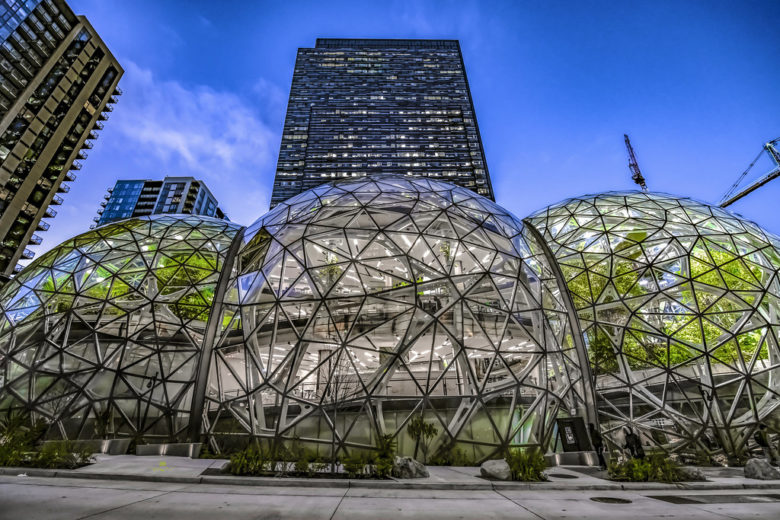
Amazon’s presence in Seattle is not merely functional; it’s an architectural statement that reinforces its brand values. The downtown Seattle campus, notably featuring “The Spheres,” is an iconic example of how a headquarters can embody a brand’s corporate identity. The Spheres, with their biophilic design and internal rainforest ecosystem, communicate Amazon’s commitment to innovation, sustainability, and a unique employee experience. They serve as a public face of the company, inviting curiosity and projecting an image of forward-thinking design and environmental consciousness. This deliberate architectural strategy transforms physical space into a powerful branding tool, signaling Amazon’s distinctiveness and its aspiration to create environments that inspire and differentiate. The integration of its buildings within the urban fabric, often blending modern aesthetics with functional design, speaks to Amazon’s dual nature: a tech giant that simultaneously seeks to be part of the community.
Impact on Local Economy and Talent Attraction
The presence of Amazon’s primary headquarters dramatically reshaped Seattle’s economy and labor market. The influx of high-paying tech jobs, the demand for housing, and the proliferation of supporting businesses cemented Amazon’s brand as a major economic engine and a magnet for top-tier talent. For many, Seattle became synonymous with Amazon, creating a symbiotic relationship where the city’s reputation as a tech hub bolstered Amazon’s brand appeal to potential employees and investors. This concentration of talent and resources in one geographic location became a critical factor in Amazon’s ability to innovate rapidly and scale effectively, reinforcing its corporate identity as a leader in technology and e-commerce. The headquarters, in this sense, functions as a living advertisement, showcasing the opportunities and dynamism inherent in the Amazon brand.
The HQ2 Saga: A Masterclass in Brand Expansion and Economic Leverage
The decision by Amazon to seek a “second headquarters” (HQ2) in 2017 was not merely a logistical move; it was a strategically brilliant branding and public relations exercise that underscored Amazon’s immense power and its evolving corporate identity.
The Rationale Behind the Search
Amazon’s stated reasons for seeking HQ2 were multifaceted and contributed to its overarching brand strategy. Diversifying its geographical footprint aimed to tap into new talent pools, mitigate risks associated with over-reliance on a single location (like Seattle’s escalating housing costs and traffic congestion), and establish a stronger presence closer to key policy-makers and emerging markets. From a brand perspective, this move signaled Amazon’s relentless growth ambition and its strategic foresight. It communicated that the company was too big, too important, and too dynamic to be contained by one primary locale. The decision to expand rather than relocate also implicitly acknowledged the value of its existing Seattle brand equity while projecting a vision of future dominance.
The Public Relations Spectacle
The HQ2 contest became an unprecedented public spectacle, with cities across North America vying aggressively for the prestige and economic boon associated with hosting Amazon. Over 200 cities submitted proposals, offering billions in tax incentives, infrastructure improvements, and marketing packages. This highly publicized competition was a masterstroke in brand marketing. It generated invaluable media coverage, showcasing Amazon as an economic powerhouse capable of transforming entire regions. The sheer desperation and competitive fervor among cities inadvertently amplified Amazon’s brand image as a desirable corporate citizen and an unparalleled job creator. It solidified the perception of Amazon not just as a retailer, but as a major player in urban development and economic policy, fundamentally enhancing its corporate identity and influence.
Crystal City & Long Island City: The Strategic Choices and Their Branding Implications
After a protracted selection process, Amazon initially chose two locations: Crystal City (Arlington, Virginia, rebranded as National Landing) and Long Island City (Queens, New York). While the Long Island City plan was eventually withdrawn due to local opposition, the selection of these two distinct locations offered significant branding advantages. National Landing, with its proximity to Washington D.C., signaled Amazon’s growing interest in public policy, government contracting (AWS’s strong presence), and shaping national discourse. It positioned Amazon as a corporate entity increasingly engaged with the levers of power, thereby enhancing its brand legitimacy and influence. Long Island City, on the other hand, would have provided access to New York City’s vast talent pool and its status as a global financial and media hub, aligning Amazon’s brand with metropolitan sophistication and cultural dynamism. Even with the withdrawal from NYC, the selection process itself underscored Amazon’s strategic thinking about where its brand needed to be present for future growth and influence.

Amazon’s Global Footprint: Beyond Traditional Headquarters
While Seattle and Northern Virginia represent Amazon’s core North American headquarters, the company’s brand strategy extends far beyond these singular locations, embracing a decentralized global footprint that reinforces its omnipresent identity.
Decentralization as a Brand Strategy
Amazon’s vast network of regional offices, fulfillment centers, data centers (for Amazon Web Services), and research and development hubs across the globe constitutes a powerful distributed headquarters model. This decentralization is a deliberate brand strategy: it minimizes single-point failures, optimizes for local market conditions, and allows Amazon to tap into diverse talent pools worldwide. Each of these physical locations, though not a “headquarters” in the traditional sense, acts as a local ambassador for the Amazon brand, anchoring its operations closer to customers and partners. This distributed presence reinforces the brand message of Amazon’s reach, efficiency, and global service capabilities, making it feel simultaneously local and universal.
Physical Presence as a Brand Touchpoint
Beyond its corporate offices, Amazon’s brand is physically manifested in a myriad of ways globally. Its thousands of fulfillment centers, bustling with activity, are the engines of its e-commerce brand, symbolizing reliability and rapid delivery. Its growing portfolio of physical retail stores, including Whole Foods Market, Amazon Go, and Amazon Books, transforms the digital brand into a tangible, experiential one, allowing customers to interact with Amazon in new ways. Even its cloud data centers, though largely invisible to the public, are crucial physical infrastructures that underpin the AWS brand, symbolizing robustness and technological leadership. Every physical touchpoint, from a delivery van bearing the Amazon logo to a cashier-less Amazon Go store, contributes to the overall brand perception, reinforcing its promise of convenience, innovation, and ubiquitous service.
Localizing the Global Brand
Amazon’s brand strategy also involves careful localization. While maintaining a consistent global corporate identity, Amazon adapts its messaging, services, and even its physical presence to resonate with local cultures and markets. Its international headquarters in places like London (UK), Luxembourg (Europe), and Hyderabad (India) are not just administrative centers; they are strategic outposts that facilitate this localization. These regional hubs help Amazon understand and respond to specific consumer behaviors, regulatory environments, and competitive landscapes. By having a robust physical presence in these key regions, Amazon can tailor its brand narrative, build stronger relationships with local stakeholders, and project an image that is both globally consistent and locally relevant, a complex but essential feat for a truly global brand.
The Headquarters as a Symbol: Shaping Corporate Identity and Public Perception
Ultimately, Amazon’s headquarters, in all its forms, serves as a potent symbol that profoundly shapes its corporate identity and influences public perception. The “where” is not just a place but a statement of intent.
An Embodiment of Innovation and Ambition
The architectural grandeur of The Spheres, the sheer scale of the HQ2 pursuit, and the distributed network of global offices collectively embody Amazon’s core brand values: relentless innovation, audacious ambition, and a future-forward mindset. These physical spaces inspire employees, impress visitors, and project an image of a company constantly pushing boundaries. The very existence and growth of these headquarters communicate Amazon’s unwavering commitment to technological advancement and market leadership, making them powerful anchors for its brand narrative as a disruptor and a pioneer. They are a physical testament to Amazon’s journey from a humble startup to a global powerhouse.
Navigating Public Scrutiny and Brand Responsibility
With great power comes great scrutiny, and Amazon’s headquarters often become focal points for public discussions about corporate responsibility. Issues such as labor practices, urban gentrification, and environmental impact are frequently debated in the context of Amazon’s presence in Seattle or its proposed HQ2 locations. The brand implications are significant: how Amazon manages its relationship with the communities hosting its headquarters directly impacts its public image and corporate reputation. Proactive engagement, community investment, and transparent communication around its headquarters strategy are crucial for Amazon to maintain a positive brand perception and address criticisms effectively. The headquarters, therefore, is not just a place of work but a stage where Amazon’s brand values are constantly tested and defined in the public eye.
Future-Proofing the Brand: Adaptability and Growth
Amazon’s approach to its headquarters strategy, characterized by both deep roots and aggressive expansion, reflects its ongoing commitment to adaptability and growth – essential attributes for future-proofing its brand. The company’s willingness to experiment with new locations, embrace remote work trends (accelerated by recent global events), and continuously evolve its physical infrastructure demonstrates a dynamic and forward-looking corporate identity. This flexibility allows Amazon to remain agile, attract diverse talent, and respond to changing market conditions, reinforcing its brand as a resilient and future-ready enterprise. The headquarters strategy is, therefore, an active and evolving component of how Amazon positions itself for sustained success in an ever-changing world.
The Evolving Brand Landscape of Amazon’s Headquarters
The question “where are Amazon headquarters” reveals far more than a simple address. It uncovers a sophisticated brand strategy where physical location, architectural design, economic impact, and public perception are intricately woven into Amazon’s corporate identity. From its foundational base in Seattle, a city forever altered by its presence, to the strategic expansion and global decentralization, Amazon’s headquarters are not passive structures but active participants in its brand narrative. They symbolize its relentless innovation, its global ambition, its economic power, and its evolving relationship with society. As Amazon continues to grow and adapt, its headquarters strategy will remain a vital element in shaping its enduring brand legacy and its future trajectory on the world stage. The “where” for Amazon is, indeed, a powerful declaration of “who” and “what” it aims to be.
aViewFromTheCave is a participant in the Amazon Services LLC Associates Program, an affiliate advertising program designed to provide a means for sites to earn advertising fees by advertising and linking to Amazon.com. Amazon, the Amazon logo, AmazonSupply, and the AmazonSupply logo are trademarks of Amazon.com, Inc. or its affiliates. As an Amazon Associate we earn affiliate commissions from qualifying purchases.