
Amazon, the e-commerce behemoth that has redefined retail, cloud computing, and digital entertainment, is a masterclass in long-term strategic vision. For many years, traditional financial analysts and even some investors scratched their heads, questioning the company’s seemingly endless pursuit of growth over immediate profits. The story of Amazon’s journey to consistent profitability is not just a tale of corporate success; it’s a profound lesson in business finance, illustrating how a radically different approach to capital allocation and market strategy can yield unparalleled returns in the long run.
Founded in 1994 by Jeff Bezos, Amazon’s initial mission was to be the “Earth’s biggest bookstore.” However, Bezos always envisioned something far grander: a customer-centric empire built on convenience, selection, and low prices. This vision necessitated a colossal investment in infrastructure, technology, and market expansion, often at the expense of quarterly earnings. The question, “When did Amazon become profitable?” is therefore not a simple one with a single date, but rather a journey through phases of strategic investment, nascent profitability, and ultimately, sustainable, diversified financial strength.
The Early Years: A Decade of Investment Over Immediate Profit
From its inception, Amazon embraced a philosophy that challenged conventional wisdom regarding business growth and profitability. While most companies aim for profitability within a few years of launch, Amazon deliberately prioritized market share, customer experience, and infrastructural development. This strategy, often dubbed “grow big fast,” meant that the company consistently reinvested nearly all its revenues back into operations, technology, and logistics.
Jeff Bezos’s Long-Term Vision and Shareholder Patience
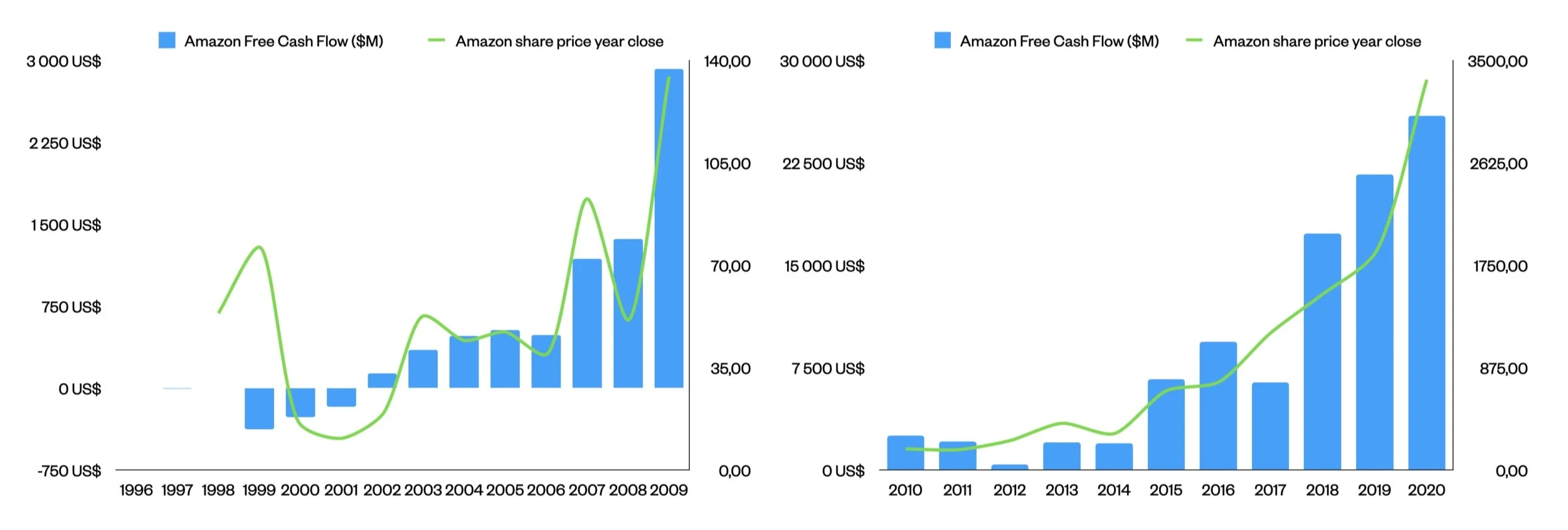
Jeff Bezos famously articulated his long-term perspective, often communicating directly with shareholders through his annual letters about the company’s commitment to “free cash flow per share over the long term” rather than short-term net income. He sought investors who understood and were willing to back this unconventional approach. This required an extraordinary amount of patience from the market, which, surprisingly, Amazon often received. The rationale was simple: by sacrificing current profits to build an unparalleled customer experience (wide selection, low prices, fast shipping), Amazon could establish an insurmountable competitive moat. This long-term focus was pivotal in allowing the company to defer profitability for years, a luxury few other public companies could afford or justify to their stakeholders.
The Dot-Com Bubble and Amazon’s Survival Strategy
Amazon launched its IPO in 1997, just before the height of the dot-com bubble. While many internet companies focused on rapid user acquisition and speculative valuations without a clear path to profitability, Amazon was diligently building physical infrastructure—warehouses, fulfillment centers, and advanced inventory management systems. When the bubble burst in the early 2000s, numerous internet-based businesses collapsed. Amazon, however, survived and even thrived, largely due to its tangible assets, robust operational backbone, and a more realistic, albeit still unconventional, long-term business model. The company’s emphasis on efficiency and customer value, even amidst significant losses, proved to be its lifeline during this tumultuous period. This period also refined Amazon’s understanding of lean operations and cost management, paving the way for eventual financial stability.
Reinvesting for Scale and Market Dominance
Throughout its initial years, Amazon’s financials were characterized by massive capital expenditures. Every dollar earned, and often more through debt and equity financing, was poured back into expanding product categories beyond books, building out its vast logistics network, developing proprietary software, and exploring new markets. This constant reinvestment was designed to achieve scale, which in turn would drive down per-unit costs and allow Amazon to offer even lower prices, creating a virtuous cycle (often referred to as the “flywheel effect”). The goal was not just to be profitable, but to become an indispensable part of consumer life, making its services so convenient and pervasive that competition would struggle to catch up.
The Turning Point: Initial Glimmers of Green
After years of operating in the red, investing aggressively, and meticulously building its technological and logistical backbone, Amazon finally crossed the threshold into profitability. This was a moment that many analysts had predicted would never arrive, or at least, not in a meaningful way.
Q4 2001: A Historic First Profit
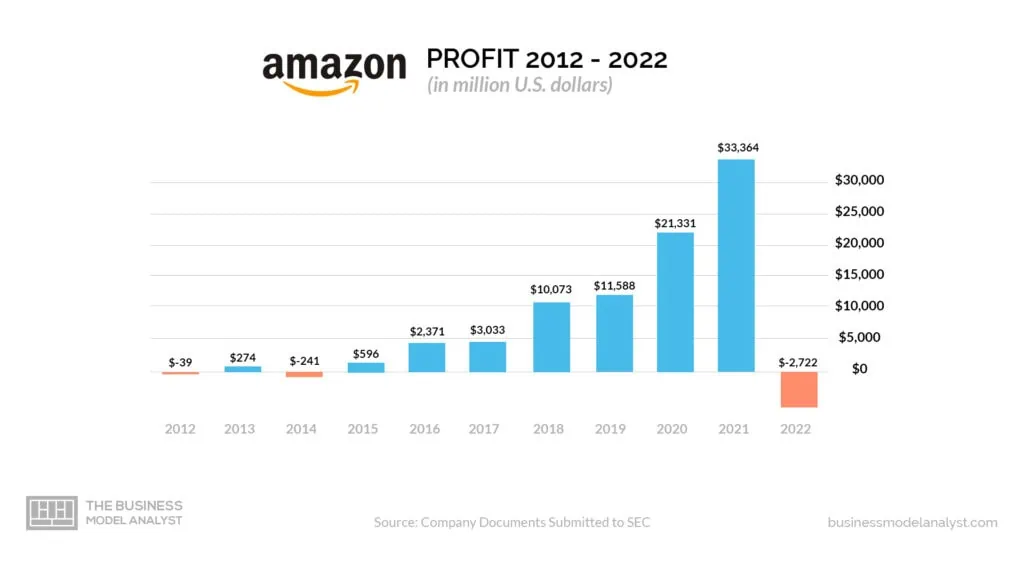
Amazon’s first-ever quarterly net profit came in the fourth quarter of 2001. For the period ending December 31, 2001, Amazon reported a net income of $5 million on revenues of $1.12 billion. While a modest sum by later Amazon standards, this achievement was monumental. It signaled to the market that Amazon’s long-term strategy, though unorthodox, was indeed viable. This initial profitability was primarily driven by increasing operational efficiencies, better inventory management, and a stronger holiday shopping season performance. It was a tangible proof point that the company could indeed turn a profit, even if that profit was still razor-thin compared to its revenue.
The Role of Operational Efficiency and Cost Management
The shift to profitability wasn’t accidental; it was a result of years of disciplined focus on operational excellence. Amazon had invested heavily in its fulfillment centers, employing sophisticated algorithms and automation to streamline processes. By 2001, these investments began to pay off in the form of reduced shipping costs, faster delivery times, and improved inventory turnover. The company learned how to manage its vast supply chain more effectively, turning what were once significant cost centers into engines of efficiency. Furthermore, the burgeoning Amazon Marketplace, which allowed third-party sellers to list products on Amazon’s platform, offered a low-cost way to expand product selection without incurring significant inventory risks, contributing to the bottom line.
Diversification and Nascent Revenue Streams
While e-commerce remained its core, Amazon was already experimenting with diversification, planting seeds for future revenue streams. The Marketplace, though still evolving, was a key step. More significantly, the internal tools and infrastructure Amazon developed to manage its own massive operations were beginning to be viewed as potential external services. This period saw the very early conceptualization of what would later become Amazon Web Services (AWS). Although AWS wouldn’t launch publicly until 2006, the internal drive for scalable, efficient computing resources was already fostering the innovation that would eventually become Amazon’s most profitable segment.
Sustaining Profitability: Beyond Retail and into New Frontiers
While the initial profit in 2001 was a significant milestone, consistent, substantial profitability took several more years to achieve. The real game-changer in Amazon’s financial narrative came with the maturation of its non-retail segments.
The Ascent of Amazon Web Services (AWS) as a Profit Engine
Launched in 2006, Amazon Web Services (AWS) initially offered basic infrastructure services like storage and compute power to developers. What began as an internal solution to Amazon’s own IT needs quickly grew into the world’s leading cloud computing platform. AWS provides scalable, cost-effective infrastructure-as-a-service (IaaS) and platform-as-a-service (PaaS) solutions to millions of businesses, from startups to large enterprises and government agencies.
The financial impact of AWS has been nothing short of transformative for Amazon. Cloud computing, with its subscription-based model and high margins, proved to be far more profitable than the traditionally low-margin retail business. By the mid-2010s, AWS became not just a significant revenue stream but the primary driver of Amazon’s overall profitability. Despite often accounting for only a fraction of Amazon’s total revenue, AWS consistently generates the vast majority of the company’s operating income. This diversification into a high-margin service business fundamentally altered Amazon’s financial profile, providing the stable, robust earnings that underpinned further expansion in retail and other ventures.
Prime Membership: A Loyalty and Revenue Powerhouse
Introduced in 2005, Amazon Prime began as a simple proposition: unlimited two-day shipping for an annual fee. Over the years, it evolved into a comprehensive ecosystem offering streaming video and music, exclusive deals, cloud storage, and much more. While the direct revenue from Prime subscriptions is substantial, its greater financial impact lies in customer loyalty. Prime members spend significantly more on Amazon’s platform than non-Prime members, driven by the perceived value of their subscription and the convenience it offers. This creates a powerful lock-in effect, increasing purchase frequency and lifetime customer value. Prime acts as a financial flywheel within the retail segment, making customers more valuable and justifying continued investment in logistics and content.
Advertising and Other Ancillary Revenue Streams
Beyond retail, AWS, and Prime, Amazon has successfully cultivated several other lucrative revenue streams. Its burgeoning advertising business, primarily through sponsored product listings and display ads on its e-commerce platform, has grown into a multi-billion-dollar enterprise. This segment leverages Amazon’s vast trove of customer data and shopping intent, offering highly targeted advertising solutions to brands. Additionally, ventures like Twitch (live streaming), Alexa (voice AI), and various hardware devices contribute to a diverse portfolio that strengthens Amazon’s financial resilience and reduces its reliance on any single market segment. Each of these streams, while perhaps smaller than AWS, adds significantly to the company’s overall profitability and market dominance.
Understanding Amazon’s Unique Financial Model
Amazon’s journey to sustained profitability offers a fascinating case study in business finance, demonstrating a departure from traditional corporate strategies and a reimagining of shareholder value creation.
The “Flywheel” Effect: Growth, Scale, and Efficiency
Bezos’s famous “flywheel” model illustrates Amazon’s self-reinforcing business strategy. Lower prices attract more customers, which increases sales volume. Higher sales volume attracts more third-party sellers (for the Marketplace) and allows Amazon to achieve greater economies of scale. Greater scale enables further cost reductions and efficiency improvements, which in turn allow for even lower prices. This perpetual motion machine, fueled by massive investment, constantly generates more revenue and, eventually, more profit. The genius of the model is that each component strengthens the others, making the overall business incredibly resilient and difficult for competitors to replicate.
Market Perception vs. Traditional Profit Metrics
For many years, traditional financial metrics like net income or profit margins, when applied to Amazon, painted a picture of a company perpetually on the brink. However, Wall Street eventually came to understand and appreciate Amazon’s focus on “free cash flow” – the cash a company generates after accounting for cash outlays to support its operations and maintain its capital assets. Free cash flow is often seen as a more accurate measure of a company’s financial health and its ability to return value to shareholders over the long term, as it reflects the true liquidity and operational efficiency. Amazon’s consistent generation of strong free cash flow, even when net income was low due to aggressive reinvestment, eventually won over skeptical investors.
Shareholder Value Creation through Reinvestment
Unlike many companies that prioritize dividend payouts or share buybacks once profitable, Amazon has historically favored reinvesting its earnings back into the business. This strategy, while delaying direct shareholder returns in the form of dividends, has been incredibly effective in creating long-term shareholder value through exponential stock price appreciation. By reinvesting in new technologies, infrastructure, and market expansion (e.g., Prime, AWS, international expansion, new product categories), Amazon has consistently widened its competitive moat and unlocked new growth avenues, leading to a compounding effect on its valuation. This approach highlights a profound lesson: for innovative, high-growth companies, reinvestment can often be the most effective form of shareholder return.
Lessons in Business Finance from Amazon’s Journey
Amazon’s path to profitability is a testament to several critical principles in business finance that challenge conventional wisdom and offer valuable insights for entrepreneurs, investors, and executives alike.
The Power of Patience and Strategic Long-Term Planning
Perhaps the most salient lesson from Amazon is the immense power of patience. Bezos’s unwavering commitment to a multi-decade vision, even in the face of skepticism and short-term losses, demonstrates that truly disruptive innovation often requires deferring immediate gratification. This strategic long-term planning, backed by a clear financial philosophy centered on free cash flow and customer value, allowed Amazon to build an empire that would have been impossible if it had bowed to quarterly earnings pressure. For businesses considering bold, capital-intensive strategies, Amazon provides a compelling blueprint for how to articulate and execute a long-term value creation story.
Diversification as a Risk Mitigation and Growth Strategy
Amazon’s financial resilience and sustained profitability are deeply rooted in its successful diversification. The creation of high-margin businesses like AWS not only provided a stable profit engine but also diversified Amazon’s revenue streams away from the often razor-thin margins of e-commerce retail. This strategic move mitigated risks associated with relying on a single industry and unlocked entirely new avenues for growth and profitability. For any business, Amazon’s model underscores the importance of exploring complementary ventures that can leverage existing capabilities and provide multiple streams of income.

Balancing Growth with Profitability: A Continuous Act
Amazon’s journey shows that the balance between aggressive growth and profitability is not a one-time achievement but a continuous act of strategic management. While the company achieved its first profit in 2001 and consistent profitability later, it never stopped investing aggressively for future growth. The challenge for any business, especially those in dynamic markets, is to allocate capital effectively—knowing when to invest for expansion and when to harvest profits. Amazon’s ability to do both, often simultaneously across different business segments, is a hallmark of its financial acumen and a key driver of its enduring success. It consistently re-evaluates its investment priorities, ensuring that even as it delivers profits, it is also laying the groundwork for the next wave of innovation and market leadership.
aViewFromTheCave is a participant in the Amazon Services LLC Associates Program, an affiliate advertising program designed to provide a means for sites to earn advertising fees by advertising and linking to Amazon.com. Amazon, the Amazon logo, AmazonSupply, and the AmazonSupply logo are trademarks of Amazon.com, Inc. or its affiliates. As an Amazon Associate we earn affiliate commissions from qualifying purchases.