
The question “what is the worth of Apple?” extends far beyond a simple stock price. It delves into the colossal financial valuations, intricate revenue streams, strategic market positioning, and the underlying intrinsic value that collectively define one of the world’s most dominant corporations. Apple Inc. stands as a titan in the global economy, a company whose every financial move, product launch, and strategic pivot sends ripples across markets worldwide. To truly grasp its worth, one must navigate a multifaceted landscape of financial metrics, investment analyses, and future growth prospects. This exploration aims to provide a comprehensive understanding of Apple’s financial valuation, dissecting the layers that contribute to its extraordinary economic stature.

Quantifying Apple’s Market Dominance
Apple’s financial worth is most immediately recognizable through its staggering market capitalization, but a deeper dive into its revenue generation and profitability reveals the operational prowess underpinning this valuation.
Market Capitalization: A Multi-Trillion-Dollar Behemoth
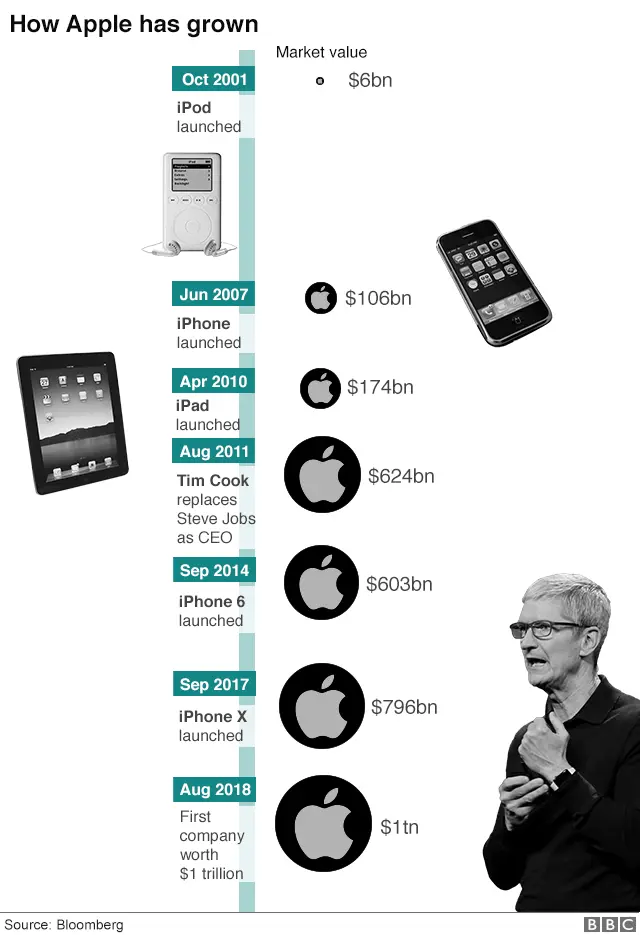
At the forefront of Apple’s financial worth is its market capitalization, a metric that represents the total value of all its outstanding shares. Apple has not only consistently held a position as one of the largest companies by market cap but has frequently crossed the multi-trillion-dollar threshold, a feat achieved by only a handful of global entities. This colossal valuation is a testament to investor confidence in its business model, brand strength, and consistent financial performance. The journey to this valuation has been marked by relentless innovation, strategic market expansion, and an unwavering ability to generate substantial profits. Unlike many companies whose valuations might be speculative, Apple’s market cap is largely a reflection of its robust financial fundamentals, including strong revenue growth, impressive profit margins, and a massive cash reserve. It signifies not just its current size but also the market’s expectation of its sustained leadership and future profitability.
Revenue Streams and Profitability: A Diversified Empire
Apple’s revenue generation is a masterclass in diversification, albeit still heavily reliant on its flagship product. The company’s financial success is powered by several key segments:
- iPhone: Remains the bedrock of Apple’s revenue, consistently accounting for roughly half of its total sales. Its enduring popularity, premium pricing, and global penetration underscore its critical role.
- Services: This segment has emerged as a high-growth, high-margin powerhouse. Encompassing iCloud, Apple Music, Apple TV+, Apple Arcade, the App Store, Apple Pay, and AppleCare, Services provides recurring revenue and deepens customer engagement within the Apple ecosystem. Its growth trajectory is particularly attractive to investors, offering a more predictable and less cyclical income stream.
- Mac and iPad: While representing smaller portions of total revenue, these product lines maintain strong market positions within their respective categories, driven by design, performance, and ecosystem integration.
- Wearables, Home, and Accessories: This category, including Apple Watch, AirPods, and HomePod, has shown significant growth, demonstrating Apple’s ability to create new product categories and expand its ecosystem footprint beyond traditional computing devices.
Crucially, Apple’s profitability is exceptional. Its ability to command premium prices across its product lines, coupled with efficient supply chain management and scale, results in industry-leading gross and net profit margins. This high profitability fuels its substantial cash flows, enabling investments in R&D, strategic acquisitions, and generous shareholder returns.
Beyond the Balance Sheet: Intrinsic Value Drivers
While financial statements provide a quantitative snapshot, Apple’s true worth is also rooted in qualitative factors that act as profound intrinsic value drivers, translating directly into financial strength and market resilience.
The Power of Brand Equity
Apple’s brand is arguably its most valuable intangible asset, a phenomenon that transcends mere marketing. Its brand equity contributes immensely to its financial worth by enabling:
- Pricing Power: The Apple brand commands a premium. Consumers are willing to pay more for Apple products and services due to perceived quality, design, and user experience, directly boosting revenue and profit margins.
- Customer Loyalty: Apple boasts an incredibly loyal customer base, often referred to as “sticky” customers. This loyalty translates into high retention rates, repeat purchases, and a reduced need for aggressive marketing to acquire new customers, thus lowering customer acquisition costs.
- Global Recognition and Trust: The iconic Apple logo is recognized worldwide, fostering immediate trust and desirability. This global appeal simplifies market entry and strengthens its competitive position across diverse geographies.
This powerful brand equity directly impacts financial performance, providing a buffer against economic downturns and a competitive moat against rivals, making it a cornerstone of Apple’s sustained high valuation.
Innovation and Ecosystem Lock-in
Apple’s relentless pursuit of innovation, coupled with its meticulously crafted ecosystem, creates a powerful feedback loop that enhances its financial standing.
- Pioneering Technologies: From the original Macintosh to the iPhone, Apple has a history of introducing groundbreaking products that redefine industries. Its significant investments in research and development continue to yield advancements in chip design (e.g., Apple Silicon), artificial intelligence, and new product categories (e.g., Vision Pro), positioning it for future growth.
- Integrated Ecosystem: The seamless integration between Apple’s hardware (iPhone, Mac, iPad, Watch), software (iOS, macOS), and services (App Store, iCloud) creates a compelling user experience that discourages users from switching to competitors. This “lock-in” effect increases customer lifetime value, as users are more likely to purchase additional Apple products and subscribe to its services, further boosting revenue and profitability. The ecosystem creates a network effect, where the value of one product increases with the adoption of others, amplifying Apple’s overall worth.
Global Supply Chain and Operational Efficiency
Managing a company of Apple’s scale requires unparalleled operational efficiency, particularly in its global supply chain. Its ability to design, manufacture, and distribute millions of complex electronic devices worldwide is a testament to its operational mastery.
- Strategic Sourcing and Manufacturing: Apple maintains tight control over its supply chain, enabling it to optimize costs, ensure quality, and manage inventory effectively. Its deep relationships with suppliers and manufacturers allow for economies of scale and often exclusive access to critical components.
- Logistics and Distribution: The intricate logistics network ensures that products reach consumers efficiently, whether through its vast retail store footprint or online channels. This operational excellence directly translates into cost savings, faster time-to-market, and ultimately, higher profitability and sustained shareholder value.
Investment Perspective: Why Investors Value Apple
From an investment standpoint, Apple consistently ranks as a top-tier holding due to its predictable performance, shareholder-friendly policies, and promising future outlook.
Consistent Performance and Shareholder Returns
Apple has a remarkable track record of delivering consistent financial performance, characterized by strong revenue growth, robust free cash flow generation, and disciplined capital allocation.
- Strong Financial Health: Investors value Apple’s healthy balance sheet, which often boasts significant cash reserves. This financial strength provides flexibility for strategic investments, acquisitions, and weathering economic downturns.
- Shareholder-Friendly Policies: Apple actively returns capital to shareholders through substantial share buyback programs and dividend payments. Share buybacks reduce the number of outstanding shares, increasing earnings per share and often boosting the stock price, while dividends provide a steady income stream for investors. These actions signal management’s confidence in the company’s future and enhance investor appeal.
Resilience in Economic Downturns
During periods of economic uncertainty, Apple often demonstrates greater resilience compared to many other companies. Its strong brand loyalty, premium positioning, and essential nature of its products (for many users) mean that demand for Apple products tends to hold up better than for discretionary goods or services. Its diverse revenue streams, particularly the growing services segment, also provide a degree of insulation against product-specific market fluctuations. This perceived stability makes Apple a favored “safe-haven” stock for many institutional and individual investors.
Future Growth Vectors
Beyond its current dominance, Apple continues to explore and invest in future growth opportunities that could further enhance its worth.
- Augmented/Virtual Reality (AR/VR): The launch of Apple Vision Pro signals a significant strategic move into spatial computing. This new platform holds the potential to create an entirely new ecosystem of hardware, software, and services, opening up vast new markets for growth.
- Health and Wellness: Apple has made substantial strides in health tracking through Apple Watch and its various health initiatives. Further integration of health monitoring capabilities and AI-driven personalized health insights could unlock significant revenue streams and reinforce its ecosystem.
- Services Expansion: Continuing to expand its services offerings into new categories and geographies remains a key growth driver, providing higher-margin, recurring revenue that diversifies its business model away from hardware dependency.
- Emerging Markets: While already global, there is still significant potential for growth in emerging economies as disposable incomes rise and technology adoption increases.
Challenges and Future Considerations
Despite its impressive worth, Apple faces several challenges that could impact its future financial performance and valuation.
Regulatory Scrutiny and Antitrust Concerns
Apple’s immense market power and control over its ecosystem, particularly the App Store, have attracted significant regulatory scrutiny globally. Potential antitrust actions or regulatory changes related to app store commissions, sideloading, or data privacy could force Apple to alter its business practices, potentially impacting its service revenues and profitability. Litigation and regulatory compliance efforts can also incur substantial financial costs.
Dependence on Key Products and Markets
While diversifying, Apple’s financial health remains heavily tied to the success of the iPhone. Any significant decline in iPhone sales or increased competition in the smartphone market could have a substantial impact on its overall revenue and profitability. Furthermore, the company’s significant reliance on the Chinese market for both manufacturing and sales exposes it to geopolitical risks and economic fluctuations in that region.
Geopolitical Risks and Supply Chain Diversification
Increasing geopolitical tensions, particularly between the U.S. and China, pose risks to Apple’s highly integrated supply chain. Efforts to diversify manufacturing away from China, while strategically sound, involve significant capital expenditure, potential supply disruptions, and complex logistical challenges that could impact production costs and efficiency in the short to medium term.

Conclusion
The worth of Apple is a complex tapestry woven from its unparalleled market capitalization, diversified and highly profitable revenue streams, and profound intrinsic value drivers such as brand equity, ecosystem lock-in, and operational excellence. From an investment perspective, its consistent performance, shareholder returns, and promising future growth vectors continue to make it a highly desirable asset. However, like any global giant, it navigates a landscape fraught with regulatory challenges, market dependencies, and geopolitical risks. Ultimately, Apple’s worth is not merely a number; it’s a dynamic reflection of its ability to consistently innovate, execute, and captivate a global audience, solidifying its position as an enduring economic powerhouse in the 21st century.
aViewFromTheCave is a participant in the Amazon Services LLC Associates Program, an affiliate advertising program designed to provide a means for sites to earn advertising fees by advertising and linking to Amazon.com. Amazon, the Amazon logo, AmazonSupply, and the AmazonSupply logo are trademarks of Amazon.com, Inc. or its affiliates. As an Amazon Associate we earn affiliate commissions from qualifying purchases.