
For millions of investors worldwide, Apple Inc. (AAPL) represents more than just a technology giant; it’s a cornerstone of many portfolios and a barometer for market sentiment. Its stock price is one of the most frequently queried financial data points, a reflection of both the company’s intrinsic value and the broader economic landscape. Understanding “what is the stock price for Apple” goes far beyond a simple number; it involves appreciating the myriad factors that drive its movements, the financial health of the company, and the broader investment implications for those looking to buy, hold, or sell shares in this iconic enterprise.
This article delves into the financial intricacies of Apple’s stock, providing investors with a comprehensive perspective on how to track its performance, analyze its drivers, and approach it within a well-considered investment strategy. Our focus remains squarely on the financial and investment aspects, offering insights purely from a money management perspective.
Tracking Apple’s Stock Performance in Real-Time
The immediate answer to “what is the stock price for Apple” is a constantly fluctuating figure, reflecting the real-time interplay of buyers and sellers on major stock exchanges. For investors, knowing where to find this information and how to interpret it is the first crucial step.
Where to Find Real-Time Quotes
Accessing current and historical stock prices for Apple (AAPL) is straightforward through various financial platforms. Reputable sources include:
- Major Financial News Websites: Bloomberg, Reuters, The Wall Street Journal, Yahoo Finance, Google Finance, and CNBC all provide up-to-the-minute stock quotes, interactive charts, and relevant news.
- Brokerage Platforms: If you have an investment account, your broker’s platform will offer real-time data, often integrated with tools for analysis and trading.
- Stock Market Apps: Many mobile applications are dedicated to tracking stock prices, offering push notifications for significant movements and customizable watchlists.
When checking a quote, you’ll typically see the last traded price, along with its change from the previous day’s close (both in absolute terms and as a percentage). Pay attention to the exchange it’s traded on – Apple is primarily listed on the NASDAQ Global Select Market.
Interpreting Key Metrics: Open, Close, High, Low, Volume
Beyond the current price, several other metrics provide a snapshot of the stock’s trading activity within a given period (usually a trading day):
- Open: The price at which the stock first traded at the opening of the trading session.
- Close (Previous Close): The final price at which the stock traded at the end of the previous trading session. This is the benchmark against which today’s performance is often measured.
- High: The highest price at which the stock traded during the current session.
- Low: The lowest price at which the stock traded during the current session.
- Volume: The total number of shares of Apple stock traded during the session. High volume often indicates significant investor interest and can lend more credence to price movements.
- Market Cap (Market Capitalization): This is a critical metric, calculated by multiplying the current stock price by the total number of outstanding shares. It represents the total market value of the company and is a key indicator of its size. Apple consistently ranks among the largest companies globally by market cap.
Historical Trends and Chart Analysis Basics
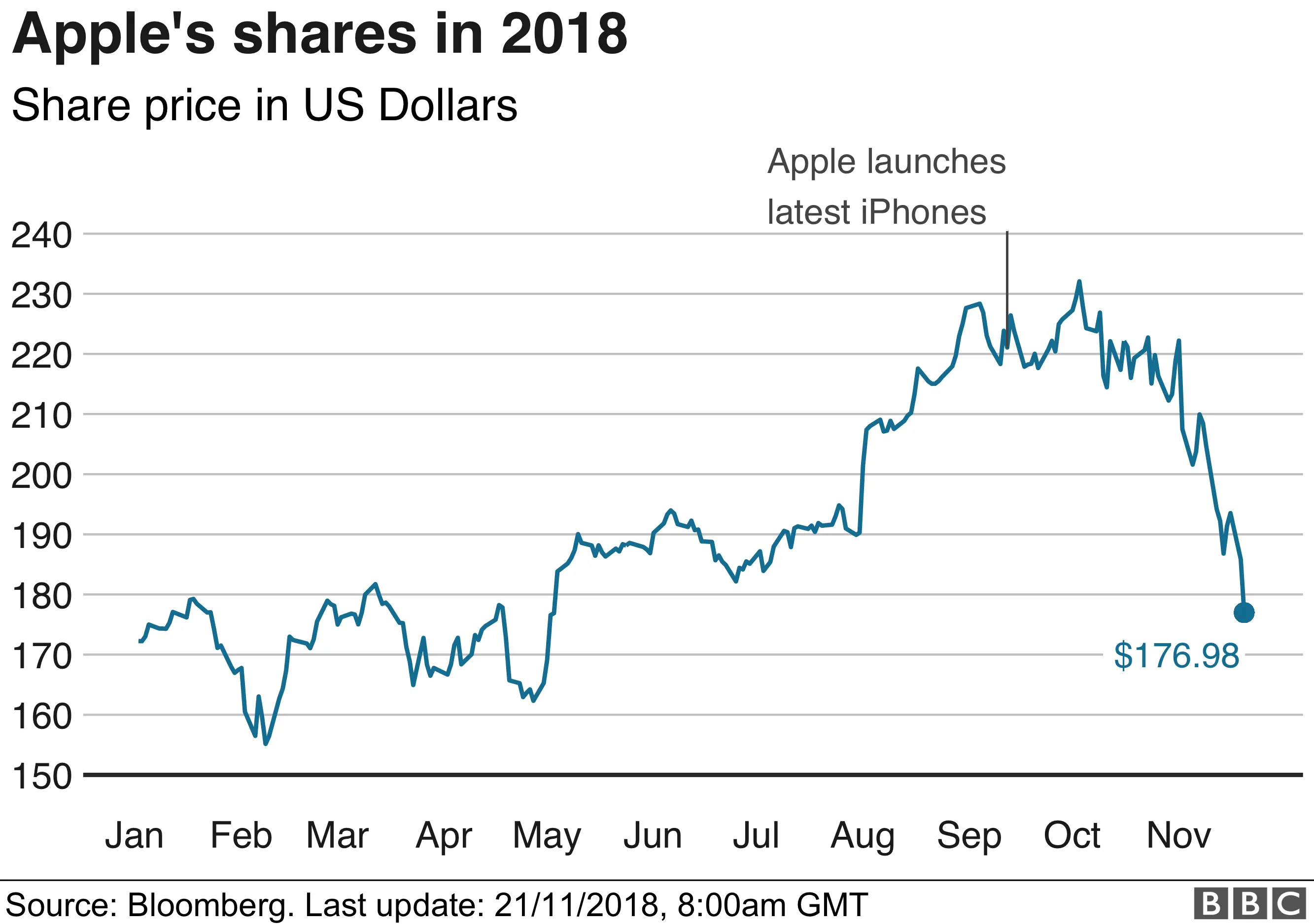
While the current price is important, understanding Apple’s stock price requires a look at its history. Interactive charts on financial platforms allow investors to view price movements over various timeframes – daily, weekly, monthly, yearly, or even over decades. Analyzing these charts can reveal:
- Trends: Is the stock generally moving upwards (uptrend), downwards (downtrend), or sideways?
- Volatility: How much does the price fluctuate? Apple, despite its size, can experience significant swings, especially around major announcements.
- Support and Resistance Levels: These are price levels where the stock has historically struggled to move above (resistance) or below (support). While not foolproof, they can offer insights into potential future price action.
Basic chart analysis can help investors identify patterns and make more informed decisions, but it’s crucial to remember that past performance is not indicative of future results.
Factors Influencing Apple’s Stock Valuation
Apple’s stock price is not static; it’s a dynamic reflection of numerous internal and external forces. For investors, dissecting these influences is key to understanding potential future movements and assessing the investment’s risk-reward profile.
Product Launches and Innovation Cycles
Apple is synonymous with innovation. Major product launches, such as new iPhone generations, MacBooks, Apple Watches, or new categories like the Vision Pro, significantly impact investor sentiment and, consequently, the stock price. The anticipation leading up to these events, the initial sales figures, and the critical reception all play a role. Disruptive innovation, or the lack thereof, is a constant subject of analyst reports and investor discussions, directly affecting revenue and growth expectations.
Quarterly Earnings Reports and Guidance
Every quarter, Apple releases its financial results, detailing revenue, net income, earnings per share (EPS), and various other metrics. These reports are perhaps the most critical short-term catalysts for stock movement. Investors scrutinize whether Apple met, exceeded, or missed analyst expectations. Equally important is the company’s “guidance” for the upcoming quarter or year, which provides management’s outlook on future performance. Weak guidance, even after a strong quarter, can lead to a stock price drop, as investors look to future growth prospects.
Macroeconomic Trends and Consumer Spending
Even a titan like Apple is not immune to broader economic forces. Factors such as global economic growth, inflation rates, interest rates, and consumer confidence directly affect discretionary spending, especially on premium products like iPhones and Macs. A robust global economy with strong consumer purchasing power tends to favor Apple, while economic downturns or recessions can dampen demand and, subsequently, weigh on the stock price. Geopolitical events and trade policies can also impact Apple’s extensive global supply chain and market access.
Competitive Landscape and Regulatory Scrutiny
Apple operates in highly competitive markets across smartphones, computers, wearables, and services. Actions by competitors (e.g., Samsung, Google, Microsoft) can influence Apple’s market share and pricing power. Furthermore, Apple increasingly faces regulatory scrutiny worldwide, particularly concerning its App Store policies, antitrust concerns, and privacy practices. Potential fines, changes in business models forced by regulators, or new legislative hurdles could impact profitability and growth, creating uncertainty that is often reflected in the stock price.
Investing in Apple Stock: A Strategic Perspective
Approaching Apple as an investment requires more than just tracking its daily price. It demands a strategic understanding of its valuation, dividend policy, and how it fits into a diversified portfolio.
Understanding Valuation Metrics: P/E Ratio, Market Cap
Beyond market capitalization, investors often look at other valuation metrics to assess whether Apple’s stock is “expensive” or “cheap” relative to its earnings and growth prospects:
- Price-to-Earnings (P/E) Ratio: This divides the stock price by its earnings per share (EPS). A higher P/E ratio suggests investors are willing to pay more for each dollar of earnings, often implying expectations of higher future growth. Comparing Apple’s P/E to its historical average and to industry peers can offer insights.
- PEG Ratio (Price/Earnings to Growth): This refines the P/E by dividing it by the expected earnings growth rate. It aims to account for growth in valuation.
- Enterprise Value (EV) to EBITDA: This metric is often preferred for comparing companies with different capital structures, providing a clearer picture of valuation.
Analyzing these metrics helps investors gauge whether the current stock price aligns with the company’s financial fundamentals and growth trajectory.
Dividend Policy and Share Buybacks
Apple has a history of returning capital to shareholders through dividends and aggressive share buyback programs.
- Dividends: Apple pays a quarterly cash dividend. While its dividend yield (dividend per share / stock price) might not be as high as some mature “income stocks,” it provides a steady stream of income. Investors often view consistent dividend payments as a sign of financial stability and confidence from management.
- Share Buybacks: Apple has executed massive share repurchase programs, significantly reducing the number of outstanding shares. This increases earnings per share (EPS) and can push up the stock price, as the same profit is spread across fewer shares. For many investors, Apple’s capital return program is a significant part of its investment appeal.
These capital allocation strategies are crucial for understanding the total return potential of Apple’s stock beyond just price appreciation.
Long-Term vs. Short-Term Investment Strategies
Apple’s stock appeals to various investor profiles:
- Long-Term Investors: Many view Apple as a “buy and hold” investment, banking on its strong brand, ecosystem lock-in, consistent innovation, and robust financial health to deliver compounding returns over many years or even decades. They focus on the company’s fundamental growth story rather than daily price fluctuations.
- Short-Term Traders: Some traders attempt to profit from Apple’s short-term price volatility, often around earnings reports, product launches, or market-wide movements. This strategy is significantly riskier and requires active monitoring and deep technical analysis.
Understanding your own investment horizon and risk tolerance is paramount before deciding how to approach Apple’s stock.
Diversification and Portfolio Management
Even with a company as strong as Apple, diversification remains a cornerstone of prudent investing. Holding a significant portion of your portfolio in a single stock, no matter how robust, exposes you to concentrated risk. A sudden, unexpected negative event specific to Apple could disproportionately impact your wealth. Therefore, Apple’s stock should ideally be part of a broader, diversified portfolio that includes investments across different industries, asset classes, and geographies to mitigate risk and optimize returns.
Apple’s Financial Health and Future Outlook
A deep understanding of Apple’s stock price necessitates an examination of its underlying financial strength and the strategic vision guiding its future growth. Investors must look beyond current headlines to the fundamentals that sustain its valuation.
Revenue Streams: Products vs. Services
Apple’s revenue diversification is a key strength. While the iPhone remains its flagship product and largest revenue contributor, the company has strategically grown its Services segment (App Store, Apple Music, iCloud, Apple Pay, advertising, etc.). Services revenue offers higher margins and a recurring revenue stream, providing greater stability and predictability compared to the more cyclical product sales. Investors closely monitor the growth trajectory of services, as it represents a significant opportunity for future expansion and margin improvement, potentially reducing dependence on hardware upgrade cycles.
Profitability and Margins
Apple consistently demonstrates impressive profitability. Key metrics like gross margin (revenue minus cost of goods sold), operating margin (gross profit minus operating expenses), and net profit margin (net income divided by revenue) are vital. Apple’s ability to maintain high margins, even amidst intense competition and supply chain challenges, speaks to its premium brand positioning, efficient operations, and control over its ecosystem. Sustained profitability is a fundamental driver of earnings per share and, by extension, the stock price.
Growth Vectors: New Markets, AR/VR, AI
Looking forward, Apple is actively pursuing several avenues for growth:
- Emerging Markets: Expanding its presence and sales in developing economies, adapting products and pricing strategies to local conditions.
- Augmented Reality (AR) / Virtual Reality (VR): The launch of Apple Vision Pro signals a significant push into spatial computing, a potentially transformative technology. The success and adoption rate of this new platform will be closely watched by investors.
- Artificial Intelligence (AI): While Apple has integrated AI into its products for years (Siri, computational photography), its strategy for generative AI and its impact on its ecosystem are areas of intense investor interest. How Apple leverages AI to enhance existing products and create new services will be crucial for its competitive edge.
These growth vectors are critical for justifying Apple’s high valuation and driving future stock price appreciation.
Analyst Ratings and Price Targets
Financial analysts from investment banks and research firms regularly publish reports on Apple, providing their “ratings” (e.g., Buy, Hold, Sell) and “price targets” – their estimation of where the stock price will be in the next 12-18 months. While these should not be the sole basis for investment decisions, they offer a consensus view from professionals who dedicate significant resources to analyzing the company. Investors often consider analyst upgrades or downgrades as a factor, alongside their own due diligence.
Risks and Opportunities in Apple Investment
No investment is without risk, and even a company as dominant as Apple presents both opportunities for growth and potential pitfalls for investors. A balanced perspective is essential.
Market Volatility and Geopolitical Risks
Apple’s stock, despite its large size, is not immune to broader market volatility. Economic downturns, interest rate hikes, or significant geopolitical events (e.g., trade wars, conflicts) can trigger market-wide sell-offs, impacting even fundamentally sound companies. Given Apple’s global reach, it is particularly susceptible to international political tensions, supply chain disruptions originating from specific regions, and currency fluctuations.
Dependence on iPhone Sales
While services are growing, the iPhone remains Apple’s primary revenue generator. Any significant slowdown in iPhone sales, increased competition in the smartphone market, or a failure to innovate meaningfully in future iterations could have a substantial impact on the company’s top line and, consequently, its stock performance. This reliance, though lessening, still represents a concentrated risk.
Potential for Innovation and Ecosystem Expansion
The core opportunity for Apple investors lies in its continued capacity for innovation. The company has a proven track record of creating entirely new product categories and seamlessly integrating them into its ecosystem. Future breakthroughs in AI, AR/VR, health tech, or even unexpected new ventures could unlock significant new revenue streams and redefine its market position. The strength of its ecosystem — the seamless integration between its hardware, software, and services — creates a powerful moat, encouraging customer loyalty and high switching costs.

Regulatory Challenges and Supply Chain Vulnerabilities
Ongoing and escalating regulatory scrutiny across various global jurisdictions poses a significant risk. Potential anti-trust actions, mandates to open up its ecosystem, or changes in how it operates its App Store could impact profitability and business models. Additionally, Apple’s extensive global supply chain, heavily concentrated in specific regions, makes it vulnerable to disruptions from natural disasters, pandemics, or geopolitical tensions, which can lead to production delays and impact product availability.
In conclusion, understanding “what is the stock price for Apple” is a journey through real-time financial data, fundamental company analysis, and a broader appreciation of macroeconomic and industry dynamics. For investors, Apple represents a complex, yet often rewarding, opportunity. By diligently tracking its performance, analyzing its financial health, understanding its growth drivers, and acknowledging its risks, investors can make more informed decisions about whether this technology titan aligns with their financial goals and risk tolerance.
aViewFromTheCave is a participant in the Amazon Services LLC Associates Program, an affiliate advertising program designed to provide a means for sites to earn advertising fees by advertising and linking to Amazon.com. Amazon, the Amazon logo, AmazonSupply, and the AmazonSupply logo are trademarks of Amazon.com, Inc. or its affiliates. As an Amazon Associate we earn affiliate commissions from qualifying purchases.