
The question “how many stock exchanges are there?” seems straightforward on the surface, yet its answer is far from a simple number. It plunges us into the intricate depths of global finance, revealing a complex tapestry of market infrastructures that drive economies, fuel innovation, and shape the financial destinies of nations and individuals alike. From bustling trading floors to sophisticated digital networks, stock exchanges are the epicenters where capital meets opportunity, facilitating the buying and selling of securities that underpin the modern economic landscape. Understanding their number, their nature, and their global distribution is crucial for investors, businesses, and anyone seeking to grasp the mechanics of capital formation and wealth creation.
This exploration will move beyond a mere tally, delving into the definition and evolution of these vital institutions, the challenges inherent in counting them accurately, and the influence of major global hubs. Ultimately, we will see that the true significance lies not just in a numerical count, but in the collective power and reach of these interconnected markets.
Defining a Stock Exchange: More Than Just a Trading Floor
At its core, a stock exchange is an organized marketplace where buyers and sellers meet to trade stocks, bonds, and other financial instruments. While historically associated with physical trading floors characterized by shouts and hand signals, the modern stock exchange has largely transitioned into an electronic entity, operating at lightning speed across global networks. Yet, its fundamental purpose remains unchanged.
Core Functions and Role in the Economy
Stock exchanges serve several critical functions within an economy. Firstly, they facilitate capital formation. Companies seeking to raise capital for expansion, research and development, or debt repayment can issue new shares through an Initial Public Offering (IPO) or subsequent offerings, listing them on an exchange. This allows them to tap into a vast pool of public and institutional investment. Without exchanges, businesses would struggle to access the significant funding required for large-scale growth, thereby stifling economic progress and innovation.
Secondly, exchanges provide liquidity. For investors, the ability to easily buy or sell their holdings without significantly impacting the price is paramount. An active exchange ensures that there is always a market for securities, allowing investors to enter or exit positions with relative ease. This liquidity is a key factor in attracting investment, as it reduces the risk of being stuck with illiquid assets. A liquid market encourages more trading activity, which in turn leads to more efficient price discovery.
Thirdly, stock exchanges are central to price discovery. Through the continuous interaction of supply and demand, the market effectively determines the fair value of a company’s shares. This price reflects publicly available information, investor sentiment, and economic conditions. Accurate price discovery is essential for resource allocation, guiding capital towards productive enterprises and signaling the health and prospects of different sectors and companies. The prices observed on an exchange serve as important benchmarks for valuation and financial reporting.
Evolution from Open Outcry to Digital Platforms
The history of stock exchanges is a testament to continuous adaptation and technological advancement. Early exchanges, like the Amsterdam Stock Exchange established in the 17th century, were rudimentary gatherings of merchants and brokers. Over centuries, these evolved into more structured environments, culminating in the iconic “open outcry” systems seen in the 20th century, where traders communicated bids and offers face-to-face on a physical floor. This method, while dynamic, had inherent limitations in terms of speed, reach, and capacity.
The late 20th and early 21st centuries witnessed a seismic shift with the advent of computerization and the internet. The rise of electronic trading systems revolutionized the industry, replacing physical trading floors with sophisticated networks of servers and algorithms. Exchanges like Nasdaq pioneered this shift, demonstrating the efficiency and scalability of fully electronic markets. Today, the vast majority of trading occurs digitally, enabling instantaneous transactions across geographical boundaries and drastically increasing market accessibility and speed. This digital transformation has not only enhanced efficiency but also globalized financial markets, making them more interconnected than ever before.
Regulatory Frameworks and Investor Protection
A robust regulatory framework is indispensable for the integrity and stability of any stock exchange. Regulators, often government agencies like the Securities and Exchange Commission (SEC) in the U.S. or the Financial Conduct Authority (FCA) in the UK, establish rules governing listing requirements, trading practices, disclosure obligations, and market surveillance. Their primary goals are to protect investors from fraud and manipulation, ensure market fairness and transparency, and maintain systemic stability.
Listing requirements, for instance, mandate that companies provide comprehensive financial information to the public, allowing investors to make informed decisions. Rules against insider trading and market manipulation aim to create a level playing field. Furthermore, exchanges themselves often have their own sets of rules and compliance departments that monitor trading activity. This multi-layered regulatory oversight is crucial for fostering investor confidence, without which capital markets would struggle to attract and retain participants. The trust placed in these institutions, underpinned by stringent regulations, is what allows them to function as reliable conduits for capital.
The Challenge of Counting: Why a Simple Number is Elusive
Attempting to provide a definitive, static number for the world’s stock exchanges is akin to trying to count grains of sand on a beach – the answer is constantly shifting and depends heavily on how one defines and categorizes them. The complexity stems from several factors, including the various types of exchanges, their operational structures, and the continuous evolution of financial markets.
Primary vs. Secondary Listings and Different Types of Exchanges
One major complication in counting exchanges arises from the distinction between primary and secondary listings, and the sheer variety of markets available. A company typically has a primary listing on one main exchange, where the majority of its trading volume and regulatory oversight reside. However, it might also have secondary listings on other exchanges, making its shares accessible to a broader international investor base. While these secondary listings use the infrastructure of multiple exchanges, they don’t necessarily count as distinct entities for the company’s core capital-raising function.
Furthermore, “stock exchange” is often used broadly, but there are specialized markets beyond conventional equity trading. We primarily think of equity exchanges (like NYSE, Nasdaq) where shares of companies are traded. However, there are also:
- Derivatives exchanges (e.g., CME Group, Eurex) where futures and options contracts are traded.
- Commodity exchanges (e.g., LME, Nymex) dealing in raw materials like oil, gold, and agricultural products.
- Bond exchanges (often integrated within larger exchanges or specific platforms) for debt securities.
- Foreign exchange markets (forex), which are largely over-the-counter (OTC) rather than exchange-based.
- Cryptocurrency exchanges, a rapidly growing segment that operates with varying degrees of regulation and structure compared to traditional exchanges.
If we strictly count only major equity exchanges, the number is significantly lower than if we include all types of organized trading venues for various assets. For the purpose of answering “how many stock exchanges are there” for common investors, we generally focus on those offering public equity listings.
Mergers, Acquisitions, and Group Structures
The global exchange landscape has been profoundly shaped by a wave of mergers and acquisitions over the past few decades. Large exchange groups now own and operate multiple distinct exchanges, further muddying the waters for a simple count. For example:
- Intercontinental Exchange (ICE) owns the New York Stock Exchange (NYSE), NYSE Arca, NYSE American, and various futures and options exchanges globally.
- Nasdaq, Inc. operates the Nasdaq Stock Market (its flagship U.S. equity exchange) along with several other U.S. and European equity and options exchanges.
- London Stock Exchange Group (LSEG) operates the London Stock Exchange, Borsa Italiana, and plays a significant role in global data and clearing services.
- Euronext is a pan-European exchange group operating exchanges in Paris, Amsterdam, Brussels, Lisbon, Oslo, Dublin, and Milan.
- Deutsche Börse Group operates the Frankfurt Stock Exchange (Xetra), Eurex (derivatives), and Clearstream (clearing and settlement).
When we ask “how many exchanges,” do we count each subsidiary exchange (e.g., NYSE and NYSE Arca as two) or just the overarching group (ICE as one)? Typically, market participants refer to the individual exchange entities, but the operational and ownership structure points to a consolidation of power and infrastructure under fewer, larger groups. This consolidation often leads to technological efficiencies and broader market reach for the parent company, but it makes an independent count of “stock exchanges” more complex.

Emerging Markets and Frontier Exchanges
Beyond the established financial centers, new exchanges are continually emerging, particularly in developing and frontier markets. These exchanges play a crucial role in local capital formation and can range from fully functional, technologically advanced platforms to nascent markets with limited liquidity and infrastructure.
Identifying and tracking these newer or smaller exchanges is challenging. Some may operate with less international visibility, or they may be subject to less stringent data collection and reporting. The ongoing economic development in various regions means that the number of operational exchanges is not static; new ones may launch, while others might merge, become defunct, or evolve into different forms. Consequently, any precise count becomes a snapshot in time, subject to constant revision as the global financial landscape shifts. While major financial data providers attempt to track these, the definitive global tally remains an evolving figure, often cited in the range of 100 to 150 significant equity exchanges worldwide, with hundreds more specialized or smaller venues if all types are included.
Major Global Stock Exchange Hubs and Their Influence
While the exact number of exchanges is debatable, their geographic distribution reveals dominant hubs that collectively wield immense influence over global finance. These hubs are characterized by high trading volumes, deep liquidity, robust regulatory frameworks, and a concentration of financial institutions and expertise.
North America: Powerhouses of Innovation and Capital
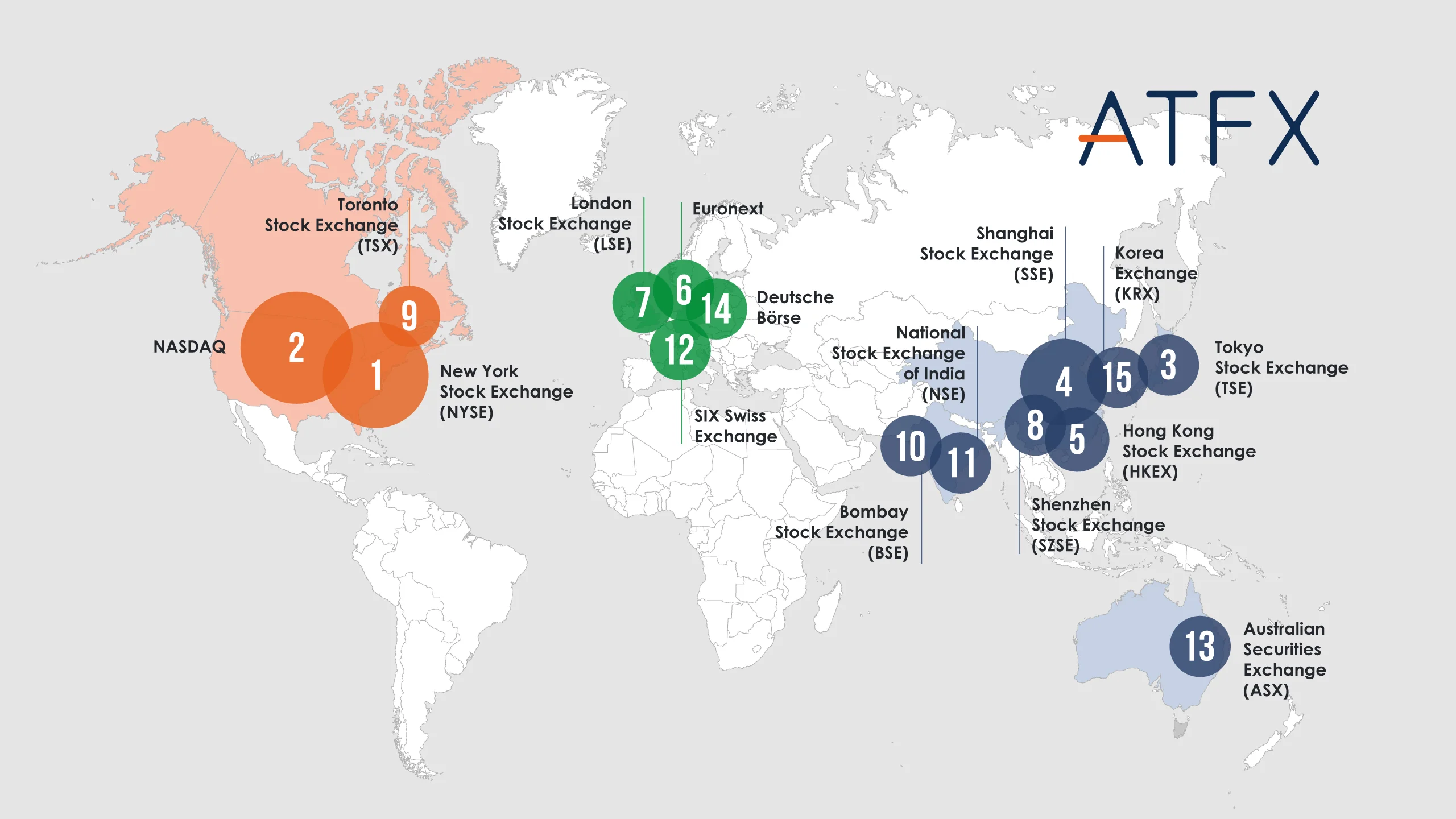
North America hosts some of the world’s largest and most influential stock exchanges. The New York Stock Exchange (NYSE), often referred to as “the Big Board,” is renowned for its prestige and the sheer market capitalization of its listed companies, which include many of the world’s oldest and largest corporations. The Nasdaq Stock Market revolutionized the industry with its fully electronic trading system and has become synonymous with technology and growth companies, attracting listings from innovative firms across various sectors. Together, the NYSE and Nasdaq represent the pinnacle of global equity markets, drawing capital from every corner of the globe. In Canada, the Toronto Stock Exchange (TSX) and TSX Venture Exchange are crucial for junior mining and energy companies, forming a vital part of the North American financial landscape.
Europe: A Diverse and Integrated Market
Europe’s exchange landscape is characterized by a blend of national exchanges and the integrated Euronext platform. The London Stock Exchange (LSE) remains a global financial center, particularly for international listings and derivatives trading, despite Brexit. Euronext, born from a merger of the Paris, Amsterdam, and Brussels exchanges, has expanded to include Lisbon, Oslo, Dublin, and Milan, creating a single trading platform that provides significant liquidity across multiple European economies. Deutsche Börse Group, operating the Frankfurt Stock Exchange (Xetra), is another powerhouse, particularly strong in derivatives and clearing services. The SIX Swiss Exchange in Zurich is known for its stability and international listings. These exchanges collectively facilitate vast amounts of cross-border investment within Europe and connect European capital to global markets.
Asia-Pacific: The Engines of Emerging Growth
The Asia-Pacific region has witnessed explosive growth in its capital markets, driven by rapid economic development and increasing integration into the global financial system. The Japan Exchange Group (JPX), comprising the Tokyo Stock Exchange and Osaka Exchange, is one of the world’s largest by market capitalization, home to many global industrial and technology giants. China boasts two major exchanges, the Shanghai Stock Exchange (SSE) and the Shenzhen Stock Exchange (SZSE), which have rapidly grown to become among the largest globally, reflecting China’s economic might. The Hong Kong Stock Exchange (HKEX) serves as a crucial gateway to mainland China and is a favored destination for international listings. Other significant exchanges include the Australian Securities Exchange (ASX), an important hub for resources and financial services, and the Bombay Stock Exchange (BSE) and National Stock Exchange (NSE) in India, which serve one of the world’s fastest-growing major economies. These exchanges are increasingly influential, attracting significant foreign investment and playing a pivotal role in global capital flows.
Other Significant Players: Expanding the Global Reach
Beyond these dominant regions, numerous other exchanges contribute significantly to the global financial ecosystem. B3 (Brasil Bolsa Balcão) in São Paulo is the largest exchange in Latin America, serving a dynamic and vast market. The Johannesburg Stock Exchange (JSE) is the largest exchange in Africa, a key player for resource-rich economies on the continent. Exchanges in the Middle East, such as the Saudi Exchange (Tadawul) and the Dubai Financial Market (DFM), are gaining international prominence due to vast sovereign wealth funds and diversifying economies. Each of these exchanges, irrespective of their size relative to the major hubs, plays a critical role in its respective region by mobilizing domestic savings, attracting foreign investment, and providing companies with access to the capital they need to grow.
The Impact of Stock Exchanges on Global Finance and Investment
Stock exchanges are not merely venues for transactions; they are fundamental pillars of modern economies, profoundly impacting global finance and investment strategies. Their collective function creates a virtuous cycle that supports economic development, offers wealth creation opportunities, and provides vital economic indicators.
Facilitating Economic Growth and Innovation
The primary impact of stock exchanges is their unparalleled ability to facilitate economic growth. By enabling companies to raise capital through equity issuance, exchanges provide the lifeblood for business expansion, job creation, and investment in research and development. Innovative startups, mature corporations, and even government entities can access the funds needed to transform ideas into products, expand operations, and drive technological advancements. This mechanism is far more efficient than traditional bank lending for many large-scale ventures, allowing for risk-sharing among a broad base of investors. Without robust capital markets, the pace of innovation and the scale of economic development would be significantly curtailed, restricting the ability of nations to compete and prosper in the global arena.
Providing Investment Opportunities and Wealth Creation
For individuals and institutions, stock exchanges offer a vast array of investment opportunities. They allow investors to participate in the growth of companies, sectors, and entire economies, providing a mechanism for wealth creation and portfolio diversification. Through direct stock ownership, mutual funds, exchange-traded funds (ETFs), and other pooled investment vehicles, individuals can build long-term savings, fund retirement, and achieve financial goals. The accessibility of publicly traded securities, coupled with the liquidity provided by exchanges, makes equity investing a cornerstone of modern personal finance. Furthermore, the ability to invest across different geographies and industries through various exchanges enables investors to diversify their portfolios, mitigate risks, and potentially enhance returns by tapping into global growth stories.
Benchmarking and Market Indicators
Stock exchanges also serve as critical providers of economic information and benchmarks. Stock market indices, such as the Dow Jones Industrial Average, S&P 500, FTSE 100, DAX, Nikkei 225, or CSI 300, are compiled from the performance of listed companies and are widely regarded as key indicators of economic health and investor confidence. These indices reflect market sentiment, corporate earnings, interest rate expectations, and geopolitical developments. Economists, policymakers, and businesses closely monitor these benchmarks to gauge the overall direction of the economy, make informed decisions, and forecast future trends. The daily fluctuations and long-term trends observed on exchanges offer valuable insights into the performance of specific industries and the broader economic landscape, acting as a real-time barometer for national and global financial well-being.
Future Trends: Decentralization, ESG, and Technological Advancements
The future of stock exchanges is likely to be shaped by several powerful trends. Technological advancements, particularly in areas like artificial intelligence (AI), machine learning, and blockchain (Distributed Ledger Technology or DLT), are poised to further enhance trading efficiency, security, and market surveillance. DLT, for instance, has the potential to streamline settlement processes, reduce costs, and increase transparency.
Another significant trend is the growing focus on Environmental, Social, and Governance (ESG) factors. Investors are increasingly prioritizing companies with strong ESG credentials, leading to the development of new ESG-focused indices and investment products on exchanges. Exchanges themselves are adapting by encouraging better corporate disclosure on sustainability and facilitating green bond listings. Finally, discussions around decentralization in financial markets, influenced by the rise of cryptocurrencies and decentralized finance (DeFi), suggest a potential paradigm shift. While traditional exchanges will likely remain central due to regulatory and liquidity advantages, they may adopt elements of decentralization or face competition from new, blockchain-native trading venues, presenting both challenges and opportunities for the established order.
In conclusion, while a precise, immutable number of stock exchanges remains elusive due to the dynamic nature of global finance, it is evident that these institutions, numbering well over a hundred major equity exchanges and many more specialized venues, form the indispensable backbone of the world’s financial system. Their profound impact on capital formation, liquidity provision, wealth creation, and economic benchmarking underscores their ongoing and evolving importance in shaping global prosperity.
aViewFromTheCave is a participant in the Amazon Services LLC Associates Program, an affiliate advertising program designed to provide a means for sites to earn advertising fees by advertising and linking to Amazon.com. Amazon, the Amazon logo, AmazonSupply, and the AmazonSupply logo are trademarks of Amazon.com, Inc. or its affiliates. As an Amazon Associate we earn affiliate commissions from qualifying purchases.