
Navigating the world of auto loans can feel like deciphering a complex financial puzzle, especially with interest rates constantly shifting. For most consumers, securing a vehicle involves taking out a loan, and the interest rate attached to that loan can significantly impact the total cost of ownership over its lifetime. Understanding what drives these rates, where they stand today, and how to secure the most favorable terms is crucial for making a financially sound decision. This comprehensive guide will demystify auto interest rates, offering insights into the current landscape and equipping you with the knowledge to make informed choices.
Understanding the Fundamentals of Auto Loan Interest Rates
Before diving into current market figures, it’s essential to grasp the core concepts that dictate auto loan interest rates. These aren’t arbitrary numbers but rather a reflection of broader economic forces, lender risk assessment, and individual borrower profiles.
What Drives Auto Interest Rates?
Several macro-economic factors play a pivotal role in shaping the prevailing auto interest rate environment. At the forefront is the Federal Funds Rate, set by the Federal Reserve. When the Fed raises this benchmark rate, it typically leads to higher borrowing costs across the board, including for auto loans. Conversely, a cut in the Fed rate can signal a potential decrease.
Inflation is another critical driver. Lenders charge interest to compensate for the risk of lending money and to ensure their return outpaces inflation, preserving the purchasing power of their money over time. High inflation often correlates with higher interest rates. Economic stability, or the lack thereof, also influences rates. During periods of economic uncertainty, lenders may become more cautious, potentially leading to higher rates for borrowers deemed riskier, or they might lower rates to stimulate demand if the economy is sluggish. Finally, the supply and demand for credit within the market also plays a part; if there’s high demand for loans but limited capital, rates might climb.
APR vs. Interest Rate: The Full Picture
It’s common to see both “interest rate” and “APR” (Annual Percentage Rate) when discussing loans, and understanding the distinction is vital. The interest rate is simply the percentage a lender charges on the principal loan amount. It represents the cost of borrowing money.
The APR, however, provides a more comprehensive picture of the true cost of borrowing. It includes not only the interest rate but also other associated fees, such as origination fees, closing costs, and sometimes even document preparation fees, amortized over the life of the loan. This means the APR will almost always be slightly higher than the stated interest rate. When comparing loan offers, always use the APR to get an accurate side-by-side comparison, as it accounts for all the mandatory costs you’ll incur. A lower interest rate might look appealing, but if it comes with high hidden fees that push the APR up, it might not be the better deal.
New vs. Used Car Rates: A Distinct Difference
A common observation in the auto loan market is that interest rates for new cars are generally lower than those for used cars. This disparity stems from a few key factors. New cars typically hold their value better in the initial years, offering more collateral for the lender. They also come with warranties, reducing the likelihood of mechanical issues that could financially burden the borrower and impact their ability to repay the loan.
Used cars, on the other hand, represent a higher risk for lenders. They depreciate faster, especially older models, and come with a greater potential for mechanical problems, which could reduce the borrower’s equity and their ability to keep up with payments. Lenders factor in this increased risk by charging a higher interest rate on used car loans to compensate for the greater potential for default and lower recovery value.
Factors Influencing Your Personal Auto Loan Rate
While macroeconomics sets the general market tone, your individual circumstances play the most significant role in determining the specific interest rate you’ll be offered. Lenders assess your creditworthiness and the perceived risk you present.
The Power of Your Credit Score
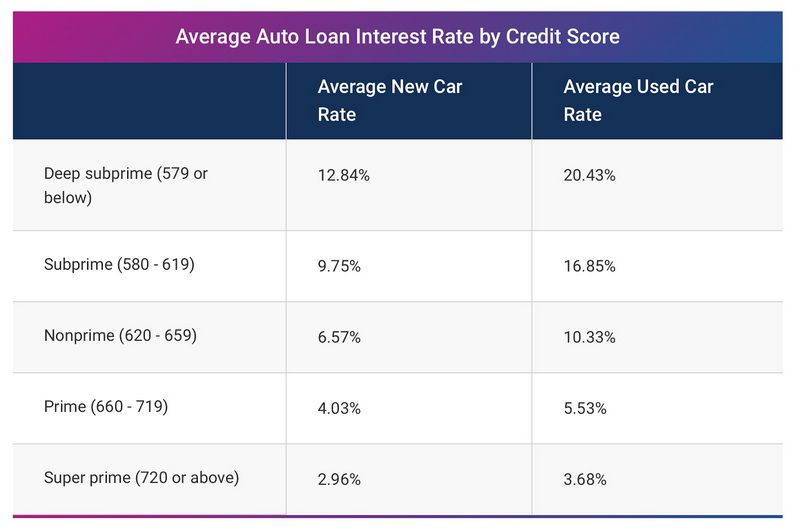
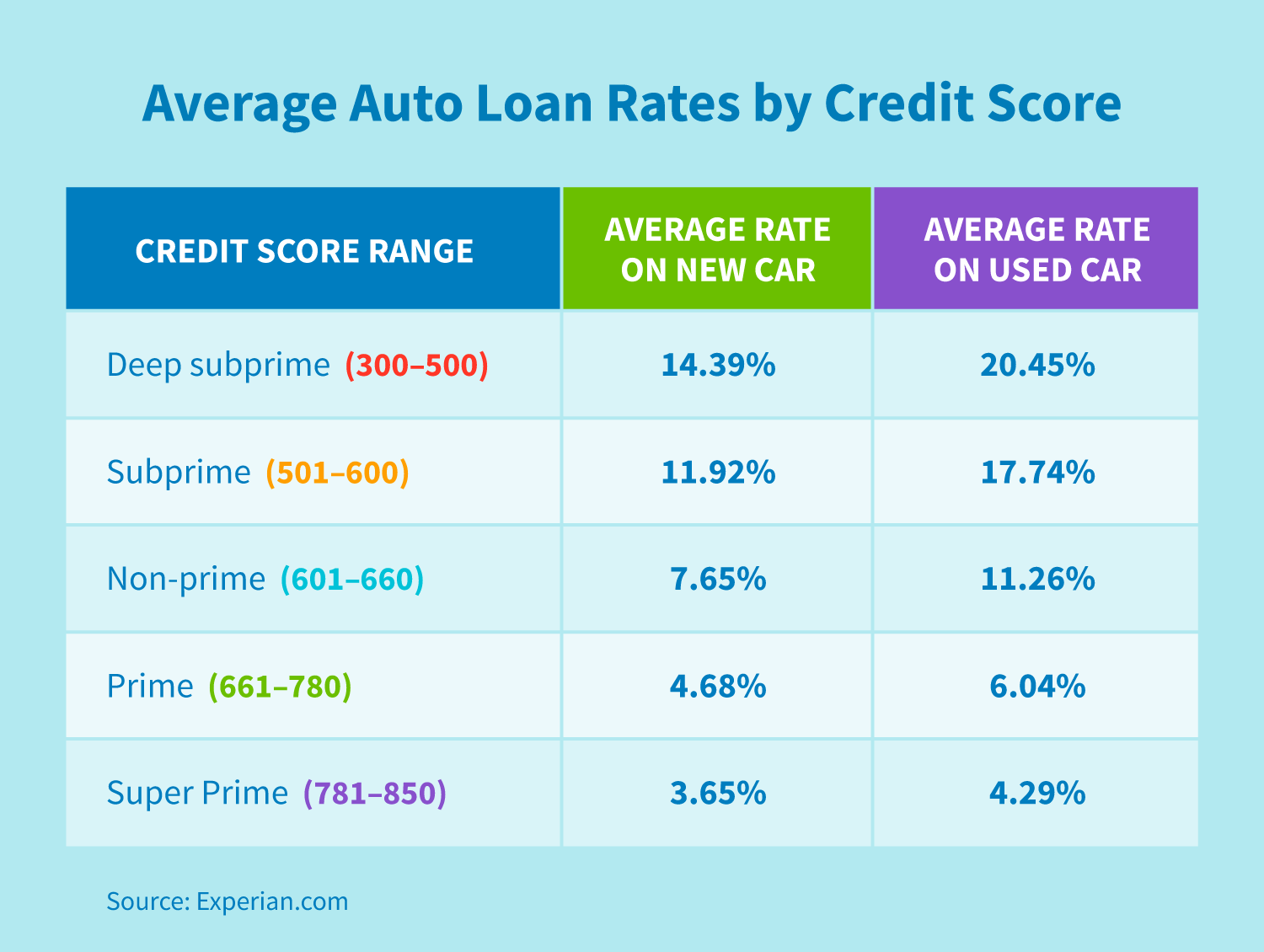
Your credit score is arguably the single most important determinant of your auto loan interest rate. Lenders use it as a snapshot of your financial reliability and history of debt repayment. A higher credit score (generally 700+) indicates a lower risk borrower, allowing you to qualify for the most competitive rates. Borrowers with excellent credit might see rates as low as 0-3% on new cars, especially with manufacturer incentives.
Conversely, a lower credit score (below 600) signals higher risk, leading to significantly higher interest rates, often in the double digits. This is to compensate the lender for the increased likelihood of late payments or default. It’s always advisable to check your credit score and report well in advance of applying for a loan, allowing time to correct any errors or improve your score if necessary.
Loan Term and Down Payment: Strategic Choices
The loan term, or the length of time you have to repay the loan, also impacts your interest rate. Shorter loan terms (e.g., 36 or 48 months) generally come with lower interest rates because the lender’s money is tied up for a shorter period, reducing their risk. However, shorter terms mean higher monthly payments. Longer terms (e.g., 60 or 72 months) often carry higher interest rates but result in lower monthly payments, making the car more “affordable” on a month-to-month basis, though you’ll pay more in total interest over the life of the loan.
A down payment also plays a critical role. A larger down payment reduces the amount you need to borrow, thereby lowering the lender’s risk exposure. This often translates to a lower interest rate offer. Furthermore, a substantial down payment can help you avoid being “upside down” on your loan (owing more than the car is worth), especially given a car’s rapid initial depreciation. Experts generally recommend putting down at least 10-20% for a new car and 10% for a used car if possible.
Vehicle Type and Age: Risk Assessment
The type and age of the vehicle you’re purchasing directly influence the loan’s risk profile for the lender. As mentioned, new cars typically command lower rates due to their higher initial value and warranty coverage. Older, higher-mileage used cars, however, present a greater risk of mechanical failure and faster depreciation, leading lenders to apply higher interest rates to these loans. Luxury or high-performance vehicles, which might be more expensive to repair or insure, can also sometimes influence rates or require specific lending criteria.
Lender Type: Dealerships vs. Banks vs. Credit Unions
Where you secure your loan can also affect the rate you receive.
- Dealerships often offer convenient one-stop shopping and may provide promotional rates directly from manufacturers (subsidized rates as low as 0% or 0.9%). However, their standard rates might be higher if you don’t qualify for special offers, and they may mark up rates from their lending partners.
- Banks are traditional lenders known for competitive rates, especially for borrowers with strong credit. They offer a wide range of loan products and often have pre-approval processes.
- Credit Unions are member-owned financial institutions known for often offering some of the lowest interest rates due to their non-profit structure. They prioritize member benefits over shareholder profits, making them an excellent place to check for pre-approvals.

It’s always wise to get pre-approved from at least two different independent lenders (banks or credit unions) before stepping foot in a dealership. This gives you a benchmark rate and strengthens your negotiating position.
Current Auto Interest Rate Landscape: Today’s Snapshot
As of early 2024, the auto loan interest rate landscape reflects the broader economic trends of the past year. Following aggressive interest rate hikes by the Federal Reserve aimed at combating inflation, borrowing costs across the board have risen significantly compared to pre-2022 levels.
General Market Trends and Averages
While specific rates vary widely based on individual borrower profiles, general market averages provide a useful benchmark. For new car loans, borrowers with excellent credit (780+) might see rates ranging from 3.5% to 6.5% APR for a 60-month loan. Those with good credit (660-779) could expect rates closer to 6.0% to 9.0% APR.
For used car loans, which inherently carry more risk, rates are typically higher. Borrowers with excellent credit might find rates between 4.5% to 8.5% APR, while those with good credit could look at 8.0% to 12.0% APR or more, depending on the car’s age and condition.
Subprime borrowers (credit scores below 600) often face considerably higher rates, potentially ranging from 15% to 25% APR or even higher, underscoring the critical importance of a healthy credit score.
Impact of Recent Economic Shifts
The past two years have seen a period of high inflation followed by aggressive monetary policy tightening. The Federal Reserve’s consistent increases to the federal funds rate throughout 2022 and 2023 have directly translated to higher costs for all forms of borrowing, including auto loans. While inflation appears to be cooling, and the Fed may eventually pivot to rate cuts, the current environment means that the “historically low” rates of the pandemic era are largely a thing of the past. Borrowers today should expect to pay more in interest than they would have a few years ago. Supply chain issues, though easing, have also kept vehicle prices elevated, meaning consumers are financing larger amounts at higher rates, further increasing total costs.
Strategies to Secure the Best Auto Loan Rate
Given the current rate environment, being proactive and strategic is more important than ever to secure the most favorable auto loan terms.
Boosting Your Credit Score
The best long-term strategy is to improve your credit score. Pay all bills on time, reduce outstanding debt, especially on credit cards, and avoid opening new lines of credit just before applying for an auto loan. Check your credit report for errors and dispute any inaccuracies. Even a modest improvement in your score can move you into a better rate tier, potentially saving you thousands over the life of the loan.
Shopping Around for Lenders
Never accept the first loan offer you receive, especially if it’s from a dealership. Get pre-approved from multiple lenders—banks, credit unions, and online lenders—before you even visit a dealership. This allows you to compare offers based on APR, not just the monthly payment. Having a pre-approval in hand gives you leverage and the confidence to negotiate with the dealership’s finance department or simply choose the best external offer. These inquiries within a short window (typically 14-45 days, depending on the scoring model) are usually grouped as a single hard inquiry, minimizing the impact on your score.
Negotiation Tactics at the Dealership
When at the dealership, negotiate the car price first, separate from the financing. Once you’ve agreed on a price for the vehicle, then discuss financing. Present your best pre-approval offer and see if the dealership can beat it. Dealers often have relationships with various lenders and may be able to secure a better rate or offer manufacturer incentives. Be wary of focusing solely on the monthly payment; a lower monthly payment over a longer term often means paying significantly more in total interest. Always ask for the total cost of the loan, including all interest.
Refinancing Options
If you already have an auto loan but market rates have fallen, or your credit score has significantly improved since you took out the loan, refinancing could be an excellent option. Refinancing involves taking out a new loan to pay off your existing one, ideally at a lower interest rate, which can reduce your monthly payments and/or the total interest paid. It’s especially beneficial if you initially financed with a high-interest loan (e.g., as a subprime borrower) and have since established a better credit history.
The Long-Term Impact of Your Auto Loan
Understanding auto interest rates isn’t just about the immediate purchase; it’s about recognizing the long-term financial implications of your decision.
Total Cost of Ownership
The interest rate profoundly affects the total cost of ownership of your vehicle. A higher interest rate means you’ll pay substantially more over the life of the loan than just the car’s sticker price. For example, on a $30,000 car loan over 60 months, a 3% APR might cost you around $2,300 in interest, while a 7% APR could cost over $5,500. This difference of $3,200 could be used for maintenance, insurance, or other financial goals. Always calculate the total amount you’ll pay (principal + interest) before committing to a loan.
Budgeting and Financial Planning
Your auto loan payment will be a fixed expense in your monthly budget. A high interest rate not only increases this payment but also ties up more of your discretionary income, potentially limiting your ability to save, invest, or pay down other debts. Factor in not just the loan payment but also insurance, fuel, maintenance, and registration when assessing affordability. A financially responsible approach involves aligning your auto loan with your overall financial goals, ensuring it doesn’t derail your other savings or investment plans.
When to Consider a Lower-Rate Refinance
Refinancing isn’t just for those with poor initial rates. Even a 1-2 percentage point drop in your interest rate can save you money, especially on large loan balances or longer terms. Regularly check current rates and your credit score. If your score has improved, or if prevailing market rates have dropped significantly since you obtained your loan, refinancing could provide substantial savings. Tools and calculators are readily available online to help you estimate potential savings from refinancing.
In conclusion, “what are auto interest rates today” is a question with a complex answer, influenced by global economics and deeply personalized by your financial profile. By understanding these dynamics and employing strategic approaches to secure the best possible terms, you can ensure your next vehicle purchase is a financially smart move, rather than a costly mistake.
aViewFromTheCave is a participant in the Amazon Services LLC Associates Program, an affiliate advertising program designed to provide a means for sites to earn advertising fees by advertising and linking to Amazon.com. Amazon, the Amazon logo, AmazonSupply, and the AmazonSupply logo are trademarks of Amazon.com, Inc. or its affiliates. As an Amazon Associate we earn affiliate commissions from qualifying purchases.