
Understanding the interest rate on a loan is not merely a matter of financial literacy; it’s a cornerstone of sound personal and business finance. Whether you’re considering a mortgage, an auto loan, a personal line of credit, or a business expansion loan, the interest rate dictates the true cost of borrowing. It’s the metric that can mean the difference between financial freedom and prolonged debt, impacting everything from your monthly budget to your long-term wealth accumulation. Far too often, borrowers focus solely on the monthly payment, overlooking the cumulative interest that quietly but significantly inflates the total repayment amount.
This guide aims to demystify the process of figuring out interest rates on various loans. We’ll delve into the fundamental concepts, explore practical methods for identifying and calculating rates, examine the crucial difference between a stated interest rate and the Annual Percentage Rate (APR), and finally, equip you with strategies to optimize your borrowing costs. By the end, you’ll be empowered to approach loan decisions with clarity, confidence, and a critical eye for detail, ensuring you make choices that align with your financial well-being.
Decoding the Core: What Exactly is an Interest Rate?
At its simplest, an interest rate is the cost of borrowing money. It’s the fee lenders charge for the use of their capital, typically expressed as a percentage of the principal amount over a specific period, usually annually. This percentage represents the compensation the lender receives for the risk and opportunity cost associated with lending you money instead of investing it elsewhere. However, the simplicity of this definition often masks layers of complexity inherent in real-world lending scenarios.
Interest Rate vs. Annual Percentage Rate (APR): The Crucial Distinction
While often used interchangeably in casual conversation, the interest rate and the Annual Percentage Rate (APR) are distinct and critically important concepts when evaluating a loan.
- Interest Rate: This is the base percentage rate charged on the principal amount of the loan. It determines the periodic interest payment you owe on the outstanding balance. For example, a 5% interest rate on a $10,000 loan means you’d pay $500 in interest for that year if no other fees were involved and the principal remained constant.
- Annual Percentage Rate (APR): The APR provides a more comprehensive measure of the cost of borrowing because it includes not only the interest rate but also most other fees associated with the loan, such as origination fees, discount points, mortgage insurance (for some loans), and other charges. Federal regulations mandate that lenders disclose the APR to give consumers a “true cost” comparison. Think of APR as the total annualized cost of your loan, expressed as a single percentage. This makes it an invaluable tool for comparing different loan offers, as it accounts for all mandatory charges rolled into the loan. A loan with a lower interest rate might actually have a higher APR if it comes with substantial fees, making it ultimately more expensive.
The Language of Loans: Key Terms You Must Know
To navigate the world of interest rates effectively, familiarizing yourself with key loan terminology is essential:
- Principal: This is the initial amount of money you borrow, excluding interest and fees. It’s the foundation upon which interest is calculated.
- Loan Term: The duration over which you agree to repay the loan, typically expressed in months or years. A longer loan term generally means lower monthly payments but often results in paying more interest over the life of the loan.
- Amortization: The process of paying off a debt over time through regular, equal payments. Each payment consists of both principal and interest, with the proportion changing over the loan’s life. Early in the loan term, a larger portion of your payment goes towards interest; later, more goes towards principal.
- Fixed vs. Variable Rate: A fixed-rate loan maintains the same interest rate throughout its entire term, providing predictable payments. A variable-rate loan (also known as an adjustable-rate loan) has an interest rate that can change periodically based on a benchmark index, leading to fluctuating payments.
Underlying Factors: What Drives Your Specific Rate?
Several critical factors influence the interest rate you’re offered on a loan:
- Credit Score: Your credit score is perhaps the most significant determinant. A higher credit score signals lower risk to lenders, typically qualifying you for lower interest rates. Conversely, a lower score suggests higher risk, leading to higher rates.
- Market Conditions: Broader economic factors, such as the Federal Reserve’s benchmark interest rates, inflation, and the overall supply and demand for credit, heavily influence prevailing loan rates. When benchmark rates rise, so do consumer loan rates.
- Loan Type: Different types of loans carry different inherent risks and, therefore, different rate structures. For instance, secured loans (like mortgages or auto loans, backed by collateral) generally have lower rates than unsecured loans (like personal loans or credit cards).
- Lender Risk Assessment: Beyond your credit score, lenders assess your overall financial stability, debt-to-income ratio, employment history, and the loan-to-value (LTV) ratio (for secured loans) to determine their perceived risk and, consequently, your interest rate.
Practical Approaches: Unearthing Your Loan’s Stated Rate
For most consumer and business loans, the interest rate (and critically, the APR) will be clearly stated. Knowing where to look and what documents to scrutinize is your first step.
The Loan Document Deep Dive: Your Primary Source of Truth
When you apply for and are approved for a loan, you will receive a series of documents detailing the terms and conditions. These are your most reliable source for finding the interest rate:
- Loan Agreement/Promissory Note: This legally binding document outlines all the specific terms of your loan, including the principal amount, loan term, payment schedule, and, most importantly, the stated interest rate.
- Truth in Lending (TIL) Disclosure Statement: For most consumer loans, the Truth in Lending Act (TILA) requires lenders to provide a disclosure statement that clearly outlines the APR, finance charge (total dollar amount of interest and other fees), and total payments. This document is designed to help consumers understand the full cost of borrowing.
- Closing Disclosure (for Mortgages): For mortgage loans, the Closing Disclosure is a comprehensive five-page form that provides final details about the mortgage loan you have selected, including the interest rate, APR, monthly payments, and closing costs.
Always read these documents thoroughly before signing. If anything is unclear, ask the lender for clarification.
Demystifying Fixed vs. Variable Rates
As mentioned, loans can have either fixed or variable interest rates. It’s crucial to identify which type of rate applies to your loan:
- Fixed-Rate Loans: The interest rate stated in your loan documents will remain constant for the entire duration of the loan. This provides predictability in your monthly payments, making budgeting easier.
- Variable-Rate Loans: For these loans (often called Adjustable-Rate Mortgages or ARMs), the initial interest rate is typically fixed for a period (e.g., 3, 5, or 7 years), after which it adjusts periodically (e.g., annually) based on a specified index (e.g., SOFR, Prime Rate) plus a margin. Your loan documents will specify the initial fixed period, the adjustment frequency, the index used, and any interest rate caps (limits on how much the rate can increase or decrease per adjustment period and over the life of the loan). Understanding these parameters is vital for projecting future payment changes.
Initial Disclosure Statements: What to Look For
Before you even commit to a loan, lenders are required to provide estimates. For mortgages, you’ll receive a Loan Estimate form within three business days of applying. This document provides a good-faith estimate of your interest rate, APR, monthly payments, and closing costs. While not final, it’s an excellent tool for comparing offers from different lenders and identifying the estimated rate. For other loans, similar preliminary disclosure statements may be provided, offering an early glimpse into the proposed interest rate.
Beyond the Statement: Calculating the Implied Interest Rate
Sometimes, you might need to determine the interest rate when only other variables (like principal, payment, and term) are known, or you want to verify a stated rate. While straightforward for simple interest, it becomes more complex for amortized loans.
Simple Interest Loans: A Straightforward Formula
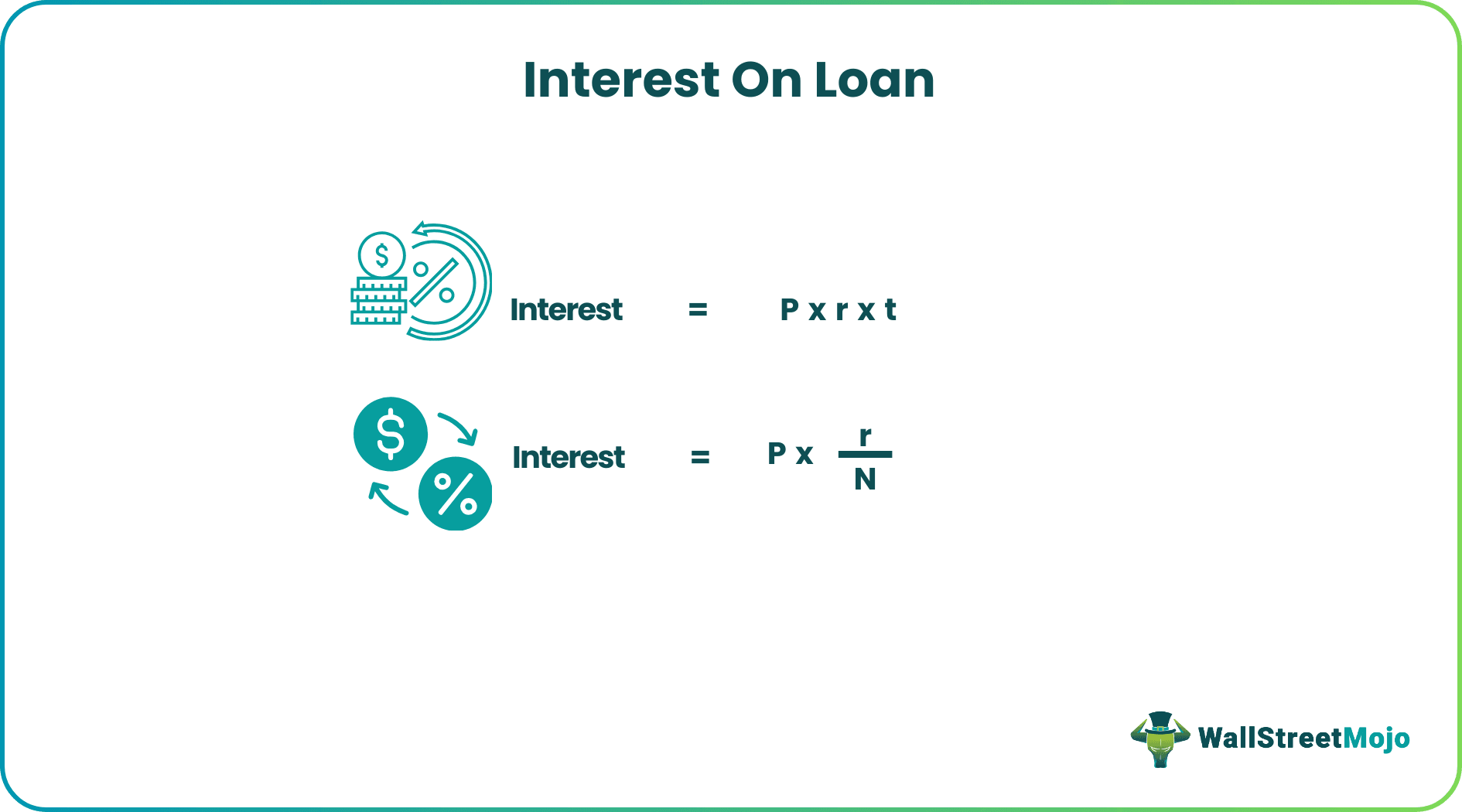
Simple interest is calculated only on the principal amount of a loan. It’s common for short-term loans or specific types of bonds. The formula for simple interest is:
I = P * R * T
Where:
- I = Total Interest Paid
- P = Principal Loan Amount
- R = Annual Interest Rate (as a decimal)
- T = Loan Term (in years)
To find the interest rate (R), you can rearrange the formula:
R = I / (P * T)
Example: If you borrowed $1,000 (P), paid $50 in interest (I) over 1 year (T), your simple interest rate (R) would be: R = $50 / ($1,000 * 1) = 0.05 or 5%.
The Complexity of Amortized Loans: When Manual Calculation Gets Tricky
Most common loans (mortgages, auto loans, personal loans) are amortized loans. This means that each payment includes both principal and interest, and the interest is calculated on the remaining principal balance, which decreases over time. Manually calculating the precise interest rate for an amortized loan given only the principal, monthly payment, and loan term is mathematically complex. It involves solving for ‘r’ (the interest rate per period) in a present value of an annuity formula, which usually requires iterative methods or specialized financial calculators.

The formula for the monthly payment (PMT) of an amortized loan is:
PMT = [ P * r * (1 + r)^n ] / [ (1 + r)^n – 1 ]
Where:
- PMT = Monthly Payment
- P = Principal Loan Amount
- r = Monthly Interest Rate (annual rate divided by 12)
- n = Total Number of Payments (loan term in years multiplied by 12)
Solving this equation for ‘r’ directly is not algebraically straightforward. This is why we rely on financial tools.
Leveraging Technology: Online Calculators, Spreadsheets, and Financial Apps
Given the complexity, leveraging technology is the most practical and accurate way to determine the implied interest rate for amortized loans:
- Online Loan Calculators: Numerous websites offer free loan calculators. You typically input the principal, loan term, and monthly payment, and the calculator will output the implied interest rate. Be sure to use calculators specific to the loan type (e.g., mortgage calculators, auto loan calculators).
- Spreadsheet Software (Excel, Google Sheets): These are powerful tools for financial calculations. The
RATEfunction in Excel or Google Sheets is specifically designed for this purpose.RATE(nper, pmt, pv, [fv], [type], [guess])nper: Total number of payments (e.g., 30 years * 12 months = 360)pmt: Payment made each period (must be negative as it’s an outflow)pv: Present value or principal amount (must be positive as it’s an inflow from the lender)fv: Future value (optional, usually 0 for loans)type: When payments are due (0 for end of period, 1 for beginning; optional, usually 0)guess: Your guess for the rate (optional, can help if Excel struggles)
- Example: If
P = $200,000,PMT = -$1,073.64,nper = 240(20 years * 12 months), the formula=RATE(240, -1073.64, 200000)would return approximately0.005, which is the monthly rate. Multiply this by 12 to get the annual interest rate (e.g.,0.005 * 12 = 0.06or 6%).
- Financial Apps and Websites: Many personal finance apps and banking websites offer integrated loan calculators that can help you quickly determine or verify interest rates.
The True Cost: Understanding APR and Hidden Fees
Even with a stated interest rate, and even after calculating an implied rate, it’s crucial to understand the “true cost” of your loan, which often extends beyond the simple interest percentage. This is where the APR becomes indispensable.
Why APR is Your Best Friend for Comparison
As previously discussed, the APR incorporates the interest rate and most other mandatory costs associated with securing the loan. This means it offers a standardized way to compare the cost of borrowing across different lenders, even if they have different fee structures.
Imagine two loan offers:
- Loan A: Interest rate of 5.0%, but with a 2% origination fee.
- Loan B: Interest rate of 5.25%, but with no origination fee.
Without looking at the APR, Loan A might seem cheaper. However, the origination fee in Loan A increases the overall cost. The APR would effectively incorporate that 2% fee, allowing for an “apples-to-apples” comparison. Loan A’s APR might be 5.3% while Loan B’s is 5.25%, revealing that Loan B is actually the more affordable option when all mandatory costs are considered.
Unmasking Hidden Fees: Origination, Closing, Prepayment Penalties
Beyond the interest rate, be vigilant about other fees that can significantly impact your total cost of borrowing:
- Origination Fees: A fee charged by the lender for processing your loan application, often expressed as a percentage of the loan amount.
- Closing Costs: A broad category of expenses incurred when finalizing a loan, especially for mortgages. These can include appraisal fees, title insurance, attorney fees, recording fees, and more. While some are reflected in the APR, others may not be fully integrated or might be negotiable.
- Prepayment Penalties: Some loans include clauses that charge you a fee if you pay off the loan early. This can significantly offset the savings of early repayment, so always check for this.
- Late Payment Fees: Standard penalties for failing to make a payment on time.
- Service or Administrative Fees: Ongoing small charges for managing the loan account.
Always ask for a detailed breakdown of all fees and understand which ones are included in the APR and which are separate.
The Long-Term Impact: How Interest Rates Shape Your Financial Future
A seemingly small difference in interest rates can have a monumental impact over the life of a loan, particularly for large, long-term debts like mortgages. For example, on a $300,000, 30-year fixed mortgage:
- At a 6.0% interest rate, the total interest paid would be approximately $347,516.
- At a 5.5% interest rate, the total interest paid would be approximately $311,623.
That half-percentage point difference saves you over $35,000 in interest over 30 years. This illustrates why even marginal improvements in your interest rate are worth pursuing. It directly translates to more money in your pocket, which can be saved, invested, or used for other financial goals.
Strategic Maneuvers: Lowering Your Interest Rate and Optimizing Loan Costs
Knowing how to figure out your interest rate is just the beginning. The next step is actively working to secure the best possible rates and manage your loan costs effectively.
Building a Stronger Credit Profile
Your credit score is paramount. Before applying for a loan, take steps to improve your creditworthiness:
- Pay Bills on Time: Payment history is the most significant factor in your credit score.
- Reduce Debt: Lowering your credit utilization ratio (how much credit you’re using vs. available credit) can boost your score.
- Avoid New Credit Inquiries: Don’t open multiple new credit accounts in a short period.
- Correct Errors on Your Credit Report: Regularly review your credit reports for inaccuracies that could be dragging down your score.
Refinancing: When and Why it Makes Sense
Refinancing involves taking out a new loan to pay off an existing one. It’s often done to secure a lower interest rate, which can significantly reduce your monthly payments or the total interest paid over the life of the loan. Refinancing is a strategic move when:
- Interest Rates Have Dropped: If market rates are significantly lower than your current loan rate.
- Your Credit Score Has Improved: A better credit score can qualify you for more favorable terms.
- You Want to Change Loan Terms: To shorten the loan term (pay less interest overall) or lengthen it (reduce monthly payments).
- You Want to Change Loan Type: For example, switching from a variable-rate to a fixed-rate loan for predictability.
Be sure to factor in any refinancing costs (like closing costs) when deciding if it’s worthwhile.
Negotiation Tactics with Lenders
Don’t be afraid to negotiate, especially if you have a strong credit profile or have received competitive offers from other lenders. Lenders want your business, and they may be willing to offer a slightly lower rate or waive certain fees to win you over.
- Gather Multiple Offers: Apply to several lenders to get a range of rates.
- Highlight Your Strengths: Point out your excellent credit score, stable income, or low debt-to-income ratio.
- Ask for Fee Reductions: Inquire if any origination fees, appraisal fees, or other costs can be reduced or eliminated.

Avoiding High-Interest Traps: The Perils of Predatory Lending
Be extremely cautious of loans with excessively high interest rates, unclear terms, or aggressive marketing tactics. Payday loans, title loans, and some subprime loans can carry APRs in the triple digits, trapping borrowers in a cycle of debt. Always scrutinize the APR and total cost of borrowing. If an offer seems too good to be true, or if you feel pressured, walk away. Prioritize reputable lenders who are transparent about all costs.
By diligently understanding how interest rates are determined, utilizing available tools for calculation, and adopting proactive strategies to manage your financial profile, you transform from a passive borrower into an informed financial decision-maker. This mastery over loan costs is not just about saving money; it’s about building a robust financial future.
aViewFromTheCave is a participant in the Amazon Services LLC Associates Program, an affiliate advertising program designed to provide a means for sites to earn advertising fees by advertising and linking to Amazon.com. Amazon, the Amazon logo, AmazonSupply, and the AmazonSupply logo are trademarks of Amazon.com, Inc. or its affiliates. As an Amazon Associate we earn affiliate commissions from qualifying purchases.