
Purchasing a car is often one of the most significant financial decisions an individual makes, second only to buying a home. While the sticker price of a vehicle garners most of the attention, the interest rate on your car loan plays an equally, if not more, crucial role in determining the total cost of your investment. Understanding how to calculate, interpret, and optimize this rate is not just about saving money; it’s about empowering yourself with financial literacy to make informed choices that positively impact your long-term economic well-being. This comprehensive guide will demystify car loan interest rates, providing you with the knowledge and tools to navigate the complexities of auto financing with confidence.

Understanding the Fundamentals of Car Loan Interest
Before you can effectively figure out your car’s interest rate, it’s essential to grasp the foundational concepts that underpin how auto loans work and why interest is charged.
What is an Interest Rate?
At its core, an interest rate is the cost of borrowing money, expressed as a percentage of the principal amount. For car loans, this is typically represented as an Annual Percentage Rate (APR). The APR is a broader measure of the cost of borrowing, as it includes not just the nominal interest rate but also certain fees and charges associated with the loan, such as origination fees. It’s the most comprehensive figure to compare when evaluating different loan offers, as it reflects the true yearly cost of your financing. A higher APR means you pay more for the privilege of borrowing.
Why Does Your Interest Rate Matter?
The interest rate directly impacts two critical aspects of your car loan: your monthly payment and the total amount you will pay over the life of the loan. A seemingly small difference in interest rate – say, from 5% to 7% – can translate into hundreds or even thousands of dollars in extra costs over a typical 5-year loan term. For example, on a $30,000 loan over 60 months, a 5% APR results in total interest paid of approximately $3,984, while a 7% APR increases that to roughly $5,650. This difference of over $1,600 underscores why even marginal improvements in your interest rate are worth pursuing. It’s not just about affordability in the present; it’s about maximizing your financial resources for the future.
Key Factors Influencing Your Interest Rate
Several variables contribute to the interest rate lenders offer you. Understanding these factors can help you position yourself for the most favorable terms.
Your Credit Score
This is arguably the most significant determinant. Lenders use your credit score (e.g., FICO Score) as a quick indicator of your creditworthiness – your likelihood of repaying the loan on time. Borrowers with excellent credit (typically 720+) are perceived as lower risk and therefore qualify for the lowest interest rates. Those with fair or poor credit will face higher rates to compensate the lender for the increased risk.
Loan Term (Length of Loan)
The length of your repayment period also influences the rate. Shorter loan terms (e.g., 36 or 48 months) generally come with lower interest rates because the lender’s money is tied up for a shorter period, reducing their risk. Longer terms (e.g., 72 or 84 months) often carry higher rates, even though they result in lower monthly payments, because the overall risk to the lender increases over a longer timeframe.
Down Payment Amount
A larger down payment reduces the amount you need to borrow, which in turn reduces the lender’s risk. This can often translate into a lower interest rate, as you have more equity in the vehicle from the outset.
Debt-to-Income (DTI) Ratio
Lenders assess your DTI ratio to understand how much of your gross monthly income goes towards debt payments. A lower DTI ratio indicates that you have more disposable income to cover new loan payments, making you a more attractive borrower.
Vehicle Age and Type
New cars generally qualify for lower interest rates than used cars. This is because new cars hold their value better initially, and the depreciation risk for the lender is lower. Certain types of vehicles, especially those deemed less reliable or with very high depreciation rates, might also attract higher interest rates.
Market Conditions and Lender Specifics
Broader economic factors, such as the federal funds rate set by central banks, influence prevailing interest rates. Additionally, different lenders (banks, credit unions, online lenders, dealership finance departments) have varying risk appetites and pricing strategies, which is why shopping around is crucial.
Practical Steps to Determine Your Car Loan Interest Rate
Once you’ve secured a car loan, or if you’re evaluating an existing one, several methods can help you pinpoint the exact interest rate you’re paying.
Reviewing Your Loan Agreement
The most definitive source for your interest rate is your official loan agreement or promissory note. This legally binding document will clearly state your Annual Percentage Rate (APR). Look for sections detailing the “Finance Charge,” “Annual Percentage Rate (APR),” or “Interest Rate.” It’s critical to distinguish between the nominal interest rate and the APR; always use the APR for accurate comparison and understanding of your total borrowing cost. If your loan involves simple interest, the agreement will likely specify how interest accrues daily on the remaining principal.
Using Online Loan Calculators
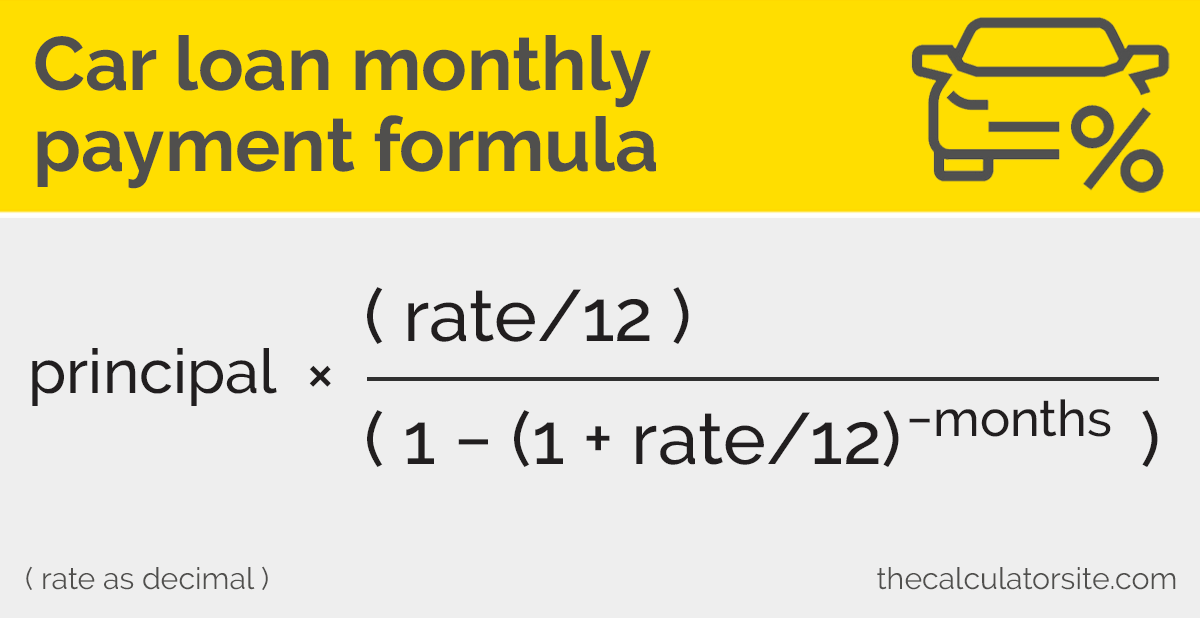
If you want to estimate an interest rate for a potential loan, or if you’ve misplaced your original documentation, online loan calculators can be invaluable. These tools typically require you to input the total loan amount, the number of payments (loan term in months), and your estimated monthly payment. The calculator can then work backward to approximate the interest rate. While useful for quick estimates, remember that these calculators don’t account for all specific fees that might be included in your APR. However, if you input your exact monthly payment, loan amount, and term from an existing loan, it can give you a very accurate approximation of your current APR.
Contacting Your Lender
When in doubt, directly contacting your loan servicer (the bank, credit union, or financial institution that holds your loan) is the most straightforward approach. Their customer service representatives can provide you with your precise APR, the remaining principal balance, and any other relevant loan details. Have your loan account number ready to expedite the process.
Analyzing Your Monthly Statements
While not always explicitly stated as the APR, your monthly loan statements often provide enough information to calculate it. Statements will typically show your current principal balance, the amount of your last payment, and how much of that payment went towards principal and how much towards interest. Over several statements, you can observe the declining principal and the interest component, which can be used to back-calculate an approximate interest rate, especially if you know the original loan amount and term.

Strategies to Secure a Favorable Interest Rate
Proactively working to improve your financial standing can significantly lower the interest rate you qualify for, saving you a substantial amount of money over the life of the loan.
Boost Your Credit Score
This is a long-term strategy but highly effective. Regularly pay all your bills on time, keep your credit utilization low (use less than 30% of your available credit), avoid opening too many new credit accounts at once, and dispute any errors on your credit report. A higher credit score signals less risk to lenders, making you eligible for their best rates.
Make a Larger Down Payment
The more money you put down upfront, the less you need to borrow. A larger down payment reduces the loan-to-value (LTV) ratio, making the loan less risky for the lender and often resulting in a lower interest rate. It also immediately reduces the total interest you’ll pay simply because you’re financing a smaller amount.
Choose a Shorter Loan Term
While a shorter term means higher monthly payments, it typically comes with a lower interest rate. This is because the lender takes on less risk over a shorter period. If you can comfortably afford the higher monthly payments, a shorter term is almost always more financially advantageous in the long run.
Shop Around for Lenders
Never accept the first loan offer you receive, especially from a dealership without comparing. Banks, credit unions, and online lenders often have competitive rates. Get pre-approved by multiple lenders before you visit a dealership. This gives you leverage and a benchmark interest rate against which to compare any financing offered by the dealer. Credit unions, in particular, are known for offering some of the most competitive auto loan rates.
Consider Refinancing an Existing Loan
If market rates have dropped, your credit score has improved since you first took out the loan, or if you simply found a better offer, refinancing your car loan can significantly lower your interest rate. This involves taking out a new loan to pay off your existing one, ideally with more favorable terms. Be mindful of any prepayment penalties on your original loan or new loan origination fees, though these are less common with auto loans.
Decoding Common Interest Rate Scenarios and Pitfalls
Navigating the world of car financing requires an understanding of not just how to calculate rates, but also how to interpret different scenarios and avoid common traps.
Dealership “Special” Rates vs. Your Actual Rate
Dealerships often advertise alluringly low “special” rates, sometimes as low as 0% APR. While these can be legitimate, they are usually reserved for buyers with impeccable credit on specific new car models, and often in lieu of other incentives (like cash rebates). For most buyers, the interest rate offered will be higher. Always scrutinize these offers and understand if you truly qualify, or if they are simply a marketing tactic designed to get you in the door.
The Impact of Add-ons and Extended Warranties
Be cautious of dealership add-ons like extended warranties, rustproofing, paint protection, or VIN etching, especially if they are rolled into your car loan. Financing these extra products at your loan’s interest rate can significantly increase their cost over the life of the loan. Evaluate these add-ons separately and consider paying for them upfront if you genuinely want them, or purchasing them from third-party providers who often offer them at a lower cost.
Understanding Variable vs. Fixed Rates
While most car loans are issued with fixed interest rates (meaning your rate and monthly payment remain constant throughout the loan term), it’s important to understand the alternative. Variable rates fluctuate with a benchmark index (like the prime rate), which means your payments could go up or down. For car loans, fixed rates are almost universally preferred as they provide predictability and stability for your budget.
Pre-qualification vs. Hard Inquiry
When shopping for rates, distinguish between pre-qualification and a hard inquiry. Pre-qualification uses a “soft pull” on your credit, which doesn’t affect your score and gives you an idea of the rates you might receive. A formal loan application involves a “hard inquiry,” which can temporarily ding your credit score. However, most credit scoring models treat multiple hard inquiries for the same type of loan (like an auto loan) within a short period (typically 14-45 days) as a single inquiry, recognizing that consumers shop for the best rates.
The Long-Term Financial Impact of Your Interest Rate
Beyond the immediate monthly payment, your car loan’s interest rate has profound long-term implications for your financial health and future decisions.
Total Cost of Ownership Beyond the Sticker Price
Many consumers focus solely on the vehicle’s purchase price. However, the true cost of ownership includes not just the principal but also the total interest paid, insurance, maintenance, fuel, and depreciation. A high interest rate inflates the total cost paid for the car, reducing the “value” you get for your money and diverting funds that could otherwise be saved or invested.
Building or Damaging Your Financial Health
Managing your car loan effectively by understanding and optimizing your interest rate contributes positively to your overall financial health. Paying a reasonable interest rate and making timely payments helps build a strong credit history, which is crucial for future borrowing (like mortgages) and even for things like apartment rentals or insurance premiums. Conversely, being saddled with a high-interest loan can strain your budget, lead to missed payments, and damage your credit, creating a negative financial spiral.
Empowering Future Financial Decisions
Learning how to decipher interest rates and navigate the financing process for a car provides invaluable experience that translates to other major financial decisions. The principles of shopping around, understanding terms, and improving your creditworthiness are universal across different types of loans and investments. This knowledge empowers you to approach future financial commitments with confidence and a critical eye, ensuring you always secure the best possible terms for your money.
Conclusion
Understanding “how to figure out the interest rate on a car” is a cornerstone of responsible financial management. It’s not just a mathematical exercise but a critical skill that impacts your monthly budget, total cost of vehicle ownership, and long-term financial stability. By knowing the factors that influence your rate, actively taking steps to improve your creditworthiness, diligently shopping for the best loan terms, and scrutinizing all aspects of a loan offer, you can save thousands of dollars over the life of your car loan. Empower yourself with this knowledge, and transform the often-daunting process of car buying into a strategic financial win.
aViewFromTheCave is a participant in the Amazon Services LLC Associates Program, an affiliate advertising program designed to provide a means for sites to earn advertising fees by advertising and linking to Amazon.com. Amazon, the Amazon logo, AmazonSupply, and the AmazonSupply logo are trademarks of Amazon.com, Inc. or its affiliates. As an Amazon Associate we earn affiliate commissions from qualifying purchases.