
The question of Bitcoin’s creator resonates far beyond mere curiosity; it delves into the foundational principles of a revolutionary financial asset. Unlike traditional currencies or corporations, Bitcoin emerged from the digital ether, launched by an anonymous entity or group known only as Satoshi Nakamoto. This deliberate anonymity is not just a footnote in Bitcoin’s history; it is a cornerstone of its financial philosophy and has profound implications for its value, security, and perception as a global financial tool.
The Genesis of an Anonymous Financial Revolution
Bitcoin’s inception on January 3, 2009, with the mining of the genesis block, marked the birth of a decentralized digital currency designed to operate outside the control of governments, banks, or any single central authority. This fundamental characteristic, crucial for its role as “digital gold” or an alternative financial system, is deeply intertwined with the unknown identity of its creator, Satoshi Nakamoto.
The Whitepaper and Genesis Block: An Anonymous Launchpad
Before the genesis block, Satoshi Nakamoto published the Bitcoin whitepaper in October 2008, titled “Bitcoin: A Peer-to-Peer Electronic Cash System.” This nine-page document meticulously outlined the cryptographic proof-of-work system, the blockchain, and the overarching goal of enabling online payments to be sent directly from one party to another without going through a financial institution. The paper was released on a cryptography mailing list, signaling its intent to appeal to a technically astute audience interested in secure, private transactions.
The very first block mined contained a hidden message in its coinbase transaction: “The Times 03/Jan/2009 Chancellor on brink of second bailout for banks.” This message, widely interpreted as both a timestamp and a commentary on the prevailing financial crisis, subtly underscored the economic and political motivations behind Bitcoin’s creation. It suggested a profound distrust in the traditional banking system and hinted at Bitcoin’s aspiration to offer a viable alternative during times of financial instability – a sentiment that continues to drive significant investment in the asset today.
Why Anonymity Matters for a Digital Currency
Satoshi’s decision to remain anonymous is paramount to Bitcoin’s financial integrity and decentralization. If the creator were a known individual or entity, they would instantly become a single point of failure. This known creator could be pressured by governments, targeted by malicious actors, or even tempted to manipulate the system for personal gain, thereby undermining the very trustless nature that Bitcoin was designed to uphold.
For investors, the absence of a central figure head implies that there’s no CEO to lobby, no board to influence, and no central bank to dictate monetary policy. This absence ensures that Bitcoin’s supply schedule, governed by its immutable code, remains predictable and resistant to inflationary pressures from human intervention. This aspect is highly attractive to those seeking a hedge against traditional fiat currency devaluation and a truly independent store of value. The financial strength of Bitcoin, in part, lies in its leaderless structure, which is a direct consequence of Satoshi’s anonymity.
Decentralization and Trust: Core to Bitcoin’s Financial Model
The enduring anonymity of Satoshi Nakamoto has fortified Bitcoin’s core principle of decentralization. This characteristic is not merely a technical detail; it is a fundamental pillar of its financial model, shaping its utility as an investment and a monetary innovation.
Eliminating Central Authority in Money
Traditional financial systems are inherently centralized. Banks process transactions, governments issue currency, and regulatory bodies oversee markets. Each of these entities represents a point of control and potential failure, susceptible to corruption, mismanagement, or political influence. Bitcoin, by design, seeks to dismantle this hierarchy. Without a known creator to consult or control, the network operates purely on consensus rules enforced by its participants—miners, nodes, and users.
This elimination of central authority is vital for Bitcoin’s appeal as “sound money.” It ensures that no single entity can unilaterally decide to print more Bitcoin, censor transactions, or confiscate funds. For individuals and institutions looking to protect their wealth from political instability, hyperinflation, or arbitrary financial controls, Bitcoin’s decentralized nature—born from its anonymous origin—presents a compelling financial sanctuary. It transforms a cryptographic innovation into a powerful economic tool for financial sovereignty.
The Investment Implications of a Leaderless System
From an investment perspective, Bitcoin’s leaderless system translates into several key advantages. First, it reduces counterparty risk. Investors do not need to trust a corporation’s management or a government’s fiscal responsibility. Their trust is placed in cryptography and a transparent, auditable ledger. Second, it fosters long-term stability in its monetary policy. The maximum supply of 21 million Bitcoin is hard-coded, and its issuance rate halves approximately every four years (the “halving” events), creating a predictable scarcity that underpins its value proposition.
This predictability, directly flowing from the immutable rules set by an absent founder, is a stark contrast to fiat currencies where central banks can alter money supply at will. For institutional investors and long-term holders, this makes Bitcoin a more reliable store of value, akin to digital gold, rather than a speculative tech stock. The absence of a central figure ensures that economic policy decisions are not subject to human error or political agenda, bolstering confidence in its long-term financial viability.
The Speculation and the Search: Impact on Market Psychology
The allure of Satoshi’s identity has sparked intense speculation, creating a narrative that frequently intersects with market sentiment and investor behavior. Every potential revelation, however fleeting, sends ripples through the cryptocurrency markets, demonstrating the powerful psychological impact of the creator’s ghost.

From Hal Finney to Nick Szabo: The Candidates and Their Financial Ties
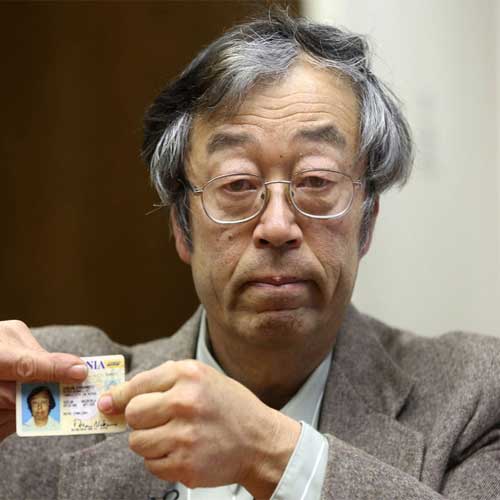
Over the years, numerous individuals have been posited as potential Satoshi Nakamoto, each with varying degrees of circumstantial evidence. Hal Finney, a renowned cryptographer and the recipient of the first Bitcoin transaction, was a prominent early candidate. His technical prowess, early engagement with Bitcoin, and proximity to its launch made him a credible figure. However, Finney consistently denied being Satoshi before his passing in 2014, and cryptographic analysis of writing styles generally pointed away from him.
Another strong contender is Nick Szabo, a computer scientist known for his work on “bit gold,” a precursor to Bitcoin. Szabo’s intellectual contributions to digital currency concepts and his deep understanding of cryptography and economics align closely with the vision articulated in the Bitcoin whitepaper. Financial analysts and researchers have often cited the similarities between Szabo’s writing style and Satoshi’s, fueling sustained speculation.
More recently, figures like Craig Wright, an Australian computer scientist, have publicly claimed to be Satoshi Nakamoto. These claims have been met with widespread skepticism within the crypto community due to a lack of verifiable cryptographic proof. Such pronouncements, whether credible or not, often create temporary market volatility as investors react to the possibility of a known entity suddenly having control or influence over the narrative of Bitcoin.
The Market’s Reaction to Creator Rumors
The financial markets, particularly the highly sensitive cryptocurrency market, react dynamically to any news or rumors surrounding Satoshi Nakamoto. When a new “Satoshi candidate” emerges, or an old one re-surfaces with a new claim, Bitcoin’s price can experience short-term fluctuations. If a credible individual were ever proven to be Satoshi, the implications would be enormous. Such an event could lead to a temporary surge in confidence (or fear), depending on the perceived intentions and character of the revealed creator.
However, the prevailing sentiment among seasoned investors and analysts is that even a definitive revelation of Satoshi’s identity might have less long-term impact than one might expect. The decentralization of Bitcoin is now so ingrained, and the network so robust, that the system would likely continue to function as intended, independent of its founder. The collective conviction in Bitcoin’s protocol and its financial value has largely surpassed the need for a human figurehead. The network’s value proposition has evolved beyond its origins to stand on its own merits.
Satoshi’s Unspent Fortune: A Financial Sword of Damocles
Perhaps the most tangible financial implication of Satoshi Nakamoto’s existence lies in the estimated stash of Bitcoin they mined in the early days. This vast, unspent fortune represents a significant portion of Bitcoin’s total supply and constitutes a unique point of financial interest and speculation.
The Estimated Holdings and Their Market Influence
Satoshi Nakamoto is believed to hold approximately one million Bitcoin, mined in the earliest blocks of the network. This substantial holding, which has remained largely untouched since the early days, represents an extraordinary concentration of wealth. At current market valuations, this fortune could amount to tens of billions of dollars, making Satoshi one of the wealthiest individuals globally, purely in terms of Bitcoin holdings.
This immense, dormant supply of Bitcoin has a psychological effect on the market. Investors constantly monitor these “Satoshi coins” for any signs of movement. The specter of a million Bitcoin suddenly entering circulation is often viewed as a potential market-moving event, capable of introducing significant sell pressure and volatility. The sheer volume could easily overwhelm existing buy orders, leading to a sharp decline in price if dumped onto exchanges.
What if Satoshi’s Coins Move? Economic Ramifications
The potential movement of Satoshi’s coins poses a complex economic challenge. If Satoshi were to liquidate even a fraction of their holdings, it could trigger a massive cascade of selling, fundamentally impacting Bitcoin’s market capitalization and investor confidence. The market’s reaction would depend heavily on the reason behind such a move. A controlled, gradual distribution for philanthropic purposes might be received differently than a sudden, unexplained liquidation.
However, many within the Bitcoin community believe that if Satoshi were ever to move these coins, it would likely be with a clear purpose that aligns with Bitcoin’s ethos, rather than a chaotic dump. The mere possibility of this movement acts as a constant, underlying factor in Bitcoin’s macro-economic outlook. It underscores the unique financial dynamics of an asset created by an anonymous founder who holds a disproportionate share of its early supply, making it a critical consideration for financial models and risk assessments of Bitcoin.
The Enduring Legacy: A Model for Future Finance
Regardless of whether Satoshi Nakamoto’s identity is ever revealed, their creation has undeniably reshaped the landscape of global finance. Bitcoin’s anonymous inception provided the blueprint for a new paradigm of money, inspiring countless financial innovations and influencing investment strategies worldwide.
From Digital Gold to a Global Financial Protocol
Bitcoin initially gained traction as “digital cash,” but its primary use case has evolved into “digital gold”—a scarce, censorship-resistant store of value. Its finite supply, independent monetary policy, and decentralized network make it an attractive alternative to traditional assets, particularly during periods of economic uncertainty. This transformation was largely facilitated by the absence of a central authority, allowing the market to define its value proposition organically.
Beyond its role as a store of value, Bitcoin’s underlying blockchain technology, born from Satoshi’s vision, has spurred the entire cryptocurrency industry. Thousands of altcoins, decentralized finance (DeFi) protocols, and non-fungible tokens (NFTs) have leveraged or adapted the concepts introduced in the Bitcoin whitepaper. This has profound implications for the future of finance, suggesting a shift towards more transparent, programmable, and permissionless financial systems. For investors, understanding Bitcoin is now crucial for navigating the broader digital asset economy.
Lessons for Investors and the Future of Money
Satoshi Nakamoto’s greatest legacy might not be the creation of Bitcoin itself, but the demonstration that a truly decentralized and trustless financial system is not only possible but sustainable. For investors, this implies a fundamental shift in how value is perceived and stored. It emphasizes the importance of understanding underlying protocols, cryptographic security, and network effects over traditional corporate governance or government backing.
The anonymity of Bitcoin’s creator reinforces the idea that the power of money can reside in its users and its code, rather than in centralized institutions. This model challenges existing financial hierarchies and encourages a deeper scrutiny of the systems that govern our wealth. As digital assets continue to integrate into mainstream finance, the lessons learned from Satoshi’s anonymous creation will remain central to understanding the future trajectory of global monetary systems and investment opportunities within them.
aViewFromTheCave is a participant in the Amazon Services LLC Associates Program, an affiliate advertising program designed to provide a means for sites to earn advertising fees by advertising and linking to Amazon.com. Amazon, the Amazon logo, AmazonSupply, and the AmazonSupply logo are trademarks of Amazon.com, Inc. or its affiliates. As an Amazon Associate we earn affiliate commissions from qualifying purchases.