
The question of who holds the most Bitcoin is not merely one of curiosity; it delves deep into the economic structure, market dynamics, and future trajectory of this revolutionary digital asset. Unlike traditional financial assets where ownership is often centralized and transparent through regulatory bodies, Bitcoin’s pseudonymous nature and decentralized ledger present a unique challenge in definitively identifying its largest holders. However, through on-chain analysis and publicly disclosed information, a clear picture emerges of significant concentration among early adopters, institutional investors, and even national treasuries, shaping its investment landscape.
The Concentrated Landscape of Bitcoin Ownership
Bitcoin, designed to be decentralized and distributed, paradoxically exhibits a significant concentration of wealth among a relatively small number of entities. This phenomenon has profound implications for market stability, price discovery, and the broader economic narrative surrounding digital assets. Understanding these “whales” – individuals or organizations holding substantial amounts of Bitcoin – is crucial for grasping the asset’s investment profile.
Early Adopters and Visionaries
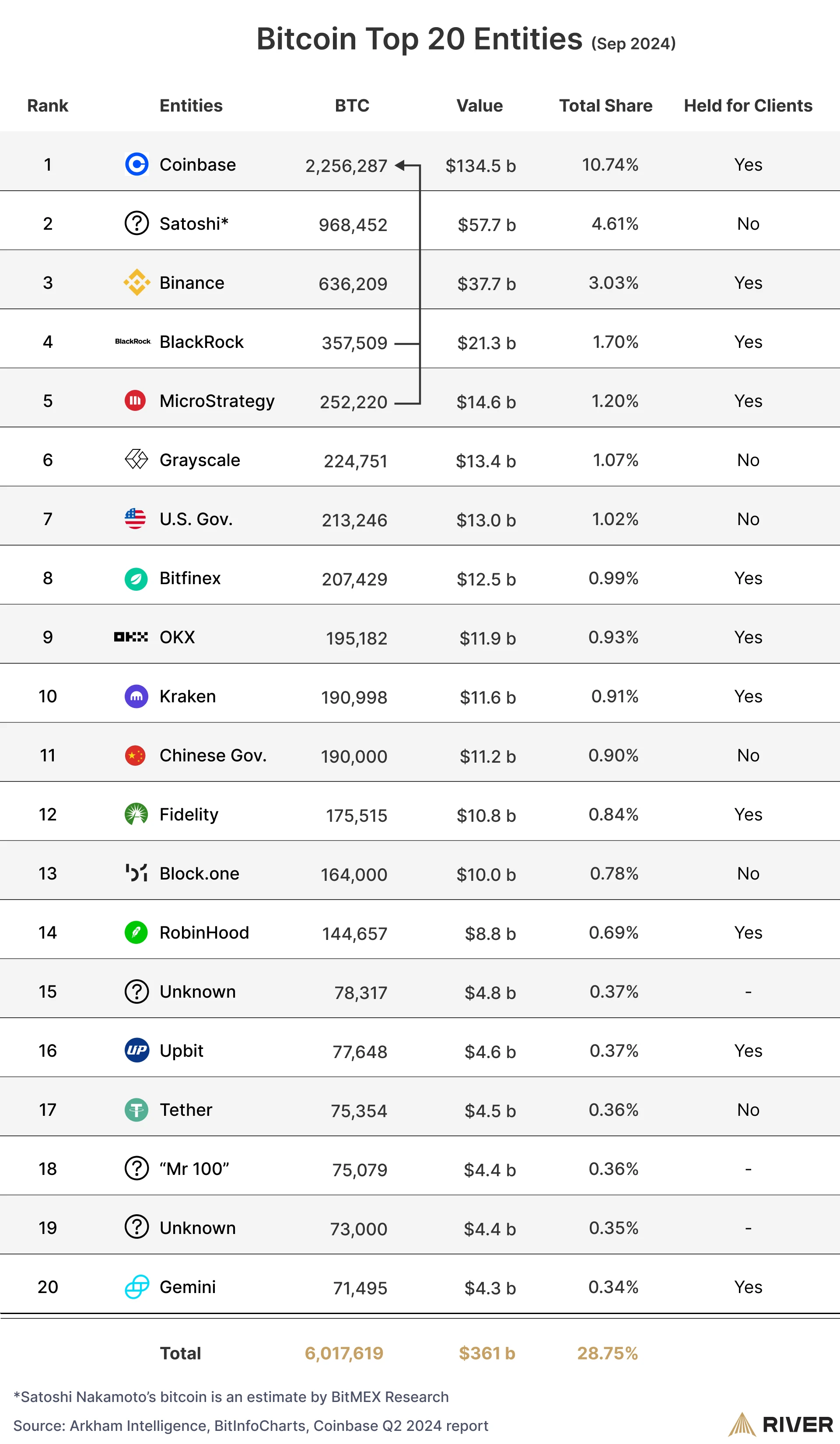
The earliest days of Bitcoin were characterized by a small community of cypherpunks, developers, and visionaries who either mined the asset or acquired it at negligible prices. These individuals, driven by ideological convictions or an early understanding of its potential, accumulated vast sums of Bitcoin when its market capitalization was minuscule. Many of these early adopters, including Bitcoin’s pseudonymous creator Satoshi Nakamoto, are believed to hold hundreds of thousands, if not millions, of BTC that have remained largely dormant for years. Their foresight in recognizing Bitcoin’s value proposition as a peer-to-peer electronic cash system and a hedge against traditional financial systems has resulted in unimaginable wealth generation. The sheer volume of their holdings means that any significant movement from these wallets could send ripples across the market, making their investment behavior a constant subject of speculation and analysis within the financial community.
Institutional Players Emerge
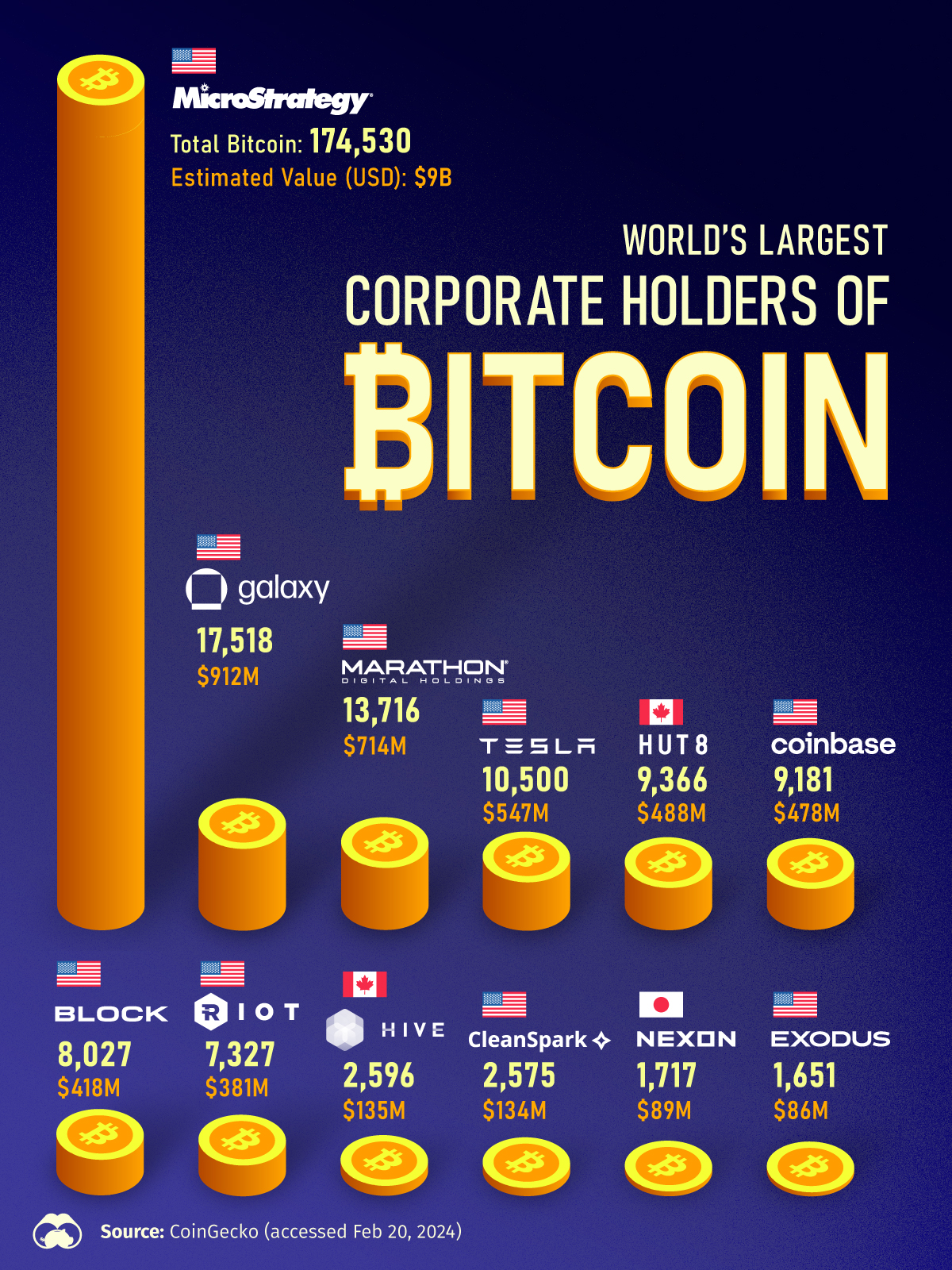
While early adoption defined the initial concentration, the past few years have witnessed a dramatic shift with the entry of institutional players. Publicly traded companies, asset management firms, hedge funds, and even sovereign entities have increasingly allocated portions of their portfolios to Bitcoin. This institutional embrace, beginning in earnest around 2020, marked a maturation of Bitcoin as a recognized investment asset class. Companies like MicroStrategy, for instance, have made strategic corporate treasury investments in Bitcoin, viewing it as a superior reserve asset to cash. Investment funds, such as Grayscale Bitcoin Trust (GBTC) and various spot Bitcoin ETFs now approved in several jurisdictions, aggregate Bitcoin from countless individual investors, effectively becoming massive centralized holders on behalf of their clients. This institutionalization not only provides legitimacy but also creates new, large pools of concentrated Bitcoin ownership, impacting market liquidity and trading patterns.
Whales and Their Market Influence
The term “Bitcoin whale” generally refers to individual or entity addresses holding exceptionally large amounts of Bitcoin, often exceeding 1,000 BTC. These whales possess the financial capacity to significantly influence market sentiment and price action. A single large buy or sell order from a whale can cause substantial price swings due to the market’s relative illiquidity compared to traditional asset classes. This influence introduces a unique dynamic for investors, where monitoring whale movements through on-chain analytics platforms becomes a strategy for anticipating market shifts. While some whales are long-term holders (“hodlers”) who have minimal impact on day-to-day trading, others are active participants whose strategic moves are closely watched, highlighting the critical role of concentrated wealth in the Bitcoin ecosystem.
Publicly Traded Companies and Their Bitcoin Holdings
The strategic decision by publicly traded companies to integrate Bitcoin into their financial operations represents a pivotal moment in its journey from a niche digital asset to a mainstream investment vehicle. This trend reflects evolving corporate treasury management strategies and the growing recognition of Bitcoin’s potential as a store of value and inflation hedge.
Corporate Treasury Management
Traditionally, corporate treasuries maintain cash reserves for operational liquidity and short-term investments. However, with persistent inflationary pressures and near-zero interest rates on traditional cash holdings, some forward-thinking corporations have sought alternative assets to preserve and grow their capital. Bitcoin has emerged as a compelling option, driven by its limited supply, decentralized nature, and potential for significant appreciation. MicroStrategy, led by Michael Saylor, pioneered this strategy, aggressively accumulating Bitcoin as its primary treasury reserve asset. Other companies have followed suit, albeit on a smaller scale, integrating Bitcoin into their balance sheets as a strategic investment. This move signifies a paradigm shift in corporate finance, where Bitcoin is no longer viewed solely as a speculative asset but as a legitimate component of a diversified corporate treasury strategy aimed at maximizing shareholder value in a changing economic landscape.
Investment Vehicles and Funds
The growth of investment vehicles specifically designed to hold Bitcoin has dramatically increased institutional exposure and, consequently, concentrated ownership. Products like the Grayscale Bitcoin Trust (GBTC) allowed accredited investors and institutions to gain exposure to Bitcoin without directly holding the asset, accumulating hundreds of thousands of BTC over its operational history. The advent of spot Bitcoin Exchange-Traded Funds (ETFs) in regions like Canada and, more recently, the United States, further democratized institutional access. These ETFs provide regulated, easily tradable avenues for institutions and retail investors alike to invest in Bitcoin through traditional brokerage accounts. The custodians of these ETFs, often major financial institutions, hold massive amounts of Bitcoin on behalf of their fund participants, creating significant centralized holdings. These funds not only facilitate investment but also signal a maturing market infrastructure, bridging the gap between traditional finance and the digital asset space.
Mining Operations and Self-Custody
Large-scale Bitcoin mining operations also contribute significantly to concentrated ownership. Mining companies invest heavily in specialized hardware and energy infrastructure to validate transactions and earn new Bitcoin as a reward. Many of these publicly traded mining firms strategically hold a substantial portion of the Bitcoin they mine rather than immediately selling it to cover operational costs. Companies like Marathon Digital Holdings or Riot Platforms have accumulated considerable Bitcoin reserves directly from their operations, viewing these holdings as long-term assets. Their strategy is a blend of generating revenue through mining and accumulating a strategic financial asset, further concentrating Bitcoin in the hands of major industry players who are deeply embedded in the network’s economic fabric.
Governments and Sovereign Wealth Funds: A Growing Interest?
The involvement of governments and sovereign wealth funds in Bitcoin ownership introduces another layer of complexity and significance to the distribution of the asset. While largely unacknowledged by many nations as official reserve assets, several governments have accumulated Bitcoin through various means, signaling a nascent but potentially impactful trend for global finance.
National Treasuries and Seized Assets
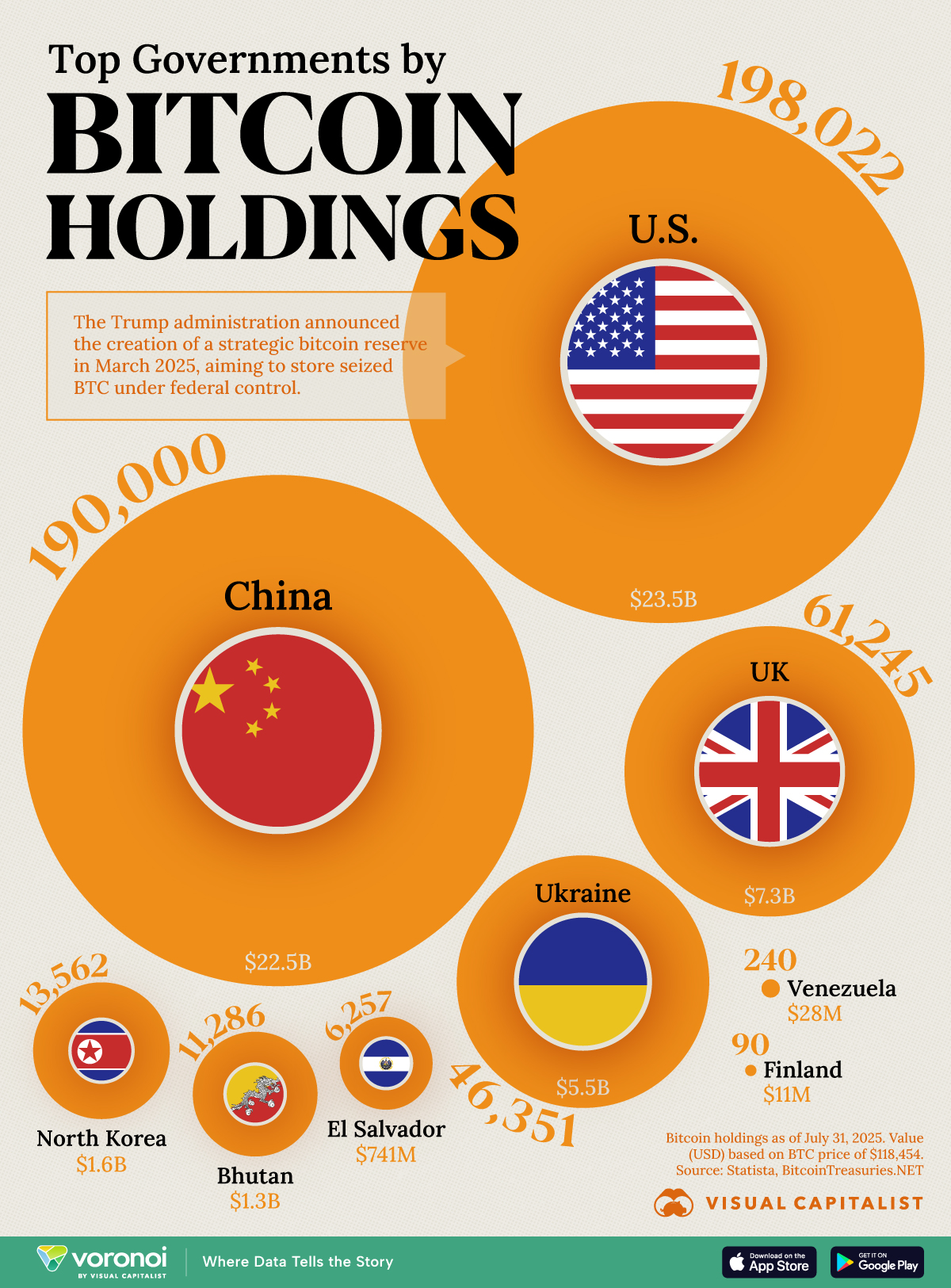
One of the primary ways governments have accumulated Bitcoin is through law enforcement actions. Bitcoin, due to its pseudonymous nature, has been used in illicit activities, leading to seizures by agencies worldwide. These seized Bitcoins, often acquired through ransomware payments, dark web market operations, or other financial crimes, are then held by national treasuries or designated government agencies. For instance, the US government holds significant amounts of Bitcoin from seizures related to the Silk Road marketplace and other criminal enterprises. While these holdings are not part of a deliberate investment strategy, their existence means governments are, by default, among the larger holders of Bitcoin, creating a unique situation where state entities hold a valuable digital asset whose future management could have market implications. The eventual disposition of these assets – whether sold or held – is a critical financial decision.
El Salvador’s National Experiment
El Salvador stands out as the pioneering nation to adopt Bitcoin as legal tender in September 2021. As part of this bold economic experiment, the Salvadoran government, under President Nayib Bukele, has actively purchased Bitcoin for its national treasury using state funds. This represents a deliberate and publicized strategy to diversify national reserves, attract foreign investment, and foster financial inclusion for its citizens. El Salvador’s continuous “buying the dip” strategy has made its treasury a significant holder of Bitcoin, placing a sovereign nation directly within the ranks of large-scale investors. This move is a real-world case study in national financial innovation, with potential profound implications for other developing nations considering similar diversification strategies away from traditional fiat currencies.
Future Implications for Global Finance
The actions of El Salvador and the incidental holdings of other governments spark an important conversation about the future role of Bitcoin in global finance. As geopolitical tensions rise and the stability of traditional reserve currencies is occasionally questioned, the prospect of sovereign wealth funds or central banks considering Bitcoin as a reserve asset becomes less hypothetical. Diversifying a nation’s financial reserves with a digitally native, decentralized asset like Bitcoin could offer new hedging opportunities against inflation, currency debasement, and geopolitical risks. Such a shift would not only dramatically increase Bitcoin’s concentration but also fundamentally alter its perception and valuation within the global economic system, moving it firmly into the realm of strategic national financial planning.
The Pseudonymous Nature of Bitcoin Ownership and Its Challenges
The very design of Bitcoin’s blockchain, offering pseudonymity rather than full anonymity, creates both opportunities for privacy and significant challenges in accurately identifying who holds the most Bitcoin. This characteristic influences financial analysis, regulatory oversight, and market transparency.
The Illusion of Decentralization
While Bitcoin’s underlying technology aims for decentralization in its network operation, the concentration of ownership among a relatively small number of entities creates a paradox. A large portion of Bitcoin’s circulating supply resides in a limited number of addresses, many of which belong to early adopters, exchanges, or institutional funds. This concentration means that decisions by a few major holders can exert disproportionate influence on price movements and market sentiment. For individual investors, this implies a need for vigilance regarding market manipulation and the potential for large transactions to trigger volatility. Understanding this distinction between technological decentralization and financial concentration is vital for any serious financial assessment of Bitcoin.
Measuring Concentration: On-Chain Analysis vs. Reality
Blockchain explorers and on-chain analytics platforms provide invaluable tools for tracking Bitcoin movements and identifying large addresses. Researchers can categorize addresses by their holdings and trace transaction flows, offering insights into the distribution of wealth. However, these tools face inherent limitations. A single large address might represent an exchange’s cold storage wallet holding assets for millions of users, rather than a single individual. Similarly, an entity might spread its holdings across numerous smaller wallets to obscure its total holdings or for security purposes. The ultimate beneficial owner (UBO) often remains opaque, making precise identification of individual “whales” challenging. This inherent ambiguity underscores the difficulty in providing an exact count of Bitcoin’s largest holders, requiring a nuanced interpretation of blockchain data for financial analysis.
Wealth Distribution and Economic Inequality
The concentration of Bitcoin ownership mirrors broader discussions about wealth distribution and economic inequality in traditional financial systems. The early access and disproportionate gains of a few individuals and institutions raise questions about fairness and equitable access to this new form of wealth. While Bitcoin’s open and permissionless nature theoretically allows anyone to participate, the initial accumulation advantage has created a significant wealth gap. This aspect is crucial for financial policymakers and economists considering the long-term societal implications of digital assets, and for investors evaluating the asset’s trajectory in a world increasingly conscious of economic disparities.
Investment Implications and the Road Ahead
The understanding of Bitcoin ownership concentration is not merely academic; it has direct and significant implications for investors, market participants, and the future development of the digital asset ecosystem. Navigating these dynamics is key to successful investment strategies.
Market Volatility and Whales’ Impact
The concentrated nature of Bitcoin ownership is a primary driver of its notorious volatility. Large buy or sell orders from whales can easily overwhelm market liquidity, leading to rapid and significant price swings. For retail investors, this means that Bitcoin’s price is not solely driven by fundamental supply-demand dynamics or macroeconomic factors, but also by the strategic movements of a few dominant players. This necessitates a robust risk management approach, emphasizing diversification, long-term holding strategies, and caution against speculative trading based on short-term price movements potentially influenced by whale activity.
Long-Term Outlook for Retail vs. Institutional Investors
The divergence in investment strategies between retail and institutional investors is also shaped by ownership concentration. Institutional investors, often managing large capital pools, tend to move slower but with greater impact, and their entry frequently requires regulated financial products. Their accumulation through ETFs and corporate treasuries continues to centralize significant portions of the supply. Retail investors, while collectively representing a vast number of holders, individually hold smaller portions. The long-term outlook suggests a potential gradual shift where more Bitcoin flows from early individual holders to institutional vehicles, as financial products mature and regulatory clarity increases. This trend could lead to a more stabilized, albeit still concentrated, market, but it also means that the impact of early whales might slowly dilute as the market capitalization grows and more diverse institutional funds participate.
The Evolving Landscape of Digital Asset Ownership
The distribution of Bitcoin is not static; it is an evolving landscape influenced by market cycles, technological advancements, regulatory changes, and broader economic trends. As new financial instruments emerge, such as more sophisticated derivatives or lending platforms, and as global jurisdictions establish clearer regulatory frameworks, the patterns of ownership will continue to shift. The increasing adoption of Bitcoin as a payment rail, collateral, or even a national reserve asset will draw in new categories of holders. Investors must remain attuned to these developments, understanding that the answer to “who holds the most Bitcoin” today might differ significantly tomorrow, profoundly impacting market dynamics, investment strategies, and the asset’s role in the global financial system.
aViewFromTheCave is a participant in the Amazon Services LLC Associates Program, an affiliate advertising program designed to provide a means for sites to earn advertising fees by advertising and linking to Amazon.com. Amazon, the Amazon logo, AmazonSupply, and the AmazonSupply logo are trademarks of Amazon.com, Inc. or its affiliates. As an Amazon Associate we earn affiliate commissions from qualifying purchases.