
Understanding Market Capitalization
Market capitalization, often shortened to “market cap,” is a fundamental metric in financial markets, serving as a critical indicator of an asset’s overall size and value. While commonly applied to publicly traded companies, it is equally relevant and insightful when assessing cryptocurrencies like Bitcoin. For investors, analysts, and market observers, understanding Bitcoin’s market cap is not just about knowing a number; it’s about gaining a perspective on its financial standing within the broader economic landscape and the nascent digital asset class.
What is Market Cap?
At its core, market capitalization represents the total dollar value of all outstanding shares of a company or, in the case of Bitcoin, the total value of all Bitcoins currently in circulation. It is calculated by multiplying the current market price of a single unit of the asset by the total number of units available. For a company, this means share price multiplied by shares outstanding. For Bitcoin, it means the current price of one Bitcoin multiplied by the total number of Bitcoins that have been mined and are in circulation. This simple yet powerful metric provides a snapshot of an asset’s magnitude, enabling comparisons across different asset classes and within the same sector. It’s distinct from trading volume, which measures the number of units traded over a period, or the total value locked (TVL) in DeFi protocols, which measures assets staked. Market cap is a direct measure of an asset’s total monetary worth.
Why Market Cap Matters for Bitcoin
Bitcoin’s market cap holds significant weight for several reasons, primarily within the context of investment and financial analysis. Firstly, it offers a clear indication of Bitcoin’s position relative to other cryptocurrencies. A higher market cap generally signifies a more established and often more liquid asset, attracting greater institutional and retail investor interest. This “size” can also be interpreted as a measure of investor confidence and network effect, suggesting broader adoption and utility. Secondly, market cap plays a crucial role in understanding Bitcoin’s market dominance, which refers to its share of the total cryptocurrency market capitalization. Changes in Bitcoin’s dominance can signal shifts in investor sentiment towards the broader altcoin market or indicate periods where capital flows are consolidating into or out of Bitcoin.
Moreover, a large market cap often correlates with greater stability compared to smaller, more volatile assets. While Bitcoin is known for its price swings, its vast market cap makes it less susceptible to manipulation by individual large trades compared to lower-cap cryptocurrencies. For portfolio diversification strategies, Bitcoin’s market cap provides a benchmark for allocating capital within the digital asset space. Investors often look at market cap to gauge an asset’s potential for future growth, understanding that assets with smaller market caps might have higher percentage growth potential but also carry greater risk. Conversely, an already large market cap like Bitcoin’s might suggest a more mature asset with different growth dynamics, often driven by broader economic adoption rather than speculative micro-trends.
Calculating Bitcoin’s Market Cap
The calculation of Bitcoin’s market capitalization is straightforward, relying on two primary variables: its current market price and the total number of Bitcoins in circulation. This simplicity, however, belies the profound implications and dynamic nature of the resulting figure.
The Simple Formula
The formula for Bitcoin’s market cap is:
Market Cap = Current Price per Bitcoin × Circulating Supply of Bitcoin
For example, if the price of one Bitcoin is $50,000 and there are 19,000,000 Bitcoins in circulation, the market cap would be $50,000 × 19,000,000 = $950,000,000,000 (or $950 billion). This formula provides a real-time valuation that fluctuates continuously with changes in either the price or the circulating supply. Financial data websites and cryptocurrency exchanges typically display this figure, updated minute by minute, making it readily accessible to anyone tracking the asset.
The Role of Circulating Supply
The “circulating supply” refers to the total number of Bitcoins that have been mined and are currently available to the public. This is a critical distinction from the “total supply” or “max supply.” Bitcoin has a hard-coded maximum supply limit of 21 million coins. As of any given moment, the circulating supply is less than this maximum, as new Bitcoins are introduced into the market through the mining process approximately every ten minutes. The rate of new Bitcoin creation halves roughly every four years in an event known as the “halving,” which gradually slows down the increase in circulating supply.
It’s important to note that the circulating supply also accounts for Bitcoins that may be lost or inaccessible. While these lost coins technically remain part of the blockchain’s total ledger, they are effectively removed from active circulation. However, for the purpose of market cap calculation, the most widely accepted method uses the coins that are verifiably “in circulation” on the network. The predictable issuance schedule and eventual cap of 21 million make Bitcoin’s supply highly transparent and auditable, a key characteristic that differentiates it from fiat currencies with potentially infinite supplies.
The Impact of Price Fluctuations
While the circulating supply changes relatively slowly and predictably, Bitcoin’s market price is famously volatile. This means that even small percentage changes in Bitcoin’s price can lead to significant shifts in its overall market capitalization. A 1% increase or decrease in price, when applied to a circulating supply of tens of millions of coins, translates into billions of dollars in market cap change. This high sensitivity to price movements makes Bitcoin’s market cap a dynamic and frequently observed metric.
Factors influencing Bitcoin’s price are numerous and include investor demand, macroeconomic conditions, regulatory news, technological developments, and general market sentiment. Each of these elements can cause rapid price swings, directly impacting the calculated market cap. Consequently, observing Bitcoin’s market cap over time provides a comprehensive view not just of its growth but also of its inherent volatility and the collective perception of its value by market participants globally.
Bitcoin’s Market Cap in Perspective
To truly appreciate the significance of Bitcoin’s market capitalization, it’s essential to contextualize it by comparing it to other assets within the cryptocurrency ecosystem and traditional financial markets. This comparative analysis provides deeper insights into its standing, dominance, and potential future trajectory as a store of value and an investment vehicle.
Comparing Bitcoin to Other Cryptocurrencies
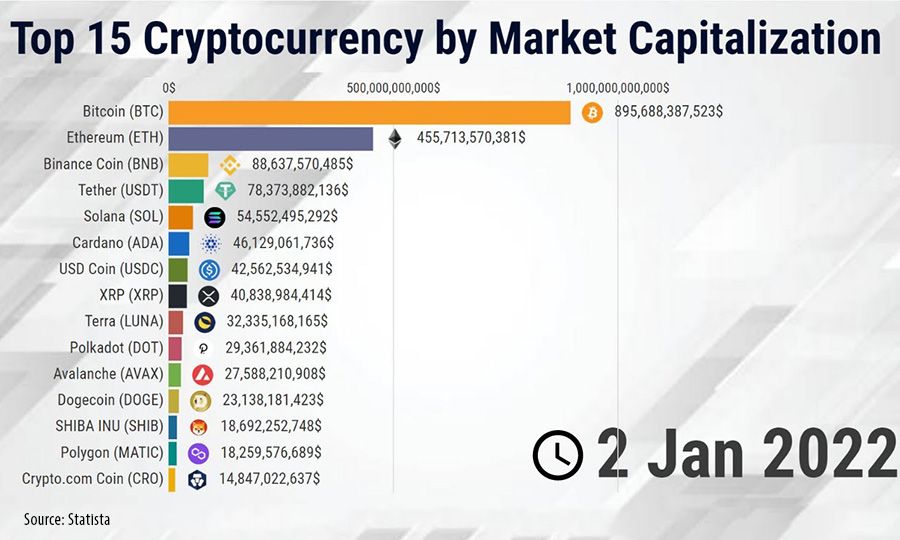
Within the digital asset space, Bitcoin consistently holds the largest market capitalization by a considerable margin. This position is critical for several reasons. Firstly, it often serves as the “reserve asset” of the crypto market, meaning that capital tends to flow into Bitcoin during times of market uncertainty, similar to how investors might flock to gold or the U.S. dollar in traditional finance. Its dominance often dictates the overall sentiment for the broader cryptocurrency market; when Bitcoin performs well, altcoins often follow, and vice versa.
The vast gap between Bitcoin’s market cap and that of other cryptocurrencies (like Ethereum, Ripple, Solana, etc.) underscores its first-mover advantage, robust network security, and widespread recognition. While other projects may offer innovative technological features or specialized use cases, Bitcoin’s primary value proposition as a decentralized, censorship-resistant digital store of value has resonated most powerfully with institutional and retail investors seeking a foundational asset in the crypto space. Its high market cap makes it a de facto benchmark against which other cryptocurrencies are often measured in terms of perceived stability and investment potential.
Bitcoin vs. Traditional Assets
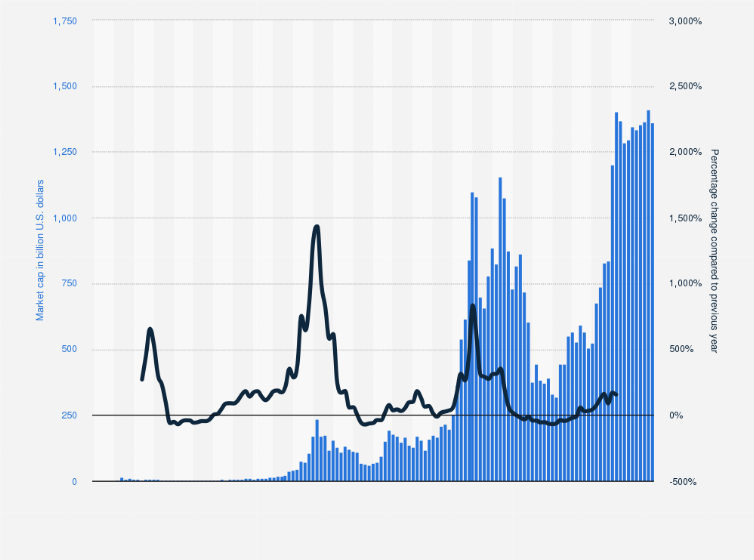
Beyond the crypto realm, Bitcoin’s market cap can be benchmarked against traditional assets, providing a fascinating perspective on its growing prominence. While it might still be smaller than the market capitalization of giants like gold or the entire stock market of major economies, Bitcoin’s rapid ascent has already seen it surpass the market caps of many large-cap companies. For instance, Bitcoin has, at various points, exceeded the market valuation of major banks, automotive manufacturers, and even entire national currencies, depending on its price.
Comparing Bitcoin to gold, often referred to as “digital gold,” highlights its emerging role as a potential alternative or complement to traditional safe-haven assets. While gold’s market cap is still several times larger than Bitcoin’s, the speed at which Bitcoin has grown is unprecedented. This comparison is vital for investors looking to diversify portfolios with non-correlated assets, as Bitcoin offers a liquid, globally accessible, and verifiable alternative store of value. Its ability to grow to such a scale within a relatively short period demonstrates a significant shift in investor perception and an increasing acceptance of digital scarcity as a valuable economic characteristic.
Market Dominance and Its Implications
Bitcoin’s market dominance, typically expressed as a percentage of its market cap relative to the total cryptocurrency market cap, is a crucial indicator. A high Bitcoin dominance suggests that capital is concentrated in Bitcoin, often indicating a flight to quality within the crypto market or periods of uncertainty where investors favor the most established asset. Conversely, a declining Bitcoin dominance might signal an “altcoin season,” where capital flows from Bitcoin into various alternative cryptocurrencies, often driven by speculative interest or the emergence of new, compelling projects.
Understanding market dominance helps investors gauge risk appetite in the broader crypto market. When dominance is high and rising, it may suggest caution towards altcoins. When dominance is falling, it can indicate a broader speculative surge in the altcoin market. For institutional investors, Bitcoin’s commanding market dominance is often a prerequisite for allocation, as it signifies liquidity and relative stability within a highly volatile asset class. Its consistent leadership in market capitalization reinforces its status as the bellwether of the cryptocurrency world, influencing trends and sentiment across the entire digital asset ecosystem.
Factors Influencing Bitcoin’s Market Cap
Bitcoin’s market capitalization is a dynamic figure, constantly shifting in response to a complex interplay of economic, regulatory, technological, and behavioral factors. Understanding these drivers is crucial for anyone seeking to comprehend its valuation and future potential.
Demand and Supply Dynamics
The fundamental economic principles of supply and demand heavily influence Bitcoin’s market cap. On the supply side, Bitcoin’s protocol dictates a fixed maximum supply of 21 million coins, with a predictable and decreasing rate of new coin issuance (halving events). This inherent scarcity is a core tenet of its value proposition, differentiating it from fiat currencies that can be printed infinitely. As the circulating supply slowly approaches its cap, the scarcity effect is expected to intensify, potentially putting upward pressure on price if demand remains constant or increases.
On the demand side, a multitude of factors come into play. Growing retail adoption, driven by increased awareness and accessibility through user-friendly platforms, boosts demand. Institutional investment, from hedge funds and asset managers to corporations adding Bitcoin to their balance sheets, represents a significant demand driver, often moving large sums of capital. Furthermore, Bitcoin’s role as a hedge against inflation or geopolitical uncertainty, especially in regions experiencing economic instability, can also lead to surges in demand, as investors seek a non-sovereign store of value.
Macroeconomic Trends
Global macroeconomic conditions exert a profound influence on Bitcoin’s market cap. Periods of high inflation, for instance, can enhance Bitcoin’s appeal as a potential inflation hedge, leading to increased demand and upward price pressure. Conversely, rising interest rates in traditional markets might reduce investor appetite for riskier assets like Bitcoin, potentially causing capital to flow out. Geopolitical events, such as international conflicts or significant policy shifts by major economies, can also drive investors towards or away from Bitcoin, depending on how it’s perceived in relation to traditional safe havens like gold or the U.S. dollar. The strength of the U.S. dollar, in particular, often has an inverse relationship with Bitcoin’s price, as a stronger dollar can make dollar-denominated assets less attractive.
Regulatory Developments
The evolving regulatory landscape is a critical determinant of Bitcoin’s market cap. Clear and favorable regulations, such as the approval of spot Bitcoin ETFs in major financial markets, can significantly boost institutional confidence, facilitate broader adoption, and inject substantial capital into the market, thereby increasing its market cap. Conversely, restrictive regulations, bans on cryptocurrency trading, or stringent taxation policies in key jurisdictions can create uncertainty, deter investment, and lead to price depreciation. As governments worldwide grapple with how to categorize and oversee digital assets, regulatory clarity or ambiguity will continue to play a major role in shaping Bitcoin’s perceived legitimacy and investment appeal.
Technological Advancements and Adoption
While Bitcoin’s core technology is stable, advancements in scaling solutions (like the Lightning Network) or improvements in user-friendly wallets and interfaces can enhance its utility and accessibility. Increased usability can drive wider adoption for payments and remittances, expanding its use cases beyond just a store of value. This broader utility, in turn, can attract more users and investors, indirectly boosting demand and, consequently, its market cap. Furthermore, the integration of Bitcoin into traditional financial infrastructure, through services like crypto-backed loans or institutional trading platforms, makes it easier for a wider range of participants to engage with the asset, contributing to its overall market valuation.
Investor Sentiment and Adoption
Ultimately, investor sentiment plays a powerful role in driving short-to-medium-term price movements and, by extension, market cap. News cycles, social media trends, expert opinions, and overall market psychology can create cycles of fear (FUD) and greed (FOMO), leading to rapid shifts in buying and selling pressure. Widespread adoption, whether by individual users or major corporations, signals increasing confidence in Bitcoin’s long-term viability and intrinsic value, fostering positive sentiment. As more people and institutions integrate Bitcoin into their financial strategies, its network effect strengthens, creating a self-reinforcing cycle of demand and potentially higher market capitalization.
The Future of Bitcoin’s Market Cap
Forecasting the precise future of Bitcoin’s market cap is inherently challenging due to the dynamic nature of financial markets and the digital asset space. However, examining its growth potential, ongoing challenges, and long-term outlook provides crucial insights for investors considering its role in a diversified portfolio.
Growth Potential and Challenges
Bitcoin’s growth potential is often cited in discussions around its eventual market cap. Proponents envision a future where Bitcoin rivals or surpasses gold as a global store of value, which would imply a market cap in the trillions of dollars. This optimistic outlook is predicated on several factors: continued institutional adoption, increasing global financial instability pushing more investors towards decentralized assets, advancements in scaling solutions making it more practical for everyday transactions, and its inherent programmatic scarcity. As traditional financial systems face increasing scrutiny over inflation and centralized control, Bitcoin’s value proposition as a sound, scarce money alternative could gain further traction, driving demand and price appreciation.
However, significant challenges temper this growth. Regulatory uncertainty remains a pervasive concern, with potential adverse legislation in key markets capable of dampening investor enthusiasm. Intense competition from other cryptocurrencies, offering different features and use cases, could also fragment investor interest. Furthermore, concerns around environmental impact due to its energy consumption, while being addressed by the industry, can still pose reputational and regulatory hurdles. Market volatility, while offering opportunities, also presents risks, making it difficult for some investors to hold through significant drawdowns. Overcoming these challenges will be crucial for Bitcoin to realize its full market cap potential.

Long-term Outlook and Investment Considerations
From a long-term investment perspective, Bitcoin’s market cap is generally viewed as an indicator of its maturation as a financial asset. A higher, more stable market cap suggests greater liquidity, less susceptibility to individual large trades, and a stronger foundation for broader economic integration. As Bitcoin’s market cap grows, it increasingly becomes a relevant asset class for large institutional investors, endowments, and sovereign wealth funds, potentially leading to even greater capital inflows.
Investors considering Bitcoin should view its market cap not just as a number, but as a reflection of its accumulating network effect, its perceived security, and its growing acceptance as a legitimate store of value and, for some, a medium of exchange. While past performance is no guarantee of future results, Bitcoin’s journey from a niche digital experiment to an asset with a market capitalization that rivals major corporations is a testament to its unique financial attributes. Its continued trajectory will likely be shaped by its ability to navigate regulatory complexities, demonstrate technological resilience, and solidify its role as a deflationary hedge in an increasingly digital and financially uncertain world.
aViewFromTheCave is a participant in the Amazon Services LLC Associates Program, an affiliate advertising program designed to provide a means for sites to earn advertising fees by advertising and linking to Amazon.com. Amazon, the Amazon logo, AmazonSupply, and the AmazonSupply logo are trademarks of Amazon.com, Inc. or its affiliates. As an Amazon Associate we earn affiliate commissions from qualifying purchases.