
Investing for retirement is one of the most crucial financial decisions an individual can make, and an Individual Retirement Account (IRA) stands as a cornerstone for many long-term financial strategies. An IRA is a tax-advantaged savings plan designed to help individuals save for retirement. Unlike employer-sponsored plans like a 401(k), an IRA is opened by you directly with a financial institution, giving you more control over your investment choices.
This comprehensive guide will demystify the process of investing in an IRA, covering everything from understanding the different types and their benefits to selecting the right investments and managing your account over time. Whether you’re just starting your career or nearing retirement, leveraging an IRA can significantly enhance your financial security in your golden years.
Understanding IRA Basics: Types and Benefits
Before diving into investment strategies, it’s essential to grasp the fundamental differences between the primary types of IRAs and the unique tax advantages each offers. The choice between them often hinges on your current income, anticipated future income, and tax outlook.
Traditional IRA
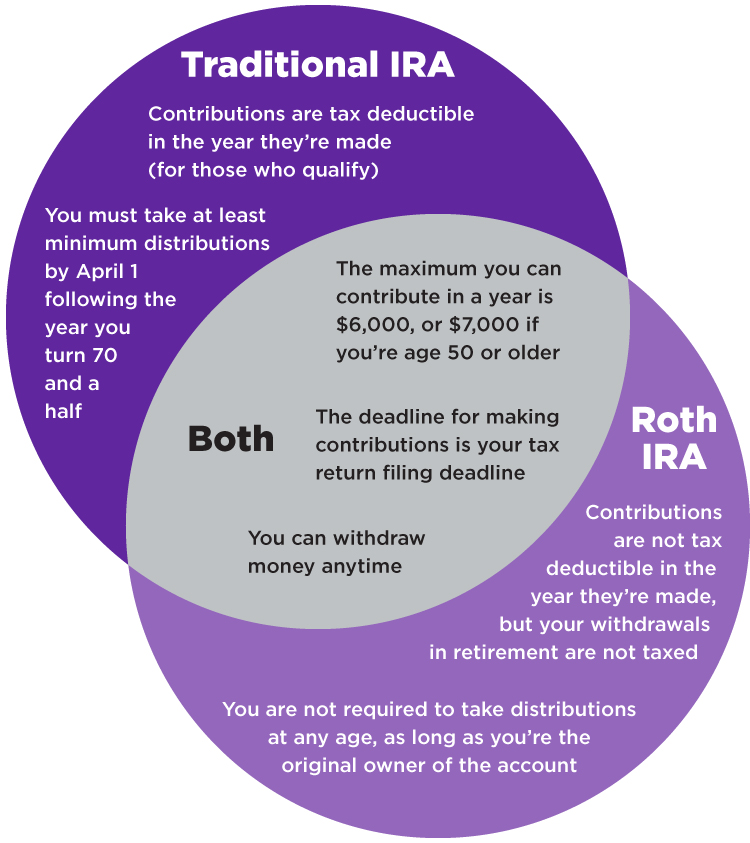
A Traditional IRA allows your investments to grow tax-deferred. This means you don’t pay taxes on earnings or gains until you withdraw the money in retirement. Contributions to a Traditional IRA may be tax-deductible in the year they are made, depending on your income level and whether you’re covered by an employer-sponsored retirement plan. This upfront tax break can lower your taxable income in the present. Withdrawals in retirement are taxed as ordinary income. The annual contribution limit for 2023 and 2024 is $6,500 and $7,000, respectively, with an additional $1,000 catch-up contribution for those aged 50 and over.
Roth IRA
The Roth IRA operates on an “after-tax” contribution model. You contribute money that has already been taxed, meaning your contributions are not tax-deductible. However, the significant advantage of a Roth IRA is that qualified withdrawals in retirement are completely tax-free. This includes both your contributions and all the earnings your investments have generated over the years. This makes a Roth IRA particularly appealing if you anticipate being in a higher tax bracket during retirement than you are now. Roth IRAs have income limitations for eligibility, but they share the same annual contribution limits as Traditional IRAs.
SEP & SIMPLE IRAs: For the Self-Employed and Small Businesses
While the primary focus for most individuals will be Traditional or Roth IRAs, it’s worth briefly mentioning SEP (Simplified Employee Pension) IRAs and SIMPLE (Savings Incentive Match Plan for Employees) IRAs. These are employer-sponsored retirement plans primarily designed for self-employed individuals and small business owners to provide retirement benefits for themselves and their employees. They offer higher contribution limits than individual IRAs but come with specific eligibility and contribution rules.
Key Benefits of IRAs
Regardless of the type, IRAs offer several compelling benefits that make them indispensable tools for retirement planning:
- Tax Advantages: Whether it’s tax-deductible contributions (Traditional) or tax-free withdrawals in retirement (Roth), IRAs provide significant tax breaks that can accelerate your savings growth.
- Compounding Growth: The ability for your earnings to generate their own earnings over time is incredibly powerful. Tax-advantaged growth within an IRA allows this compounding to occur more efficiently without being eroded by annual taxes.
- Flexibility in Investment Choices: Unlike some employer plans that have limited investment options, IRAs typically offer a vast universe of investment choices, from stocks and bonds to mutual funds and exchange-traded funds (ETFs).
- Portability: IRAs are individual accounts, meaning they move with you if you change jobs, providing continuity for your retirement savings.
Choosing the Right IRA for Your Financial Goals
Deciding between a Traditional and Roth IRA is a pivotal step. Your choice should align with your current financial situation, income projections, and overall tax strategy.
Traditional vs. Roth: Which is Right for You?
The core decision between a Traditional and Roth IRA boils down to when you prefer to pay taxes: now or later.
- If you expect to be in a lower tax bracket in retirement than you are now: A Traditional IRA might be more beneficial. You get a tax deduction today when your income is higher, and you pay taxes later when your income (and thus tax bracket) is lower.
- If you expect to be in a higher tax bracket in retirement than you are now: A Roth IRA is likely the better choice. You pay taxes on your contributions today when your income is lower, and then all qualified withdrawals in retirement are tax-free, avoiding potentially higher future tax rates.
- Access to Funds: Roth IRA contributions (but not earnings) can be withdrawn tax-free and penalty-free at any time, making it a potentially flexible emergency savings vehicle, though it’s generally ill-advised to tap retirement funds early.
- Employer-Sponsored Plans: If you contribute to a 401(k) or similar plan at work and your income exceeds certain thresholds, your Traditional IRA contributions might not be tax-deductible. However, you can still contribute to a Roth IRA (subject to income limits) or a non-deductible Traditional IRA (which can then be converted to a Roth IRA via the “backdoor Roth” strategy if income limits preclude direct Roth contributions).
Consider consulting with a financial advisor or tax professional to analyze your specific situation and determine the most advantageous IRA type for your long-term plan.
Considering Your Investment Horizon and Risk Tolerance
Retirement investing is inherently a long-term endeavor, often spanning several decades. Your investment horizon—the length of time until you need the money—and your risk tolerance—your comfort level with potential fluctuations in investment value—are critical factors in shaping your investment strategy within your IRA.
Younger investors with a long time horizon generally have a greater capacity to take on more risk, potentially allocating a larger portion of their portfolio to growth-oriented assets like stocks. As you approach retirement, you might gradually shift towards more conservative investments to protect your accumulated capital. Diversification, spreading your investments across various asset classes, is key at all stages to mitigate risk.
Step-by-Step Guide to Opening and Funding Your IRA
Once you’ve decided on the type of IRA that suits your needs, the process of opening and funding the account is straightforward.
Select a Reputable Brokerage Firm
The first step is to choose a financial institution where you’ll open your IRA. Many reputable online brokerage firms offer IRAs, including Fidelity, Vanguard, Charles Schwab, E*TRADE, and Merrill Edge, among others. When selecting a broker, consider the following:
- Fees: Look for low-cost or no-fee accounts, especially for basic trading and account maintenance.
- Investment Options: Ensure the firm offers a wide range of investments that align with your strategy (e.g., specific ETFs, mutual funds, individual stocks).
- Research Tools and Resources: Good brokers provide valuable research and educational content to help you make informed decisions.
- Customer Service: Access to responsive and knowledgeable customer support can be crucial.
- User Interface: A user-friendly platform makes managing your investments much easier.
Choose Your IRA Type and Open the Account
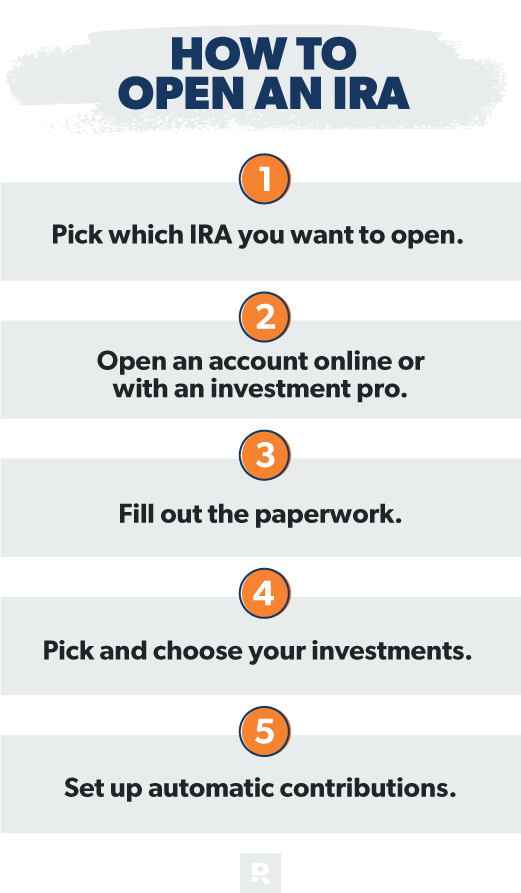
Once you’ve chosen a brokerage, navigate to their website and look for options to open a retirement account. You will typically be prompted to select between a Traditional, Roth, or sometimes SEP/SIMPLE IRA. The online application process usually takes about 15-20 minutes and requires personal information such as your Social Security number, address, date of birth, and employment details. You may also need to provide bank account information for funding.
Fund Your Account
After your account is opened, you’ll need to fund it. Common methods include:
- Electronic Bank Transfer (ACH): This is the most common and easiest method, linking your IRA directly to your checking or savings account.
- Wire Transfer: For larger, time-sensitive transfers, though often incurring fees.
- Check Deposit: You can mail a personal check.
- Rollover: If you have an old 401(k) or similar employer plan from a previous job, you can often roll it over directly into an IRA without incurring taxes or penalties. This is an excellent way to consolidate your retirement savings and gain more control.
- Direct Contributions: Set up recurring contributions to automate your savings.
Understand Contribution Limits and Deadlines
Be mindful of the annual IRA contribution limits and the associated deadlines. For a given tax year, you can typically contribute up until the tax filing deadline of the following year (e.g., April 15th for the previous year’s contributions). Maximizing your contributions each year is one of the most effective strategies for long-term growth due to the power of compounding.
Strategic Investment Options Within Your IRA
The true strength of an IRA lies in the vast array of investment choices available, allowing you to tailor your portfolio to your risk tolerance and financial goals.
Diversification: The Cornerstone of Long-Term Growth
Diversification is paramount in any investment strategy, especially for long-term retirement savings. It involves spreading your investments across various asset classes, industries, and geographies to reduce risk. The goal is to avoid having “all your eggs in one basket,” so that a downturn in one area doesn’t devastate your entire portfolio. A well-diversified portfolio aims to capture broader market returns while mitigating specific risks.
Common Investment Vehicles
Within your IRA, you’ll have access to a wide range of investment vehicles:
- Stocks: Represent ownership in a company. They offer the potential for significant growth over the long term but come with higher volatility. You can invest in individual stocks or gain broad market exposure through stock mutual funds or ETFs.
- Bonds: Represent loans to governments or corporations. They are generally less volatile than stocks and provide a more predictable income stream through interest payments. Bonds help stabilize a portfolio, especially as you approach retirement.
- Mutual Funds: Professionally managed portfolios that pool money from many investors to purchase a diversified collection of stocks, bonds, or other securities. They offer built-in diversification and professional management, though they often come with management fees (expense ratios).
- Exchange-Traded Funds (ETFs): Similar to mutual funds, ETFs hold a basket of securities but trade like individual stocks on an exchange throughout the day. Many ETFs track specific market indexes (e.g., S&P 500) and often have very low expense ratios, making them a popular choice for cost-conscious investors seeking broad market exposure.
- Target-Date Funds: These are mutual funds or ETFs designed to provide an all-in-one retirement solution. They automatically adjust their asset allocation over time, becoming more conservative as you approach a specific retirement “target date.” They are an excellent option for hands-off investors.
- Real Estate (via REITs): You can gain exposure to the real estate market without directly owning property by investing in Real Estate Investment Trusts (REITs). These are companies that own, operate, or finance income-producing real estate and are publicly traded.
- Cash/Money Market Funds: While generally not suitable for long-term growth, a small allocation to cash or money market funds can provide liquidity for future contributions or rebalancing needs.
Developing an Investment Strategy
Your investment strategy should align with your risk tolerance, time horizon, and financial goals.
- Active vs. Passive Investing: Active investing involves frequently buying and selling securities in an attempt to outperform the market, often with higher fees. Passive investing, typically through index funds or ETFs, aims to replicate the performance of a market index at a lower cost. For most long-term IRA investors, a passive approach is often recommended due to its efficiency and historical performance.
- Dollar-Cost Averaging: This strategy involves investing a fixed amount of money at regular intervals (e.g., contributing a fixed amount monthly). This helps mitigate risk by averaging out your purchase price over time, as you buy more shares when prices are low and fewer when prices are high.
- Regular Rebalancing: Over time, your portfolio’s asset allocation may drift from your target due to varying market performance. Rebalancing involves adjusting your holdings periodically (e.g., annually) to bring them back to your desired allocation.
- Long-Term Perspective: Resist the urge to react to short-term market fluctuations. Retirement investing is a marathon, not a sprint. Consistency and patience are key.
Managing and Optimizing Your IRA Over Time
Opening and funding your IRA is just the beginning. Effective management over the years is crucial to maximizing its potential.
Regular Reviews and Rebalancing
Life circumstances, market conditions, and your financial goals will evolve. It’s wise to review your IRA portfolio at least once a year, or whenever significant life events occur (e.g., marriage, birth of a child, job change). During these reviews, assess:
- Asset Allocation: Does it still align with your risk tolerance and time horizon?
- Investment Performance: Are your investments performing as expected?
- Fees: Are you paying excessive fees that could be eroding your returns?
- Diversification: Is your portfolio still adequately diversified?
Rebalancing, as mentioned, is the act of adjusting your portfolio to bring your asset allocation back to your target percentages. This might involve selling some assets that have grown significantly and buying more of those that have lagged.
Maximizing Contributions Annually
Make it a priority to contribute the maximum allowable amount to your IRA each year, especially if you are eligible for catch-up contributions (for those aged 50 and older). Even small, consistent contributions can grow into substantial sums over decades thanks to the power of compounding. Automating your contributions can make this easier to achieve.
Understanding Distribution Rules and Penalties
Be aware of the rules governing withdrawals from your IRA:
- Age 59½ Rule: Generally, withdrawals from both Traditional and Roth IRAs are penalty-free after age 59½.
- Traditional IRA RMDs: For Traditional IRAs, you must begin taking Required Minimum Distributions (RMDs) typically at age 73 (or 70½ if you reached that age before January 1, 2020). Failure to do so can result in significant penalties.
- Roth IRA Tax-Free Withdrawals: Qualified withdrawals from a Roth IRA are tax-free if the account has been open for at least five years and you are over age 59½, disabled, or using the funds for a qualified first-time home purchase (up to $10,000). Roth IRAs do not have RMDs for the original owner.
- Early Withdrawal Penalties: Withdrawing funds before age 59½ typically incurs a 10% early withdrawal penalty, plus the funds are taxed as ordinary income (for Traditional IRAs and Roth IRA earnings). There are some exceptions, such as for qualified higher education expenses or medical expenses.

Seeking Professional Guidance
While this guide provides a solid foundation, managing retirement investments can become complex. If you feel overwhelmed, need personalized advice, or have a complex financial situation, consider consulting a qualified financial advisor. They can help you:
- Create a comprehensive financial plan.
- Determine the optimal asset allocation for your specific goals.
- Navigate tax strategies, including potential conversions or advanced IRA strategies.
- Provide ongoing support and adjustments to your plan.
Investing in an IRA is a powerful step towards securing your financial future. By understanding the different account types, making informed investment choices, and consistently managing your portfolio, you can build a robust nest egg that provides peace of mind and financial freedom in retirement. Start early, stay consistent, and patiently watch your wealth grow.
aViewFromTheCave is a participant in the Amazon Services LLC Associates Program, an affiliate advertising program designed to provide a means for sites to earn advertising fees by advertising and linking to Amazon.com. Amazon, the Amazon logo, AmazonSupply, and the AmazonSupply logo are trademarks of Amazon.com, Inc. or its affiliates. As an Amazon Associate we earn affiliate commissions from qualifying purchases.