
Tax season, for many, conjures images of confusion, towering stacks of documents, and the looming dread of deadlines. Yet, rather than a period of stress, it can be an opportunity for financial review, optimization, and ensuring compliance. The key to transforming this often-daunting task into a manageable and even insightful process lies in preparation. Understanding precisely “what you need to file taxes” is the first and most critical step towards a smooth, accurate, and potentially rewarding tax experience.
This guide is designed to demystify the tax filing process by breaking down the essential documents, information, and considerations required. By systematically gathering these elements, you can approach tax season with confidence, minimize errors, and ensure you’re taking full advantage of all applicable deductions and credits. Let’s embark on this journey to empower your financial readiness, ensuring that come tax day, you’re not just prepared, but poised for success.
Understanding the Fundamentals: Why Preparation is Key
Before diving into the specifics of documents, it’s crucial to grasp the foundational importance of preparation in the tax filing journey. A proactive approach not only streamlines the process but also mitigates potential pitfalls and enhances your financial literacy.
The Importance of Timely Filing
Every tax year comes with immutable deadlines, most notably April 15th for individual federal income tax returns in the United States (or the next business day if it falls on a weekend or holiday). Missing these deadlines without an approved extension can result in significant penalties, including failure-to-file penalties and failure-to-pay penalties, which can quickly accrue interest. Timely filing, even if you can’t pay the full amount due, demonstrates good faith to the IRS and can prevent unnecessary financial burdens. Moreover, filing on time ensures that if you are due a refund, it will be processed and disbursed without undue delay.
The Benefits of Organization
Imagine sifting through a year’s worth of financial statements, receipts, and forms just days before the deadline. The stress is palpable, and the likelihood of overlooking crucial information skyrockets. Conversely, maintaining an organized system throughout the year—whether it’s a dedicated physical folder, digital files on a cloud drive, or a specialized financial tracking app—pays dividends. This organization saves invaluable time during tax season, reduces the mental load, and significantly lowers the risk of errors or missed opportunities for deductions and credits. It allows you to approach tax filing with clarity, rather than chaos.
Identifying Your Filing Status
One of the first pieces of information you’ll need to determine is your filing status, as it dictates your standard deduction amount, eligibility for certain credits, and the tax rates applied to your income. The five main filing statuses are:
- Single: For unmarried individuals.
- Married Filing Jointly: For married couples who choose to file a single return together.
- Married Filing Separately: For married couples who file separate returns. This can sometimes be advantageous in specific situations, such as when one spouse has significant medical expenses.
- Head of Household: For unmarried individuals who pay more than half the cost of keeping up a home for themselves and a qualifying person. This status offers a higher standard deduction and more favorable tax rates than Single.
- Qualifying Widow(er) with Dependent Child: For individuals whose spouse died in one of the two previous tax years and who have a dependent child. This status allows them to use the Married Filing Jointly tax rates and the highest standard deduction for two years after their spouse’s death.
Understanding your correct filing status is fundamental as it sets the stage for the entire tax calculation process.
Gathering Your Income Documentation
The cornerstone of any tax return is an accurate accounting of all income received throughout the tax year. Various forms are issued by employers, financial institutions, and government agencies to report this income.
W-2 Forms: For Employees
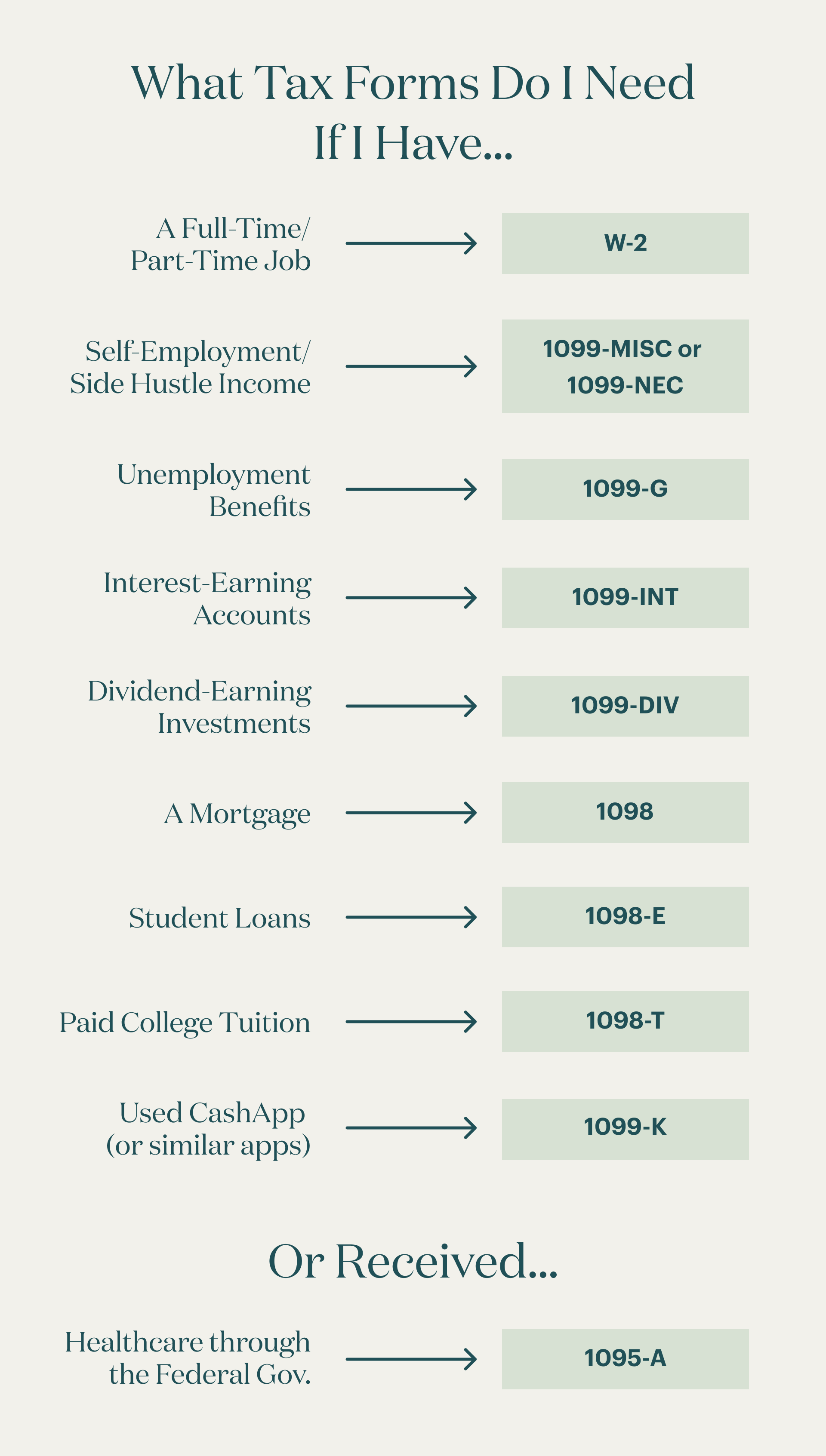
If you are an employee, your primary income document will be Form W-2, Wage and Tax Statement. Your employer is legally required to send this form to you by January 31st of the following year. The W-2 summarizes your annual wages, tips, and other compensation, along with the federal, state, and local taxes withheld from your paychecks. It also details contributions to retirement plans (like 401k) and health savings accounts (HSA). Carefully review your W-2 for accuracy and ensure all boxes are correctly filled out.
1099 Forms: For Independent Contractors & Other Income
For individuals who are not traditional employees, or who receive income from various other sources, a suite of 1099 forms will be critical.
- 1099-NEC (Nonemployee Compensation): This form replaced the 1099-MISC for reporting nonemployee compensation (e.g., payments to independent contractors or freelancers) starting in the 2020 tax year. If you performed services for a business as a contractor and earned $600 or more, you should receive a 1099-NEC.
- 1099-MISC (Miscellaneous Income): While nonemployee compensation moved to 1099-NEC, the 1099-MISC is still used for other types of miscellaneous income, such as rent, royalties, and prizes.
- 1099-INT (Interest Income): Financial institutions issue this form if you received $10 or more in interest income from savings accounts, CDs, or money market accounts.
- 1099-DIV (Dividend Income): If you received $10 or more in dividends from stocks or mutual funds, you’ll get a 1099-DIV.
- 1099-R (Distributions from Pensions, Annuities, Retirement or Profit-Sharing Plans, IRAs, Insurance Contracts, etc.): This form reports distributions from retirement accounts, which may be taxable.
- 1099-K (Payment Card and Third-Party Network Transactions): If you process payments through services like PayPal, Venmo, or credit card processors, you might receive a 1099-K, especially if you meet certain transaction thresholds (which have changed over recent years, so it’s essential to check current IRS guidelines).
- 1099-G (Certain Government Payments): This form reports various government payments, most commonly unemployment compensation or state/local tax refunds received.
Investment Income Statements
Beyond 1099 forms for interest and dividends, you’ll need comprehensive statements from your brokerage firms, mutual fund companies, or other investment vehicles. These statements typically summarize capital gains and losses from the sale of stocks, bonds, or other assets, which are critical for calculating your taxable investment income. Consolidated 1099 statements often include these details.
Other Income Sources
Don’t overlook other potential sources of income that may not come with a specific form but are still taxable:
- Rental Income: If you own rental properties, you’ll need detailed records of rent received and deductible expenses.
- Alimony: For divorce or separation agreements executed before 2019, alimony received is generally taxable income.
- Royalty Income: Payments received for the use of your property or intellectual property.
- Business Income/Loss Statements: If you run a sole proprietorship, partnership, or S-corporation, you’ll need detailed profit and loss statements.
Documenting Deductions and Credits
While income forms tell the IRS what you earned, documentation for deductions and credits tells them how much of that income might be excluded from taxation or how much your tax liability can be directly reduced. This is where strategic tax planning can genuinely make a difference.
Common Itemized Deductions
Most taxpayers take the standard deduction, but if your eligible itemized deductions exceed the standard deduction amount for your filing status, itemizing can lead to a lower tax bill. Key itemized deductions include:
- Medical Expenses: You can deduct the amount of medical and dental expenses that exceed a certain percentage of your Adjusted Gross Income (AGI) (e.g., 7.5% for 2023). Keep meticulous records of all medical bills, insurance premiums, and prescription costs.
- State and Local Taxes (SALT): You can deduct up to $10,000 ($5,000 for married individuals filing separately) for state and local income, sales, or property taxes paid.
- Home Mortgage Interest: If you own a home, Form 1098, Mortgage Interest Statement, from your lender will report the amount of mortgage interest you paid, which is often deductible.
- Charitable Contributions: Donations to qualified charitable organizations can be deductible. Keep receipts for cash contributions and appraisal documents for non-cash donations.

Key Tax Credits to Consider
Tax credits are particularly valuable because they directly reduce your tax liability dollar-for-dollar, unlike deductions which only reduce your taxable income.
- Child Tax Credit (CTC): A significant credit for taxpayers with qualifying dependent children.
- Earned Income Tax Credit (EITC): A refundable credit for low-to-moderate income working individuals and families, designed to provide a financial boost.
- Education Credits:
- American Opportunity Tax Credit (AOTC): For eligible students in their first four years of higher education.
- Lifetime Learning Credit (LLC): For courses taken towards a college degree or to acquire job skills. You’ll typically need Form 1098-T, Tuition Statement, from educational institutions.
- Retirement Savings Contributions Credit (Saver’s Credit): For low- and moderate-income taxpayers who contribute to an IRA or employer-sponsored retirement plan.
- Child and Dependent Care Credit: For expenses incurred for the care of a qualifying child or dependent to allow you to work or look for work.
- Premium Tax Credit (PTC): For individuals and families who enroll in a health insurance plan through the Health Insurance Marketplace. You’ll need Form 1095-A, Health Insurance Marketplace Statement.
Business Expenses (for Self-Employed)
For freelancers, independent contractors, and small business owners, tracking business expenses is paramount. Deductible expenses can significantly reduce your self-employment income, thereby lowering your tax burden. Maintain detailed records, including:
- Receipts: For all business-related purchases, from office supplies to software subscriptions.
- Mileage Logs: For business-related travel, detailing dates, destinations, and purposes.
- Home Office Expenses: If you use a portion of your home exclusively and regularly for business, you may be able to deduct a percentage of rent/mortgage, utilities, and insurance.
- Professional Development: Costs for courses, certifications, and conferences related to your business.
Essential Personal and Identifying Information
Beyond financial figures, several pieces of personal information are non-negotiable for filing an accurate tax return and ensuring your identity is protected.
Personal Identifiers
- Social Security Numbers (SSN): Your SSN and the SSNs of your spouse and any dependents are fundamental for identifying taxpayers. Ensure they are correct on all forms.
- Employer Identification Numbers (EIN): If you operate a business, your EIN is its federal tax ID.
Bank Account Information
If you’re expecting a refund and want it deposited directly into your bank account (the fastest and most secure method), or if you owe taxes and wish to pay via direct debit, you’ll need your bank account’s routing number and account number.
Previous Year’s Tax Return
Your prior year’s tax return is an invaluable reference. It contains information like your Adjusted Gross Income (AGI), which is often required to verify your identity when e-filing. It also helps in tracking carryovers of losses or credits.
Identity Protection PIN (IP PIN)
If you have been issued an Identity Protection PIN (IP PIN) by the IRS, it’s a six-digit number known only to you and the IRS, designed to help prevent identity thieves from filing a fraudulent tax return in your name. This PIN must be entered accurately when you file.
Tools and Resources for Filing Your Taxes
Once you’ve gathered all your documents, the next step is to choose how you’ll file your taxes. A range of tools and resources are available, catering to different levels of complexity and financial situations.
Tax Software Solutions
For most individual taxpayers, tax software offers a convenient and often cost-effective way to file. These programs guide you through the process with interview-style questions, perform calculations, and allow for electronic submission.
- TurboTax, H&R Block, TaxAct: These are popular commercial options that offer various tiers of service, from free basic filing to premium versions with extensive support. They are generally user-friendly and keep up-to-date with tax law changes.
- FreeTaxUSA: Often lauded for its affordability, providing free federal filing and a modest fee for state filing.
- Pros: User-friendly interfaces, automated calculations, error checking, direct e-filing.
- Cons: Can be expensive for more complex returns, some lack personalized advice.
Professional Tax Preparers
For those with complex tax situations (e.g., extensive self-employment income, foreign income, significant investments, or major life changes) or simply a desire for professional assistance, hiring a tax preparer can be invaluable.
- Certified Public Accountants (CPAs): Licensed professionals with extensive accounting and tax expertise.
- Enrolled Agents (EAs): Federally licensed tax practitioners who specialize in taxation and have unlimited practice rights before the IRS.
- Tax Attorneys: Best for highly complex tax law issues or representation during audits.
- When to Use Them: If you own a business, have intricate investments, need tax planning advice, or are facing an audit.
Free Tax Help
Several programs offer free tax preparation services for qualifying individuals:
- IRS Free File: A partnership between the IRS and leading tax software companies, offering free federal tax filing for taxpayers whose AGI falls below a certain threshold. Some partners also offer free state filing.
- Volunteer Income Tax Assistance (VITA): Provides free tax help to people who generally make $64,000 or less, persons with disabilities, and limited English-speaking taxpayers.
- Tax Counseling for the Elderly (TCE): Offers free tax help to all taxpayers, particularly those who are 60 years of age and older, specializing in pension and retirement-related issues.
IRS Resources
The official IRS website (IRS.gov) is an indispensable resource. It provides:
- Official Forms and Publications: Download any tax form or read detailed publications for specific topics.
- FAQs: Answers to common tax questions.
- Tools: Such as the “Where’s My Refund?” tool.
- News and Updates: Stay informed about changes in tax law.
Conclusion
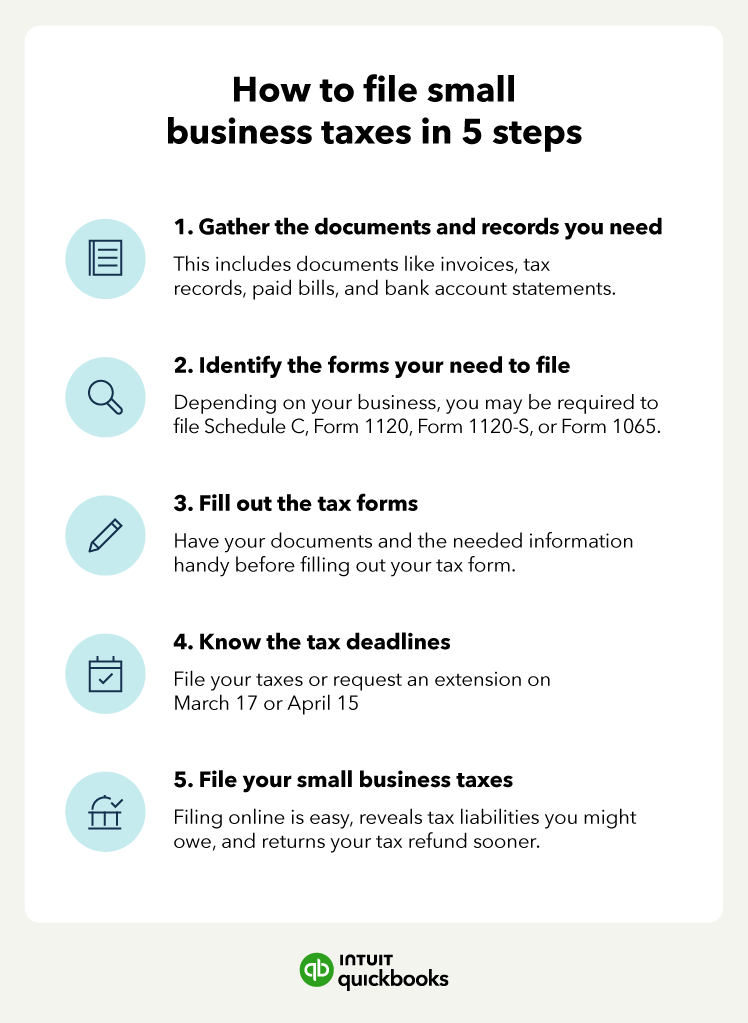
Filing taxes doesn’t have to be an annual ordeal. By systematically gathering your income documentation, identifying potential deductions and credits, securing essential personal information, and choosing the right tools, you can transform the process into a streamlined and confident experience. The discipline of organization throughout the year, coupled with a proactive approach to tax preparation, not only ensures compliance and accuracy but also empowers you with a clearer understanding of your financial landscape. Start early, leverage the resources available, and embrace the peace of mind that comes with a well-prepared tax season. Your financial well-being hinges on it.
aViewFromTheCave is a participant in the Amazon Services LLC Associates Program, an affiliate advertising program designed to provide a means for sites to earn advertising fees by advertising and linking to Amazon.com. Amazon, the Amazon logo, AmazonSupply, and the AmazonSupply logo are trademarks of Amazon.com, Inc. or its affiliates. As an Amazon Associate we earn affiliate commissions from qualifying purchases.