
Navigating the annual ritual of filing taxes can often feel like a complex and costly endeavor. Many taxpayers assume that paying for professional help or commercial software is an unavoidable expense. However, a wealth of resources exists that allows millions of Americans to file their federal (and often state) income taxes entirely for free. Understanding who qualifies for these programs and how to access them is key to saving money and reducing financial stress. The landscape of free tax filing options is robust, encompassing government-sponsored initiatives, volunteer-led assistance, and free tiers of popular tax software, each designed to make tax compliance accessible for various income levels and tax situations.

Understanding Your Eligibility for Free Tax Filing
The first step in filing your taxes for free is to determine which programs or services you qualify for. Eligibility is typically based on factors such as your Adjusted Gross Income (AGI), age, or specific life circumstances. Identifying the right fit ensures you leverage the appropriate resources and avoid unnecessary costs.
Income Thresholds and Specific Programs
The primary determinant for most free tax filing options is your AGI. The Internal Revenue Service (IRS) partners with tax software companies to offer the IRS Free File Program, which is available to taxpayers whose AGI falls below a specific threshold (this amount changes annually, for the 2023 tax year, it was $79,000 for most taxpayers). This program is a critical resource, providing access to guided tax preparation software at no cost, as long as you initiate the process through the official IRS Free File website.
Beyond the IRS Free File Program, two vital volunteer-run initiatives cater to specific demographics:
- Volunteer Income Tax Assistance (VITA): This program offers free tax help to people who generally make $64,000 or less, persons with disabilities, and limited English-speaking taxpayers who need assistance in preparing their own tax returns. IRS-certified volunteers provide free basic income tax return preparation with electronic filing.
- Tax Counseling for the Elderly (TCE): Specifically for taxpayers aged 60 and older, the TCE program specializes in pensions and retirement-related issues unique to seniors. Like VITA, TCE services are provided by IRS-certified volunteers who offer free tax preparation and e-filing.
Military personnel may also have dedicated free filing options, often through programs like Military OneSource, which offers free tax preparation and filing services to active-duty military members, their spouses, and eligible family members.
Types of Tax Situations Best Suited for Free Filing
While free filing options are extensive, they are particularly well-suited for certain types of tax situations. If your tax return primarily involves W-2 income, standard deductions, and common credits like the Earned Income Tax Credit (EITC) or the Child Tax Credit, you are an excellent candidate for free services. These programs can often handle straightforward investments (e.g., Form 1099-DIV, 1099-INT), education credits, and even some Schedule C (profit or loss from business) forms for very simple self-employment income.
However, if your tax situation is highly complex—involving extensive investment portfolios, rental properties, foreign income, or intricate business structures—some free commercial software tiers might fall short. In such cases, VITA/TCE volunteers, with their specialized training, can often still assist, especially for moderate complexities. It’s always best to check the scope of services offered by each program or software provider against your specific tax profile.
Exploring Official Free Filing Programs
The official pathways for free tax filing are designed to be accessible and reliable. These programs are backed by the IRS, ensuring accuracy and compliance. Leveraging them correctly is crucial to unlocking their full benefit.
The IRS Free File Program
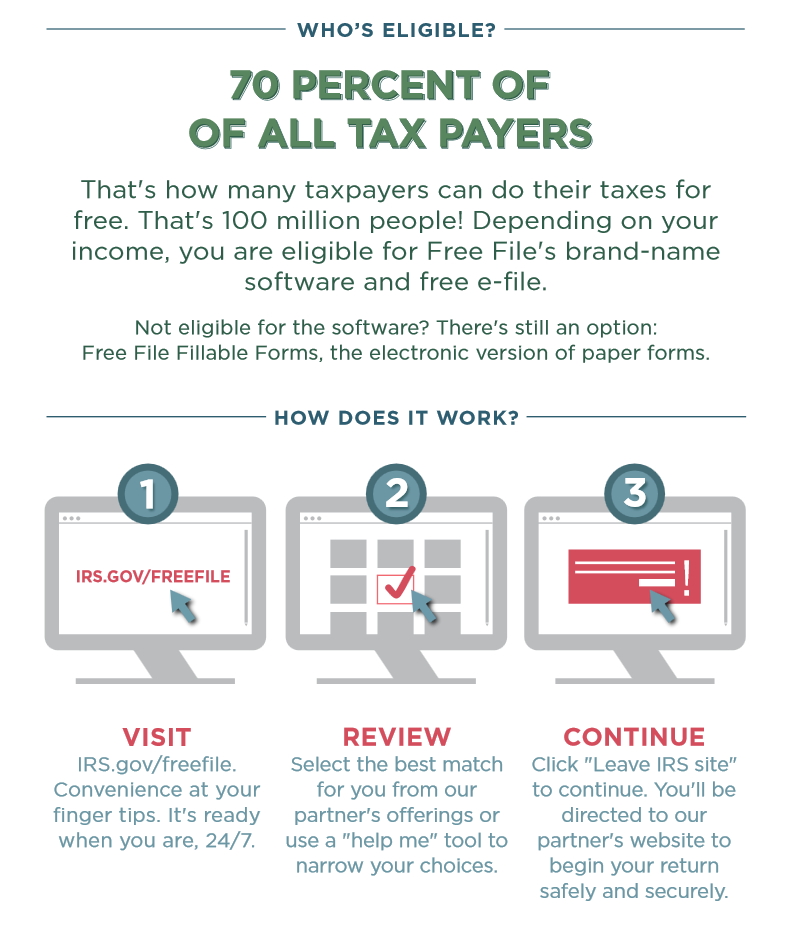
The IRS Free File Program is a unique public-private partnership. The IRS works with a consortium of tax software companies to provide free online tax preparation and electronic filing. To utilize this program, taxpayers must start their filing process from the official IRS.gov/FreeFile website. If you go directly to a tax software provider’s website, you might be redirected to their paid products, even if you qualify for free filing through the IRS program.
Once on the IRS Free File page, you can browse a list of participating software providers, each detailing their specific AGI limitations and any state filing options. You select the provider that best fits your income and needs, then click through to their site to begin preparation. These software programs guide you step-by-step, ensuring you report all necessary income and claim eligible deductions and credits. They also allow for electronic filing, which is the fastest and most secure way to submit your return.
Volunteer Income Tax Assistance (VITA) and Tax Counseling for the Elderly (TCE)
For those who prefer in-person assistance or have more complex situations that might exceed the capabilities of basic free software, VITA and TCE sites are invaluable. These sites are typically located in community centers, libraries, churches, and senior centers across the country.
- VITA services are particularly beneficial for low to moderate-income individuals and families. The IRS-certified volunteers are trained to handle a wide range of tax scenarios, including the EITC, Child Tax Credit, education credits, and even some self-employment income. They provide personalized assistance, review documents, prepare the return, and electronically file it, all at no cost. This hands-on approach minimizes errors and helps taxpayers understand their return.
- TCE services provide similar comprehensive assistance but with a focus on seniors. Volunteers are often equipped to address common issues faced by older adults, such as retirement income, pensions, and Social Security benefits. This specialized knowledge ensures that seniors receive tailored advice and assistance for their unique financial situations.
To find a VITA or TCE site near you, you can use the IRS VITA/TCE Locator tool on the IRS website, which provides contact information and operating hours for local centers.
Leveraging Free Software and Online Tools
Beyond the official IRS-partnered programs and volunteer sites, many commercial tax software providers offer free versions or tiers. These can be convenient, but it’s essential to understand their limitations and potential for upselling.
Commercial Software with Free Tiers
Major tax software companies like TurboTax, H&R Block, and TaxAct often provide “free editions” or “free online” options. These usually cater to taxpayers with very simple returns, primarily those filing a Form 1040 with W-2 income, claiming the standard deduction, and potentially basic credits like the EITC or Child Tax Credit.
The key caveat with these commercial free tiers is their scope. They are designed to handle the most basic tax situations. If your tax profile involves things like itemized deductions, capital gains/losses, self-employment income requiring a Schedule C, rental income, or certain educational deductions, you will often find yourself prompted to upgrade to a paid version of the software. While the initial federal filing might be free, state filing is frequently an additional charge, even for simple returns. Always read the fine print carefully to avoid unexpected fees.
To use these free tiers effectively, ensure your tax situation is genuinely simple. These platforms offer a guided experience, making the process relatively straightforward for those who fit the criteria. However, be vigilant about the upsell prompts for additional features or services that you may not need or that would negate the “free” aspect.
Direct File Pilot Program (where available)
For certain tax years and in specific states, the IRS has introduced the Direct File pilot program. This initiative allows eligible taxpayers in participating states to file their federal tax returns directly with the IRS for free, online, and without using a third-party tax software provider. The program is typically limited to taxpayers with simpler returns, primarily W-2 income, Social Security benefits, unemployment compensation, and claiming the standard deduction. If available for your state and tax situation, Direct File offers a direct and straightforward way to file federal taxes without cost. It’s important to check the IRS website for the latest information on its availability and eligibility requirements.
Beyond Federal: Free State Tax Filing Options
While much of the focus is on federal tax filing, many states also require an income tax return. Fortunately, free options often extend to state filing as well.
State-Specific Free File Programs
Many states operate their own versions of the Free File program, partnering with tax software companies to provide free state tax preparation and e-filing for eligible residents. The eligibility requirements, particularly the AGI thresholds, can vary from state to state. It’s advisable to check your specific state’s Department of Revenue or Tax Commission website for information on their free filing programs. Some states may even offer free fillable forms directly on their websites for those comfortable doing the calculations themselves.
Integrated Federal and State Filing
Often, when you use a free federal tax software option (either through the IRS Free File Program or a commercial free tier), it will offer an option to prepare and file your state return. Sometimes, if your federal return is free, the state return will also be free, especially if it’s a very simple return. However, it’s common for there to be a separate charge for state filing, even if the federal filing was free. This is another area where carefully reading the terms and conditions is paramount.
VITA and TCE sites frequently assist with state tax returns in addition to federal returns. If you qualify for these volunteer programs, their IRS-certified volunteers can often help prepare and e-file both your federal and state returns simultaneously, ensuring a completely free filing experience for both.
States with No Income Tax
It’s also worth noting that nine states currently do not impose a statewide income tax: Alaska, Florida, Nevada, New Hampshire (only taxes interest and dividends), South Dakota, Tennessee (only taxes interest and dividends), Texas, Washington, and Wyoming. If you reside in one of these states, you only need to worry about filing your federal income tax return, simplifying the process considerably.
Tips for a Smooth and Error-Free Free Filing Experience
Successfully filing your taxes for free involves more than just selecting the right program; it also requires careful preparation and attention to detail. A smooth and error-free experience will prevent delays and potential issues with the IRS.
Gather All Necessary Documents
Before you begin, compile all pertinent financial documents. This includes:
- Income Statements: W-2 forms from employers, 1099 forms (1099-NEC for independent contractors, 1099-INT for interest income, 1099-DIV for dividends, 1099-R for retirement distributions, etc.).
- Proof of Deductions and Credits: Receipts for qualified expenses, Form 1098-E for student loan interest, Form 1098-T for tuition expenses, child care statements, and medical expense records.
- Personal Information: Social Security numbers (or Individual Taxpayer Identification Numbers) for yourself, your spouse, and any dependents.
- Previous Year’s Tax Return: This can be a useful reference, especially for finding your prior year’s AGI, which is often needed for identity verification.
- Bank Account Information: For direct deposit of any refund or direct debit of taxes owed.
Having everything organized beforehand will make the process much faster and reduce the likelihood of errors.
Understand Your Deductions and Credits
Even when using guided software or volunteer assistance, having a basic understanding of common deductions and credits you might qualify for is beneficial. This empowers you to ensure you’re claiming everything you’re entitled to. Key areas to consider include:
- Standard Deduction vs. Itemized Deductions: Most free filers take the standard deduction, but if your itemized deductions (e.g., mortgage interest, state and local taxes, charitable contributions) exceed the standard amount, it’s worth exploring.
- Tax Credits: Familiarize yourself with credits like the Earned Income Tax Credit (EITC), Child Tax Credit, Credit for Other Dependents, education credits (American Opportunity Tax Credit, Lifetime Learning Credit), and the Premium Tax Credit if you have health insurance through the marketplace. Credits directly reduce your tax liability dollar-for-dollar, making them incredibly valuable.
Review Thoroughly Before Submitting
Regardless of whether you use online software or in-person assistance, a final, meticulous review of your return is non-negotiable. Check for common mistakes:
- Typos: Especially in Social Security numbers, names, and addresses.
- Missing Information: Ensure all income sources are reported.
- Correct Bank Information: Double-check routing and account numbers for direct deposit or payment.
- Accuracy of Calculations: While software automates this, a quick sanity check can catch glaring errors.
If using software, utilize its built-in error checks. If working with VITA/TCE, their volunteers perform a quality review to catch mistakes. This final verification step is crucial for accurate filing and avoiding potential IRS correspondence.

Keep Records
After successfully filing, save copies of your submitted federal and state tax returns, along with all supporting documents (W-2s, 1099s, receipts, etc.). The IRS generally recommends keeping tax records for at least three years from the date you filed your original return or two years from the date you paid the tax, whichever is later. This ensures you have proof of filing and supporting documentation in case of an audit or if you need to amend a return in the future. Store these documents securely, whether digitally or in physical folders.
aViewFromTheCave is a participant in the Amazon Services LLC Associates Program, an affiliate advertising program designed to provide a means for sites to earn advertising fees by advertising and linking to Amazon.com. Amazon, the Amazon logo, AmazonSupply, and the AmazonSupply logo are trademarks of Amazon.com, Inc. or its affiliates. As an Amazon Associate we earn affiliate commissions from qualifying purchases.