
The annual ritual of tax preparation can often feel like a daunting financial Everest. For many, it’s a period marked by anxiety, confusion, and the meticulous gathering of financial documents. However, the advent of sophisticated financial tools like TurboTax has transformed this complex process into a more manageable and even empowering financial exercise. Far from just a data entry mechanism, TurboTax serves as a pivotal instrument in personal financial management, guiding individuals through the intricacies of the tax code to ensure accuracy, compliance, and ultimately, optimized financial outcomes. This comprehensive guide delves into leveraging TurboTax not just for filing, but as a strategic component of your broader financial planning.

The Evolution of Tax Preparation and TurboTax’s Role in Financial Empowerment
The landscape of tax preparation has undergone a radical transformation over the past few decades. What was once a labor-intensive chore involving paper forms, endless calculations, and often, costly professional assistance, has largely migrated to the digital realm. This shift has not only streamlined the process but has also democratized access to sophisticated tax knowledge, making it an essential tool for personal financial autonomy.
From Manual Calculations to Digital Efficiency: A Financial Revolution
Before the digital age, tax preparation was a formidable task. Individuals and small businesses grappled with deciphering complex IRS forms, performing manual arithmetic, and ensuring every deduction and credit was accurately accounted for. Errors were common, leading to audits, penalties, and significant financial stress. The cost of professional tax services, while often necessary, also represented a notable expense, especially for those with simpler financial situations. This traditional model often created a barrier to effective tax planning, as individuals might avoid understanding the nuances of their financial obligations due to the sheer complexity.
The introduction of tax software marked a revolutionary turning point. These applications began to automate calculations, provide step-by-step guidance, and flag potential errors, drastically reducing the time and effort required. This technological leap was not just about convenience; it was about empowering individuals to take greater control over their financial reporting and understanding. The ability to quickly and accurately complete tax forms meant less time spent on administrative tasks and more time for strategic financial decision-making.
TurboTax as a Cornerstone Financial Tool for Households and Businesses
Among the pioneers and enduring leaders in this financial revolution is TurboTax. Developed by Intuit, TurboTax emerged as more than just software; it became a comprehensive financial tool designed to simplify tax compliance for millions. Its user-friendly interface, coupled with robust algorithmic engines, translates the formidable language of the IRS into digestible questions and prompts. For the average taxpayer, TurboTax demystifies the process, making it accessible regardless of their financial literacy level.
For households, TurboTax provides a secure and reliable platform to manage everything from W-2 income and mortgage interest deductions to educational credits and charitable contributions. It helps identify opportunities to reduce taxable income and maximize refunds, directly impacting disposable income and savings potential. For small business owners and freelancers, it offers tailored solutions for reporting self-employment income, business expenses, and understanding quarterly tax obligations, which are critical components of maintaining financial health and compliance.
Crucially, TurboTax’s role extends beyond mere calculation. It educates users by explaining tax concepts in plain language, helping them understand why certain information is needed and how it affects their tax liability. This pedagogical aspect is invaluable for financial literacy, fostering a deeper understanding of one’s financial position and the impact of various life choices on tax outcomes. In essence, TurboTax has evolved into an indispensable cornerstone financial tool, not just for submitting taxes, but for fostering greater financial awareness and strategic planning across diverse financial landscapes.
Understanding the TurboTax Advantage for Optimized Financial Management
In the realm of personal finance, efficiency and accuracy are paramount, especially when dealing with taxes. TurboTax distinguishes itself not merely as a tax filing utility, but as an advanced financial management assistant that offers significant advantages in maximizing your financial position. Its design philosophy centers on demystifying complex financial regulations and providing a clear path to accurate and optimized tax outcomes.
Streamlined Data Entry and Auto-Population: Saving Time and Reducing Financial Stress
One of the most compelling advantages of using TurboTax lies in its ability to dramatically streamline the data entry process. The days of manually inputting every figure from every document are largely over. TurboTax leverages sophisticated technology to pull in critical financial data, saving countless hours and significantly reducing the potential for human error, which can lead to costly financial repercussions.
This process begins with the seamless import of W-2 information directly from employers. Many payroll providers partner with TurboTax, allowing users to automatically import their wage and tax statements with just a few clicks. The same efficiency extends to investment income: financial institutions frequently enable direct import of 1099 forms for dividends, interest, and capital gains, ensuring that even complex investment portfolios are accurately reported. Furthermore, for returning users, TurboTax carries over prior year information, pre-filling many static fields and historical data points, making subsequent tax seasons even quicker. This auto-population feature not only conserves valuable time but also alleviates the financial stress associated with manual transcription, allowing users to focus on strategic financial review rather than tedious data input.
Maximizing Deductions and Credits: Unlocking Financial Savings
Perhaps the most significant financial benefit of TurboTax is its expert system designed to identify and apply every eligible deduction and credit. The tax code is a labyrinth of provisions, many of which can significantly reduce a taxpayer’s liability or increase their refund. Without an in-depth understanding of these rules, individuals can inadvertently leave money on the table.
TurboTax functions as a sophisticated financial advisor, guiding users through a series of intuitive questions about their life events, income sources, and expenses. Based on the responses, it intelligently scans thousands of tax laws to pinpoint relevant deductions (like student loan interest, IRA contributions, or business expenses for freelancers) and credits (such as child tax credit, earned income tax credit, or education credits). It doesn’t just list them; it actively probes for information that might qualify users for these financial benefits. For instance, it might ask about home office usage, medical expenses, or energy-efficient home improvements, all potential avenues for tax savings. This proactive approach ensures that users leverage every legal means to minimize their tax burden, directly translating into greater financial savings or a more substantial refund.
Real-time Financial Insights and Planning: A Proactive Approach to Wealth
Beyond just filing taxes, TurboTax offers invaluable real-time financial insights that transform tax preparation from a retrospective obligation into a proactive planning opportunity. As you input your financial data, TurboTax continuously calculates your estimated refund or tax liability. This immediate feedback loop allows you to see the financial impact of each piece of information, fostering a deeper understanding of how different income streams, deductions, and credits affect your overall financial picture.
This real-time calculation is a powerful tool for financial planning. It can highlight areas where you might adjust your financial behavior in the current or upcoming year to optimize your tax position. For example, if you see your tax liability is higher than expected, it might prompt you to consider increasing pre-tax retirement contributions or making additional charitable donations before the end of the year. Some versions of TurboTax even offer projections for the following year based on current data, enabling users to anticipate future financial obligations or opportunities. By providing clarity and insights into their financial standing, TurboTax empowers individuals to make informed decisions that contribute to long-term wealth building and prudent financial management, transcending its primary role as a tax filing tool to become a comprehensive financial compass.
A Step-by-Step Financial Journey Through TurboTax
Navigating the complexities of tax season can be less daunting with a structured approach. TurboTax provides a guided path, transforming what could be a confusing financial exercise into a manageable, step-by-step process. Each stage is designed to ensure accuracy, compliance, and ultimately, an optimized financial outcome.

Gathering Your Financial Documents: The Foundation of Accuracy
The cornerstone of successful tax preparation, and indeed sound financial management, is meticulous record-keeping. Before even launching TurboTax, the most crucial first step is to systematically gather all relevant financial documents. This preparatory phase is vital for ensuring that all income sources, deductions, and credits are accurately reported, preventing omissions that could lead to penalties or missed financial opportunities.
Typically, this includes W-2 forms for employment income, 1099 forms for various other income types (such. as interest, dividends, capital gains, retirement distributions, or freelance earnings), and K-1 forms for partnership or S-Corp income. Beyond income, you’ll need documentation for potential deductions: mortgage interest statements (Form 1098), student loan interest statements, records of charitable contributions, medical expense receipts, childcare expenses, and records of any business-related expenses if you’re self-employed. Having these documents organized and readily accessible not only speeds up the TurboTax process but also provides a clear financial snapshot, allowing for a more insightful review of your financial year.
Navigating Income and Expenses Reporting: Precision in Your Financial Snapshot
Once your documents are in hand, TurboTax guides you through the process of reporting your income and expenses. This stage is where the software truly shines as a financial assistant, breaking down intimidating forms into simple, understandable questions. TurboTax systematically walks you through different categories, ensuring that no stone is left unturned in constructing a precise financial snapshot.
You’ll input information from your W-2s, 1099s, and other income statements. For self-employed individuals or small business owners, TurboTax provides dedicated sections to report business income and itemize relevant business expenses, helping to accurately calculate profit or loss and determine self-employment taxes. It prompts you about potential deductions and credits based on your life situation – asking about dependents, educational pursuits, medical costs, homeownership, and more. Each piece of information entered is cross-referenced with tax laws, and the software offers explanations and insights, helping you understand the financial implications of each entry. This interactive Q&A format ensures that even those with limited tax knowledge can accurately report their financial data, while maximizing potential tax benefits.
Reviewing for Accuracy and Compliance: Securing Your Financial Integrity
After you’ve entered all your financial data, TurboTax provides a critical review stage. This step is indispensable for securing your financial integrity and ensuring compliance with tax regulations. The software performs an exhaustive check for common errors, overlooked deductions, and inconsistencies that could flag your return for an audit or lead to incorrect tax calculations.
TurboTax’s “Error Check” feature meticulously scans your entire return. It highlights potential issues, such as missing information, mathematical errors, or entries that seem out of the ordinary based on typical financial benchmarks. It also ensures that all necessary forms have been completed and attached. More than just an error detector, it also offers a “Maximize Your Refund” or “Reduce Your Tax Bill” check, actively suggesting areas where you might have missed a deduction or credit. This comprehensive review provides peace of mind, knowing that your financial submission is as accurate and optimized as possible before it reaches the IRS.
E-Filing and Post-Filing Considerations: Concluding Your Financial Obligation
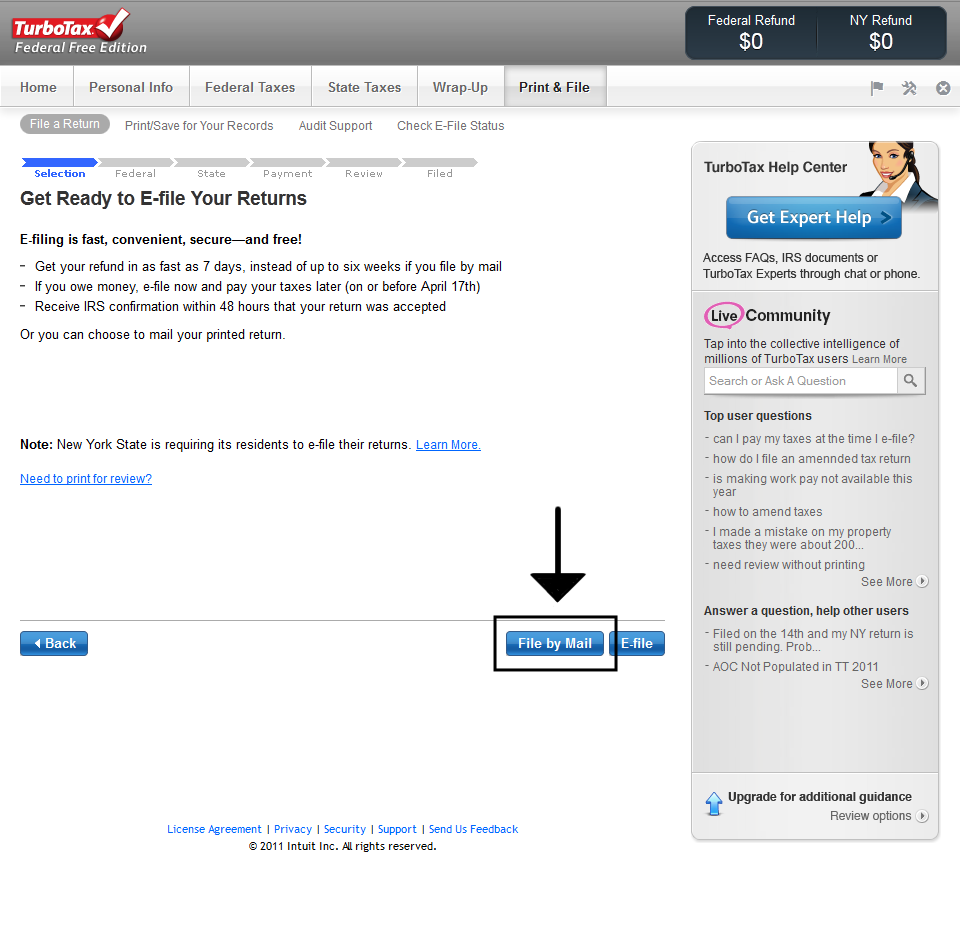
With your return thoroughly reviewed and finalized, the next logical step is e-filing. TurboTax facilitates direct electronic submission of your federal and state tax returns to the respective tax authorities. E-filing is not only the fastest and most secure method of submission but also expedites the processing of any refund you may be due.
Once filed, TurboTax provides confirmation that your return has been accepted by the IRS and state agencies. However, your financial journey doesn’t end there. Post-filing considerations are crucial. If you’re due a refund, TurboTax helps you track its status. If you owe taxes, it provides options for secure electronic payment directly from your bank account. Furthermore, it’s prudent to save a digital and/or physical copy of your filed return and all supporting documents for at least three years (or longer, depending on your financial activities). This record-keeping is vital for future reference, audit defense, and long-term financial planning, allowing you to easily retrieve past financial data for analysis or future tax preparation. TurboTax streamlines this entire process, ensuring a smooth conclusion to your annual financial obligation.
Strategic Financial Planning Through Tax Preparation
Tax preparation, often viewed as a singular annual event, offers a rich wellspring of data and insights that can be harnessed for strategic financial planning. Rather than a mere compliance task, engaging with tools like TurboTax transforms the process into a potent opportunity to review, analyze, and optimize one’s financial trajectory.
Leveraging Tax Data for Future Budgeting: Informed Financial Decisions
The detailed financial information compiled during tax preparation is an invaluable resource for future budgeting and financial forecasting. Your tax return provides a comprehensive overview of your income streams, expenditures that qualify for deductions, and overall financial inflows and outflows throughout the year. Analyzing this data can reveal significant patterns and areas for improvement in your spending and saving habits.
For example, a review of your W-2s and 1099s reveals your total income earned, while itemized deductions highlight where a substantial portion of your discretionary spending or investment in specific areas (like healthcare, education, or charitable giving) occurred. If you consistently find yourself owing a large sum, it might indicate a need to adjust your W-4 withholdings or make estimated tax payments throughout the year, freeing up cash flow and preventing a large financial hit at tax time. Conversely, a consistently large refund might suggest you’re overpaying taxes throughout the year, effectively giving the government an interest-free loan. Re-evaluating your withholdings could put more money in your pocket sooner, which could then be invested or used to pay down debt. By using TurboTax’s summary reports and carrying over data, you gain a clear picture of your financial footprint, enabling more informed and proactive budgeting decisions that align with your long-term financial goals.
Identifying Opportunities for Tax Optimization: Proactive Financial Health
Beyond simply reporting past financial activities, the tax preparation process, especially when guided by TurboTax, is a prime opportunity to identify strategies for future tax optimization. This proactive approach to financial health can significantly impact your net worth over time. By understanding how certain financial decisions affect your tax liability, you can make smarter choices throughout the year.
As you work through TurboTax, pay attention to the deductions and credits that apply to you. Did you contribute to an IRA or 401(k)? These contributions reduce your taxable income. If you didn’t, or contributed less than the maximum, you might consider increasing these contributions in the next year to both save for retirement and lower your tax bill. Are you planning major life events like buying a home, starting a business, or pursuing further education? TurboTax’s prompts and explanations can help you understand the potential tax implications and benefits of these decisions before they happen, allowing you to plan accordingly. For instance, understanding the mortgage interest deduction or business expense deductions can influence your decisions on property or entrepreneurial ventures. By reviewing the “why” behind your current tax situation, you can strategically adjust your financial behaviors—from investment choices to charitable giving strategies—to minimize future tax burdens and maximize your overall financial health.
The Importance of Professional Review (When to Seek Advice): Collaborative Financial Wisdom
While TurboTax is an incredibly powerful and intuitive financial tool, there are certain situations where integrating professional advice can provide an added layer of security and strategic insight. Recognizing when to seek a professional review or full consultation is a sign of sophisticated financial wisdom.
Complex financial situations often warrant a second look from a qualified tax professional. This includes significant life changes such as major inheritances, selling substantial assets (like real estate or a business), dealing with international income, or navigating intricate investment portfolios with various types of gains and losses. Small business owners with complex inventory, payroll, or multi-state operations may also benefit from an expert’s eye to ensure every nuance of business finance is correctly handled. Furthermore, if you receive a notice from the IRS or are facing an audit, professional guidance is almost always recommended. A tax professional can offer tailored advice, identify advanced deductions or credits that might be easily missed, and provide assurance that your financial reporting is robust and compliant. While TurboTax empowers millions to manage their taxes independently, understanding its limits and knowing when to leverage collaborative financial wisdom ensures that even the most intricate financial scenarios are handled with utmost precision and strategic foresight.
In conclusion, “how to do taxes on TurboTax” is not merely a technical instruction but an invitation to embrace a sophisticated financial tool that empowers individuals and businesses alike. From simplifying data entry and maximizing financial benefits through deductions and credits, to offering real-time insights for proactive planning, TurboTax stands as a cornerstone in modern personal finance. By approaching tax preparation strategically, utilizing the financial data gleaned from the process, and understanding when to seek expert counsel, taxpayers can transform an annual obligation into an opportunity for greater financial control, optimization, and long-term wealth building.
aViewFromTheCave is a participant in the Amazon Services LLC Associates Program, an affiliate advertising program designed to provide a means for sites to earn advertising fees by advertising and linking to Amazon.com. Amazon, the Amazon logo, AmazonSupply, and the AmazonSupply logo are trademarks of Amazon.com, Inc. or its affiliates. As an Amazon Associate we earn affiliate commissions from qualifying purchases.