
The evolution of Tesla from a niche Silicon Valley startup to the world’s most valuable automaker is not merely a story of automotive design, but a masterclass in advanced manufacturing technology. Central to Tesla’s mission of accelerating the world’s transition to sustainable energy is the concept of the “Gigafactory”—a massive, vertically integrated production facility designed to optimize every stage of the manufacturing process. Unlike traditional automotive plants that rely heavily on a fragmented network of third-party suppliers, Tesla’s production strategy emphasizes the “machine that builds the machine.” This philosophy treats the factory itself as a product, subject to iterative software updates, hardware optimization, and radical engineering shifts.
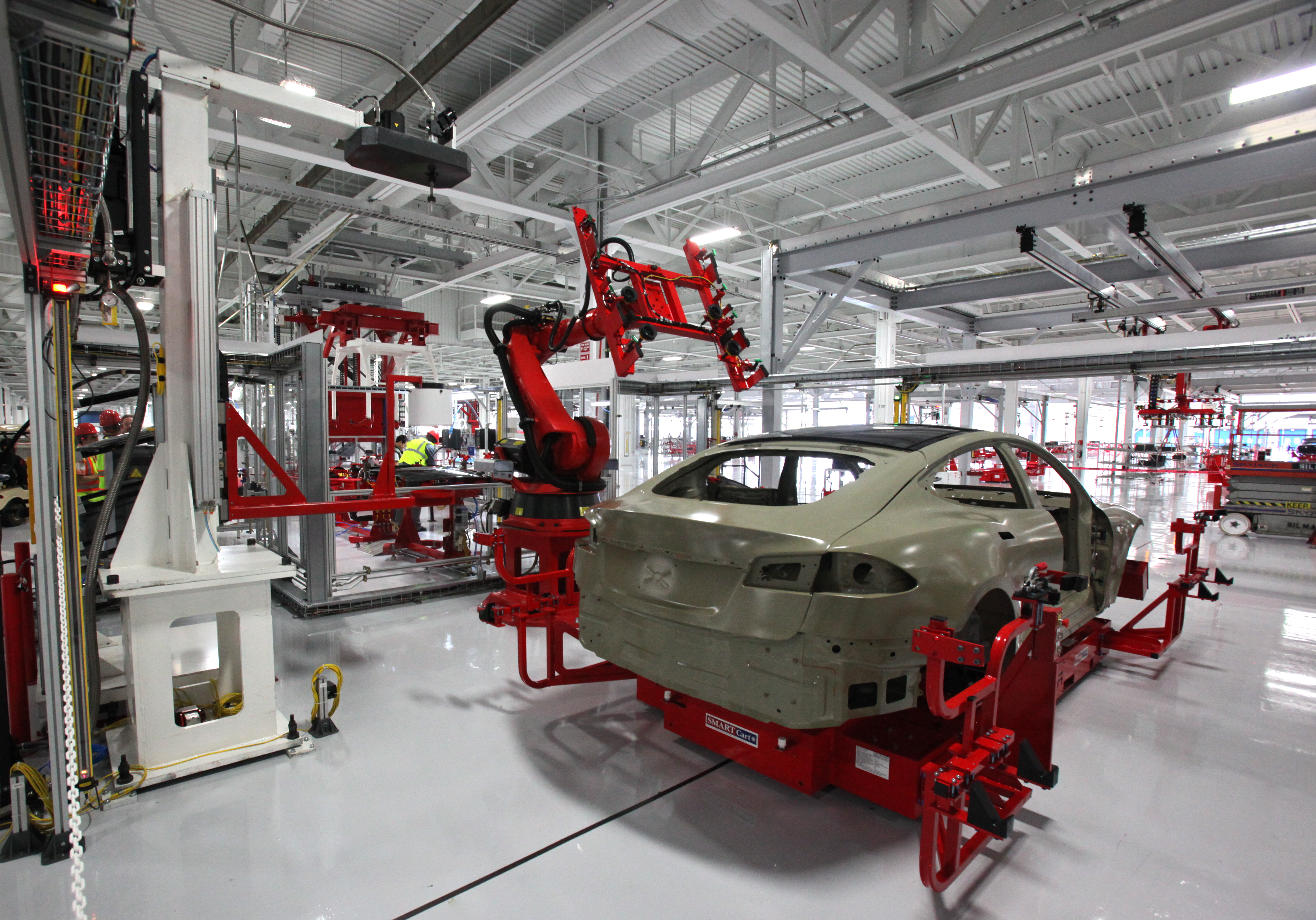
To understand where Tesla is produced is to understand a global network of high-tech hubs, each serving as a laboratory for the future of automation, robotics, and energy storage. From the sprawling deserts of Nevada to the industrial heart of Shanghai, Tesla’s production footprint is a testament to the power of software-defined manufacturing.
The American Heartland: The Origins of the Gigafactory Blueprint
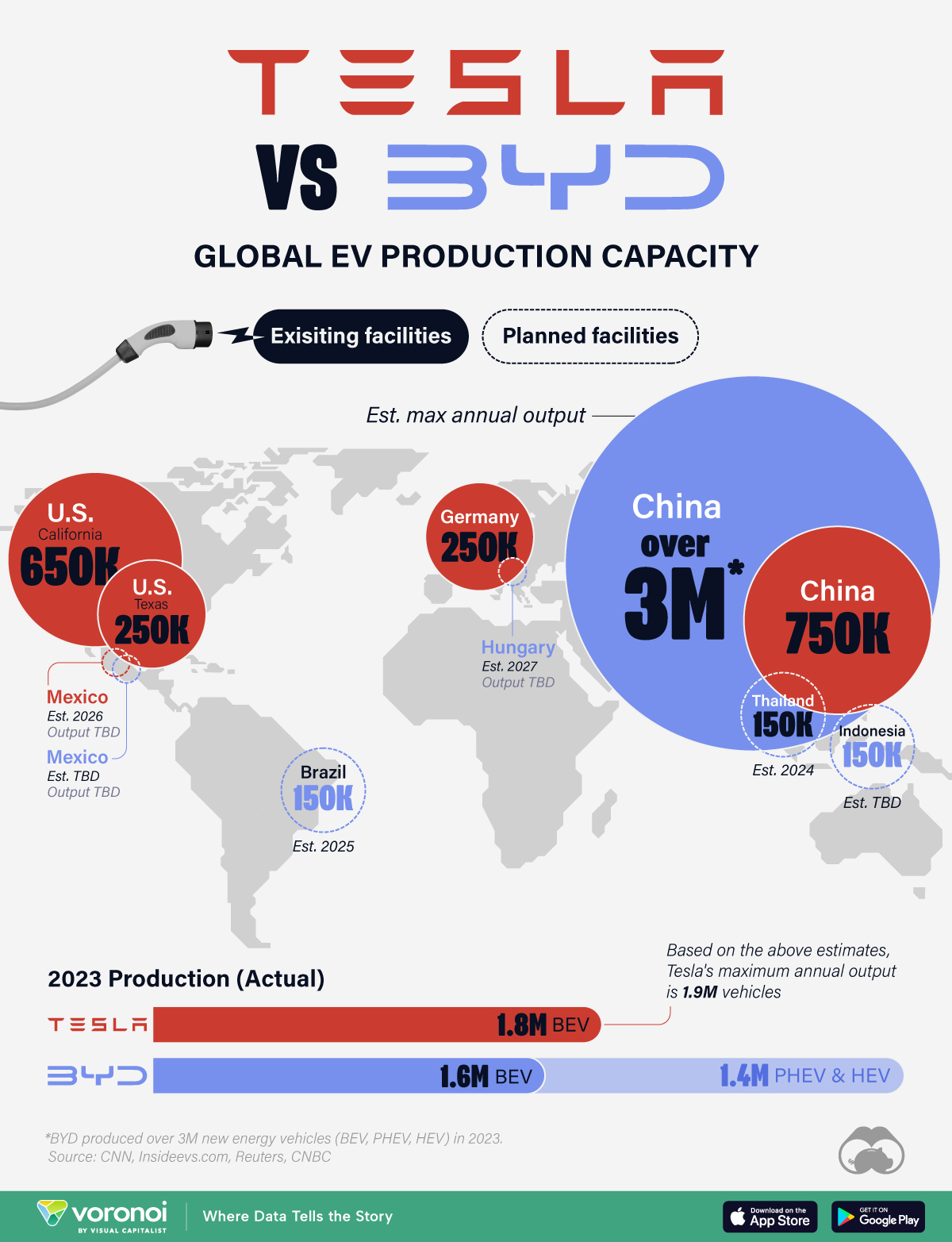
Tesla’s manufacturing journey began in Fremont, California, but the true technological leap occurred with the birth of the Gigafactory concept. These facilities are designed to handle the massive scale required for battery production and vehicle assembly, utilizing proprietary technology to drive down costs and increase efficiency.
Fremont Factory: The Proving Ground
The Fremont Factory remains one of the most advanced automotive plants in the world. Originally a joint venture between GM and Toyota (NUMMI), Tesla took over the facility and transformed it into a hotbed of robotic innovation. Today, it produces the Model S, Model X, Model 3, and Model Y. The Fremont plant is unique because it serves as a bridge between traditional automotive assembly and the high-tech, data-driven approach of Silicon Valley. Here, Tesla refined its early use of heavy-duty robotics and experimented with the integration of complex software systems into the assembly line.
Gigafactory Nevada: The Powerhouse of Battery Technology
Gigafactory Nevada (Giga Nevada) represents a pivotal shift in how Tesla manages its supply chain. In partnership with Panasonic, Tesla built this facility to solve the “battery bottleneck.” By producing 2170 lithium-ion battery cells, electric motors, and drivetrain components under one roof, Tesla achieved a level of vertical integration previously unseen in the industry. The technology at Giga Nevada focuses on high-speed automation and chemical engineering. The facility is one of the world’s highest-volume plants for electric motors and battery packs, utilizing a massive footprint to house the complex chemical processes required for cell production.
Gigafactory New York: Solar and Energy Infrastructure
Located in Buffalo, Giga New York shifts the focus from vehicles to the broader energy ecosystem. This facility is dedicated to the production of the Solar Roof, solar panels, and electrical components for the Supercharger network. The technological challenge here involves the precision manufacturing of solar glass and the integration of photovoltaic cells into durable roofing materials. It serves as the manufacturing backbone for Tesla’s vision of a decentralized energy grid.
Global Expansion: Scaling the Hardware and Software Stack
As demand for electric vehicles (EVs) surged globally, Tesla moved to localize production in key markets. This geographical expansion allowed the company to bypass logistical hurdles and tailor its manufacturing technology to regional requirements.
Gigafactory Shanghai: The Efficiency Benchmark
Giga Shanghai is perhaps the most impressive feat of engineering in Tesla’s portfolio. Constructed in less than a year, this factory revolutionized the concept of “Tesla Speed.” The facility focuses on the Model 3 and Model Y, serving both the massive Chinese domestic market and export markets in Europe and Asia. The technology at Giga Shanghai emphasizes a simplified production line and a localized supply chain, with over 95% of components sourced within China. This proximity reduces latency in the manufacturing process and allows for rapid iteration of vehicle hardware based on real-time data.
Gigafactory Berlin-Brandenburg: Engineering for the European Market
Giga Berlin represents Tesla’s first major manufacturing foothold in Europe. This facility is a showcase for the latest in Tesla’s production technology, including the most advanced paint shop in the world. The Berlin factory was designed to implement the “structural battery pack” and “megacasting” technologies, which replace hundreds of small parts with a few large, high-pressure die-cast components. This not only reduces the weight of the vehicle but also improves safety and manufacturing efficiency. Berlin is also a hub for Tesla’s 4680 cell development, a larger, more energy-dense battery format that is critical to the company’s future product roadmap.
Gigafactory Texas: The Advanced Manufacturing Headquarters
Gigafactory Texas is the new heart of Tesla’s operations. Spanning millions of square feet, Giga Texas is the home of the Cybertruck and the high-volume production of the Model Y. It serves as the global headquarters for Tesla and is the primary site for the implementation of the “Unboxed Process.” This new manufacturing paradigm involves painting only the parts that need it and assembling the car in sub-sections that are joined together at the end. This process minimizes the footprint of the factory and significantly reduces the time required for vehicle assembly.
Technological Innovations in Production: Beyond the Assembly Line
What sets Tesla’s production facilities apart is not just their location, but the proprietary technology housed within them. Tesla views manufacturing as an engineering problem that can be solved with code, robotics, and advanced materials science.
Megacasting and the Giga Press
One of the most significant breakthroughs in Tesla’s production is the use of the Giga Press—the largest high-pressure die-casting machines in the world. By using these massive machines to cast the front and rear underbodies of the Model Y and Cybertruck as single pieces of aluminum, Tesla has eliminated over 170 separate parts and hundreds of robots from the assembly line. This technological shift reduces the complexity of the vehicle’s frame, lowers the weight, and increases structural rigidity.
The 4680 Cell and Structural Battery Packs
The transition to the 4680 cell format is a core technological pillar of Tesla’s production strategy. These larger cells use a “tabless” design that allows for faster charging and better thermal management. More importantly, Tesla has integrated these cells into a structural battery pack. In this design, the battery pack is not just an energy storage device but a load-bearing part of the car’s chassis. This integration simplifies the manufacturing process and improves the vehicle’s range and performance by optimizing the space-to-weight ratio.
AI and Factory Automation
Tesla’s factories are increasingly becoming “software-defined.” Every robot on the floor and every sensor on the assembly line generates data that is fed back into a central neural network. This allows Tesla to perform predictive maintenance, optimize the flow of parts, and identify bottlenecks in real-time. The goal is to reach a level of automation that Musk has referred to as the “Alien Dreadnought”—a factory so fast and automated that the only human intervention required is for maintenance and high-level oversight.
Vertical Integration and the Software-Defined Supply Chain
The reason Tesla can produce vehicles at such a high margin compared to competitors is its radical approach to vertical integration. By owning the technology stack—from the software that runs the car to the silicon that powers the FSD (Full Self-Driving) computer—Tesla minimizes its reliance on external vendors.
In-House Silicon and Chip Design
While most automakers were crippled by the global semiconductor shortage, Tesla was able to pivot quickly because it designs its own chips. At its production facilities, Tesla integrates these custom-designed chips into the vehicles’ central computers. This allows for a level of hardware-software synergy that is impossible for companies using off-the-shelf components. The production of the Dojo supercomputer, designed for AI training, also informs the hardware architecture of the vehicles being produced on the line.
Software-Driven Iteration
In a traditional factory, making a change to a vehicle’s design might take years and require a complete retooling of the line. Tesla, however, treats its hardware like software. If data from the fleet suggests that a specific component can be improved or simplified, the change is often implemented on the production line within weeks. This agile manufacturing approach is supported by the fact that Tesla writes almost all its own firmware, allowing for seamless integration of new hardware versions without the need for extensive third-party validation.
The Future of Tesla Production: Giga Mexico and the Next-Generation Platform
The roadmap for Tesla’s production leads to Giga Mexico and the development of the next-generation vehicle platform. This upcoming facility is expected to be the most efficient manufacturing plant in history, designed specifically to produce a lower-cost, high-volume vehicle.
The technology at Giga Mexico will likely be the culmination of everything Tesla has learned from Fremont, Shanghai, Berlin, and Texas. It will focus on the “Unboxed” manufacturing strategy, further reducing the physical footprint and capital expenditure required per vehicle. By rethinking the very physics of the assembly line, Tesla aims to produce millions of vehicles annually, making the electric transition accessible to a global audience.
In conclusion, “where Tesla is produced” is a question with a multi-layered answer. It is produced in a physical network of Gigafactories across three continents, but it is also produced within a sophisticated technological ecosystem of AI, robotics, and materials science. Each factory is a node in a global network of innovation, ensuring that the vehicles rolling off the line are not just cars, but sophisticated pieces of hardware designed to evolve through software. As Tesla continues to expand, the “machine that builds the machine” will remain its most significant technological achievement.
aViewFromTheCave is a participant in the Amazon Services LLC Associates Program, an affiliate advertising program designed to provide a means for sites to earn advertising fees by advertising and linking to Amazon.com. Amazon, the Amazon logo, AmazonSupply, and the AmazonSupply logo are trademarks of Amazon.com, Inc. or its affiliates. As an Amazon Associate we earn affiliate commissions from qualifying purchases.