
The question “what is the biggest bank in the US?” might seem straightforward, but its answer is as multifaceted as the financial industry itself. While a single institution often dominates the top spot by the most commonly accepted metric, understanding what “biggest” truly signifies requires a deeper dive into financial performance indicators, market impact, and strategic positioning within the vast landscape of American finance. For consumers, businesses, and investors alike, the sheer scale of these financial giants has profound implications for the economy, access to capital, and the very stability of the monetary system.
In the realm of personal finance, business finance, and investing, identifying the largest players is crucial. It informs decisions about where to keep your money, seek loans, or place your investment capital. These colossal institutions are not just service providers; they are central pillars of global economic activity, influencing interest rates, credit availability, and the flow of capital worldwide.
Defining “Biggest”: A Multifaceted Financial Metric
To accurately determine the “biggest” bank, one must first establish the criteria. While several metrics can be used, some are more universally accepted and indicative of a bank’s overall influence and capacity.
Total Assets Under Management: The Gold Standard
When financial experts and regulators refer to the “biggest” bank, they overwhelmingly point to total assets. This metric represents the sum of all resources owned by the bank, including loans, securities, cash, and other investments. Assets are the engine of a bank’s lending capacity and its ability to generate revenue. A higher asset base typically indicates greater financial strength, broader market reach, and enhanced ability to absorb potential losses. For the largest US banks, this figure often runs into the multi-trillions of dollars, reflecting an immense concentration of financial power.
Other Key Financial Indicators
While total assets provide a robust measure, other financial indicators offer supplementary perspectives on a bank’s magnitude and market position:
- Market Capitalization: This metric reflects the total value of a bank’s outstanding shares, calculated by multiplying the share price by the number of shares. It is a real-time indicator of how investors perceive the bank’s future earnings potential and overall worth. A high market cap often suggests investor confidence and a strong brand, indirectly tied to financial strength.
- Total Deposits: Representing the funds customers have entrusted to the bank, total deposits are a vital measure of a bank’s funding base and its retail and commercial reach. A large deposit base provides stable, low-cost funding for the bank’s lending activities, making it less reliant on more volatile wholesale markets.
- Revenue and Profit: These figures illustrate the bank’s operational success and ability to generate income from its various services, including lending, investment banking, asset management, and trading. Consistent high revenues and profits are indicative of effective management and a strong market position, contributing to its financial growth and stability.
- Branch Network and Customer Base: While less of a direct financial metric, the number of physical branches, ATMs, and the overall customer base (retail and institutional) speaks to a bank’s accessibility and market penetration. A vast network means greater convenience for millions of consumers and businesses, though the digital age is rapidly shifting the importance of physical presence.
JPMorgan Chase & Co.: America’s Financial Behemoth
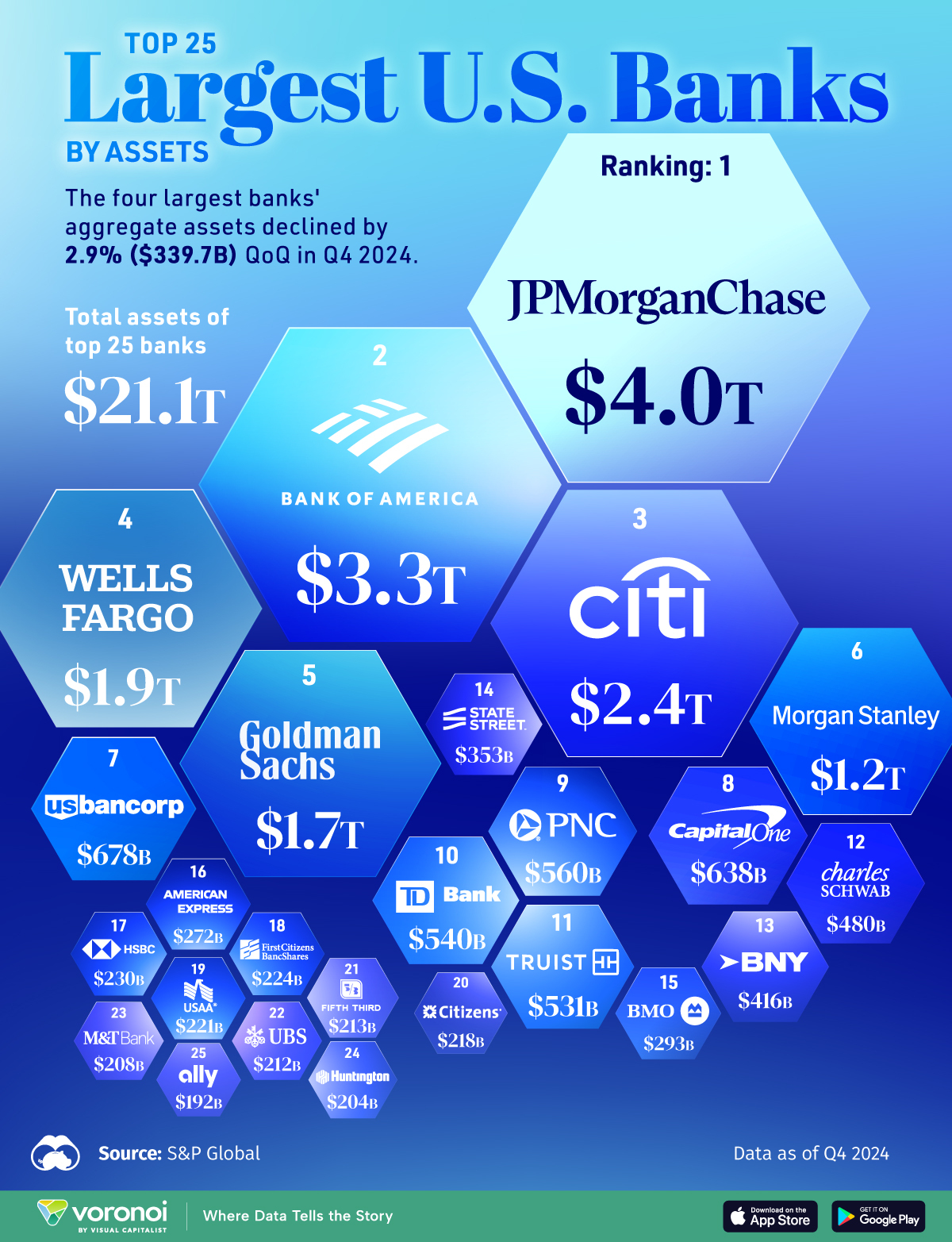
By the most widely accepted measure of total assets, JPMorgan Chase & Co. consistently holds the title of the largest bank in the United States. This financial giant is not merely big; it is a sprawling universal bank with operations spanning consumer banking, investment banking, commercial banking, and asset management on a global scale.
A Legacy of Growth and Strategic Mergers
JPMorgan Chase’s dominance is the culmination of a rich history marked by strategic mergers and acquisitions. Its roots trace back to the establishment of J.P. Morgan & Co. in 1871 by the legendary financier John Pierpont Morgan, an institution synonymous with corporate finance and investment banking. The “Chase” component came from Chase Manhattan Bank, itself a product of numerous mergers over its long history, specializing in commercial and retail banking. The pivotal merger in 2000 brought these two titans together, creating a diversified financial powerhouse. Subsequent acquisitions, such as Bear Stearns during the 2008 financial crisis and Washington Mutual, further cemented its position, expanding its reach and capabilities. This lineage of integrating diverse financial strengths has sculpted JPMorgan Chase into its current form: a leader in almost every facet of finance.
Comprehensive Financial Services and Global Reach
JPMorgan Chase’s colossal size allows it to offer an unparalleled breadth of financial services:
- Consumer & Community Banking (Chase brand): This segment serves millions of households and small businesses across the US, offering checking and savings accounts, mortgages, auto loans, credit cards, and investment products through its vast branch network and digital platforms.
- Corporate & Investment Bank (J.P. Morgan brand): This division is a global leader in investment banking (advising on mergers and acquisitions, underwriting securities), wholesale payments, and market-making in fixed income, equities, and currencies. It caters to corporations, institutional investors, and governments worldwide.
- Commercial Banking: Focused on mid-sized businesses, governments, and non-profits, providing lending, treasury services, and investment banking products.
- Asset & Wealth Management: Offering investment management, brokerage, and banking services to institutions, high-net-worth individuals, and retail investors.
With a presence in over 100 countries, JPMorgan Chase’s global reach means it plays a critical role in international trade, capital markets, and financial flows, truly making it a global systemic financial institution.
Financial Performance and Market Dominance
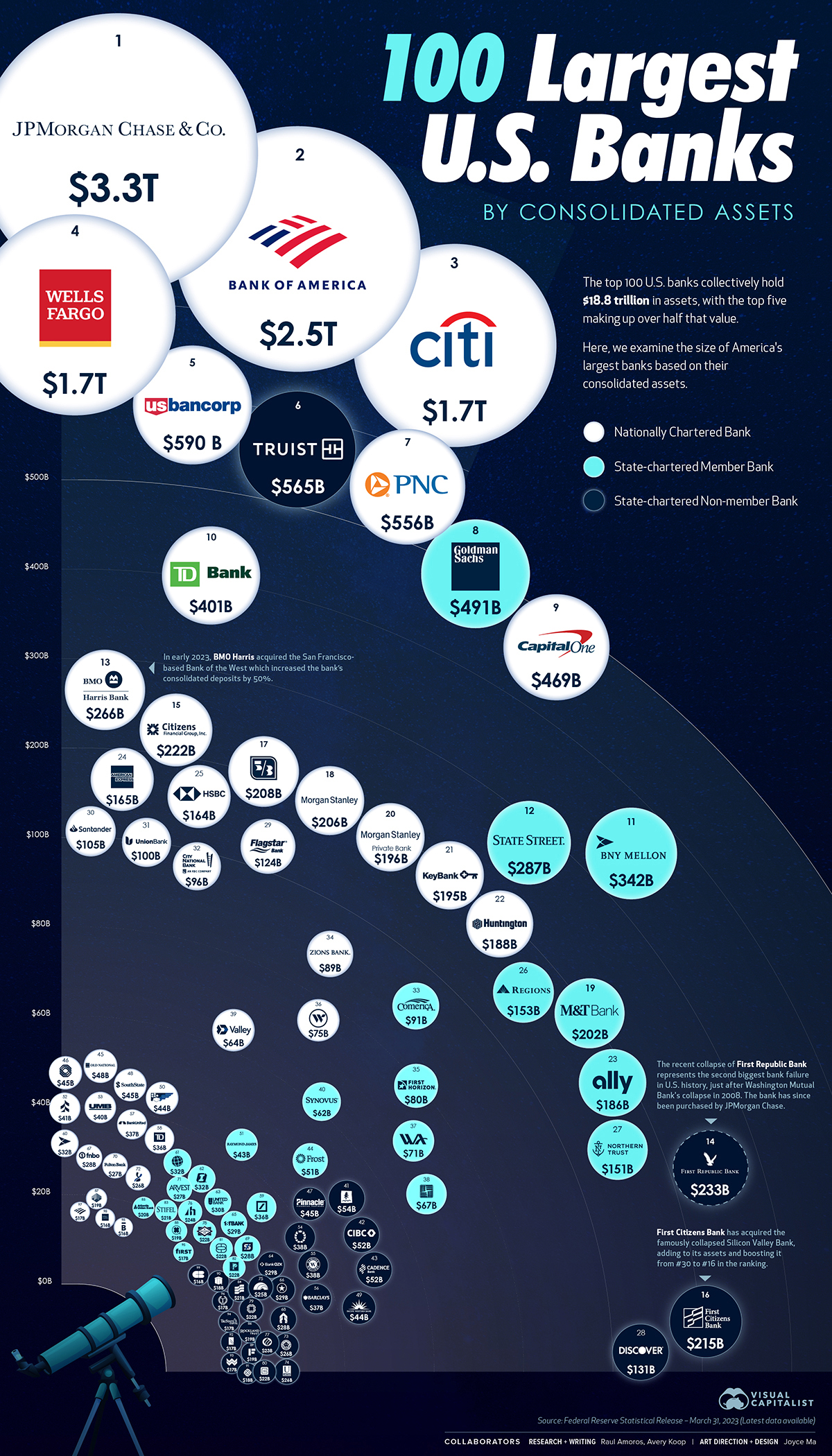
JPMorgan Chase’s financial performance regularly places it at the top of the banking sector. Its immense asset base, often exceeding $3 trillion, underpins its ability to generate substantial revenues and profits. This financial strength allows it to invest heavily in technology, risk management, and expansion, further solidifying its market dominance. Its consistent profitability and strong balance sheet make it a key bellwether for the health of the US and global economies, while its dividends are highly sought after by investors looking for stable income from blue-chip stocks.
The Titans of Wall Street: Other Major US Banks
While JPMorgan Chase sits atop the asset throne, several other banks command significant financial power and play crucial roles in the US and global economies. These institutions also contribute substantially to the “Money” landscape, offering diverse services to millions.
Bank of America: A Close Second with an Extensive Retail Footprint

Often vying for the top spot by various metrics, Bank of America (BofA) is a financial behemoth with a particularly strong emphasis on consumer banking. Its history includes significant mergers, notably with NationsBank and Merrill Lynch, which expanded its capabilities across retail banking, wealth management, and investment banking. BofA serves a massive customer base through thousands of branches and ATMs, making it highly accessible to everyday Americans. Its broad range of products includes credit cards, mortgages, personal loans, and small business services, alongside robust corporate and investment banking divisions.
Wells Fargo & Co.: The Western Giant Facing Challenges
Wells Fargo & Co. has a storied history, particularly in the Western US, known for its extensive network and strong community banking focus. Historically, it has been a leader in mortgage lending and has a substantial presence in retail and commercial banking. However, Wells Fargo has faced significant regulatory scrutiny and financial penalties in recent years due to various scandals, leading to a period of restructuring and a focus on rebuilding trust and improving compliance. Despite these challenges, its immense asset base and customer reach keep it among the top four US banks, vital for the financial health of many communities and businesses.
Citigroup Inc.: A Global Banking Powerhouse
Citigroup Inc. stands out for its strong international presence, with operations in over 160 countries and jurisdictions. While it maintains a retail banking presence in the US, its strength lies heavily in its institutional clients group, offering corporate and investment banking services, treasury and trade solutions, and private banking to multinational corporations, governments, and institutional investors. Citi’s global reach and expertise in cross-border finance make it a critical player in international capital markets and global trade flows, a true conduit for money across continents.
The Investment Banking Specialists: Goldman Sachs and Morgan Stanley
While not typically considered “commercial banks” in the same vein as JPMorgan Chase or Bank of America due to their smaller deposit bases and limited retail branches, Goldman Sachs and Morgan Stanley are undisputed titans of investment banking and capital markets. These firms primarily serve corporations, institutional investors, and high-net-worth individuals, specializing in mergers and acquisitions advisory, securities underwriting, asset management, and proprietary trading. Their influence on global financial markets, capital formation, and wealth management is immense, making them pivotal players in the broader “Money” ecosystem, even if their asset bases are structured differently from universal banks.
Why Bank Size Matters: Implications for Money and Markets
The sheer scale of these mega-banks isn’t just a matter of bragging rights; it carries significant implications for the economy, financial stability, and how individuals and businesses interact with the monetary system.
Systemic Importance and Economic Stability
Large banks are often deemed “systemically important financial institutions” (SIFIs) or “too big to fail” by regulators. This designation reflects their profound interconnectedness with the broader financial system. Their failure could trigger a cascading crisis, impacting credit markets, investment flows, and overall economic stability. Consequently, these banks are subject to more stringent regulatory oversight, capital requirements, and stress tests, aimed at mitigating risks and ensuring their resilience. From an economic perspective, their ability to lend on a massive scale fuels business growth, supports consumer spending, and facilitates government borrowing, acting as critical arteries for the flow of money in the economy.
Consumer and Business Impact: Reach, Services, and Innovation
For the average consumer and small business, large banks offer a mixed bag of advantages and disadvantages. On the positive side, their extensive branch networks and digital platforms provide unparalleled convenience and accessibility. They offer a vast array of products, from basic checking accounts and credit cards to complex investment and lending solutions, often at competitive rates due to economies of scale. Their financial muscle also allows them to invest heavily in technological innovation, leading to sophisticated mobile banking apps, advanced security features, and digital payment solutions that enhance the customer experience.
However, the size can also lead to impersonal service, bureaucratic processes, and a perception that individual customers are just numbers. While offering many services, some customers may find specialized, local banks or credit unions provide more personalized attention or better terms for specific needs. For businesses, large banks offer the capacity to fund major projects and provide complex financial instruments, but smaller businesses might find more tailored support from regional banks or credit unions.
Investment Considerations: Stability vs. Growth Potential
From an investor’s perspective, large banks typically represent stable, dividend-paying investments. Their diversified revenue streams, established market positions, and robust balance sheets often make them attractive as “blue-chip” stocks, offering a degree of predictability compared to smaller, more volatile companies. They are often bellwethers for the economic cycle, performing well during periods of growth and potentially struggling during recessions. However, their sheer size can also limit their rapid growth potential compared to nimbler, specialized financial institutions or fintech startups, which can capture niche markets more quickly. Investors must weigh the stability and income potential against the possibility of slower capital appreciation.
The Future of Banking: Adapting to a Digital Money Landscape
The banking industry, even for its largest players, is not static. It is constantly evolving, driven by technological advancements, regulatory changes, and shifting consumer expectations.
Technological Advancements and Fintech Disruptors
Major US banks are pouring billions into technology, recognizing that the future of money is increasingly digital. This includes investments in artificial intelligence (AI) for fraud detection, personalized financial advice, and automated customer service; blockchain technology for more efficient payments and record-keeping; and enhanced mobile banking platforms. The rise of fintech companies poses both a threat and an opportunity. While these agile startups can disrupt traditional banking services, large banks often acquire or partner with them to integrate new technologies and maintain their competitive edge. The focus is on creating seamless, secure, and intuitive digital experiences that cater to a generation accustomed to on-demand services.
Regulatory Pressures and Evolving Consumer Expectations
Regulators continue to evolve frameworks concerning data privacy, cybersecurity, and consumer protection, particularly given the sensitive nature of financial information. Large banks must navigate these complex landscapes while simultaneously responding to changing consumer expectations. Younger generations, in particular, demand transparency, ethical practices, and personalized digital interactions. This includes instant payment capabilities, real-time financial insights, and services that integrate seamlessly with other digital tools. The future of banking, even for the biggest players, will be defined by their ability to adapt to these digital and ethical imperatives, ensuring their services remain relevant and trusted in a rapidly changing world of money.
In conclusion, JPMorgan Chase & Co. firmly holds the title of the biggest bank in the US by total assets, a position it has secured through strategic growth and a comprehensive suite of financial services. However, understanding “biggest” encompasses much more than a single number. It involves appreciating the immense financial power, systemic importance, and diverse impact these institutions have on every facet of the “Money” category – from personal finance and business capital to global investment flows. As the financial landscape continues to transform, these banking giants will remain central to the discussion, constantly adapting to new technologies, regulations, and the ever-evolving demands of individuals and markets worldwide.
aViewFromTheCave is a participant in the Amazon Services LLC Associates Program, an affiliate advertising program designed to provide a means for sites to earn advertising fees by advertising and linking to Amazon.com. Amazon, the Amazon logo, AmazonSupply, and the AmazonSupply logo are trademarks of Amazon.com, Inc. or its affiliates. As an Amazon Associate we earn affiliate commissions from qualifying purchases.