
In the intricate world of personal and business finance, certain numerical sequences act as indispensable keys to unlocking various transactions. Among these, the routing number stands as a fundamental pillar, directing funds with precision across the vast network of the U.S. banking system. Often overlooked until needed, understanding what a routing number is, why it’s crucial, and exactly how to find it is a core competency for anyone managing their financial affairs. This guide will demystify the routing number, providing clear, actionable steps to locate yours and emphasizing its importance in your financial toolkit.

Understanding the Cornerstone of Financial Transactions: What is a Routing Number?
At its heart, a routing number, formally known as an ABA (American Bankers Association) Routing Transit Number (RTN), is a nine-digit code that identifies the specific financial institution participating in a transaction. It acts much like a street address for your bank, ensuring that funds sent electronically or via paper checks arrive at the correct destination bank. Since its inception in 1910, this standardized system has been instrumental in facilitating secure and accurate money transfers within the United States.
The Essential Identifier in Banking
Every financial institution that processes checks or engages in electronic transfers within the U.S. is assigned at least one routing number by the ABA. Larger banks, particularly those with a national presence or that have acquired smaller institutions, might possess multiple routing numbers. These variations often depend on the specific region where the account was opened, the type of transaction (e.g., wire transfer vs. ACH), or even the bank division. This complexity underscores why it’s vital to identify the correct routing number for your specific account and intended transaction.
The routing number is not merely a random set of digits; its structure carries specific information. The first four digits identify the Federal Reserve Bank district office that processes the bank’s wire transfers. The next four digits identify the specific financial institution. The final digit is a checksum, used to validate the entire number and prevent errors during processing. This sophisticated system ensures a high degree of accuracy and security in financial movements. Without this identifier, the seamless flow of money that underpins modern commerce and personal finance would grind to a halt.
Why Your Routing Number is Indispensable
The routing number serves as the backbone for a wide array of financial activities that are integral to daily life and business operations. Its importance cannot be overstated, as its absence or inaccuracy can lead to significant delays, fees, or even the rejection of critical transactions.
One of its primary uses is for direct deposits. Whether you’re receiving your paycheck, government benefits, or a tax refund, your employer or the issuing agency will require your bank’s routing number along with your account number to ensure the funds land directly into your bank account. This eliminates the need for physical checks, accelerating access to funds and reducing the risk of loss or theft.
Similarly, routing numbers are essential for automated clearing house (ACH) transactions. This broad category includes recurring bill payments (like utilities, mortgage, or credit card bills), automatic transfers between your own accounts at different institutions, and various online payments. When you authorize a merchant to debit your account directly, or set up an automatic payment, the routing number ensures the payment instruction reaches the correct bank.
For larger or international transfers, wire transfers also heavily rely on routing numbers for domestic transactions. While international wire transfers often use SWIFT/BIC codes, U.S.-domestic wire transfers require the specific routing number for the receiving bank. Due to the immediacy and irrevocability of wire transfers, accuracy here is paramount.
Beyond electronic transactions, the routing number is physically printed on paper checks. When a check is processed, the routing number directs the check to the correct bank for clearing and settlement. Even in an increasingly digital world, checks remain a common method for certain payments, making this detail continually relevant. Understanding these applications highlights why every account holder should know how to easily access this critical piece of financial information.
Your Go-To Sources: Where to Locate Your Routing Number
Fortunately, finding your bank’s routing number is generally straightforward, with several reliable methods at your disposal. Knowing where to look can save you time and prevent potential headaches when initiating financial transactions.
The Physical Artifacts: Checkbooks and Bank Statements
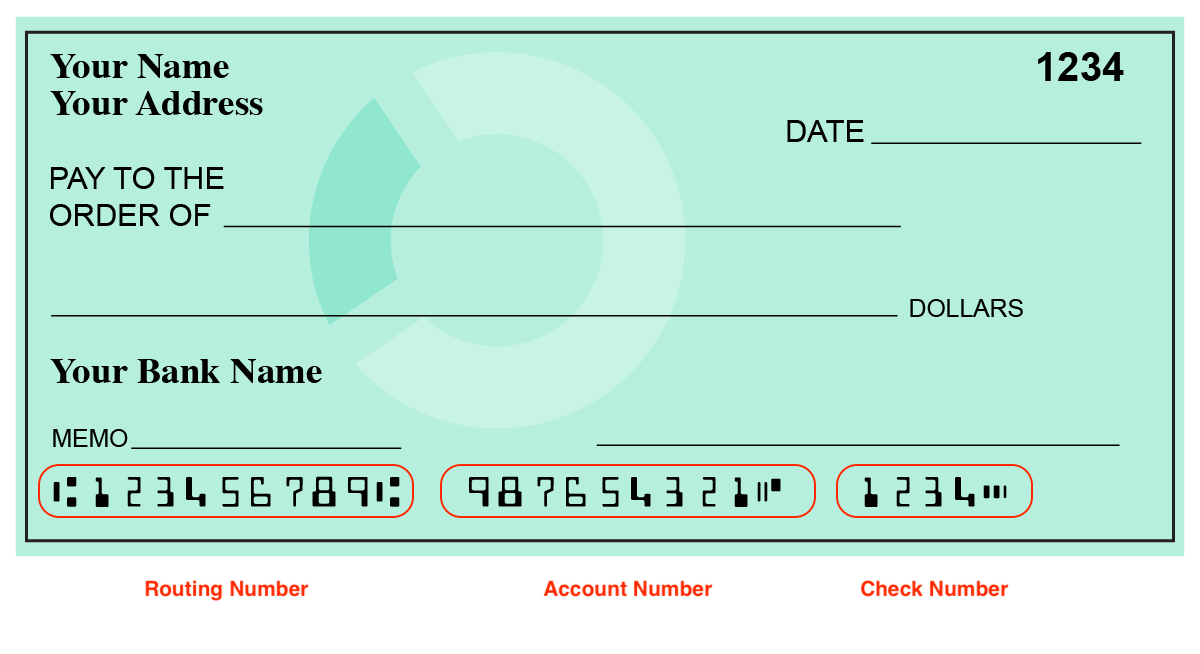
For many, the most accessible place to find their routing number is on a physical check. If you have a checkbook for the account in question, you’ll find the routing number printed at the bottom of the check. It’s almost always the first set of nine digits on the left, followed by your account number, and then the check number. Be careful not to confuse it with your account number, which is typically longer and located in the middle. This method is quick and reliable for checking accounts.
Your bank statements, whether paper or electronic, also serve as an excellent source. Look for the routing number near your account number, typically at the top or bottom of the statement. Most banks clearly label this information, often under a section titled “Bank Information” or similar. For online statements, you can usually download them as a PDF and easily locate the relevant details.
Digital Pathways: Online Banking and Official Websites
In today’s digital age, your online banking portal is perhaps the most convenient and frequently updated source for financial information. Once you log into your bank’s website or mobile app, navigate to your account details. Many banks display the routing number alongside your account number and other pertinent information. It might be under “Account Summary,” “Account Details,” “Statements,” or a similar section. If you have multiple accounts, ensure you’re viewing the details for the specific account for which you need the routing number, as different account types or branches might have different numbers.
Another highly reliable source is your bank’s official website. Most banks have a dedicated section, often in their “Contact Us,” “Help,” or “FAQ” pages, where they list their routing numbers. A simple search within the bank’s site for “routing number” will typically yield the correct information. Be sure to use the official bank website and not a third-party site, as information on unofficial sites could be outdated or incorrect. For larger banks, they might even have a tool where you can enter your state or ZIP code to find the correct routing number for your region.
Direct Assistance: Contacting Your Bank
If you’ve exhausted the self-service options or prefer direct confirmation, contacting your bank’s customer service is always a viable and highly reliable method. You can typically find their customer service phone number on your bank statement, on the back of your debit card, or on their official website. When you call, be prepared to verify your identity (e.g., with your account number, date of birth, or other security questions) to ensure you receive accurate information for your specific account.
Visiting a local branch in person is also an option, particularly if you have other banking needs to address. A teller or branch representative can quickly provide you with the correct routing number and answer any related questions you might have. This method offers the highest degree of personalized verification.
Beyond the Basics: Important Considerations and Security
While finding your routing number is a practical necessity, it’s equally important to understand its context within the broader financial landscape and how to protect this sensitive information.
Distinguishing Your Routing Number from Other Identifiers
It’s crucial not to confuse your routing number with other financial identifiers. The account number is unique to your specific bank account, while the routing number identifies your bank. Both are needed for most transactions. For international transactions, you might encounter SWIFT/BIC codes (Society for Worldwide Interbank Financial Telecommunication / Bank Identifier Code) or IBANs (International Bank Account Numbers), which serve similar purposes to routing numbers but are used for cross-border transfers. A SWIFT code identifies a specific bank globally, while an IBAN uniquely identifies an individual’s bank account within an international framework. Knowing the difference prevents sending funds to the wrong place or encountering delays. Always verify which type of code is required for your specific transaction.
Safeguarding Your Financial Information
Although a routing number is less sensitive than your account number or credit card details, it’s still part of your financial identity. Unlike a Social Security number, which you should guard fiercely, your routing number is present on every check you write and is necessary for various legitimate transactions. Therefore, while you don’t need to keep it a complete secret, you should still exercise caution. Be wary of providing your routing number to unsolicited requests via email, text message, or unverified websites. Always ensure you are on a secure, official website when entering any banking details. Phishing scams often attempt to trick individuals into revealing such information, which can then be used to attempt fraudulent withdrawals or set up unauthorized payments. Regularly monitor your bank statements for any suspicious activity.
Special Scenarios: Multiple Accounts and Bank Mergers
If you have multiple accounts with the same bank, be aware that different types of accounts (e.g., checking vs. savings) or accounts opened in different regions, or even at different times, might have different routing numbers. Always confirm the routing number specifically for the account you intend to use.
Bank mergers are another scenario that can impact routing numbers. When two banks merge, the routing numbers of the acquired bank might change to reflect the new parent institution. While banks typically provide ample notice to customers about such changes and during a transition period, it’s wise to verify your routing number if your bank has recently undergone a merger or acquisition. Always consult official bank communications or your online banking portal for the most current information.
The Critical Role of Accuracy and Verification
The correct routing number is not merely a formality; it is a critical component that ensures your financial transactions proceed smoothly and without incident. Errors, even seemingly minor ones, can have significant repercussions.
Avoiding Costly Errors
An incorrect routing number can lead to various problems. For direct deposits, an error might result in your paycheck being delayed or, in a worst-case scenario, returned. This can cause considerable financial inconvenience. For bill payments, an incorrect routing number could mean a payment isn’t processed, leading to late fees, service interruptions, or negative impacts on your credit score. For wire transfers, which are often irreversible, using the wrong routing number can be particularly problematic, potentially sending funds to an unintended recipient or causing the transfer to be stuck in limbo, requiring a lengthy and complex retrieval process. The financial and time costs associated with correcting such errors underscore the importance of accuracy.

When to Double-Check
It’s always prudent to double-check the routing number before initiating any significant or new transaction, especially:
- Setting up new direct deposits: With a new employer or government agency.
- Configuring new bill payments: Especially for automatic withdrawals.
- Sending or receiving wire transfers: These are high-value and time-sensitive.
- After a bank merger or acquisition: Even if your bank assures you that your routing number remains the same, a quick verification can prevent future issues.
- If you have multiple bank accounts: To ensure you are using the correct number for the specific account.
- When using a third-party payment service: Always verify the routing number they provide or request.
Taking a few extra moments to verify your routing number can save you from potential financial distress, frustrating delays, and the hassle of rectifying errors. It’s a simple, yet powerful, step towards robust personal and business financial management. By integrating this habit into your financial routine, you contribute to the overall security and efficiency of your money movement, ensuring your financial plans stay on track.
aViewFromTheCave is a participant in the Amazon Services LLC Associates Program, an affiliate advertising program designed to provide a means for sites to earn advertising fees by advertising and linking to Amazon.com. Amazon, the Amazon logo, AmazonSupply, and the AmazonSupply logo are trademarks of Amazon.com, Inc. or its affiliates. As an Amazon Associate we earn affiliate commissions from qualifying purchases.