
Bank account numbers are fundamental to the global financial system, serving as unique identifiers that enable the intricate flow of money for individuals, businesses, and governments alike. Far from a universal standard, the length and structure of these critical digits vary significantly across countries and even between financial institutions within the same nation. Understanding these differences, along with the broader ecosystem of financial identifiers, is paramount for secure and efficient money management in an increasingly interconnected world.
The Core Identifier in Global Finance
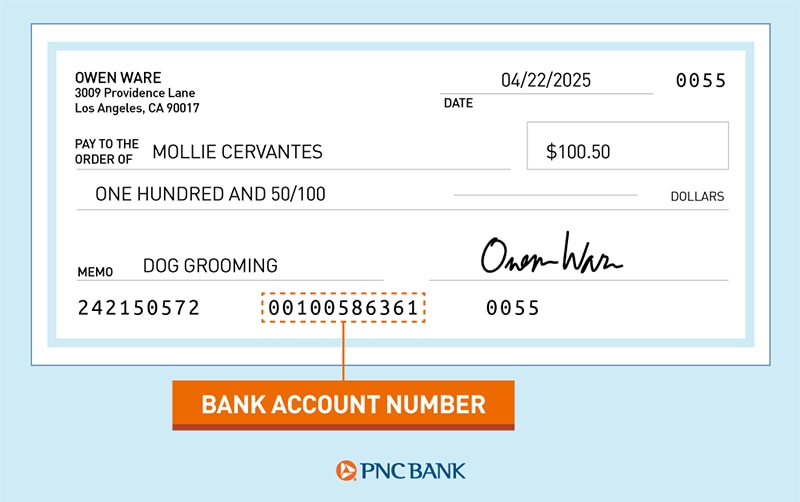
At its heart, a bank account number is a unique code that pinpoints a specific financial account within a specific financial institution. This string of digits is the digital address for your money, facilitating everything from direct deposits of salaries to automated bill payments, international wire transfers, and the myriad other transactions that form the backbone of modern commerce and personal finance.
More Than Just a String of Numbers
While seemingly a simple sequence, a bank account number is an engineered identifier designed to serve multiple purposes. It allows banks to differentiate between millions of accounts, ensuring that funds are credited to and debited from the correct places. Its structure often incorporates internal logic that might identify the branch, the type of account (e.g., checking, savings), or even a specific product, streamlining internal bank operations and enhancing accuracy in ledger keeping. From a financial perspective, this precision prevents misallocations that could lead to significant monetary losses, legal disputes, and operational inefficiencies for both institutions and account holders.
Facilitating the Flow of Capital
The existence of unique account numbers is what makes modern financial transactions possible. Without them, the automated, high-volume processing of payments would be impossible. For personal finance, it enables individuals to receive income, pay mortgages, manage investments, and save for the future. For businesses, it underpins payroll processing, vendor payments, customer receipts, and interbank settlements, all of which are essential for economic activity and growth. The integrity and reliability of these numbers directly impact economic stability and the smooth functioning of markets. Any breakdown in this system, such as through fraud or errors, can have cascading financial consequences.
Decoding National and International Variations
There is no single global standard for bank account number length or format. This diversity stems from historical development, national regulatory frameworks, and the varying complexities of financial infrastructures worldwide.
North American Banking Structures
In the United States, bank account numbers typically range from 8 to 12 digits. They are often used in conjunction with a 9-digit routing number (also known as an ABA transit number), which identifies the specific financial institution and its location. For domestic transactions, both are usually required. In Canada, account numbers generally fall between 7 and 12 digits and are used with a 5-digit branch transit number, which, along with the 3-digit institution number, forms the complete identifier for domestic transactions. These two-part systems reflect a focus on domestic clarity and routing within their respective national financial boundaries.
European Integration: The IBAN Standard
Europe has largely adopted the International Bank Account Number (IBAN), a standardized format designed to simplify and secure cross-border transactions within the Single Euro Payments Area (SEPA) and beyond. An IBAN is an alphanumeric code that can be up to 34 characters long, varying by country. It always starts with a two-letter country code (e.g., DE for Germany, GB for Great Britain), followed by two check digits, then a bank identifier, and finally the domestic bank account number. The IBAN system dramatically reduces errors in international transfers, minimizing processing delays and associated financial costs, thereby enhancing the efficiency of the European financial market.
Diverse Systems Across Continents
Other regions exhibit their own distinct systems:
- The United Kingdom primarily uses an 8-digit account number alongside a 6-digit Sort Code, which identifies the bank and branch.
- In Australia, account numbers typically have 6 to 9 digits, combined with a 6-digit Bank-State-Branch (BSB) number.
- India sees significant variation, with account numbers ranging from 9 to 18 digits depending on the bank and account type.
- China’s bank account numbers are generally longer, often between 16 and 19 digits.
These differences reflect the unique evolution of each nation’s banking sector, regulatory landscape, and specific financial security requirements.
The Rationale Behind Discrepancy
The primary reasons for this global variation are manifold:
- Legacy Systems: Many banking systems developed independently over decades, leading to entrenched structures that are costly and complex to standardize internationally.
- National Sovereignty and Regulation: Each country’s central bank and financial regulators dictate the rules for their domestic banking system, including identification standards.
- Scale and Complexity: Countries with larger populations and more complex financial ecosystems may require longer numbers or more sophisticated numbering schemes to accommodate a greater volume of accounts and transactions.
- Security Considerations: A greater number of digits offers more possible combinations, theoretically enhancing security by making brute-force guessing of account numbers more difficult, though this is only one layer of protection.
Safeguarding Your Financial Identity
Given their critical role in accessing and managing funds, bank account numbers are sensitive pieces of financial information. Protecting them is essential to prevent financial fraud and maintain the security of your assets.
The Monetary Risk of Compromise
If your bank account number falls into the wrong hands, it can lead to significant financial risk. While generally not sufficient on its own to drain an account without additional information or authentication, a compromised account number can be used for:
- Fraudulent Transactions: Unauthorized direct debits or withdrawals can be initiated, requiring diligent monitoring and prompt action to reverse.
- Identity Theft: Combined with other personal details, a bank account number can be used by criminals to open new accounts, apply for credit, or engage in other forms of financial identity theft, leading to long-term financial and credit score damage.
- Phishing Scams: Knowledge of an account number can make phishing attempts more convincing, leading individuals to divulge further sensitive information like passwords or PINs.

The financial repercussions can range from minor inconveniences to substantial monetary losses and a prolonged battle to restore financial integrity.
Best Practices for Account Security
Protecting your bank account number involves several critical habits:
- Share Judiciously: Provide your account number only when absolutely necessary, such as for direct deposit of salary, setting up legitimate recurring bill payments, or initiating a wire transfer to a trusted recipient.
- Distinguish Between Need-to-Know: Understand that while employers or utility companies might need your account number for legitimate purposes, unsolicited callers or suspicious websites should never be given this information.
- Secure Physical Documents: Shred old bank statements, voided checks, and other documents containing your account number before discarding them.
- Monitor Accounts Regularly: Regularly review bank statements and online transaction histories for any suspicious or unauthorized activity. Many banks offer alerts for certain types of transactions.
- Utilize Bank Security Features: Enable multi-factor authentication, set up transaction alerts, and use strong, unique passwords for online banking portals.
Differentiating Account Numbers from Payment Details
It is crucial to understand that a bank account number, while sensitive, is distinct from other highly critical payment details like your debit card number, its CVV, or your Personal Identification Number (PIN). Your debit card number and PIN offer direct, immediate access to funds at ATMs or point-of-sale terminals. Your online banking username and password provide comprehensive access to your accounts. While an account number is part of your financial identity, these other details represent more immediate and direct avenues for financial exploitation if compromised. Therefore, the level of vigilance required for PINs and full card details is even higher.
Beyond the Account Number: Related Financial Identifiers
The bank account number rarely operates in isolation. It is part of a broader ecosystem of financial identifiers that facilitate both domestic and international money movement.
Routing Numbers: Directing Domestic Funds
In the U.S., the 9-digit ABA Routing Transit Number (RTN) is crucial for domestic transactions. It identifies the specific bank or credit union that holds the account. Routing numbers are essential for Automated Clearing House (ACH) transactions (like direct deposits and electronic bill payments) and for processing paper checks. They ensure that funds are routed to the correct financial institution before the account number directs them to the specific account within that institution.
SWIFT/BIC Codes: Unlocking International Transfers
For international wire transfers, the SWIFT (Society for Worldwide Interbank Financial Telecommunication) code, also known as a BIC (Bank Identifier Code), is indispensable. This 8 or 11-character alphanumeric code identifies specific banks and often specific branches involved in cross-border transactions. SWIFT codes are part of a global messaging network that allows financial institutions to send and receive information about financial transactions in a secure, standardized environment. Without a correct SWIFT/BIC code, international payments cannot be accurately routed, leading to delays and additional costs.
The Strategic Role of Check Digits
Many account numbering systems, particularly those for IBANs, incorporate “check digits.” These are digits calculated using an algorithm based on the other digits in the number. Their purpose is to detect errors, such as typos during manual entry. If a single digit is transposed or entered incorrectly, the check digit calculation will fail, indicating an error before a transaction is processed. This mechanism is a vital financial safeguard, preventing funds from being misdirected due to simple human error, thereby saving both financial institutions and customers significant time and money.
Practical Implications for Financial Management
Understanding the nuances of bank account numbers and their associated identifiers is not just academic; it has profound practical implications for effective financial management.
Personal Finance and Everyday Transactions
For individuals, knowing your bank account and routing numbers is necessary for a multitude of personal finance activities:
- Direct Deposit: Ensuring your salary or government benefits are paid directly into your account.
- Automated Bill Payments: Setting up recurring payments for utilities, loans, or subscriptions.
- Savings Automation: Transferring funds regularly to savings or investment accounts.
- Receiving Payments: For freelance work, gifts, or other incoming funds.
- Tax Refunds: Direct deposit of tax refunds for faster access to funds.
Errors in these numbers can lead to missed payments, late fees, disruptions in income, and significant administrative hassle.
Business Finance and Operational Efficiency
For businesses, the accuracy of bank account numbers is critical to operational efficiency and financial health:
- Payroll: Ensuring employees are paid correctly and on time.
- Vendor Payments: Paying suppliers and service providers efficiently.
- Receivables: Collecting payments from customers into the correct accounts.
- Treasury Management: Facilitating inter-company transfers and managing cash flow across multiple accounts.
- Reconciliation: Accurate accounting and reconciliation of transactions depend entirely on correct identifiers.
Any mistakes can result in misdirected payments, strained vendor relationships, cash flow issues, and significant accounting rectification efforts.

Mitigating Transaction Errors
The most crucial practical advice stemming from the complexity of bank account numbers is constant vigilance and verification. Always double-check account numbers, routing numbers, IBANs, or SWIFT/BIC codes before initiating any transfer, especially for large sums or first-time payments to a new recipient. Many banks provide secure ways to verify recipient details for business payments. The financial industry continuously develops new tools and processes to minimize these risks, but the ultimate responsibility for accuracy often rests with the individual or entity initiating the transaction. The cost of an error can far outweigh the minor inconvenience of a double-check.
In conclusion, the number of digits in a bank account number is highly variable, reflecting a patchwork of national financial systems and security considerations. These unique identifiers, alongside routing numbers, SWIFT codes, and IBANs, form the bedrock of both domestic and international financial transactions. A thorough understanding of their purpose, structure, and the importance of their security is fundamental for anyone participating in the modern financial ecosystem, ensuring seamless money movement and safeguarding financial assets.
aViewFromTheCave is a participant in the Amazon Services LLC Associates Program, an affiliate advertising program designed to provide a means for sites to earn advertising fees by advertising and linking to Amazon.com. Amazon, the Amazon logo, AmazonSupply, and the AmazonSupply logo are trademarks of Amazon.com, Inc. or its affiliates. As an Amazon Associate we earn affiliate commissions from qualifying purchases.