
In the landscape of personal finance, managing your credit cards effectively is paramount. While the 16-digit number emblazoned on the front of your Chase credit card is what you typically use for purchases, there’s another crucial identifier that many cardholders occasionally need: your Chase credit card account number. This less frequently referenced, yet equally vital, string of digits serves various specific financial purposes, from setting up automatic payments to facilitating balance transfers or resolving complex billing issues. Understanding what this number is, why you might need it, and, most importantly, how to securely find it, is a foundational aspect of responsible credit card management.

Unlike your primary card number, which is designed for transactional use, the underlying account number represents your unique relationship with Chase for that specific credit line. It’s the identifier that ties your physical card to your financial record within the bank’s systems. This distinction is often a source of confusion for many, but clarifying it is the first step toward confidently navigating your Chase credit card details. This guide will walk you through the most reliable and secure methods to locate your Chase credit card account number, empowering you with the knowledge to access this critical information whenever the need arises.
Understanding Your Chase Credit Card Account Identifier
Before diving into the “how-to,” it’s essential to grasp the fundamental differences and purposes of the various numbers associated with your Chase credit card. Misunderstanding these can lead to frustration or, worse, security risks. The credit card account number is distinct from the primary card number, and each serves a unique function in your financial ecosystem.
Differentiating Your Card Number from Your Account Number
The 16-digit number on the front of your Chase credit card (or occasionally, on the back) is your Primary Account Number (PAN), often referred to simply as your “card number.” This is the number you input when making online purchases, swipe at point-of-sale terminals, or read aloud for phone transactions. It’s directly linked to your physical card and is the transactional gateway to your credit line. Its primary role is to facilitate payments and identify the specific card used for a transaction.
Your credit card account number, on the other hand, is the internal identifier Chase uses to manage your credit account. It’s typically a longer sequence of numbers, often 10 to 12 digits, that identifies the core credit line itself, rather than a specific physical card. Think of it this way: your PAN is like the key to your house, while the account number is the address of the house. You might have multiple keys (authorized user cards) for the same house (credit account), but the address (account number) remains unique to that property. This account number is what financial institutions use for internal record-keeping, transfers between banks, and for identifying your credit relationship in a broader context.
Key Scenarios Requiring Your Account Number
Knowing where to find your Chase credit card account number isn’t just about curiosity; it’s a practical necessity in several common financial situations. Understanding these scenarios can help you prepare and avoid last-minute scrambles.
- Balance Transfers: If you’re looking to consolidate debt from another credit card onto your Chase card, or vice-versa, the receiving bank will almost always require the full credit card account number, not just the 16-digit card number. This ensures the funds are correctly applied to the underlying credit line.
- Setting Up Automatic Payments/Bill Pay: While some services allow you to set up recurring payments using your 16-digit card number, many financial institutions or utility companies, especially those requiring a direct bank-to-bank transfer or a more permanent linkage, may request the full account number to ensure seamless and secure recurring deductions.
- Specific Payments or Transfers: Certain types of payments, particularly those initiated from other financial institutions or third-party services, might explicitly ask for the credit card account number to ensure the payment reaches the correct credit line, especially if it’s not a standard point-of-sale transaction.
- Dispute Resolution or Fraud Investigations: In complex cases of transaction disputes, suspected fraud, or investigations, Chase customer service or legal entities might require the full account number to pinpoint the exact credit line and its history, rather than relying solely on the card number which could be replaced.
- Account Closures or Consolidations: When taking significant actions like closing an account or consolidating multiple accounts, providing the precise account number helps ensure that the correct credit line is affected, preventing errors.
Primary Methods for Locating Your Chase Credit Card Account Number
Fortunately, Chase provides several secure and straightforward avenues for cardholders to access their credit card account number. The most common and recommended methods leverage existing account access points, ensuring both convenience and security.
Through Chase Online Banking (Website or Mobile App)
In the digital age, your online banking portal is often the most accessible and comprehensive source of your financial information. Chase’s robust online platform is designed to put account details at your fingertips.
- Log In Securely: Navigate to the official Chase website (chase.com) or open the Chase Mobile App on your smartphone or tablet. Enter your User ID and Password. Always ensure you are on the legitimate Chase domain to avoid phishing scams.
- Navigate to Your Credit Card Account: Once logged in, you’ll typically see a summary of all your Chase accounts. Click or tap on the specific credit card account for which you need the number. This will take you to the account details page.
- Access Account Details or Statements:
- On the website: Look for a section titled “Account Details,” “Account Services,” “Statement & Activity,” or similar. Sometimes the account number is partially visible on the main account summary page, but usually, you need to dig a little deeper. Often, accessing your monthly statement is the clearest path. Click on “Statements & Documents” and select a recent statement.
- On the mobile app: The interface might vary slightly. Look for options like “Account Details,” “Show Card/Account Information,” or “Statements.” You might need to tap on “See more” or “Manage” options for the specific card. For security reasons, the full account number might not be immediately displayed. You might need to authenticate again (e.g., enter your password or use biometric authentication) to reveal sensitive details like the full account number.
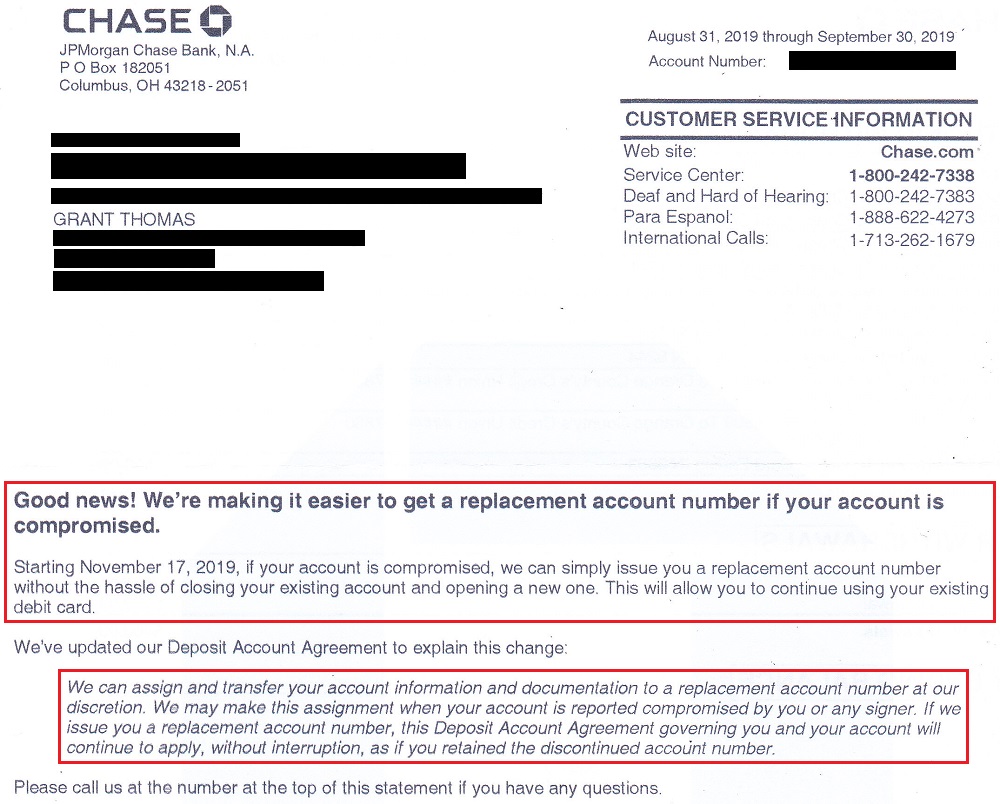
- Locate the Account Number: Once you’ve accessed an electronic statement or the detailed account information page, scour the document or screen for a section usually labeled “Account Number” or “Card Account Number.” It’s typically a 10-12 digit number. Be careful not to confuse it with your 16-digit card number or any other reference numbers. On electronic statements, it is usually found near the top, close to your name and address.
Via Monthly Statements (Paper or Electronic)
Your monthly statement, whether received in the mail or accessed digitally, is a treasure trove of your account information, including the elusive account number.
- Access Your Statement:
- Paper Statements: If you still receive paper statements, locate a recent one.
- Electronic Statements: As detailed above, log into your Chase Online Banking account and navigate to “Statements & Documents” to download or view a recent electronic statement (usually in PDF format).
- Examine the Document: Once you have the physical or digital statement in hand, carefully review the header section. The credit card account number is almost universally displayed near the top, often adjacent to your name, address, and the statement period details. It will typically be explicitly labeled “Account Number” or “Card Account Number.”
- Distinguish from Other Numbers: Again, be mindful not to confuse it with the “Card Number” (the 16-digit one) which might also be partially displayed for reference, or any loyalty program numbers or customer IDs. The account number is specifically tied to the underlying credit line.
By Contacting Chase Customer Service
When digital methods prove elusive or if you prefer direct assistance, calling Chase customer service is always a reliable option. This method ensures you receive accurate information directly from a bank representative.
- Gather Necessary Information: Before calling, have your Chase credit card handy, along with any personal identification details you might need, such as your full name, address, date of birth, Social Security Number (or the last four digits), and possibly your mother’s maiden name or answers to other security questions. This information is crucial for identity verification.
- Call the Official Chase Number: Dial the customer service number listed on the back of your credit card. This is typically the most direct line to support for your specific card type. Alternatively, you can find general customer service numbers on the official Chase website under “Contact Us.”
- Navigate the Automated System: Listen carefully to the automated prompts. You’ll likely need to select options related to “Account Information,” “Credit Card Services,” or “Speak to a Representative.”
- Speak with a Representative: Once connected to a customer service representative, clearly state your request: “I need to find my Chase credit card account number.” They will then proceed with identity verification questions. Answer truthfully and patiently.
- Receive Your Account Number: After successful verification, the representative will provide you with your account number. It’s advisable to have a pen and paper ready to jot it down accurately. Do not share this information with anyone else over the phone unless you initiated the call to a verified Chase number.
Safeguarding Your Financial Information
Accessing your credit card account number underscores the importance of stringent financial security. This number, like your Social Security Number or bank account details, is sensitive information that must be protected with the utmost care.
Best Practices for Information Security
- Secure Access: Always use strong, unique passwords for your online banking accounts and enable two-factor authentication (2FA) if available. This adds an extra layer of security beyond just a password.
- Private Environments: Access your financial information only from secure, private networks. Avoid public Wi-Fi networks when logging into banking sites or apps, as they can be vulnerable to eavesdropping.
- Physical Security: If you receive paper statements, shred them after reviewing them and storing the necessary details securely. Never leave financial documents lying around where others can access them.
- Digital Hygiene: Keep your computer and mobile devices updated with the latest security patches and antivirus software. Be wary of suspicious emails or texts that claim to be from Chase; always go directly to the official website or app if you have concerns.
- Mindful Sharing: Only provide your full credit card account number when it is absolutely necessary for legitimate financial transactions or when directly dealing with Chase customer service after you have initiated the contact. Never share it via email, insecure messaging apps, or to unsolicited callers.
Recognizing and Reporting Suspicious Activity
Regularly monitor your Chase credit card statements and online account activity for any unfamiliar transactions. If you spot anything suspicious, act immediately:
- Contact Chase Immediately: Use the official customer service number on the back of your card or the Chase website to report unauthorized activity.
- Change Passwords: If you suspect your account has been compromised, change your online banking password immediately.
- Review Credit Report: Periodically check your credit report from the three major bureaus (Experian, Equifax, TransUnion) to ensure no new, unauthorized accounts have been opened in your name. You can get free annual reports from AnnualCreditReport.com.
By adopting these security measures, you not only protect your Chase credit card account number but also safeguard your overall financial well-being from potential fraud and identity theft.
Conclusion
The Chase credit card account number, while not as frequently used as your 16-digit card number, is a vital piece of your financial identity. Whether you’re facilitating a balance transfer, setting up recurring payments, or addressing a specific account inquiry, knowing how to securely access this information is an essential skill for any responsible credit card holder. Chase provides clear and accessible pathways, primarily through your online banking portal, monthly statements, or by direct contact with their customer service representatives.
Beyond simply finding the number, the overarching message is one of vigilance and proactive financial management. By understanding the different identifiers associated with your credit card, utilizing the secure channels provided by Chase, and consistently practicing strong digital and physical security habits, you empower yourself to navigate your financial landscape with confidence and peace of mind. Your credit card is a powerful financial tool, and mastering its intricacies, down to the account number, is a hallmark of sophisticated personal finance.
aViewFromTheCave is a participant in the Amazon Services LLC Associates Program, an affiliate advertising program designed to provide a means for sites to earn advertising fees by advertising and linking to Amazon.com. Amazon, the Amazon logo, AmazonSupply, and the AmazonSupply logo are trademarks of Amazon.com, Inc. or its affiliates. As an Amazon Associate we earn affiliate commissions from qualifying purchases.