
JPMorgan Chase & Co., commonly known as JPMorgan, stands as a colossus in the global financial landscape. More than just a bank, it is a multinational investment bank and financial services holding company, deeply entrenched in nearly every facet of the monetary world. For anyone seeking to understand the intricate machinery of global finance, grasping the identity, operations, and influence of JPMorgan is fundamental. This article delves into the core of what defines this financial behemoth, exploring its historical roots, diverse business segments, profound economic impact, and forward-looking strategies, all strictly within the context of money, investing, and business finance.

A Legacy of Financial Power and Innovation
To truly understand “what is JPMorgan,” one must first appreciate its rich and complex history, which spans over two centuries. Born from a series of mergers and acquisitions, the institution represents a continuous thread in American and global financial development, consistently adapting to, and often shaping, the evolving economic environment.
Origins and Evolution: From Manhattan Company to Global Giant
The lineage of JPMorgan Chase traces back to 1799 with the founding of The Bank of The Manhattan Company by Aaron Burr, originally established to provide clean water to New York City and simultaneously serve as a bank. Over the centuries, this institution, through various iterations and strategic maneuvers, grew significantly. The “JPMorgan” name itself emerged from the influential banker John Pierpont Morgan, who founded J.P. Morgan & Co. in 1871. Morgan’s firm played a pivotal role in financing major industrial expansions, consolidating industries, and even rescuing the U.S. financial system during crises like the Panic of 1907.
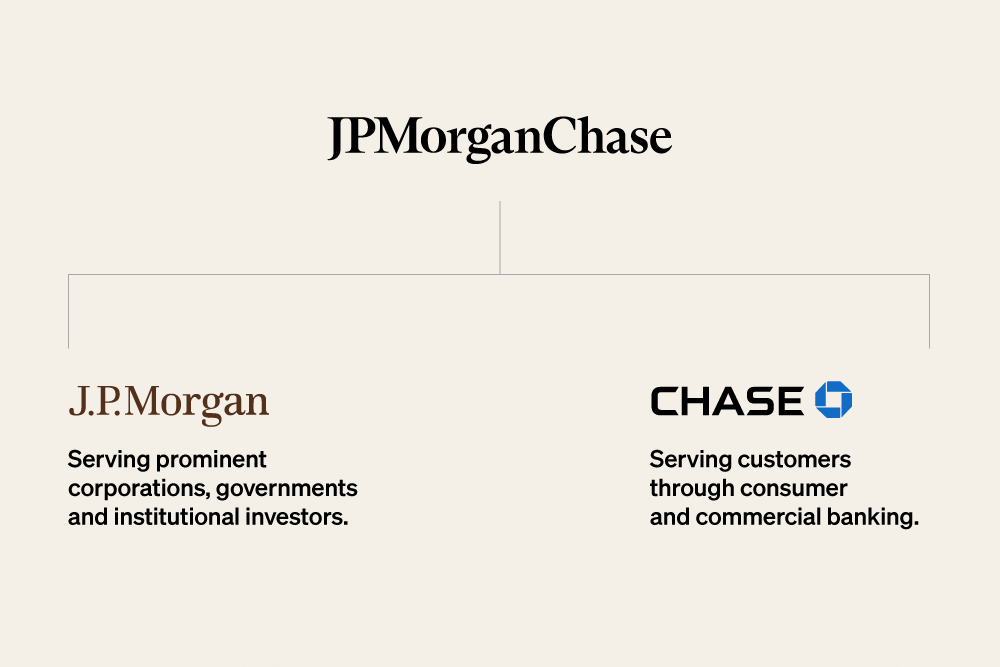
The modern JPMorgan Chase & Co. is primarily a product of a mega-merger in 2000 between J.P. Morgan & Co. and Chase Manhattan Corporation, itself a descendant of Burr’s original bank. Subsequent acquisitions, notably of Bank One in 2004 and the struggling Bear Stearns and Washington Mutual during the 2008 financial crisis, further solidified its position, transforming it into the diversified financial services powerhouse it is today. This journey highlights a consistent theme: the strategic deployment of capital, risk management, and market positioning to dominate and innovate within the financial sector.
Core Business Segments: Diversification Across Financial Markets
JPMorgan’s strength lies in its remarkable diversification across distinct, yet interconnected, business segments. Each segment contributes significantly to its overall revenue and market presence, serving a vast array of clients from individual consumers to the world’s largest corporations and governments. Understanding these pillars is crucial to grasping the scope of its financial operations.
- Consumer & Community Banking (CCB): This segment serves millions of consumers and small businesses, offering traditional banking services such as checking and savings accounts, credit cards, mortgages, auto loans, and small business lending. It forms the foundation of its retail presence and connects the bank directly to the everyday financial lives of ordinary people.
- Corporate & Investment Bank (CIB): Often considered the heart of JPMorgan’s global influence, the CIB provides financial solutions to corporations, institutional investors, governments, and wealthy individuals worldwide. This includes investment banking services (advisory on mergers and acquisitions, equity and debt underwriting), market-making in various asset classes (equities, fixed income, foreign exchange, commodities), and treasury services.
- Commercial Banking (CB): This segment focuses on middle-market companies, local governments, and nonprofit organizations, offering a comprehensive suite of financial services including lending, treasury services, and investment banking products. It acts as a bridge between the large-scale corporate solutions of the CIB and the retail offerings of the CCB.
- Asset & Wealth Management (AWM): AWM provides investment management and wealth advisory services to institutions, ultra-high-net-worth individuals, and high-net-worth individuals. This includes asset management (managing various investment funds, institutional portfolios), private banking, and brokerage services, all aimed at preserving and growing client capital.
This multi-faceted structure allows JPMorgan to generate revenue from diverse sources, mitigate risks across different market cycles, and offer comprehensive financial solutions that few other institutions can match.
Navigating the Complexities of Global Finance
JPMorgan operates at the very center of the global financial system, performing critical functions that enable economic activity on an unparalleled scale. Its operations are not merely transactional; they involve intricate strategies, deep market insights, and a profound understanding of global financial flows.
Investment Banking: Underwriting, Advisory, and Capital Markets
Within its Corporate & Investment Bank, JPMorgan is a powerhouse in investment banking. This involves advising corporations on strategic financial decisions and facilitating large-scale transactions.
- Mergers & Acquisitions (M&A) Advisory: JPMorgan advises companies on buying, selling, or merging with other businesses. This requires sophisticated financial modeling, valuation expertise, and deep industry knowledge, often involving complex negotiations and structuring.
- Equity and Debt Underwriting: When companies need to raise capital, JPMorgan acts as an underwriter, helping them issue new shares (equities) or bonds (debt) to investors. This process involves pricing the securities, marketing them to institutional buyers, and guaranteeing the proceeds, thereby facilitating capital formation essential for business growth and expansion.
- Capital Markets: JPMorgan’s trading desks are active participants in capital markets, providing liquidity by buying and selling a vast array of financial instruments. This includes fixed income (government bonds, corporate bonds), equities (stocks), currencies (foreign exchange), and commodities. This market-making function is vital for the efficient functioning of global markets, allowing investors to buy and sell assets with ease.
Commercial Banking: Serving Businesses Big and Small
The Commercial Banking arm serves as a vital financial partner for a wide spectrum of businesses, from mid-sized enterprises to large corporations. This segment offers tailored financial solutions that address the unique needs of different industries and company sizes, providing the financial backbone for their operations and growth.
- Lending Solutions: This includes term loans, revolving credit facilities, and other financing options to support working capital, capital expenditures, acquisitions, and expansion projects. JPMorgan’s scale allows it to deploy significant capital, fostering economic activity across various sectors.
- Treasury Services: Businesses rely on JPMorgan for sophisticated treasury management solutions, including cash management, payment processing, fraud prevention, and liquidity management. These services are crucial for optimizing a company’s financial operations, ensuring efficient cash flow and secure transactions.
- International Banking: For businesses engaged in global trade, JPMorgan provides international banking services, including trade finance, foreign exchange solutions, and cross-border payment capabilities, facilitating global commerce and supply chains.
Asset & Wealth Management: Stewarding Capital for the Future
JPMorgan’s Asset & Wealth Management division plays a critical role in preserving and growing the capital of its diverse client base. This involves sophisticated financial planning, investment strategy, and portfolio management.
- Investment Management: The firm manages trillions of dollars in assets across various investment strategies for institutional clients like pension funds, endowments, and sovereign wealth funds, as well as individual investors through mutual funds and exchange-traded funds (ETFs). This involves extensive research, risk management, and active portfolio construction across asset classes.
- Wealth Advisory and Private Banking: For ultra-high-net-worth and high-net-worth individuals, JPMorgan offers highly personalized wealth management services. This includes comprehensive financial planning, estate planning, philanthropic advisory, and bespoke investment solutions tailored to complex financial situations and long-term legacy goals.
Consumer & Community Banking: Everyday Financial Services
At the grassroots level, JPMorgan’s Consumer & Community Banking serves millions of individuals and small businesses, providing essential financial services that underpin daily economic life.
- Retail Banking: This includes checking and savings accounts, debit cards, and a network of branches and ATMs, providing accessible banking services for personal finance management.
- Lending Products: JPMorgan is a major provider of consumer loans, including mortgages for homeownership, auto loans for vehicle purchases, and various forms of credit, such as credit cards and personal lines of credit, all of which fuel consumer spending and economic activity.
- Small Business Services: Beyond individual consumers, the CCB also caters to small businesses, offering business checking accounts, lines of credit, and payment processing solutions, empowering entrepreneurs and local economies.
The Economic Impact and Influence of JPMorgan
The sheer scale and global reach of JPMorgan mean that its operations have a profound and often systemic impact on the global economy. Its decisions, strategies, and performance reverberate through markets, affecting everything from interest rates to employment.
Role in Global Markets: Market Making and Liquidity Provision
JPMorgan is one of the largest market makers in the world. This function is vital for the smooth operation of financial markets. By continuously quoting prices at which it is willing to buy and sell various securities (stocks, bonds, currencies, commodities), JPMorgan provides liquidity. This means investors and institutions can execute trades quickly and efficiently, without causing significant price disruptions. Without market makers like JPMorgan, markets would be far less efficient, leading to wider bid-ask spreads, higher volatility, and reduced investor confidence. Its active participation helps in price discovery and ensures that capital can flow freely across the globe.
Contribution to Economic Stability and Growth
Through its extensive lending activities to corporations, small businesses, and consumers, JPMorgan fuels economic growth. The capital it provides enables businesses to expand, innovate, and create jobs, while consumer lending supports demand and consumption. Furthermore, its investment banking activities facilitate capital raising for infrastructure projects, technological advancements, and corporate restructuring, all of which contribute to national and global economic development. During times of economic stress, large, well-capitalized institutions like JPMorgan are often seen as anchors, providing stability and continuing to extend credit when smaller entities might retreat.
Navigating Regulatory Landscapes and Financial Crises
Operating on such a grand scale means JPMorgan is under intense regulatory scrutiny globally. It must navigate a complex web of financial regulations, including capital requirements (like Basel III), stress tests, anti-money laundering (AML) laws, and consumer protection regulations. Compliance is a massive undertaking, requiring significant investment in technology, personnel, and robust internal controls. The firm has also played a significant, albeit sometimes controversial, role in navigating financial crises. While it acquired struggling entities during the 2008 crisis, demonstrating a capacity for absorbing risk and stabilizing parts of the system, it has also faced scrutiny and fines for past misconduct, highlighting the constant challenge of balancing aggressive financial activity with regulatory adherence and ethical conduct.
Financial Strategy and Future Outlook
JPMorgan’s leadership is acutely focused on strategic initiatives designed to ensure its continued dominance and relevance in an ever-changing financial world. This involves not only organic growth but also embracing technological disruption and adapting to new global imperatives.
Strategic Acquisitions and Expansion
Historically, strategic acquisitions have been a cornerstone of JPMorgan’s growth, allowing it to expand its market share, diversify its offerings, and penetrate new geographical markets. While large-scale mergers are less frequent today due to regulatory hurdles, the firm continuously evaluates smaller, strategic acquisitions, particularly in fintech or specialized financial services, to enhance its capabilities and competitive edge. Its global footprint also continues to expand, targeting emerging markets and growth regions to tap into new client bases and capitalize on global economic shifts.
Embracing Digital Transformation in Finance
The financial industry is undergoing a profound digital transformation, and JPMorgan is at the forefront of this shift. It invests billions annually in technology, focusing on areas like:
- Cloud Computing: Migrating systems to the cloud for greater efficiency, scalability, and data analytics capabilities.
- Artificial Intelligence (AI) and Machine Learning (ML): Deploying AI for fraud detection, risk management, personalized customer service, algorithmic trading, and optimizing operational processes.
- Blockchain Technology: Exploring distributed ledger technology for more efficient payments, trade finance, and other applications, though practical large-scale implementation is still evolving.
- Cybersecurity: Given its vast digital footprint and the sensitive nature of financial data, cybersecurity remains a paramount investment to protect client assets and information from increasingly sophisticated threats.
This digital pivot is not just about efficiency; it’s about reinventing how financial services are delivered, enhancing the customer experience, and staying competitive against agile fintech challengers.

ESG Principles and Sustainable Finance Initiatives
In recent years, environmental, social, and governance (ESG) factors have become central to financial decision-making, and JPMorgan has responded with significant commitments.
- Sustainable Finance: The firm has committed hundreds of billions of dollars to finance and facilitate green initiatives, renewable energy projects, and other sustainable development goals, aligning its lending and investment activities with global climate targets.
- Responsible Investing: Its Asset & Wealth Management division integrates ESG considerations into its investment strategies, recognizing that strong ESG performance can correlate with long-term financial returns and mitigate risks.
- Corporate Responsibility: Beyond finance, JPMorgan engages in philanthropic efforts, community development, and diversity and inclusion initiatives, acknowledging its broader social responsibilities as a global corporate citizen. These initiatives are not just about reputation; they are increasingly seen as integral to long-term value creation and risk management in a world focused on sustainability.
In conclusion, JPMorgan is far more than just a name in finance; it is a complex, dynamic ecosystem that underpins vast segments of the global economy. From its historical origins to its pioneering efforts in digital transformation and sustainable finance, its identity is inextricably linked to the flow, management, and strategic deployment of money on a planetary scale. Understanding JPMorgan is thus an essential step in comprehending the architecture and future trajectory of global finance.
aViewFromTheCave is a participant in the Amazon Services LLC Associates Program, an affiliate advertising program designed to provide a means for sites to earn advertising fees by advertising and linking to Amazon.com. Amazon, the Amazon logo, AmazonSupply, and the AmazonSupply logo are trademarks of Amazon.com, Inc. or its affiliates. As an Amazon Associate we earn affiliate commissions from qualifying purchases.