
In an increasingly complex financial landscape, consumers are continually seeking options that align with their values while offering competitive services. Credit unions stand out as a unique alternative to traditional banks, rooted in a philosophy of “people helping people.” Unlike commercial banks, which are driven by profit for shareholders, credit unions are non-profit cooperative organizations owned by their members. This fundamental difference often translates into tangible benefits for account holders, including lower fees, better interest rates on savings, and more favorable terms on loans.
This comprehensive guide will demystify the process of opening a credit union account, equipping you with the knowledge to make an informed decision and embark on a rewarding financial journey with a member-centric institution. Whether you’re disillusioned with big banks, seeking a more community-focused approach, or simply exploring all your financial options, understanding how credit unions operate and how to join one is a valuable step towards optimizing your personal finance strategy.

1. Demystifying Credit Unions: A Different Kind of Financial Institution
Before diving into the mechanics of opening an account, it’s crucial to grasp what makes credit unions distinct and why they might be a superior choice for your financial needs. Their cooperative structure directly influences every aspect of their operation, from services offered to their customer—or rather, member—relationships.
What Exactly is a Credit Union?
A credit union is a member-owned financial cooperative that provides traditional banking services, including savings accounts, checking accounts, loans, and credit cards. Governed by a volunteer board of directors elected by its members, a credit union’s primary mission is to serve its members, not to maximize profits. Any surplus earnings are typically reinvested into the credit union to offer better rates, lower fees, or enhance services. This member-first approach fosters a sense of community and shared financial well-being, distinguishing them from traditional, for-profit commercial banks.
The Core Advantages of Choosing a Credit Union
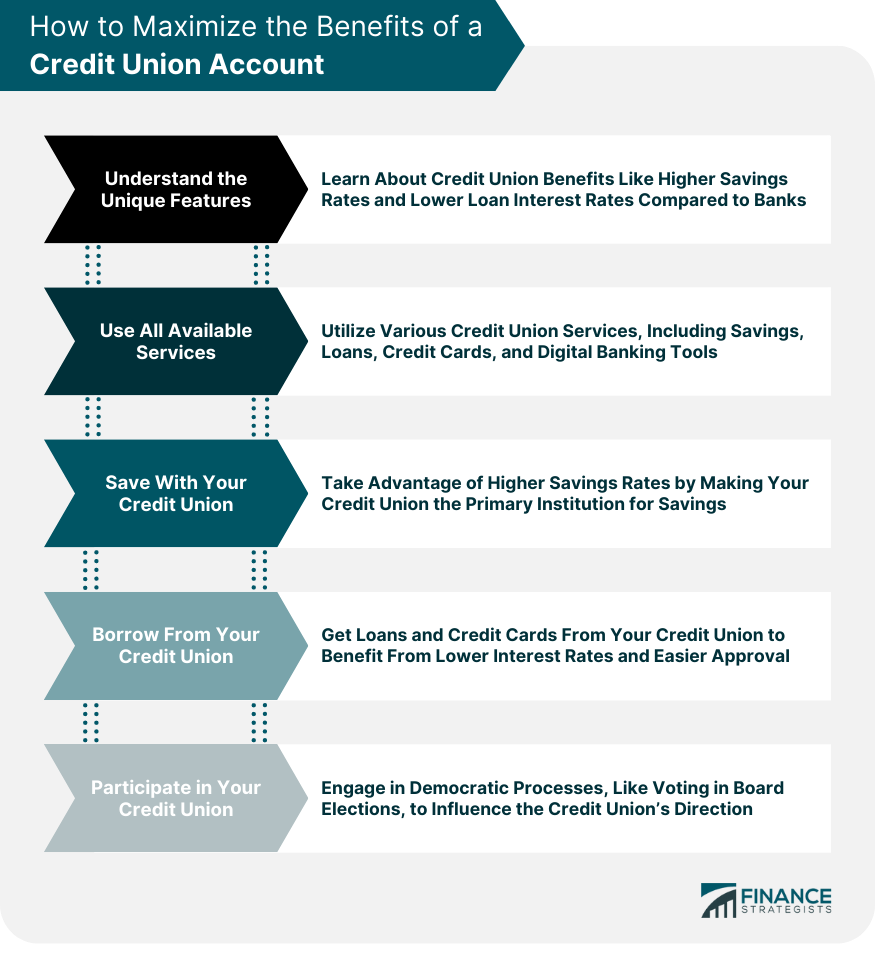
The cooperative model yields several significant benefits for members. Firstly, credit unions are renowned for offering more competitive interest rates. This means higher interest paid on savings accounts and certificates of deposit (CDs), and lower interest rates on loans, mortgages, and credit cards. Secondly, they typically charge fewer and lower fees compared to banks, often waiving common charges for checking accounts, overdrafts, or ATM usage. Thirdly, credit unions often pride themselves on providing personalized, high-quality customer service. Given their community focus and member-ownership structure, staff often know members by name and can offer more tailored financial advice and support. Finally, credit unions are deeply committed to community development and financial education, often reinvesting in local initiatives and offering resources to help members improve their financial literacy.
Distinguishing Credit Unions from Traditional Banks
While both institutions offer similar services, their fundamental operational philosophies diverge significantly. Banks are typically for-profit corporations, publicly traded, and answerable to shareholders whose primary goal is financial return. This often translates to higher fees and interest rates that favor the bank’s profitability. Credit unions, on the other hand, are non-profit and member-owned. Their surplus funds are returned to members in the form of better rates and lower fees, or invested in services and technology that benefit the membership directly. This distinction is critical in understanding why a credit union might offer a more advantageous and values-aligned banking experience.
2. Eligibility and Preparing for Membership
Credit unions are exclusive organizations in the best sense of the word: you must meet certain criteria to become a member. This exclusivity is what allows them to maintain their member-focused structure. Understanding these requirements and preparing the necessary documentation is the first practical step toward opening an account.
Understanding the “Field of Membership”
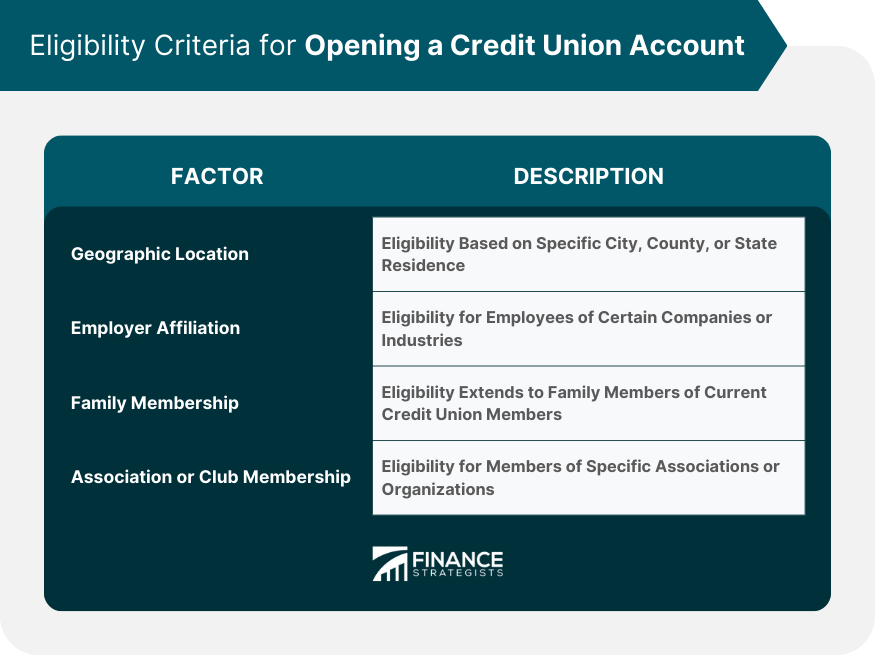
To join a credit union, you must fit within its “field of membership.” This is a defined common bond that connects all members. Common fields of membership include:
- Employer or Industry Affiliation: Many credit unions were initially formed for employees of a specific company, government agency, or industry (e.g., teachers, healthcare workers).
- Geographic Location: Some credit unions serve individuals who live, work, worship, or attend school within a specific city, county, or region.
- Family Relation: If a direct family member (e.g., spouse, parent, sibling) is already a member, you may be eligible to join.
- Membership in an Association or Organization: Some credit unions allow membership through affiliation with a specific club, church, or non-profit organization. In some cases, you might be able to join an organization (often for a nominal fee) specifically to gain eligibility for a credit union.
It’s important to research the field of membership for any credit union you are considering to ensure you qualify. Many credit unions have expanded their fields significantly, making membership more accessible than ever.
Essential Documents for Opening an Account
Regardless of the credit union, you’ll need to provide certain standard documents to verify your identity and residency, aligning with federal regulations like the Patriot Act. Typically, you will need:
- Primary Identification: A valid, government-issued photo ID such as a driver’s license, state ID card, or passport.
- Proof of Address: A utility bill, lease agreement, or another official document showing your current residential address.
- Social Security Number (SSN) or Individual Taxpayer Identification Number (ITIN): This is required for tax reporting purposes.
- Proof of Eligibility (if applicable): Depending on the field of membership, you might need a pay stub (for employer-based), proof of residency (for community-based), or a membership card for an affiliated organization.
Having these documents ready will streamline the application process and prevent delays.
Initial Deposit Requirements and Fees
Most credit unions require a minimum initial deposit to open a savings account, which establishes your membership. This is often a small amount, typically ranging from $5 to $25, and it represents your share in the cooperative. Beyond this initial deposit, credit unions are generally known for their low or no monthly maintenance fees on checking accounts, though it’s always wise to confirm specific fee structures for any account you open. Some may also have a small, one-time membership fee, but this is less common and usually minimal.
3. The Step-by-Step Process of Opening Your Account
Once you understand the ‘what’ and ‘why’ of credit unions and have gathered your necessary documents, the next step is the practical process of opening your account. It’s a straightforward procedure, similar to opening a bank account, but with a few unique considerations.
Finding the Right Credit Union for You
With thousands of credit unions across the United States, finding the right one requires a bit of research. Start by considering credit unions for which you immediately qualify through your employer, a family member, or your local community. Utilize online search tools such as the National Credit Union Administration (NCUA) “Credit Union Locator” or websites like CUNA’s “A Smarter Choice” to find credit unions near you or those with open fields of membership.
When evaluating potential credit unions, consider:
- Interest Rates: Compare savings and loan rates.
- Fees: Look for transparent fee schedules and minimal charges.
- Services Offered: Ensure they provide the financial products you need (e.g., online banking, mobile app, specific loan types).
- ATM Access & Branch Network: Assess their ATM network (many participate in shared networks) and branch locations relative to your needs.
- Customer Reviews: Check online reviews for insights into their service quality.
Initiating Your Membership Application
Once you’ve selected a credit union, you can typically apply in one of three ways:
- Online: Many credit unions offer a fully digital application process, allowing you to apply from the comfort of your home. You’ll upload scanned documents and electronically sign agreements.
- In-Person: Visiting a branch allows for direct interaction with staff who can guide you through the application, answer questions, and help you choose the best accounts.
- By Mail: While less common now, some credit unions still offer a mail-in application option, though this typically takes longer.
The application form will ask for personal details, your SSN/ITIN, contact information, and details verifying your field of membership.
Navigating Account Selection: Checking, Savings, and More
Upon approval of your membership, you’ll typically open a basic savings account (often called a “share account”) first, as this establishes your ownership stake. From there, you can open other accounts and access various services:
- Checking Accounts: Often come with low or no monthly fees, debit cards, and online bill pay.
- Additional Savings Accounts: For specific goals like emergencies, vacations, or down payments.
- Certificates of Deposit (CDs): For higher interest rates on funds you can commit for a fixed period.
- Loans: Personal loans, auto loans, mortgages, home equity lines of credit (HELOCs), usually with competitive rates.
- Credit Cards: With potentially lower interest rates and fewer fees than bank-issued cards.
- Other Services: Financial planning, investment services, insurance, and business banking for small businesses.
Discuss your financial goals with a credit union representative to ensure you select the accounts and services that best fit your individual needs.
Funding Your New Account
After your accounts are established, you’ll need to fund them. Common methods include:
- Electronic Funds Transfer (EFT): Linking an existing bank account to your new credit union account to transfer funds electronically.
- Direct Deposit: Setting up your paycheck or government benefits to be deposited directly into your credit union account.
- Check Deposit: Depositing a physical check in person or via mobile deposit if available.
- Wire Transfer: For larger sums, though typically associated with fees.
Confirm the best funding method with your credit union, especially regarding any limits or processing times.
4. Maximizing Your Credit Union Membership Benefits
Becoming a credit union member is just the first step. To truly benefit, it’s essential to actively engage with the services and unique advantages your cooperative offers. Leveraging these aspects can lead to significant financial savings and an enhanced banking experience.
Leveraging Competitive Rates and Lower Fees
One of the most immediate and impactful benefits is access to better rates and lower fees. Regularly review your credit union’s offerings:
- Savings and CDs: Compare their rates to national averages. Are you maximizing your interest earnings?
- Loans and Credit Cards: If you need a loan (auto, personal, mortgage) or a credit card, always check your credit union’s rates first. They are often more favorable than those from commercial banks. Refinancing existing high-interest debt with your credit union could save you hundreds or thousands of dollars over time.
- Fee Waivers: Understand the conditions for fee waivers on checking accounts or other services. Many credit unions offer free checking with direct deposit or a minimum balance, saving you monthly charges.
Proactively using these benefits ensures you’re getting the best value from your membership.
Embracing Personalized Member Service
Unlike the often impersonal experience at large banks, credit unions prioritize personalized service. Don’t hesitate to reach out to them for assistance:
- Financial Guidance: If you have questions about budgeting, saving, or investing, many credit unions offer free financial counseling or workshops.
- Problem Resolution: If you encounter an issue, you’re likely to receive more attentive and understanding support, as staff are motivated by member satisfaction rather than sales quotas.
- Relationship Building: Building a relationship with your credit union can be beneficial, particularly when seeking loans or needing special accommodations, as they often take a more holistic view of your financial standing.
Utilizing Financial Education and Counseling Services
Many credit unions are deeply invested in their members’ financial well-being and offer a wealth of educational resources. These can include:
- Workshops and Seminars: On topics ranging from first-time homebuying to retirement planning, debt management, and understanding credit scores.
- Online Resources: Articles, videos, and interactive tools designed to improve financial literacy.
- One-on-One Counseling: Some credit unions provide personalized financial counseling to help members set goals, create budgets, and manage debt effectively.
Taking advantage of these free or low-cost resources can significantly enhance your financial knowledge and decision-making skills.
The Power of Community and Shared Ownership
As a member, you are an owner. This means you typically have voting rights in the credit union’s annual meetings, allowing you to elect the volunteer board of directors and influence the institution’s direction. This democratic control reinforces the “people helping people” philosophy. Beyond governance, many credit unions are actively involved in their local communities, supporting local charities, schools, and economic development initiatives. By choosing a credit union, you’re not just securing your financial future; you’re also contributing to the well-being and strength of your community.
5. Common Questions and Final Considerations
Embarking on a new financial relationship often comes with questions, especially when moving to a different type of institution. Addressing these common concerns can help solidify your decision.
Are Credit Union Accounts Federally Insured?
Absolutely. Just as bank accounts are insured by the Federal Deposit Insurance Corporation (FDIC), credit union accounts are federally insured by the National Credit Union Administration (NCUA). The NCUA is an independent agency of the U.S. government that protects members’ deposits in federal credit unions and the vast majority of state-chartered credit unions. Your deposits are insured up to at least $250,000 per member, per account ownership type, per insured credit union, providing the same level of security as a traditional bank.
Can I Bank Online and Access ATMs?
Yes, modern credit unions offer a full suite of digital banking services comparable to large banks. This typically includes:
- Online Banking: For viewing account balances, transferring funds, paying bills, and managing investments.
- Mobile Banking Apps: With features like mobile check deposit, facial recognition login, and peer-to-peer payments.
- ATM Access: Credit unions often participate in vast, surcharge-free ATM networks (like CO-OP or Allpoint), giving members access to tens of thousands of ATMs nationwide, often more than a single bank’s network.
- Shared Branching: Many credit unions are part of shared branching networks, allowing members to conduct transactions at other participating credit unions as if they were at their home branch. This significantly expands physical access.
So, while a credit union might have fewer proprietary branches than a large bank, their network access is often just as extensive, if not more so.
Is a Credit Union Right for Everyone?
While credit unions offer numerous advantages, they may not be the perfect fit for every individual. Potential downsides can include:
- Limited Branch Locations (sometimes): While shared branching and ATM networks mitigate this, some smaller credit unions might have a very limited physical footprint in certain areas.
- Potentially Less Sophisticated Technology (rarely): While most credit unions have robust digital platforms, a very small percentage might lag behind the absolute cutting edge of FinTech offered by giant banks, though this gap is rapidly closing.
- Membership Requirements: The “field of membership” can be a barrier for some, though many credit unions have broadened their eligibility criteria significantly.
For most people, the benefits of lower fees, better rates, and personalized service far outweigh these minor considerations. It’s about weighing your personal financial priorities and service preferences.
Conclusion
Opening a credit union account is a straightforward process that grants you access to a unique financial institution built on the principles of cooperation, community, and member empowerment. By choosing a credit union, you’re not just opening an account; you’re becoming a part of an ownership structure that prioritizes your financial well-being over shareholder profits.
From understanding their distinct advantages and eligibility requirements to navigating the application process and maximizing your membership benefits, this guide has provided a comprehensive roadmap. With federal insurance protecting your deposits and a growing network of digital services and shared branches, credit unions offer a secure, convenient, and often more rewarding alternative to traditional banking. If you’re seeking a financial partner that truly puts you first, exploring the world of credit unions is a wise and potentially profitable decision for your personal finance journey.
aViewFromTheCave is a participant in the Amazon Services LLC Associates Program, an affiliate advertising program designed to provide a means for sites to earn advertising fees by advertising and linking to Amazon.com. Amazon, the Amazon logo, AmazonSupply, and the AmazonSupply logo are trademarks of Amazon.com, Inc. or its affiliates. As an Amazon Associate we earn affiliate commissions from qualifying purchases.