
Understanding your future Social Security benefits is a cornerstone of sound personal financial planning. For millions, these benefits represent a vital income stream in retirement, a crucial safety net in the event of disability, or essential support for surviving family members. Yet, despite its pervasive influence, many individuals remain uncertain about how the program works, what they are entitled to, and how their claiming decisions can dramatically impact their lifetime benefits. This comprehensive guide aims to demystify Social Security, offering clarity on eligibility, benefit calculation, claiming strategies, and its role within your broader financial landscape.

Understanding the Foundation of Social Security Benefits
Social Security isn’t a single, monolithic program; rather, it’s a system comprising several distinct benefit types, all rooted in a shared foundation of contributions and eligibility criteria. Grasping this underlying structure is the first step toward understanding what you can expect to receive.
A Brief History and Purpose
Enacted in 1935 during the Great Depression, the Social Security Act was a landmark piece of legislation designed to provide a basic level of economic security for Americans. Its primary purpose was, and remains, to provide income protection for workers and their families against the financial risks of old age, disability, death, and in some cases, unemployment. Over the decades, it has evolved into a comprehensive social insurance program, funded primarily through payroll taxes (FICA taxes) paid by workers and their employers. This “pay-as-you-go” system means that today’s workers contribute to the benefits received by today’s retirees and beneficiaries.
Who is Eligible? The Work Credit System
Eligibility for most Social Security benefits is determined by your work history and, specifically, the “work credits” you accumulate. As you work and pay Social Security taxes, you earn these credits. In 2024, you earn one credit for each $1,730 of earnings, up to a maximum of four credits per year. The vast majority of people need 40 work credits, earned over at least 10 years, to be eligible for retirement benefits. For disability or survivor benefits, the number of credits required can vary depending on your age at the time of disability or death. This credit system ensures that benefits are tied to a demonstrable history of contribution to the system.
Types of Social Security Benefits
While often synonymous with retirement, Social Security provides three main types of benefits:
- Retirement Benefits: The most commonly understood benefit, providing monthly payments to eligible individuals based on their earnings record. These benefits can begin as early as age 62, but are maximized by delaying commencement.
- Disability Benefits: Provided to workers who have a severe medical condition that prevents them from doing “substantial gainful activity” and is expected to last at least one year or result in death. Eligibility also requires a sufficient work history.
- Survivor Benefits: Paid to eligible family members of a deceased worker, including spouses, children, and dependent parents. These benefits provide crucial financial support during a difficult time, demonstrating the program’s family protection aspect.
Calculating Your Social Security Retirement Benefits
The amount of your Social Security retirement benefit is not arbitrary; it’s the result of a precise calculation based on your lifetime earnings. Understanding this process can help you estimate your future income and make informed decisions.
The Average Indexed Monthly Earnings (AIME)
The first step in calculating your benefit involves determining your Average Indexed Monthly Earnings (AIME). The Social Security Administration (SSA) looks at your entire earnings history and identifies your 35 highest-earning years. These earnings are then “indexed” to account for changes in average wages since the year the earnings were posted. This indexing process ensures that your past earnings are expressed in terms of their modern-day value, making the calculation fairer. If you have fewer than 35 years of earnings, the missing years are filled in with zeroes, which will lower your AIME.
The Primary Insurance Amount (PIA)
Once your AIME is calculated, it’s used to determine your Primary Insurance Amount (PIA). The PIA is the benefit amount you would receive if you start collecting benefits exactly at your Full Retirement Age (FRA). The PIA calculation uses a progressive formula that provides a higher percentage of replacement income for lower earners. This formula applies three “bend points” to your AIME: you receive 90% of your AIME up to the first bend point, 32% of the amount between the first and second bend points, and 15% of the amount above the second bend point. These bend points are updated annually. The progressive nature of the PIA ensures that Social Security serves as a more significant safety net for those with lower lifetime earnings.
Factors Affecting Your Benefit Amount
While AIME and PIA form the core, several factors can adjust your final monthly benefit:
- Years Worked: As mentioned, 35 years of earnings are used. Working more than 35 years can replace lower-earning years with higher ones, boosting your AIME. Fewer than 35 years will include zero-earning years, reducing your AIME.
- Highest Earning Years: Your highest 35 years of indexed earnings are used, emphasizing the importance of consistent employment and career progression.
- Claiming Age: This is arguably the most significant factor you can control. Claiming before your FRA results in a permanently reduced benefit, while delaying past your FRA leads to increased benefits through Delayed Retirement Credits.
- Cost-of-Living Adjustments (COLAs): Once you start receiving benefits, they are subject to annual COLAs, which are designed to keep pace with inflation and maintain your purchasing power.
- Earnings While Receiving Benefits: If you work while collecting benefits before your FRA, your benefits may be temporarily reduced if your earnings exceed certain thresholds. Once you reach FRA, this earnings test no longer applies.
Navigating When and How to Claim Your Benefits
One of the most critical decisions you’ll make regarding Social Security is when to start receiving your benefits. This choice can have a profound and irreversible impact on your total lifetime income from the program.
Full Retirement Age (FRA): The Crucial Benchmark
Your Full Retirement Age (FRA), sometimes called “normal retirement age,” is the age at which you are entitled to 100% of your Primary Insurance Amount (PIA). FRA depends on your birth year:
- Born 1943-1954: FRA is 66
- Born 1955: FRA is 66 and 2 months
- Born 1956: FRA is 66 and 4 months
- Born 1957: FRA is 66 and 6 months
- Born 1958: FRA is 66 and 8 months
- Born 1959: FRA is 66 and 10 months
- Born 1960 or later: FRA is 67
Understanding your specific FRA is crucial because it serves as the baseline for all benefit adjustments.
Early Claiming: The Trade-offs
You can begin collecting retirement benefits as early as age 62. However, claiming before your FRA results in a permanent reduction in your monthly benefit amount. The reduction is approximately 5/9 of 1 percent for each month before FRA, up to 36 months, and then 5/12 of 1 percent for each month beyond 36 months. For someone with an FRA of 67, claiming at 62 means a reduction of about 30%. While early claiming provides immediate income, it comes at the cost of a significantly smaller monthly payment for the rest of your life. This option is often considered by those who need the income, have health issues, or do not expect to live beyond their life expectancy.
Delayed Claiming: Maximizing Your Payouts
Conversely, if you delay claiming benefits past your FRA, you can earn Delayed Retirement Credits (DRCs). For each year you delay, up to age 70, your monthly benefit increases by a certain percentage, typically 8% per year. This means someone with an FRA of 67 who delays claiming until age 70 will receive a benefit that is 124% of their PIA (100% at FRA + 3 years x 8% = 24% increase). This substantial increase makes delayed claiming an attractive strategy for those who are healthy, can afford to wait, and expect to live a long life. It provides a guaranteed, inflation-adjusted increase to your income stream. There is no additional benefit to delaying past age 70.
Spousal and Survivor Benefits: Leveraging Family Entitlements
Social Security also provides benefits to eligible family members, which can be a significant part of a couple’s retirement strategy:
- Spousal Benefits: If your spouse is eligible for retirement benefits, you may be able to claim a spousal benefit based on their work record, even if you haven’t worked or have a limited work history. This benefit can be up to 50% of your spouse’s PIA. If you are eligible for benefits based on your own work record and also for spousal benefits, you will receive the higher of the two.
- Survivor Benefits: When a worker dies, their eligible surviving spouse (including divorced spouses in some cases), children, and dependent parents may be entitled to survivor benefits. A surviving spouse can receive up to 100% of the deceased worker’s benefit amount if they wait until their own FRA, or a reduced amount if claimed earlier. This protection is invaluable for families experiencing the loss of a primary wage earner. Strategic claiming of spousal or survivor benefits can significantly enhance a household’s overall Social Security income.
Beyond Retirement: Disability and Survivor Benefits
While retirement benefits garner the most attention, Social Security’s disability and survivor protection are equally vital components, offering critical support when life takes an unexpected turn.
Social Security Disability Insurance (SSDI)
Social Security Disability Insurance (SSDI) provides monthly benefits to individuals who become unable to work due to a severe medical condition. Unlike some other forms of disability insurance, SSDI has strict criteria:
- Medical Criteria: You must have a medical condition that meets the SSA’s definition of disability, meaning it prevents you from doing any substantial gainful activity and is expected to last at least a year or result in death. It’s not enough to be unable to do your previous job; you must be unable to do any job that exists in the national economy.
- Work Credits: You must have accumulated a sufficient number of work credits, including some earned recently. The specific number of credits needed depends on your age when you become disabled.
- Application Process: The application process can be lengthy and complex, often requiring extensive medical documentation and multiple appeals.
SSDI benefits provide a lifeline for workers and their families when a disability strikes, offering a level of financial stability during a challenging time.
Survivor Benefits: Protecting Your Loved Ones
Survivor benefits are a form of life insurance provided by Social Security, ensuring that a deceased worker’s family members are not left without financial support. Eligibility for survivor benefits extends to:
- Spouses: A widow or widower can receive benefits based on the deceased worker’s record. A surviving spouse can claim benefits as early as age 60 (or 50 if disabled) and receive 71.5% to 99% of the deceased worker’s basic benefit, depending on their age at claim. If the surviving spouse is caring for the deceased’s child (under age 16 or disabled), they can receive benefits at any age.
- Children: Unmarried children under age 18 (or 19 if still in high school) can receive benefits. Disabled children can receive benefits at any age if their disability began before age 22.
- Dependent Parents: In some cases, dependent parents aged 62 or older may also be eligible for benefits.
The total amount of survivor benefits payable to a family is capped, but these benefits often provide crucial support, particularly for young families or surviving spouses who rely heavily on the deceased’s income.
The Future of Social Security and Your Financial Planning
Social Security is a dynamic program, and its long-term solvency is a topic of ongoing discussion. Understanding these broader trends is essential for integrating your expected benefits into a robust financial plan.
Addressing Solvency Concerns and Potential Reforms
For years, the Social Security program has faced long-term financing challenges, primarily due to demographic shifts—people are living longer and birth rates have declined, meaning fewer workers are paying into the system relative to the number of beneficiaries. Projections from the Social Security Administration’s annual Trustees’ Report indicate that the trust funds will be able to pay 100% of promised benefits for a number of years, but eventually, without legislative action, they will only be able to pay a reduced percentage.
Various reform proposals have been put forth to address these solvency concerns, including:
- Raising the full retirement age further
- Adjusting the COLA formula
- Increasing the Social Security tax rate
- Raising or eliminating the taxable earnings cap
- Modifying the benefit formula for future retirees
While the exact nature of future reforms remains uncertain, it’s widely believed that Social Security will continue to be a vital program, though some adjustments are likely. Financial planners often advise clients to plan for a scenario where Social Security covers a slightly smaller percentage of their retirement income needs than it might have for previous generations.
Integrating Social Security into Your Broader Retirement Strategy
Social Security should be viewed as one important pillar of your retirement income, not the sole foundation. It provides a reliable, inflation-adjusted income stream, which is a powerful advantage. However, for most individuals, it won’t be enough to maintain their desired lifestyle in retirement. A comprehensive retirement strategy should therefore integrate Social Security with other income sources, such as:
- Personal Savings and Investments: 401(k)s, IRAs, brokerage accounts, and other investment vehicles.
- Pensions: If you are fortunate enough to have one.
- Other Income: Part-time work, rental income, etc.
By understanding your estimated Social Security benefits, you can better determine the gap that needs to be filled by your personal savings and investments, allowing you to tailor your savings and investment strategies accordingly. Financial modeling tools can help you project how these different income streams will combine to support your retirement goals.

Tools and Resources for Personal Estimation
The best way to understand what you will get from Social Security is to utilize the resources provided by the Social Security Administration itself:
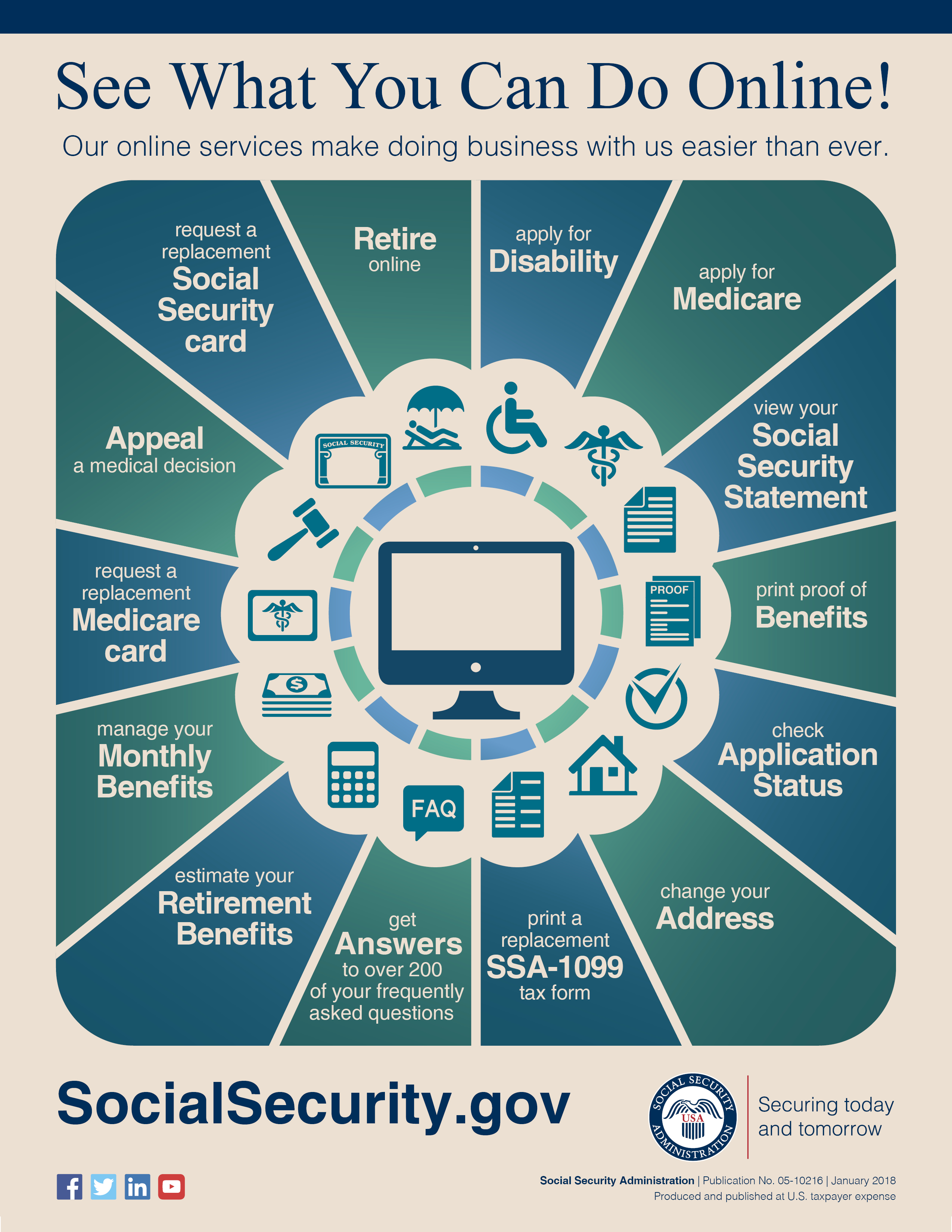
- mySocialSecurity Account: This free online account is an invaluable tool. It allows you to check your earnings history, review your estimated benefits for retirement, disability, and survivor protection, and download your Social Security Statement. Regularly reviewing your earnings record ensures accuracy.
- Online Calculators: The SSA website offers various calculators that allow you to explore different claiming scenarios and their impact on your benefits.
- Social Security Statement: If you don’t have an online account, the SSA periodically mails a paper statement to workers.
Taking the initiative to access and understand these personalized resources is the most accurate way to project your future Social Security benefits and integrate them effectively into your overall financial plan. By doing so, you move from uncertainty to informed decision-making, setting the stage for a more secure financial future.
aViewFromTheCave is a participant in the Amazon Services LLC Associates Program, an affiliate advertising program designed to provide a means for sites to earn advertising fees by advertising and linking to Amazon.com. Amazon, the Amazon logo, AmazonSupply, and the AmazonSupply logo are trademarks of Amazon.com, Inc. or its affiliates. As an Amazon Associate we earn affiliate commissions from qualifying purchases.