
The year 2022 will be remembered as a pivotal period in modern economic history, characterized by an inflation surge that caught many by surprise and subsequently redefined monetary policy across the globe. After decades of relatively subdued price increases, the world experienced a dramatic reawakening to the power of inflation, profoundly impacting household budgets, business operations, and investment strategies. Understanding the specifics of the 2022 inflation rate, its underlying causes, and its far-reaching implications is crucial for anyone navigating the financial landscape.
Understanding Inflation: A Primer
Before delving into the specifics of 2022, it’s essential to establish a clear understanding of what inflation is and how it’s measured. This foundational knowledge provides the context necessary to appreciate the magnitude of the economic challenges faced during the year.

Defining Inflation and Its Measurement
Inflation refers to the rate at which the general level of prices for goods and services is rising, and consequently, the purchasing power of currency is falling. When inflation is high, a unit of currency buys less than it did before. This erosion of purchasing power can significantly impact individuals’ savings, investment returns, and overall quality of life.
Economists measure inflation primarily through price indexes, which track the average change over time in the prices paid by urban consumers for a market basket of consumer goods and services. These indexes are critical tools for policymakers, businesses, and consumers to gauge economic health and make informed decisions.
Key Inflation Metrics: CPI vs. PCE
While several metrics exist, two stand out as the most widely cited for measuring inflation in advanced economies like the United States:
-
Consumer Price Index (CPI): This is perhaps the most commonly referenced inflation gauge. Published monthly by the U.S. Bureau of Labor Statistics (BLS), the CPI measures the average change over time in the prices paid by urban consumers for a market basket of consumer goods and services. It includes a wide range of items, from food and energy to housing, transportation, medical care, and apparel. The CPI is often broken down into “headline CPI,” which includes all items, and “core CPI,” which excludes volatile food and energy prices to provide a clearer picture of underlying inflation trends. For many, the CPI serves as the most direct indicator of how inflation affects their daily lives.
-
Personal Consumption Expenditures (PCE) Price Index: The PCE price index is the Federal Reserve’s preferred measure of inflation. Produced by the Bureau of Economic Analysis (BEA), it also tracks the prices of goods and services purchased by consumers. A key difference from CPI is that PCE accounts for substitutions consumers make in response to price changes (e.g., buying chicken instead of beef if beef prices rise sharply). It also has a broader scope, including expenditures made on behalf of households by employers or government programs (like medical care). Like CPI, it is often presented as both headline PCE and core PCE. The Fed prefers PCE due to its comprehensive coverage and its ability to reflect shifts in consumer behavior more accurately.
In 2022, both CPI and PCE painted a stark picture of rapidly accelerating prices, signaling a significant departure from the economic stability of previous years.
The Unprecedented Surge: Inflationary Trends in 2022
The year 2022 saw inflation reach levels not observed in decades across many developed nations, presenting a formidable challenge to central banks and governments alike.
Headline Figures: The Official 2022 Inflation Rate
In the United States, the Consumer Price Index (CPI) recorded a year-over-year increase of 6.5% for December 2022. This figure, while a decline from the peak of 9.1% in June 2022, still represented an unacceptably high level of inflation for policymakers and significantly eroded household purchasing power. For the full calendar year, the average CPI inflation rate was also exceptionally high. Similarly, the Personal Consumption Expenditures (PCE) price index, the Federal Reserve’s preferred measure, showed a year-over-year increase of 5.0% in December 2022, down from its peak but still well above the Fed’s 2% target.
These headline numbers translated into real-world impacts, with prices for everyday necessities rising sharply throughout the year. The narrative of “transitory” inflation, which dominated early discussions in 2021, definitively gave way to the reality of persistent and widespread price pressures by 2022.
Deconstructing the Drivers: Why Prices Skyrocketed
The inflationary pressures of 2022 were not singular but rather a complex confluence of factors, each exacerbating the others to create a potent economic cocktail.
Energy Shocks and Geopolitical Tensions
One of the most significant contributors to the 2022 inflation surge was the dramatic rise in energy prices, particularly oil and natural gas. The Russian invasion of Ukraine in February 2022 sent shockwaves through global energy markets, as Russia is a major producer of both. Sanctions against Russia, coupled with fears of supply disruptions, caused crude oil prices to spike, pushing up gasoline and electricity costs for consumers and businesses worldwide. This energy shock had a pervasive effect, as higher fuel costs increased transportation expenses for goods, ultimately raising prices across nearly every sector of the economy.
Persistent Supply Chain Bottlenecks
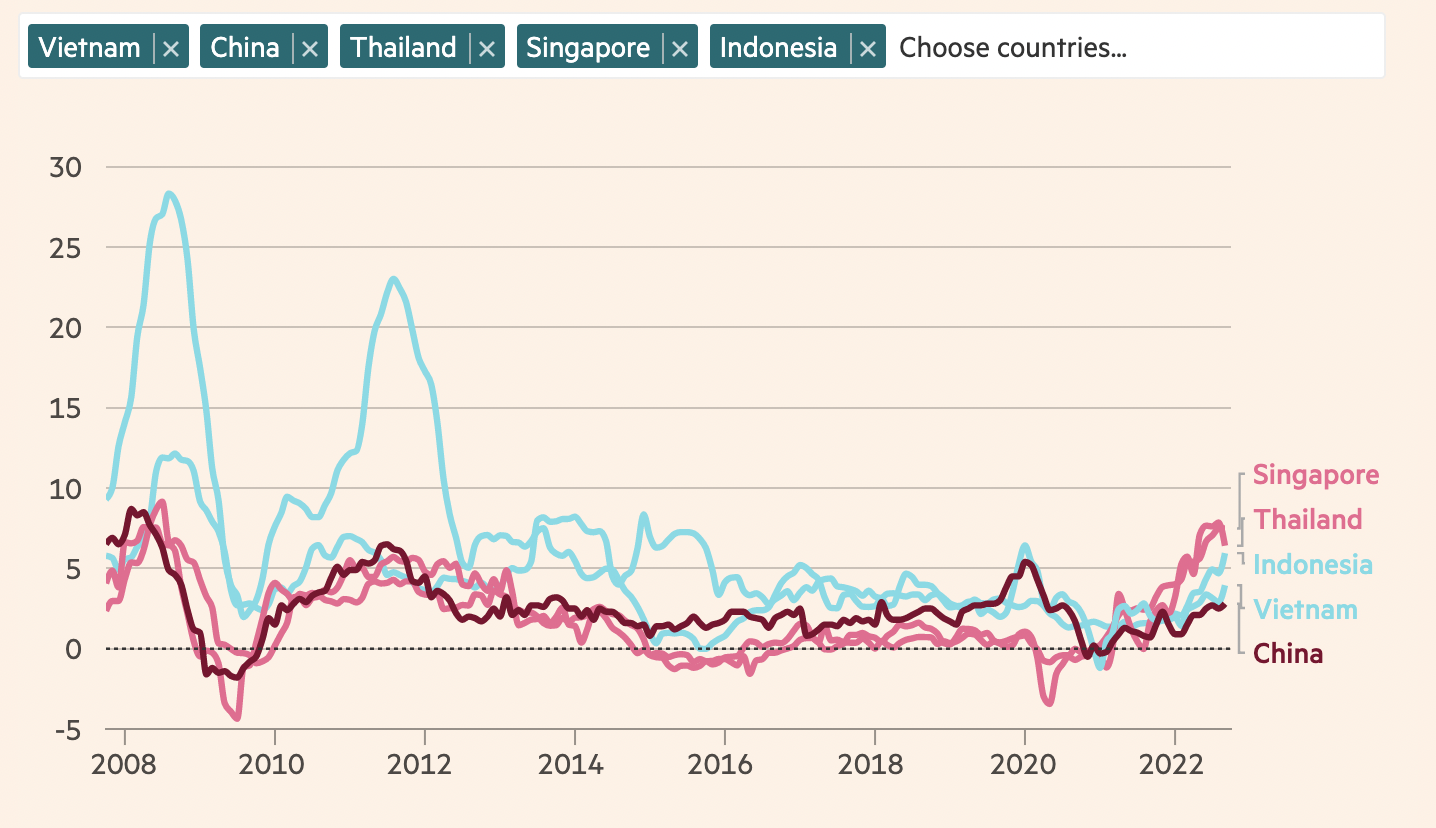
The global supply chain disruptions that emerged during the COVID-19 pandemic continued to plague the economy through 2022. Lockdowns, labor shortages, and logistical challenges, particularly in crucial manufacturing hubs like China, meant that goods could not be produced or transported efficiently. This mismatch between strong consumer demand and constrained supply led to higher prices for everything from semiconductors and automobiles to furniture and clothing. The backlog at ports, container shortages, and lack of trucking capacity proved more persistent than anticipated, maintaining upward pressure on prices throughout the year.
Robust Consumer Demand and Wage Growth
Following extensive fiscal and monetary stimulus during the pandemic, consumers in many developed economies entered 2022 with strong balance sheets and a pent-up demand for goods and services. This robust demand, coupled with tight labor markets and rising wages, created a classic demand-pull inflationary environment. As businesses struggled to find workers, wage growth accelerated, especially in sectors with high turnover. While beneficial for workers, these higher labor costs were often passed on to consumers in the form of higher prices, contributing to the inflationary spiral. The combination of strong consumer spending power and limited supply created fertile ground for price increases.
The Ripple Effect: Impact Across the Economy
The high inflation rates of 2022 did not exist in a vacuum; they generated significant ripple effects throughout the economy, impacting different stakeholders in varied ways.
Consumers Under Pressure: Eroding Purchasing Power
For the average household, the most immediate and tangible impact of 2022’s inflation was the erosion of purchasing power. The cost of living rose significantly, with essentials like groceries, rent, and utility bills seeing substantial increases. Many workers found that their wage gains, if any, were outpaced by inflation, leading to a decrease in their real (inflation-adjusted) income. This squeeze on household budgets forced many to cut back on discretionary spending, draw down savings, or even take on more debt to cover daily expenses. Lower-income households were disproportionately affected, as they spend a larger percentage of their income on basic necessities, which saw some of the steepest price hikes.
Businesses Navigating Rising Costs
Businesses faced a dual challenge in 2022: managing surging input costs while trying to maintain profitability without alienating customers. Raw materials, energy, and labor became more expensive, squeezing profit margins. Companies had to make difficult decisions about whether to absorb these costs, pass them on to consumers, or seek efficiencies elsewhere. Small businesses, often with less leverage and thinner margins than large corporations, found this environment particularly challenging. Supply chain disruptions also complicated production schedules and inventory management, forcing many to hold larger stocks at higher costs or risk losing sales.
Investor Reactions and Portfolio Shifts
Inflation significantly altered the investment landscape. Fixed-income investments, such as bonds, saw their real returns diminish or turn negative as their fixed payments were eroded by rising prices. The prospect of aggressive interest rate hikes by central banks to combat inflation led to significant volatility in equity markets, with growth stocks particularly vulnerable to higher discount rates. Investors had to re-evaluate their portfolios, often shifting towards assets traditionally seen as inflation hedges, such as real estate, commodities, or inflation-protected securities. The “TINA” (There Is No Alternative) phenomenon for equities, prevalent during low-inflation periods, began to wane as bonds became more attractive with rising yields.
Central Banks’ Response: A Battle Against Price Stability
Faced with persistent and high inflation, central banks around the world were compelled to act decisively, marking a significant shift in monetary policy after years of accommodative stances.
The Federal Reserve’s Aggressive Stance
The U.S. Federal Reserve, initially maintaining that inflation was “transitory,” fundamentally altered its posture in 2022. Acknowledging that inflation had become entrenched, the Fed embarked on an aggressive campaign of interest rate hikes. Starting from near-zero in March 2022, the federal funds rate was increased multiple times throughout the year, with several 75-basis-point hikes, bringing it to a range of 4.25%-4.50% by December. The aim was to cool down the economy by making borrowing more expensive, thereby reducing demand and bringing inflation back down towards its 2% target. This rapid tightening cycle was the fastest in decades and signaled the Fed’s strong commitment to restoring price stability, even at the risk of slowing economic growth.
Global Central Bank Synchronization and Divergence
The Federal Reserve was not alone in its fight against inflation. Central banks across the globe, including the European Central Bank (ECB), the Bank of England (BOE), and many others, also raised interest rates in 2022. There was a broad synchronization in this tightening cycle, reflecting the global nature of inflation drivers. However, some divergence also occurred. The Bank of Japan (BOJ), for instance, maintained an ultra-loose monetary policy for most of the year, leading to a significant weakening of the Japanese yen. These varied approaches highlighted the distinct economic conditions and policy priorities of different nations.
The Fight for a “Soft Landing”
A key objective for central banks in 2022 was to achieve a “soft landing”—a scenario where inflation is brought under control without triggering a severe economic recession. This is a delicate balancing act, as aggressive rate hikes risk overtightening and stifling economic growth, leading to job losses and a downturn. The concern about an impending recession intensified throughout 2022 as rate hikes became more frequent and substantial, making the path to a soft landing appear increasingly narrow. The year ended with significant uncertainty regarding whether central banks could successfully navigate this challenging environment.
Looking Ahead: Lingering Effects and Future Outlook
While 2022 marked the peak of the inflation surge, its effects are expected to reverberate well into the future, shaping economic policies and individual financial decisions.
The Path to Disinflation: Challenges and Opportunities
As 2022 concluded, there were signs that inflation might have peaked, with some monthly figures showing a deceleration. This process, known as disinflation (a slowing of the inflation rate), offers a glimmer of hope. However, the path to bringing inflation back to target levels remains fraught with challenges. Supply chain issues, while easing, have not fully resolved. Geopolitical risks, particularly concerning energy, persist. Moreover, wage growth, while slowing, could continue to put upward pressure on prices if it outpaces productivity gains.
For consumers and businesses, this period presents both challenges and opportunities. Opportunities may arise from a potential stabilization of prices, allowing for better financial planning and investment decisions. However, the legacy of higher interest rates, which are typically maintained for some time to ensure inflation is truly contained, will continue to impact borrowing costs for mortgages, car loans, and business investments.

Strategies for Financial Resilience in an Inflationary Environment
Navigating the lingering effects of inflation requires proactive financial planning. For individuals, this means revisiting personal budgets, seeking opportunities to increase income (through side hustles or career advancement), optimizing investments for inflation protection, and managing debt prudently. Re-evaluating savings strategies and potentially exploring higher-yield savings accounts or inflation-protected securities can also be beneficial.
For businesses, the focus remains on enhancing operational efficiency, diversifying supply chains to mitigate future shocks, and strategically pricing products and services. Adapting to evolving consumer behaviors, which have been shaped by higher prices, will also be key to maintaining market relevance and profitability.
In conclusion, 2022 was a transformative year for inflation, marking a return to an economic reality that many had not experienced in decades. The high rates recorded, driven by a complex interplay of demand, supply, and geopolitical factors, necessitated aggressive monetary policy responses. While the immediate surge may have peaked, the lessons learned and the ongoing adjustments required to manage its aftermath will undoubtedly continue to shape the financial landscape for years to come.
aViewFromTheCave is a participant in the Amazon Services LLC Associates Program, an affiliate advertising program designed to provide a means for sites to earn advertising fees by advertising and linking to Amazon.com. Amazon, the Amazon logo, AmazonSupply, and the AmazonSupply logo are trademarks of Amazon.com, Inc. or its affiliates. As an Amazon Associate we earn affiliate commissions from qualifying purchases.